Jaialdi returns to Boise July 29–Aug. 3 after a 10-year hiatus since 2015.
Festival highlights include Basque sports, folk dance, cuisine and street music.
Event celebrates Idaho’s Basque heritage and global diaspora with strong turnout.
Boise has waited 10 long years for this.
Jaialdi is back and will be bigger than ever, starting Tuesday, July 29, and running until Sunday, Aug. 3.
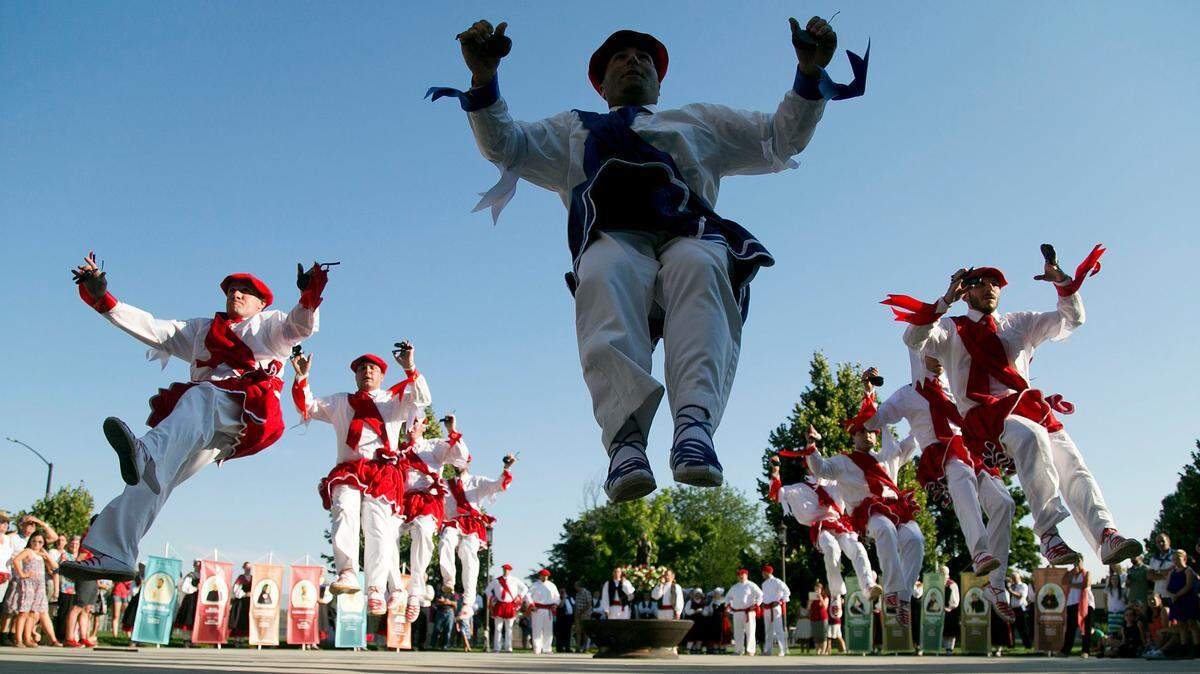
The COVID-19 pandemic sidelined the once-every-five-years festival in 2020, so for the first time since 2015, Boise will come alive with a traditional Basque celebration unlike any other in the U.S. Masses will line up for authentic Basque eats and drinks, hear Basque Country music, and watch athletes, dazzling dancers and artists from across the world take center stage.
This year’s festival will be a testament to rebuilding, as well as a “homecoming” for the Basque community in the U.S. and beyond, organizers said. Boise is home to an estimated 16,000 Basques, making it one of the larger concentrations outside of Basque Country in Europe.
“The celebration brings together people from the Basque Country and the diaspora, offering a chance to celebrate heritage, reconnect with family and friends and share Basque culture with the wider world,” Jaialdi spokesperson Lael Uberuaga-Rodgers said.
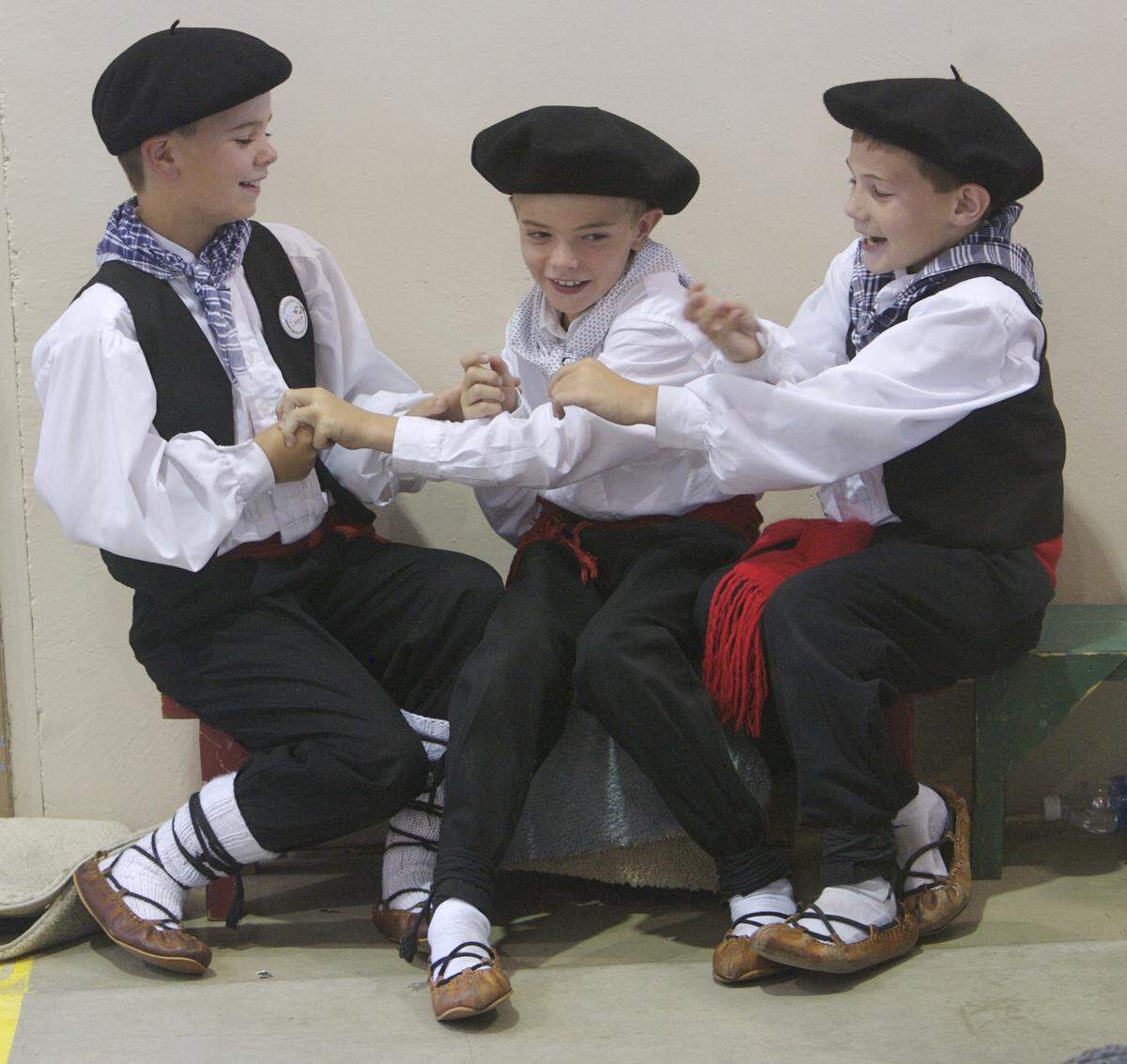
In this file photo, Battle Mountain Oberenak Dancers wait their turn to perform at Jaialdi 2010. The dance group will perform again this year. Katherine Jones Katherine Jones / Idaho Statesman
What exactly is Jaialdi?
The word, pronounced “hai-al-dee,” translates to “festival” in the Basque language, called Euskara.
A celebration of all things Basque, the festival showcases a culture that’s been prominent in Idaho since the late 1800s.
“It’s a really special way to help remind people that Basque stuff is around and it’s a living culture, it’s not just in history, it’s still here today,” Uberuaga-Rodgers told the Idaho Statesman. “It’s a way to create those sources of cultural touchstones of Basque pride.”
The Basque people are an indigenous ethnic group of southwest Europe, and their homeland, Euskal Herria, is a region on the border between Spain and France in the Pyrenees Mountains. In the late 1800s and early 1900s, many Basque people migrated to the United States, especially coming to the West for the Gold Rush and the sheep industry, according to the Basque Museum and Cultural Center.
The festival began in 1987 at the Idaho State Penitentiary, planned as a one-time celebration in Idaho. It was so popular that it was held again in 1990 for Idaho’s centennial. Since then, it has been held every five years, with the exception of the pandemic cancellation.
Communities come together at Jaialdi, Uberuaga-Rodgers said. While there is no official theme, she said this year can be summarized by the Euskara word “auzolan,” which means “community work.”
“This is a Herculean community effort that we put on,” she said. “It’s just really for the love of celebrating our heritage and Basque culture, and really perpetuating it and teaching people about the Basque language, sharing our cuisine, heritage, sharing our dance.”
Jaialdi on the Basque Block in Downtown Boise in 2015. Darin Oswald Darin Oswald/Idaho Statesman
What to expect on the Basque Block, around Boise
With six days of festivities, attendees should prepare with water and good walking shoes, and make sure not to go too hard the first couple of days, Uberuaga-Rodgers said.
“It’s a marathon, not a sprint,” Uberuaga-Rodgers said.
The festival will start “casual,” Uberuaga-Rodgers said, with Basque Block festivities the first couple of days, and then ramp up with the large ticketed events and the Basque Expo.
Attendees can try Basque cuisine throughout the weekend on the Basque Block, at the Basque Expo and at restaurants around the city. Get ready for a lot of chorizos, and marinated pork loin sandwiches, paella, pintxos and croquettes.
Popular refreshments will be the kalimotxo, which is a mix of red wine and cola; sagardoa, a Basque cider that’s dry and tart; and Picon Punch, a cocktail made of Amaro, grenadine, brandy and lemon.
Uberuaga-Rodgers is especially excited for the “spontaneous” music performances on the streets next week. It isn’t uncommon to witness an impromptu show, with people bringing instruments playing for the crowds, she said.
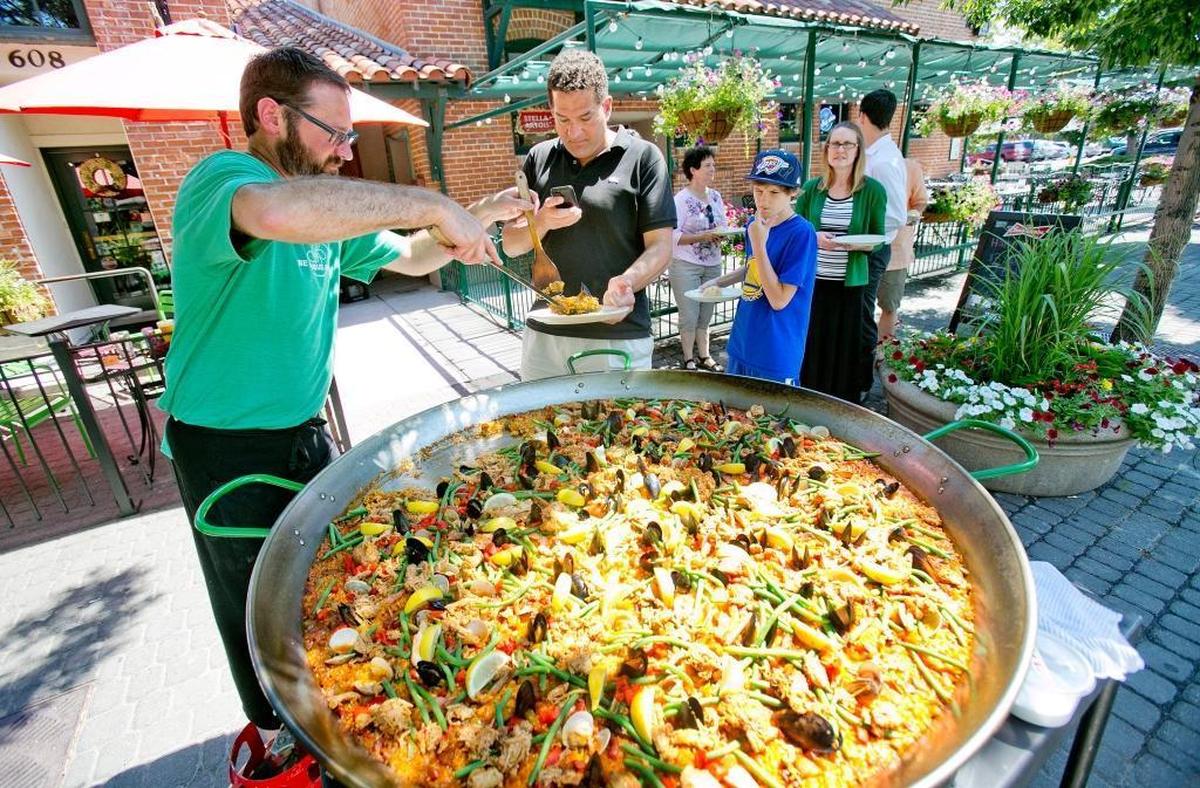
Tony Eiguren serves from a gigantic 100 person paella-filled pan prepared for lunch at The Basque Market in this file photo from July 1, 2015. Idaho Statesman file photo
Events to see
To see a full schedule and purchase tickets visit the Jaialdi website.
Basque-ing on the Block: Visit Boise’s Basque Block, which is Grove Street downtown between Capitol Boulevard and 6th Street, for food, drinks and music Tuesday through Thursday.
This is free and a non-ticketed event.
Sports Night: Watch Basque athletes compete in traditional farm sports at Idaho Central Arena at 7 p.m. Thursday. The sporting events, called Herri kirolak, include stone lifting, wood chopping, hay bale throwing and wagon lifting.
Ticket prices start at $84.67 on Ticketmaster.
Street Dance: Thursday and Sunday at 8:30 p.m. at the Basque Block performers will take the streets with folk and rock music, with performances from groups
Xabi Aburruzaga and Gatibu will perform Thursday, and Xabi Aburruzaga and Amuma Says No will perform Sunday.
This event is a free and non-ticketed event.
Festara: Friday at 7 p.m. at Idaho Central Arena there will be a showcase of theatrical traditional dance and music, with performances by dance groups from the Basque Country as well as Boise’s own Oinkari Basque Dancers.
Ticket prices start at $30.65.
Dantzaldi: On Saturday at 7:30 p.m. at Idaho Central Arena, Basque-American bands will perform a mix of Basque folk, rock and fusion music. The bands include Amuma Says No, Neomak and Gatibu.
Ticket prices start at $35.80.
Basque-ing at Expo Idaho: On Saturday from 10 a.m. to 5 p.m. and Sunday from 11 a.m. to 4 p.m. at Expo Idaho, dozens of dance groups will perform, and there also will be sporting events. Attendees can get souvenirs from vendors and see sheep wagons.
Tickets can be purchased in advanced on the Jaialdi site for $16 or at the door for $20.
Jaialdi Mass: Gather at the Cathedral of St. John the Evangelist on Sunday at 5 p.m. for an honoring of Saint Ignatius of Loyola. The Boise Oñati Dancers will perform a sacred liturgical dance. This event is free.