A plan to lower utility costs won Boise global recognition, chance at $1M
AI-generated summary reviewed by our newsroom.
- The Bloomberg 2025 Mayors Challenge for government innovation had 630 entrants worldwide.
- Boise wants to use geothermal heating to lower utility costs in affordable housing.
- Boise's proposal pairing environmentally sound energy with affordable housing stood out.
The city of Boise took an old idea and gave it a new focus recently, and that caught the attention of the Bloomberg Philanthropies’ 2025 Mayors Challenge.
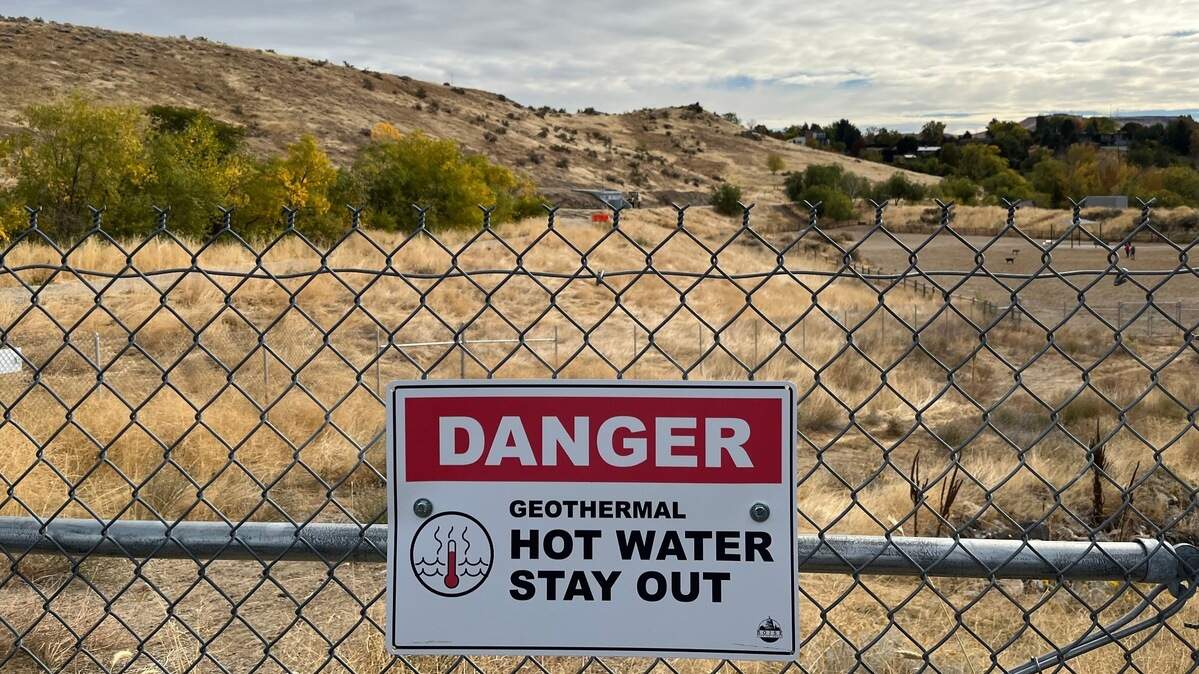
Boise applied to the challenge with the idea of taking the city’s existing geothermal heating system to provide a solution to high utility costs in affordable housing downtown. That idea made the city one of 50 finalists in Bloomberg’s initiative, which comes with $50,000 to help develop a prototype, as well as a chance to be one of 25 cities worldwide that receives $1 million “to bring their proposals to life,” according to a Bloomberg news release.
The competition, run by former New York City Mayor Michael Bloomberg’s philanthropic foundation, challenges cities to find innovative and creative solutions to prominent issues facing municipalities — things such as affordable housing, waste management, emergency services and environmental issues.
“Using a geothermal system is something that Boise can uniquely offer as sort of an idea to transform the way that a city can be run,” the city’s energy program manager, Katie O’Neil, told the Idaho Statesman. “We’re the only city in the United States that has this, one of only a handful in the world, and this has never been applied to an affordable housing structure.”
Mayor Lauren McLean said the proposal’s goal to lower residential utility bills and reduce carbon emissions hits two of her priorities for the city.
“This project, being named a finalist, makes it possible for us to look at how we take one resource that we have, clean heat, and use it to achieve our goal of affordability,” McLean told the Statesman.
Boise has been a leader in geothermal energy since the late 19th century, when the city established the Warm Springs Water District and built a system that uses natural hot springs to heat many homes along Warm Springs Avenue. The city has its own system that heats City Hall and more than 90 buildings downtown, several Boise State University buildings and even the Idaho Statehouse.
Aparna Ramanan, who leads the Mayors Challenge for the Government Innovation program at Bloomberg Philanthropies, said the trends they observed from across the world in this challenge showed up in North America, where housing and shelter were top issues.
“Boise’s proposal really stood out for its creativity in bringing together a solution that looked at energy affordability through geothermal energy and pairing it with affordable housing,” Ramanan said.
There were 630 applicant submissions worldwide before the top 50 were chosen. Cities Boise will compete with to make the top 25 include Budapest, Hungary; Cape Town, South Africa; Mexico City; Seattle; and Helsinki, Finland.
“We are really excited to showcase this unique opportunity that Boise can bring to the table,” O’Neil said.
The city is now working on the prototype with the help of experts from Bloomberg Philanthropies, and it is participating this month in Bloomberg’s Ideas Camp to get feedback.
Boise’s team has identified housing structures in the Lusk District, near Boise State, and is trying to find ways to create an equitable billing program for the geothermal system, according to Bre Brush, the mayor’s transportation adviser and a member of the team that worked on the proposal.
The team then will reapply to Bloomberg with its polished plan as it fights to make the top 25, which will be announced in January 2026.
“We have a fair shot,” O’Neil said. “ ... But you know, we have to see how we can address some of the challenges we’ve identified (in the proposal), and we have to see how we can best put forward our application.”
Even if the city does not win a $1 million grant by placing in the top 25, expanding the geothermal system to affordable housing is still a priority, McLean said. She said the city’s team members on this project feel they “have already won.”
“If we don’t win the final round, we’ll do what we’ve always done the last five years, which is to continue to knock on every door possible to secure as many resources as possible for the people of Boise so that we can advance our goals,” McLean said.
This story was originally published July 8, 2025 at 4:00 AM.