A historic Boise home could be demolished over safety concerns. What happened?
AI-generated summary reviewed by our newsroom.
- A historic Boise home may be demolished after fire damage raised safety concerns.
- Contractor cited cost of repairs, frequent break-ins and liability risks.
- City approval is pending; demolition would require new public hearings.
A distinctive and historic Boise home could soon be on the chopping block after Boise-based Cook Brothers Construction applied for a permit in April to demolish the vintage but fire-damaged Nathan Smith House at 2315 S. Broadway Ave.
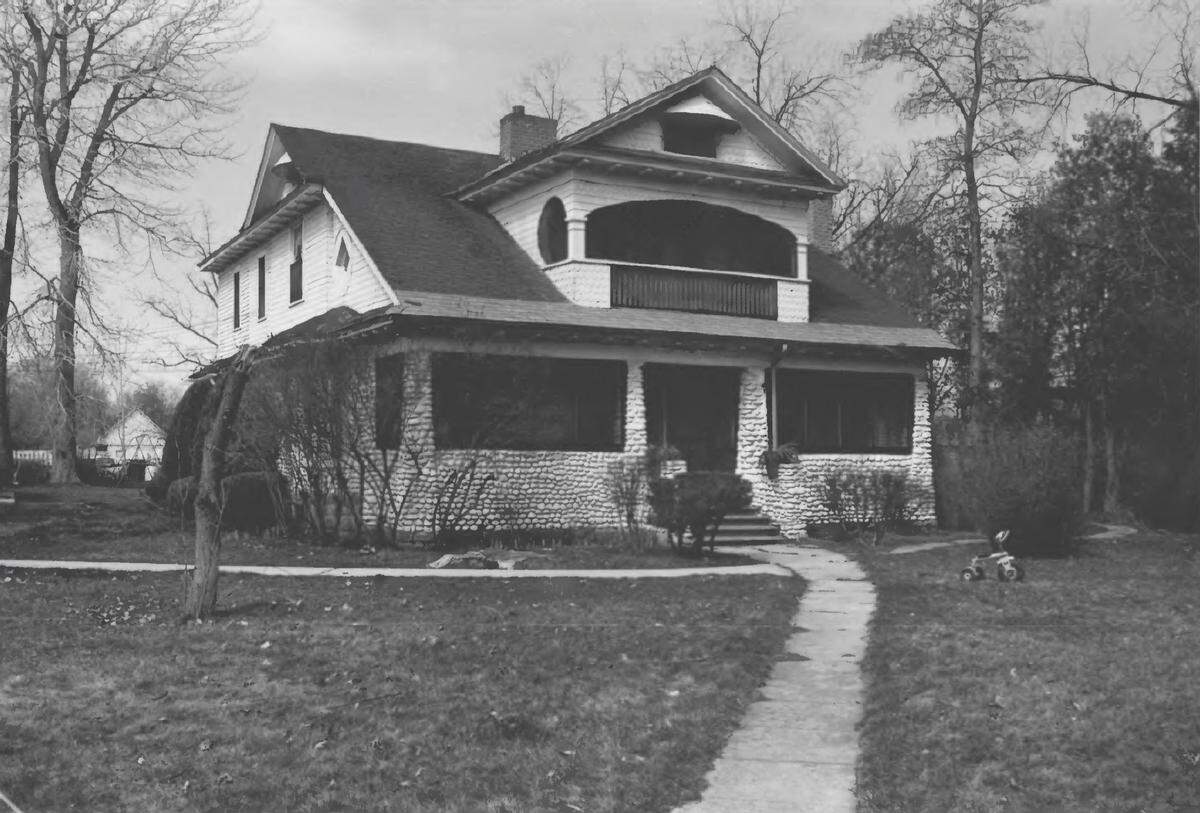
If you’ve driven down Broadway Avenue in the last 125 years, you’d likely recognize the white house across the street from Pioneer Federal Credit Union and southwest of the Broadway Park Shopping Center. The 1900-built home, which is listed in the National Register of Historic Places, is decked out in stones gathered from the Boise River and flanked by a large lawn.
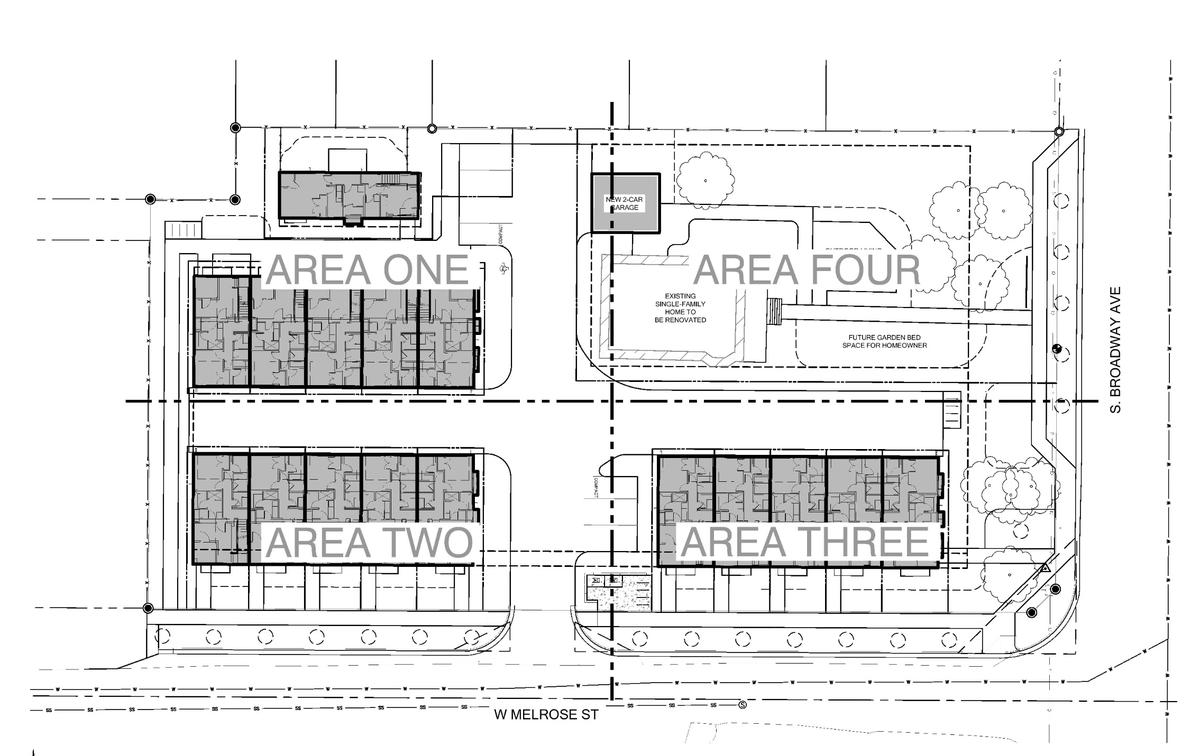
Mature trees filled the property until crews began construction on 15 townhouses and a single-family home around the house. During construction, a fire began in the basement when a worker used a battery-powered grinding tool on a wood cabinet.
The flames traveled upward into the crawl space and first-floor kitchen pantry, Boise Fire Department spokesperson Lynsey Amundson said after the fire. It caused moderate damage, but Amundson said the house was not a complete loss and wouldn’t need a major renovation to become habitable again.
The house and surrounding property is owned by Boise real estate developer Huron Properties. Idaho Secretary of State business records list Jason and Aaron Ellsworth as the managing members. Jason Ellsworth is the founder and CEO of Boise-based renewable energy company Clēnera.
Ben Semple, a landscape architect with Rodney Evans and Partners, said in 2022 that the development team had discussed the building’s future with Preservation Idaho, a historic conservation nonprofit, and Idaho’s State Historic Preservation Office.
“It’s one of the first homes designed (by Tourtellotte and Hummel),” Semple said in 2022. “That is not lost on us. We are preserving that home.”
But three years later, it seems the fate of the house may be in question.
Mike Cook, co-founder of Cook Brothers Construction and the general contractor who applied for the permit, said in letters to the city of Boise that the demolition was a matter of public safety.
“The fire department broke every window on the home to put the fire out,” Cook wrote. “We have had frequent homeless break-ins and feel as if the home is a public safety risk.”
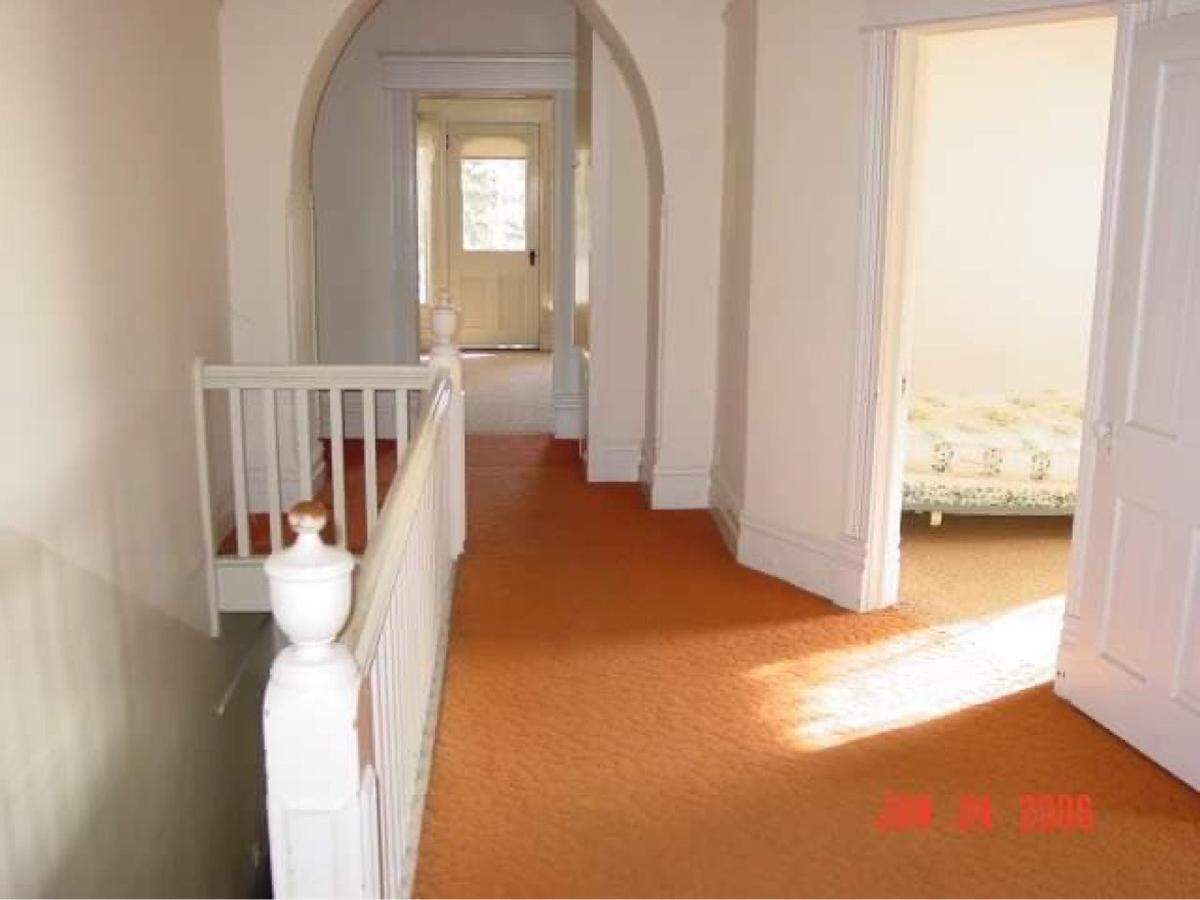
According to Cook’s letters, the fire department also damaged every wall, ceiling and floor while extinguishing the fire. Repairing the home would require removing all the walls on the first floor, replacing and reinforcing the second-floor supports, and removing all the plaster and sheetrock to re-do all of the wiring. Crews would also need to replace most of the plumbing and all of the flooring, cabinets and countertops.
Pictures from a May 1 inspection showed burned structural support beams, smoke damage and spray-painted graffiti on the walls.
“We realized that the cost of these repairs would make it impossible to justify the financial implications required to remodel the home,” Cook’s letter said. “Of course, with enough money anything structurally unsound or not can be repaired.”
But as is, repairs wouldn’t pencil out, he wrote.
“The two choices that we have are to either maintain the boarded-up building in its current condition indefinitely or demolish the structure,” he wrote. “The building is not cosmetically pleasing. It is a hazard to the individuals that continually break in. It is a liability to both the city and the owner. We do not believe the building in its current condition is in the best interest of the owner, the city or the community.”
The company is working on plans for a new structure, but has yet to finalize anything, according to the letter.
Cook Brothers declined to comment by phone, but said that the city still needs to approve the permit and that the owners have not decided whether it would come down if the city permits the demolition.
A long history on Broadway Avenue
Legendary Idaho architects Tourtellotte and Hummel, who also designed the Idaho State Capitol, Boise High School and parts of the Old Penitentiary, designed the home. The firm would eventually become Hummel Architects, which was behind the recent Gibson apartments in Boise and a dorm for Boise State University that is under construction.
According to the register, “The Smith house is architecturally significant as the largest and most flamboyant of the Tourtellotte firm’s early shingled colonial-style houses.”
The home was named after the fruit farmer who first lived there, though the Smiths called it Fairlawn. The Smiths bought the home for $3,000 — or about $114,000 in today’s dollars — and moved into it in September 1900, according to Statesman archives.
The family hosted dinner parties with members of Boise’s elite like William Ridenbaugh, who was the president of the city’s first electric company and helped secure a railroad right of way through the city.
“This is a unique building (in) the colonial style, being a cobble stone building containing modern plumbing appliances and the patent hard-wall plaster now being tried i(n) this vicinity,” the Aug. 27, 1900, edition of the Statesman reported. “Mr. Smith’s plastered walls are perfect, without flaw, and as hard as adamant.”
Tricia Canaday, Idaho State Historic Preservation Office deputy, said that though the home is on the National Register of Historic Places, that designation carries no restrictions.
“National Register buildings are torn down all the time without our knowledge or input or opinion,” she said by phone.
The State Historic Preservation Office, she said, has no authority to prevent the demolition of historic homes, nor does the office involve itself in local preservation.
“No one in this office wants to see National Historic Register buildings torn down,” she said. But “we don’t meddle in local programs.”
Instead, regulation has to come from the local level, such as with the city of Boise, she said.
According to Maria Ortega, a spokesperson with the city of Boise, the house does not have historical protected status. However, the city’s approval of the townhouses and single-family home on the property called for the building to be preserved. Demolition would require modifying the previous approvals, she said, which would require future public hearings.
Clearing Boise homes for apartments
Cook Brothers demolished another home on Monday at 1508 W. Boise Ave., on a triangular lot a quarter-mile south of the Boise State University campus. The company plans to build a 26-unit, four-story apartment building on the property. The home is about a mile northwest of the Nathan Smith House.
The city of Boise approved the development, but neighbors opposed it and filed an appeal to the Boise Design Review Commission. They said it lacked adequate parking, didn’t fit the neighborhood and could create traffic and safety issues at the six-way stop the property sits on.
The Design Review Commission approved the project anyway, and then neighbors appealed the decision to City Council, saying that it didn’t fit city code or building standards.
“The approval of this project was flawed in procedure and violates numerous sections of the zoning standards,” neighbor Judy Osborne, who filed the appeal, said during the City Council’s April 15 hearing on the appeal. “The flaws result in contradictions in the modern zoning code, staff failing to apply standards correctly and the Design Review Commission failing to address these errors.”
Osborne said the property sits in a zone for “compact” development rather than “high density,” that the proposed building did not have large enough setbacks and that the city did not notify enough nearby residents.
The Design Review Commission only considers features of development such as landscaping, sidewalks, parking area circulation and appearance of buildings, according to the city of Boise. Proper zoning falls to the Planning and Zoning Commission.
.jpg "1508 W. Boise(1).jpg")
The Boise City Council denied that appeal in April in a 4-1 vote, with Council Member Luci Willits the lone dissenter. The approval cleared the way for the demolition and for construction to move forward.
“The Design Review Commission has a very narrow scope of review, and in appeal we have an even narrower scope,” City Council President Pro Tem Meredith Stead said. “I wasn’t convinced that the Design Review acted in error in this application.”
She said most of the arguments presented during the appeal were over the development and issues with city code — not over the Design Review Commission’s decision.
The 1936-built home lacked any sort of historic classification and several other nearby homes were also built between 1925 and 1950, according to Ada County Assessor’s Office records.
.jpg "1508 W. Boise(2).jpg")
According to a letter from neighbor Nicole Kinney, the lot has “sat virtually empty for the vast majority of the time I’ve lived here over the past decade.”
“I find my neighbors and landlords who are appealing this development to be selfish and short-sighted,” Kinney wrote. “Did (the neighbors) expect that the thoroughfare we live on would not continue to be developed? If so, they were stupid to think that. It’s high time that this location be put to use.”
Kinney said she looked forward to denser, taller housing in the neighborhood, and to adding more neighbors to “this vibrant and economically diverse neighborhood.”
This story was originally published May 23, 2025 at 4:00 AM.