Former Boise council member has not given up. She wants compensation for lost seat
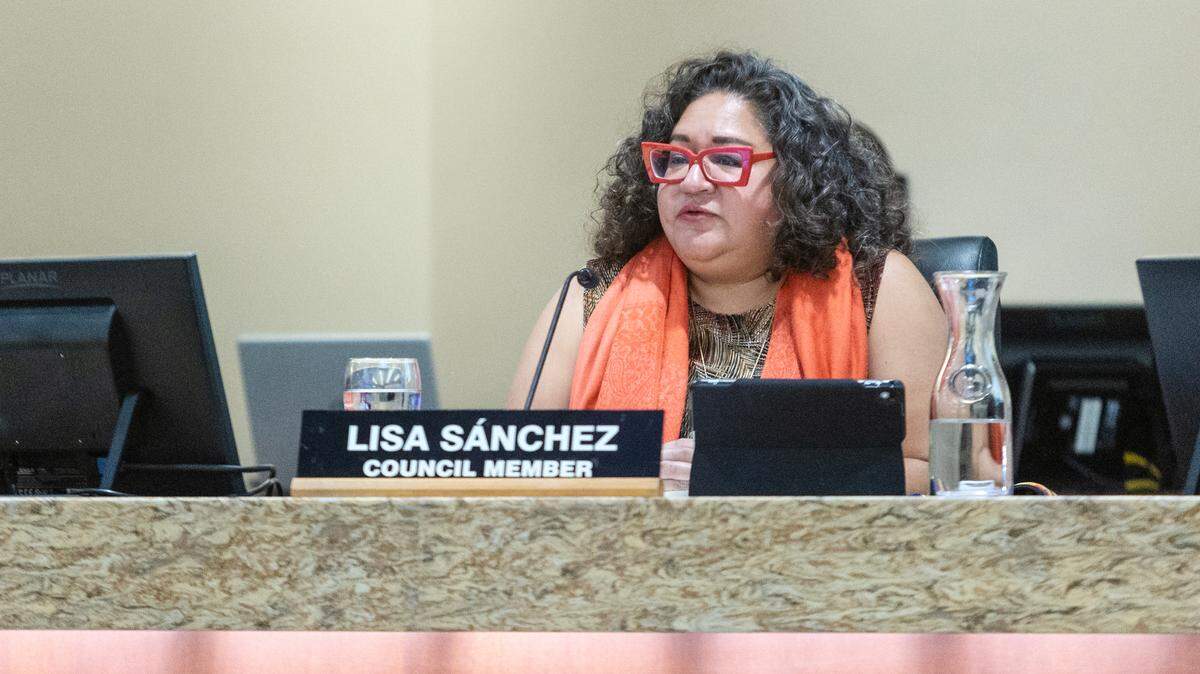
It’s been two years since former Boise City Council Member Lisa Sánchez lost her seat after she inadvertently moved outside of her district, but she’s still fighting.
Sánchez filed an appeal in her lawsuit to the Idaho Supreme Court in November 2023, not long after she lost her case in lower court, and she appeared Wednesday morning for oral arguments in front of the state’s five justices.
The former official is asking the Supreme Court to reverse 4th District Judge Derrick O’Neill’s ruling that elected representatives have to keep their residence in their district.
Sánchez doesn’t expect to get her seat back — council elections have taken place since her term would have ended — but she is seeking compensation for lost wages and benefits, according to her attorney, Wendy Olson.
Olson did not specify an amount.
Sánchez’s argument hinges on Idaho statute 59-901, an 1890 law passed by the Legislature that mandates under what conditions an elected official’s seat should be considered vacant.
Among others — including death, resignation and commission of a felony — one of the listed reasons for vacancy is an official “ceasing to be a resident of the state, district or county in which the duties of his office are to be exercised, or for which he may have been elected.”
Sánchez was elected in 2021 as a Boise council member for District 3, which covered the North End and part of Northwest Boise. Sánchez said her 2022 lease in the North End was not renewed, so she moved to a new rental that wound up being two blocks outside of District 3 at the end of the year, according to previous Idaho Statesman reporting.
The city sent Sánchez a letter in January 2023 informing her that she had essentially vacated her seat by moving outside of her elected district.
“When she learned she had inadvertently moved outside of District 3, she immediately moved back,” Olson said. “She intended at all times to serve her two-year term.”
Boise Mayor Lauren McLean then chose Latonia Haney Keith, the board chair of Boise’s urban renewal agency, to fill the seat. McLean said she did not appoint Sánchez because she did not believe there was enough support from other council members, who had to approve the mayor’s choice, the Statesman previously reported.
Attorneys argue over legislative intent
Olson argued Wednesday that when Idaho legislators wrote in 1890 that you must be a “resident of the state, district or county,” they were not referring to a city council district.
“It does not apply to cities, because city council districts did not exist when (Idaho statute) 59-901 was passed,” Olson said.
The Supreme Court justices questioned Olson on this position, asking why she was not addressing the statute’s use of the words “every elective civil office,” and whether Olson was arguing that a resident of one city could serve on the council of another city.
Olson said she thought it was possible that under the current state law, a nonresident could serve on the council of another city.
She pointed to the statute’s lack of the word “city” as evidence for her argument.
“In making sure that someone lived within the geographic boundaries of the place that they were going to serve, they chose not to include cities,” Olson said. “And their intent was not to include cities because they specifically did not.”
Daniel Williams, attorney for the city of Boise, argued that Olson was making the statute much more complicated than necessary.
“This Court has said time and again, just because lawyers may disagree and promote different readings of the statute, that doesn’t mean the statute is ambiguous,” Williams said. “In fact, it’s hard for me to imagine a statute on this subject being any clearer, because it simply says “every elective office shall be vacant upon the happening of the following events.”
Williams acknowledged that Sánchez simply made an error in moving, but maintained that taking residence elsewhere, even for a short period of time, legally meant she had vacated her seat.
“There’s no question that former City Council Member Sánchez had no intent to negate her office, and it was an unfortunate kind of combination of mistakes that led her to cease to be a resident of her district,” Williams said. “But from the city’s point of view, we can’t rewrite the statute and make an exception.”
The Idaho Supreme Court said it would take the matter under advisement and issue a decision at a later date.