‘Hard to overstate the value’: Harris family donates geothermal water rights to city
Simmering water courses underneath the Boise Foothills. Millions of gallons are piped downtown to heat buildings, warm pools and melt snow on the sidewalks.
And now, thanks to a donation from a prominent local family, the city is set to quadruple its geothermal capacity.
The Harris family, known for its land ownership in the Barber Valley area, particularly the Harris Ranch development, and for its contributions to the community, donated its geothermal water rights to the city — a donation the city says is priceless.
Boise has the nation’s largest geothermal system, and one of the oldest systems in the world. It provides renewable energy to about 100 buildings in downtown Boise.
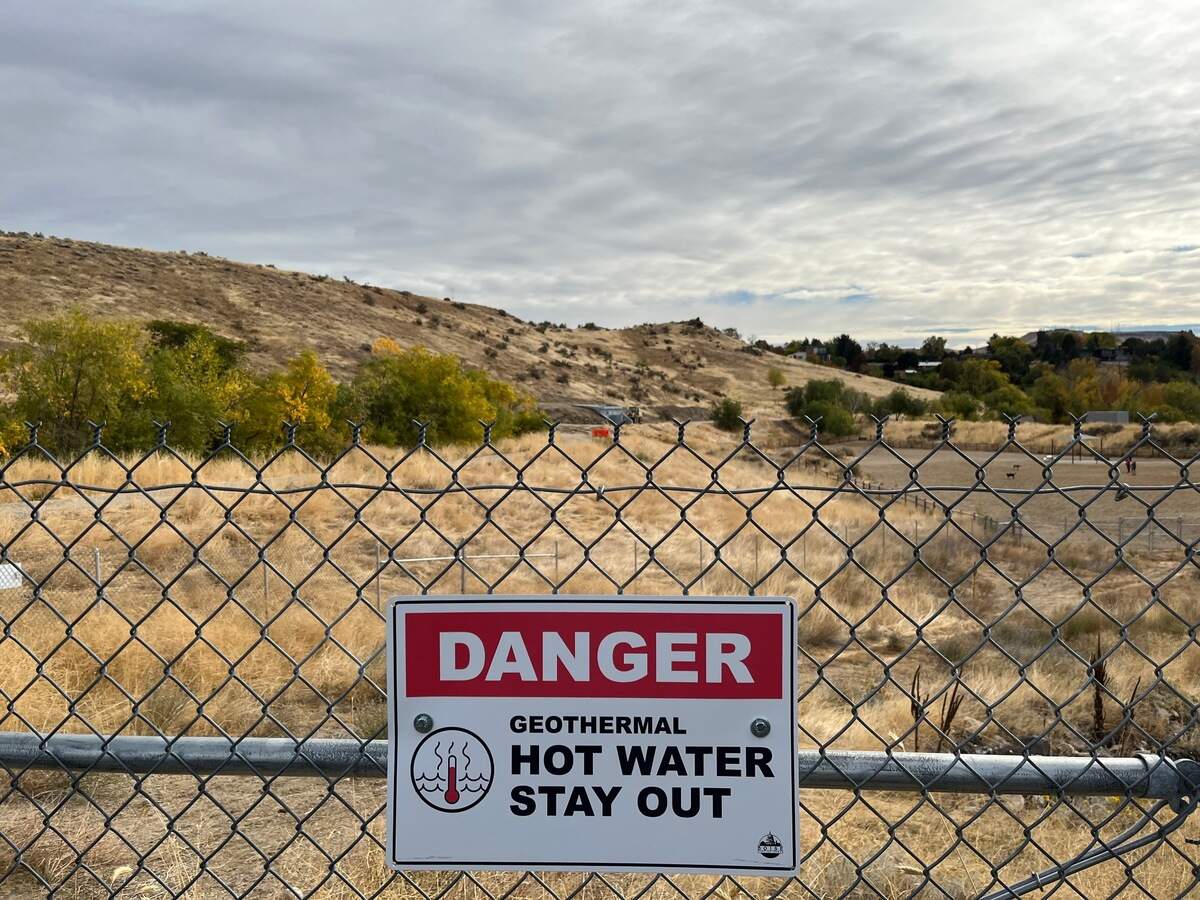
Geothermal refers to heat generated by the earth. As radioactive material beneath the surface decays, it gives off heat that can warm water below the surface to high temperatures. Some of that water rises up naturally as hot springs, but it can also be brought up with pumps and used to heat buildings.
City leaders see the natural ground reserves as a key component in Boise’s shift away from nonrenewable energy.
“This gift ensures that more Boiseans will have access to this incredible renewable energy source that cleanly warms our buildings,” Mayor Lauren McLean said in a news release.
The city has the rights to pump 385 million gallons per year. The donation from the Harris family brings that capacity to over 1.5 billion gallons.
The family donated 7.2 cubic feet per second of geothermal water rights to the city and kept 0.2 cubic feet per second for itself to potentially use in the future, Doug Fowler, president of Barber Valley Development, told the Idaho Statesman. Fowler said the water rights were obtained in the late 1970s and never used to their potential.
“It is purely a gift for Boise’s future,” Fowler said by email. He said it will have no financial benefit to the Harris family. “The city of Boise has the expertise and infrastructure to maximize the benefit of the geothermal rights for both the community and the environment.”
Steve Burgos, the city’s public works director, said the city plans to use the water rights to expand its geothermal system into other areas of the city and to bring buildings that already sit along the geothermal lines onto the system. The city’s system, which heats City Hall, the Ada County Courthouse, the Treasure Valley YMCA, Jack’s Urban Meeting Place (also known as JUMP) and dozens of other buildings, is among four main geothermal systems downtown and in East Boise.
The water rights have no monetary value, Burgos told the Idaho Statesman. “It’d be hard to say, like, this is worth X amount of money, what they donated,” he said. “It is hard to overstate the value, though, to us and the community, the donation is so significant.”
The city’s system covers 6.5 million square feet. The water comes from a fault line along the edge of the Boise Foothills, where water below the surface is 177 degrees. Boise uses deep wells at the Military Reserve to pipe the water out. It arrives at buildings downtown at about 170 degrees.
“It’s hard to overstate the value of what’s being donated,” Burgos said. “It’ll allow us to keep adding buildings onto the system without skipping a beat.”
In line to join the system is a proposed apartment building with up to 40 stories across from Simplot’s headquarters on Front Street.
The transfer of water rights from the Harris family to the city still has to be approved by the state Department of Water Resources, according to Burgos. The Boise City Council gave its approval at a work session on March 4.
The state has a separate system that heats the Idaho Capitol, the only statehouse in the nation to use geothermal. The Veterans Administration has its own small system that it uses to heat the Boise VA Medical Center. The oldest of the four systems, the Warm Springs Water District’s system, heats many of the homes along Warm Springs Avenue in East Boise. Founded in 1892, it is the world’s first geothermal heating system.