Boise police advised venues on stricter concert rules. Upset fans of one genre responded
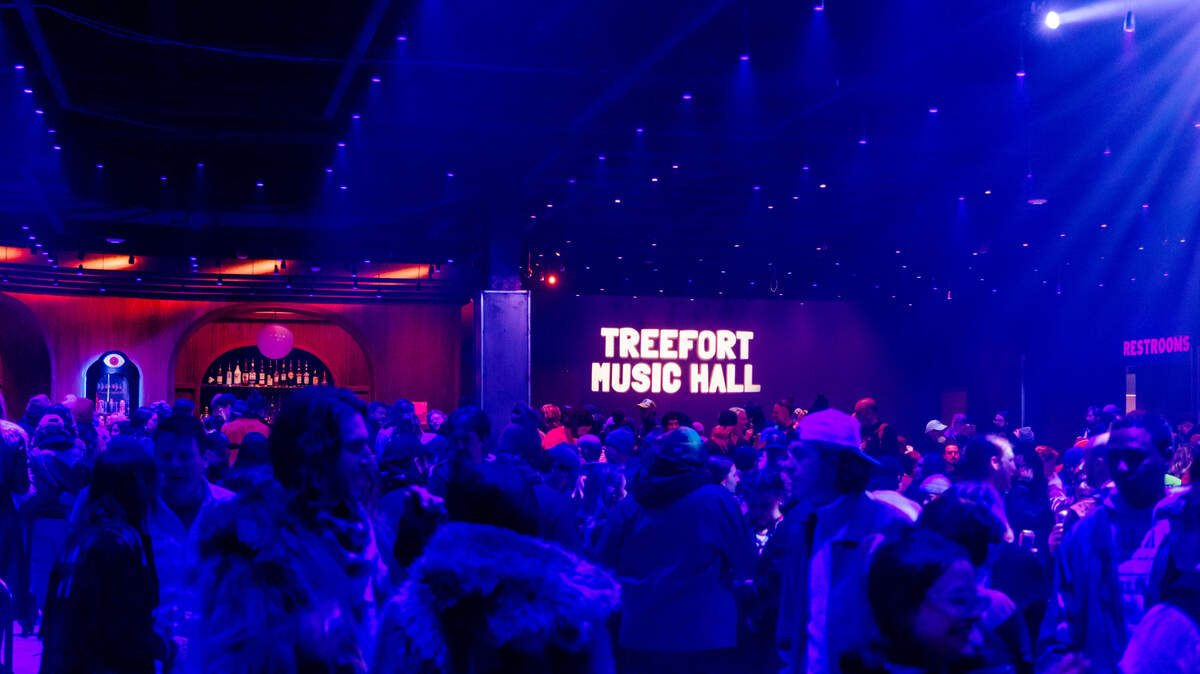
Last summer, Boise Police Officer Cameron Kolos invited representatives from local concert venues to a meeting to discuss “recent issues with Reggaeton and other similar type events,” according to emails obtained by the Idaho Statesman.
In meetings and emails, officers alleged that Reggaeton events drew gang members and in an internal report said that shows often had cartel ties. Police recommended local venues adopt dress codes and age restrictions on certain shows to prevent problems such as underage drinking and fights, according to internal documents and the chief.
But the dress codes drew criticism as being racist and discriminatory, and one venue eventually reversed its actions after a meeting with Latino advocates.
“Reggaeton has teenagers-wanting-to-dance ties,” said Esteban Galan, who is Latino and an advocate with the American Civil Liberties Union of Idaho program SOMOS. “It’s part of our cultural experience. Music is what brings celebration.”
Reggaeton, a genre of music from the “sonic crossroads of Panama, Jamaica, Puerto Rico and the U.S.,” according to Pitchfork, has dealt with criminalization and scapegoating: In the 1990s and early 2000s, for instance, Puerto Rican police raided homes and “confiscated cassettes,” according to The New York Times.
The 2017 hit “Despacito” is considered Reggaeton-Pop, according to The Atlantic.
Boise Police Chief Chris Dennison said officers have advised similar dress code measures for rap and EDM concerts, although he said there are no other events officers believe have cartel ties. He said the “broader issue” for police was underage drinking at all-ages events. Dennison, who told the Statesman he had not heard of Reggaeton before, dismissed concerns that the tactics could be considered racial profiling.
“This is a best standard for policing to provide direction to mitigate problems,” he said.
Boise Police Department actions
In June 2024, officials with the Residence Inn Boise City Center emailed a representative of Treefort Music Hall and the Boise Police Department about persistent noise concerns from the venue, according to internal emails. Officer Ed Moreno wrote that if the noise continued, a representative from Treefort could be cited for disturbing the peace.
But Moreno also brought up another issue: “Specifically, Treefort Music Hall has been hosting ‘Reggaeton’ nights,’” Moreno wrote. A previous Reggaeton event had “created a high volume of calls for service on our part.”
A couple of weeks later, Boise Police’s Bar and Gang Enforcement teams were at the venue to monitor a Reggaeton function, according to emails received via a records request.
Officers met several times with Treefort Music Hall and other venues to discuss “high-risk events,” and police determined that Reggaeton nights were drawing in a number of people “identified as gang members,” according to internal emails. Dennison, the police chief, said the department wanted to engage “proactively” with downtown businesses.
Law enforcement said that 18-plus Reggaeton concerts, rap shows, college nights and club DJ nights were contributing to a spike in violence and gun incidents, according to an internal report. One type was causing the most issues, the report said: “18 and Up Reggaeton shows became the most consistent type of event correlated to the violence and gang activity.”
Yet from May 2024 through January 2025, the music hall and the Knitting Factory in Boise “chose to continue running these high-risk events,” an officer wrote in a report, adding that it seemed as if Treefort had even “increased the frequency.” However, attendance seemed to be down because of the increased number of shows, according to the report.
As to how police could determine that concertgoers were gang members, Dennison told the Statesman that some people are flagged under state law, and other times, people appear to be affiliated with gangs based on their clothing.
“You know, groups of guys going in wearing similar clothing, some tattoos can distinguish that,” Dennison said. “People sometimes proclaim they are gang members.”
Potential “gang” clothing includes monocolor hats, specific types of baseball caps or groups wearing specific colors, Dennison said. The types of possible “gang” tattoos vary, he said.
Very few police citations
From January 2024 to April 2024, police filled out two police reports at the Treefort Music Hall, although the department withheld six pages from those in the records request. In January, someone was hit in the head by a snowball near Treefort Music Hall. In the other, police were holding someone’s cellphone, wallet and a suspected controlled substance.
Boise police filled out at least three reports at Treefort Music Hall last summer, according to a records request spanning April-September 2024. However, the department withheld 61 pages for a variety of reasons, including cases that were still ongoing.
On July 6, officers were sent to a fight involving two exes at Reggaeton Landia, records showed. On Aug. 10, officers responded to a report of a violated civil protection order around the time of a Reggaeton night, and on July 30, police came to investigate a stolen bike.
Treefort Music Hall’s security team provided information to law enforcement about issues with intoxicated guests, underage drinking and people who get aggressive, according to another email. In all of 2024, though, police issued just one citation for underage drinking at the venue, out of 168 issued last year citywide, according to public records.
Dennison said officers don’t necessarily issue citations or make arrests at the exact location of underage drinking.
At a College DJ Night in January of this year, however, police issued nine citations for underage drinking, an internal report said. Those were the only ones police issued at Treefort Music Hall in the first two months of the year, out of 25 issued throughout the city of Boise, according to information obtained via a records request. The College DJ Night was not a Reggaeton event.
In February 2025, police told Treefort Music Hall and the Knitting Factory that Reggaeton and other events with DJs would have to be 21 and older instead of 18 and older. If there were any violations, the venues would face issues with their liquor licenses, according to an internal email.
The Idaho State Police’s Alcohol Beverage Control division recommended the changes, according to spokesperson Aaron Snell.
“This wasn’t geared specifically toward Reggaeton,” Dennison said, referring to the department’s actions. “This is all events downtown to ensure that the community can come and enjoy these venues, regardless of whether they have a gang affiliation or not.”
Spokespeople with police in Meridian and Caldwell said they have no issues with Reggaeton events. In Nampa, police spokesperson Carmen Boeger said there are no issues with a Reggaeton concert as long as “laws, ordinances and permitting are followed.”
Downtown Boise venues and Reggaeton
Treefort Music Hall and the Knitting Factory both told the Statesman they have had dress codes for Reggaeton events.
In a statement, Boise Police Department spokesperson Haley Williams said, “How events take our recommendations or decide what to include … is up to them.”
Eric Gilbert, CEO of Duck Club Entertainment and director of the just-completed Treefort Music Fest, told a concerned citizen that its dress code was “developed in consultation with local law enforcement,” according to emails obtained by the Statesman. The “adjustments” were made because of safety concerns, “including incidents involving potential gang activity.”
The dress code at Treefort Music Hall was no hats, no jerseys and no bandannas, Gilbert said. At least one event held at the music hall has also had a rule for “no baggy clothes.”
The goal, encouraged by the Boise Police Department, was to reinforce the message that gang activity wasn’t welcome, Gilbert said in an interview. The dress codes weren’t in place until police advised the venue about potential gang issues, he said.
“It’s a fun-loving crowd that just likes to come and dance,” Gilbert told the Statesman, and he noted that the venue has about one Reggaeton event a month. “There’s been times there’s been fights and stuff we’ve dealt with, but not many major problems.”
There were fewer altercations after the dress-code rules went into effect, Gilbert said, but he’s not sure a direct correlation can be made.
“A lot of times when you’re a venue and you’re just being threatened by law enforcement, they can take your liquor license … you’re backed up against a wall,” Gilbert said during a recent panel discussion on inclusive cultural spaces.
Michael Crosby, the general manager of the Knitting Factory, told the Statesman in an email that Reggaeton event attendees may not wear jerseys, bandannas, gang-related attire or more than two articles of clothing of the same color. Gang-related attire is “determined at staff’s discretion,” he said.
“We communicate on a regular basis with Boise Police on issues they might be seeing in the downtown area to keep an eye out for,” Crosby wrote. “As well as periodically touch base with the gang unit on patterns they are seeing to keep an eye out for as well.”
Crosby did not return additional requests for comment.
At least one advocate said that what the forbidden clothes represent was being misconstrued. Melanie Figueroa, who leads the ACLU of Idaho program SOMOS, said people are just celebrating their culture.
“A bandanna does not make me a gang member,” Figueroa said. “This is our cultural style.”
Leonardo Gonzalez, another Latino advocate, said he took the dress codes and police involvement personally.
“It feels like it’s directed towards me,” Gonzalez said. “Especially after these dress codes were only enforced for Latino shows, it becomes a thing where it’s like, is it just me?”
In a report, police also said that Boise State University’s ExtraMile Arena canceled a large August 2024 concert after officers advised them of Reggaeton risks. A school spokesperson, Stephany Galbreaith, told the Statesman, however, that a Fuerza Regida concert was canceled because of a failure to return a “signed licensed agreement.”
When asked whether the university had conversations about police’s concerns with the group or event, Galbreaith suggested the Statesman put in a records request for a “more thorough review.”
Fuerza Regida, which Ticketmaster describes as a “genre-crossing música mexicana group,” did not return a request for comment. The Statesman has not received the results of the Boise State records request.
Community concerns over dress codes
Robert Holden attended an electronic dance music (EDM) show at Treefort Music Hall last summer, he told the Statesman. Holden wore jeans, a T-shirt and a hat, and had no issues, he said. The next day, he went to a Reggaeton event, wearing almost exactly the same outfit. Security approached him and told him that hats weren’t allowed, he said.
“I think this treatment is unfair,” Holden told the Statesman. “It’s only applied to these Latin-themed events.”
Others expressed concern about the impact of stricter dress codes specifically for Reggaeton events.
In mid-March, a handful of advocates with SOMOS met with Treefort Music Hall representatives to talk about the rules. Figueroa said it’s hard to hear how the genre is perceived, when for her, Reggaeton is about joy.
“Regardless of where the policy is coming from, there was harm done to our community,” Figueroa said, referring to the meeting. “It is a racist policy that you chose to enforce. We were there to create accountability, we were there to build that relationship.”
There can be problems when organizations start judging what gang-related attire might be. In 2023, the ACLU of Idaho released a report on gang-related dress codes in the Nampa and Caldwell school districts saying that they disproportionately targeted Latino students, according to previous Statesman reporting.
At both districts, policies that prohibit students from wearing certain clothing meant that Catholic rosaries were banned for some. Nampa and Caldwell police also considered items such as flannel shirts, Boston Red Sox caps, Nebraska Cornhuskers clothing and khaki pants to be gang attire, according to previous Statesman reporting.
Ultimately, Gilbert, the CEO of Duck Club entertainment, told the Statesman in April that the meeting with SOMOS helped Treefort Music Hall finalize plans to eliminate the dress code.
“We feel better empowered to stand our ground on that,” Gilbert said in an email.
Several Idaho Latinos described listening to Reggaeton music since childhood with family and friends. Damaris Rueda, who is part of the SOMOS program, said the music was a “really positive soundtrack to my life.”
“We want to show everyone that being Latino is not inherently violent,” Rueda said. “If Treefort does anything that helps move that narrative along … that our culture is something to be celebrated, I’m all for it.”
Transparency about Reggaeton, concert rules
In an internal police email this January, Officer Moreno told colleagues that a reporter was asking questions about the Reggaeton dress codes. Moreno wrote some background information about Reggaeton’s alleged gang ties and how hats “are used by Gang members to solidify gang unity.”
Tim Brady, a Lieutenant with Boise police, replied to Moreno’s email to say the department had responded to the reporter, just without mentioning hats or gangs. Police largely avoided directly answering the Statesman’s questions about the Reggaeton events for over a month.
Williams, the police spokesperson, said in an email to the Statesman that a discussion between police and venues labeled internally as a “Reggaeton meeting” actually “ended up being a broad conversation about many events.”
She also initially told the Statesman the “issues” cited were “actually about many events and event management.” Later, Williams clarified that those issues, at Reggaeton and other events, were underage drinking, fighting and noise.
“Reggaeton and other similar events that often feature a DJ rather than a live performer, tend to have more of a focus on drinking alcohol than on watching a performance and that can lead to additional problems due to alcohol consumption, specifically with minors,” Williams wrote.
The Boise Police Department also declined interview requests until the Statesman was about to receive a new set of internal emails. The Statesman first reached out for an interview Jan. 30; police on March 13 offered to schedule a meeting with a reporter.
Dennison, who was hired as Boise police chief in August to take over for the retiring Ron Winegar, said the department acted as transparently as it could.
“There’s no member of this department, myself in particular, that would be opaque in anything that we’re doing,” Dennison said.
This story was originally published April 7, 2025 at 4:00 AM.