Catholic Diocese threatens Boise with lawsuit over denial of church office building
Since 2020, Boise’s Catholic Diocese has been trying to build an office building near the North End. But it has come up against substantial opposition in public hearings, especially from neighbors who took issue with the three-story, 20,000-square-foot building’s proposed height.
The Boise City Council caught the church off guard in April by denying its request to modify an existing development agreement at the site, 902 N. 8th St. Council members said the project’s lack of housing or retail made it too big of a stretch to align with the original agreement’s intent to build a mixed-use building at the site.
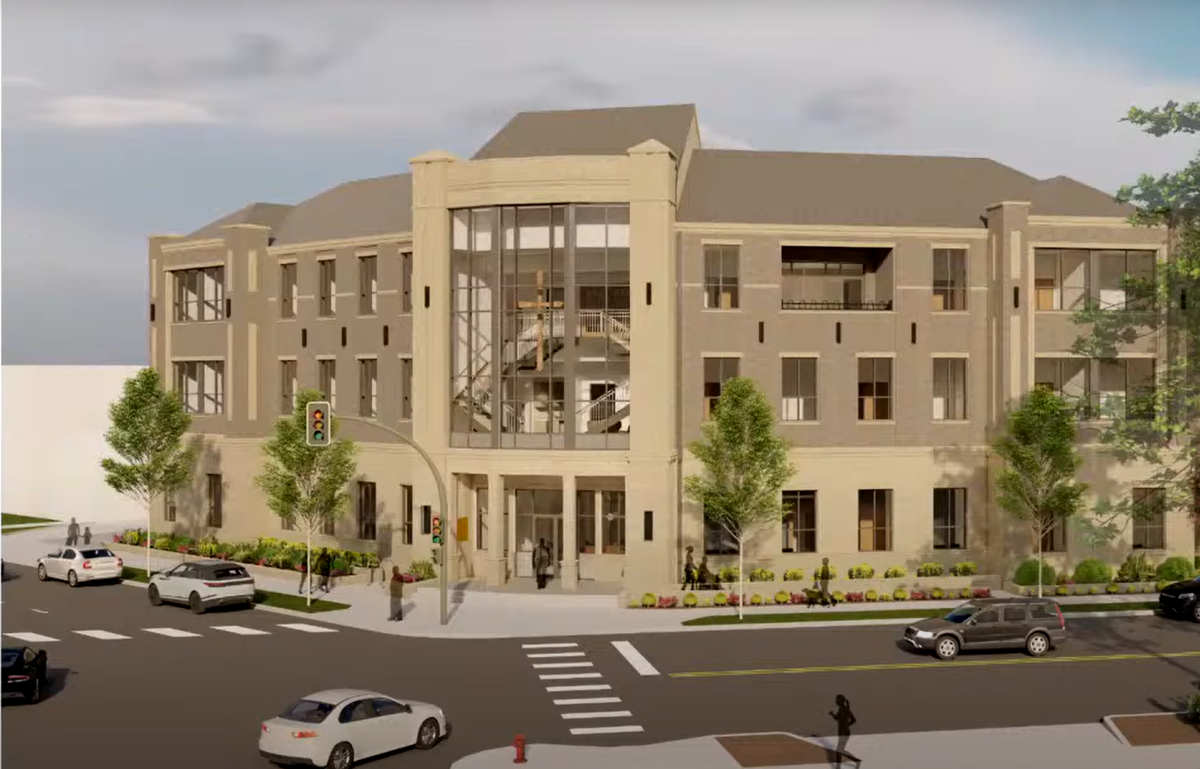
That denial essentially killed the project, Council Member Luci Willits said at the time. Christian Welp, the church’s director of special projects, called the decision a “complete surprise.”
In the months since, the church has worked with neighbors to compromise on the building’s height, and modified its request to include a “public-use space” on the building’s first floor. But it has also come to view the City Council’s requirement to include housing as a “government burden” on its exercise of religion, according to a statement the church released Friday.
The church accused the city of violating federal and state laws and implicitly threatened a lawsuit if the city did not approve the church’s appeal, and modified application, at an upcoming hearing. The diocese separately sent a letter to Mayor Lauren McLean and the City Council outlining the legal limits to the city’s authority to deny the diocese’s application, the statement said.
“City regulations that require the diocese to include housing substantially burden the diocese’s religious exercise according to state and federal law,” the statement reads. “Put simply, the offices for the administration of the Catholic Church in Idaho should not have to include apartments or condos for the city at large. Requiring the diocesan offices to build city housing and be a landlord violates these federal and state statutes.”
Still, the diocese “remains committed” to compromises it has offered “to try to find common ground for approval and avoid the delay inherent in a lawsuit,” the statement says.
In April, Council Member Jimmy Hallyburton expressed opposition to the project’s lack of retail and housing. On Monday, he told the Statesman that “Boise City Council sees dozens of rezones, conditional use permits, variance requests, appeals and other types of development applications every year,” making decisions “based on city code, our comprehensive plan, and public comment, all through the lens of our state statutes and legal authority.”
“The Catholic Diocese was treated no differently in their original public hearing,” he added. “I’m confident they will not be treated differently when they return in August.”
Maria Weeg, a spokesperson for the city, did not immediately respond to emailed requests for comment Friday on the church’s allegations.
At the April meeting, Willits, who opposed the decision, called it a “darn shame.”
“The reality is, the Catholic Diocese (is) not going to put retail in the bottom of their facility,” Willits said. “They’re not going to put an ice cream shop. That’s not what it’s for.”
The church’s statement frames the diocese’s efforts to construct the office building as part of its “religious exercise.” But at public hearings in February and April, when the church faced questions from neighbors about why the building was not being zoned as a religious institution, its representatives characterized the building as an office space that would not be used for worship.
“We feel it is disingenuous to claim freedom of religious exercise at this point after arguing for months that it is not a religious project, but just an office building,” Erik Hagen, the North End Neighborhood Association’s president, told the Statesman in an email.
In its statement, the church expressed optimism that the changes to its application would warrant the City Council’s approval. It cited a meeting with the neighborhood association in which an agreement to lower the building’s proposed 62-foot height prompted “nearly all” of the association’s board members to vote in support of the project.
“The board deeply appreciates the diocese representatives and the architects for their flexibility and willingness to finally consider and address our concerns,” Hagen wrote. “Their decision to make these changes ... was a significant factor in our decision to support them.”
Will the church really sue the city if it denies the modified request?
“That’s a great question,” Welp told the Statesman on Friday. “We’ll cross that bridge if we come to it.”
The City Council is set to decide about the church’s modified request after a public hearing at 6 p.m. Tuesday, Aug. 20, at City Hall.
This story was updated on August 5, 2024 to incorporate a comment from Council Member Jimmy Hallyburton.
This story was originally published August 2, 2024 at 4:39 PM.