
Hate crime or free speech? Pro-Palestine protesters say they exercised their rights
The arrest of two pro-Palestine protesters who were charged with malicious harassment for allegedly targeting a Jewish man in downtown Boise has raised questions about what was actually said and the limits of free speech.
The two women were arrested on July 4 after a confrontation with a man who was wearing a kippah and sitting at a restaurant patio with his wife. Ada County prosecutors charged the women under Idaho’s hate crime law.
But Boise police have pointed out nuances in the state’s law. A flyer sent by spokesperson Haley Williams on July 11 in response to Statesman questions shows how to report hate crimes. In it police define hate crimes and state that free speech provides a right to express ideas without government censorship.
The flyer provided examples of speech that are offensive but generally not a crime, such as using racial slurs, accusing someone of trespassing because of their race, or telling someone to go back to their country.
If someone spray-paints a swastika on a home to intimidate someone from a protected class, that can be malicious harassment. But if it’s random or not specifically aimed at someone, that is investigated as general property damage, according to the flyer.
“Our statute doesn’t criminalize the pure speech. … The speech must also be accompanied by an act,” Jodi Nafzger, an education lawyer at The College of Idaho who has taught both criminal law and criminal procedure, told the Idaho Statesman. “... Difficult decisions have to be made in the field by the officers making the arrests.”
Protesters charged under Idaho hate crime law
Idaho’s malicious harassment statute bars targeting someone based on their race, color, religion, ancestry or national origin by injuring them, damaging their property or threatening them. The women were charged with threatening to injure the man, according to their criminal complaints.
A preliminary hearing in the case is scheduled for Aug. 2.
The prosecution and defense offered conflicting reports of what happened during the confrontation. Prosecutors and police said during an arraignment and in a press release that the women targeted the man, instigated an argument, and accused him of “killing babies” and being “OK with massacre” by Israeli forces in Palestine. In social media video posts, the man’s wife said one of the protesters’ phones struck him in the face during the argument.
The defense attorney, Mike French, said the two women were demonstrating for an end to U.S. funding of Israel when the man “advanced” toward them, yelled at them and batted one of their phones. The two women exercised their First Amendment rights by protesting, French said. The Boise to Palestine protest group said the two were wrongfully arrested for exercising their right to freedom of speech.
Boise Police Chief Ron Winegar called the women’s actions “hateful” behavior. Boise police receive human and civil rights training, Boise police spokesperson Haley Williams said, and are taught to recognize and investigate bias-related crimes.
Law enforcement agencies across the country this year have shut down pro-Palestinian protests and arrested demonstrators, and reckoned with questions over whether certain speech should be considered antisemitic. The confrontation and arrests in Boise further illustrated the tension over violence and war in the Mideast, which escalated after Hamas militants attacked Israel on Oct. 7, with reports totaling more than 1,200 killed and hundreds taken hostage.
Israel responded with massive military force. Palestinian health authorities said Israel’s military campaign has since killed more than 38,000 residents in Gaza, according to Reuters.
Free speech or hate speech?
The question of Idaho’s limitations on First Amendment rights, and whether its hate crime law applies, played out earlier this year. In May, Coeur d’Alene city attorneys decided not to charge a suspect who was accused of racially harassing the University of Utah women’s basketball team while players and people with the program were staying in Coeur d’Alene for NCAA Tournament games in Spokane. The decision cited the suspect’s free speech rights, according to previous Statesman reporting.
Dan Berger, the founder of Idaho Israel Alliance, recently observed in a Statesman opinion piece that what the two women said was protected speech. However, he said the situation was escalated by the alleged phone strike.
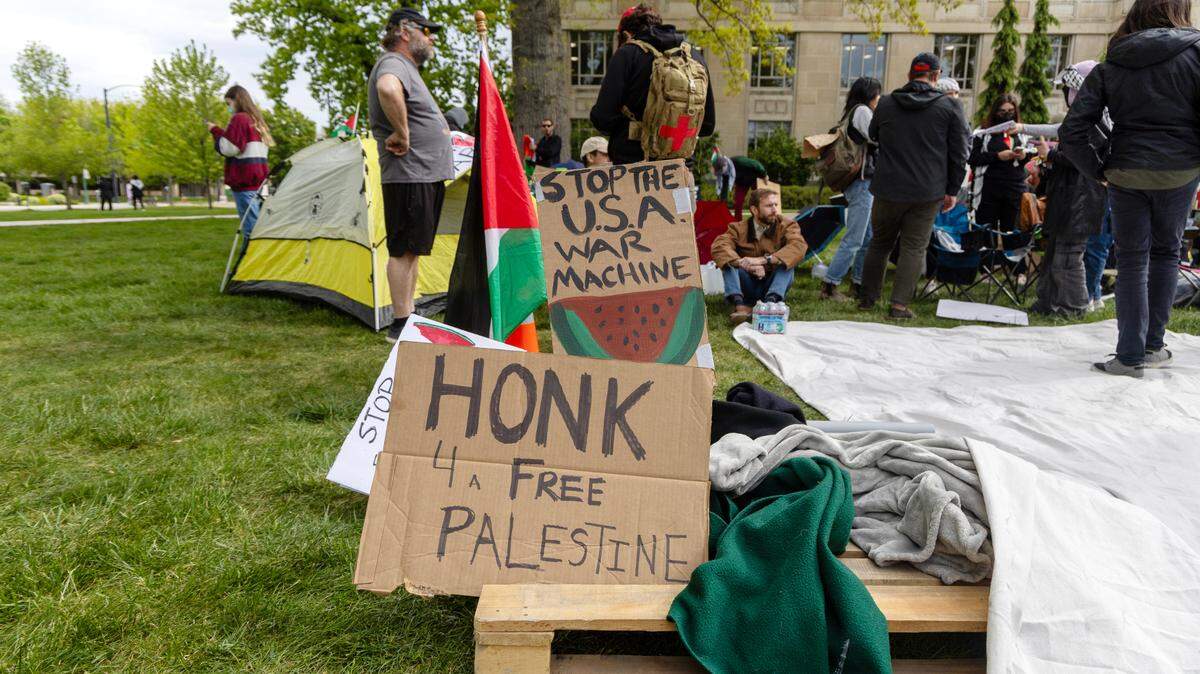
“The larger issue is that the cycle of hate speech, provocation and violence is being allowed to fester in our city on state property,” Berger wrote, referring to the pro-Palestine protest downtown at the Capitol Annex. The state sued protesters over the demonstration in May, arguing, among other things, that demonstrators were camping, damaging grass, and marking up and obstructing sidewalks in violation of Idaho statutes.
Aaron Terr, director of public advocacy for the Foundation for Individual Rights and Expression, told the Statesman that it doesn’t matter who is targeted by someone’s hateful views because the government must be neutral in the “marketplace of ideas.” Since the Oct. 7 attacks, many people have faced punishment and censorship amid a “supercharged” debate, Terr said.
“We’ve really seen how often people sharply disagree about the meaning of certain language — for example, whether it’s antisemitic or it’s merely critical of the Israeli government,” Terr said. “It’s for the people to deliberate and work out those disagreements among themselves.”