In our Reality Check stories, Idaho Statesman journalists seek to hold the powerful accountable and find answers to critical questions in our community. Read more. Story idea? Tips@idahostatesman.com.
Complaints against former Boise Police Chief Ryan Lee prior to his departure covered managerial decisions, allegations of a hostile work environment, the implementation of hybrid patrol vehicles and concerns about an officer with a history of use-of-force issues, according to documents made public as part of a lawsuit against the city.
The documents — a 31-page report by the city’s former police oversight director, who was fired in December 2022, and a 21-page third-party review by a Boise law firm — were revealed after 4th District Judge Jonathan Medema declined motions to seal them from the public in former Office of Police Accountability Director Jesus Jara’s lawsuit.
Boise Mayor Lauren McLean asked Lee to resign in September 2022, after KTVB published an article detailing some of the allegations against Lee, in what McLean called an “unprecedented step” of publicizing personnel complaints.
Just six months before that, a third-party review of the various complaints concluded that there wasn’t “any single incident” that warranted placing Lee on administrative leave, and added that some officers’ complaints simply “second-guess(ed)” Lee’s decisions.
Notably, however, the independent review, which was done by the law firm Bevis, Thiry, Henson & Katz, did not include interviews with Lee or any of the police force members.
The Idaho Statesman attempted to uncover the entirety of the complaints — and submitted public records requests for the reports — for almost two years, but was denied access by the city on grounds that the documents were personnel records. That changed with Medema’s ruling in the Jara case.
Boise-based attorney Ryan Henson, who works for the law firm the city hired, said in the third-party review that there also were concerns Lee made “hostile” or “demeaning” comments, which Henson found weren’t a question of criminal behavior or department violations, and instead seemed like a “disagreement with Chief Lee’s management style.”
He added that some “policies, procedures and personalities” could be addressed.
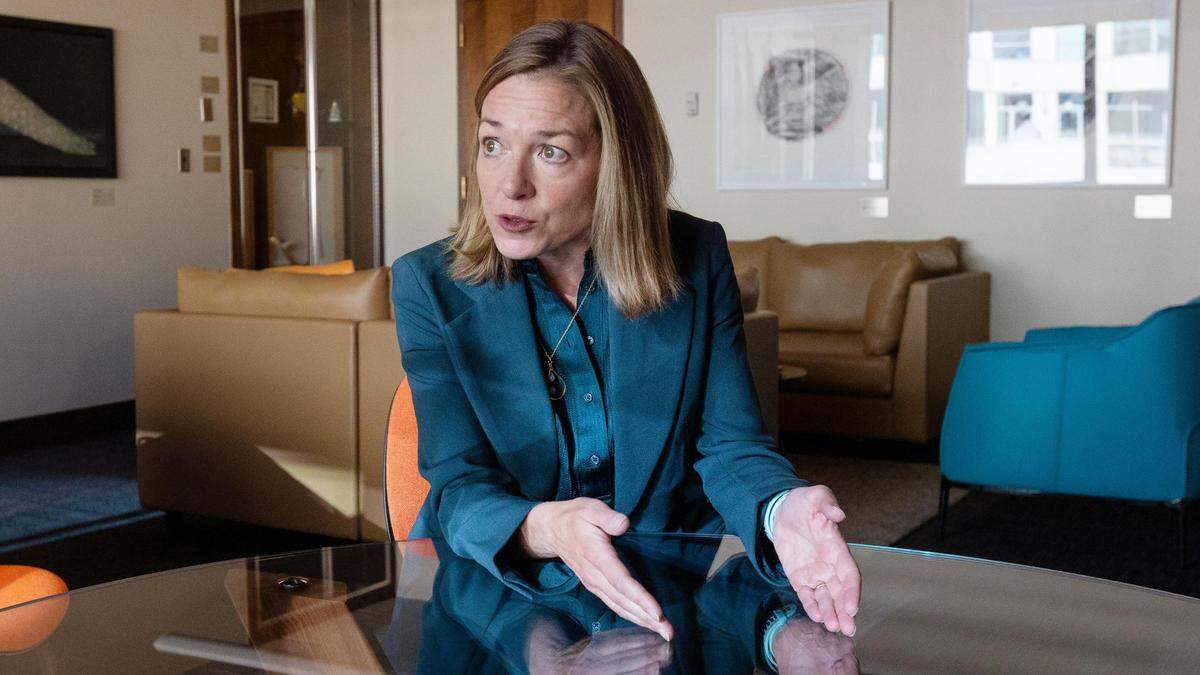
In an October 2022 interview with the Idaho Statesman, Boise Mayor Lauren McLean said officers were “venue shopping” their complaints about then-Police Chief Ryan Lee. Sarah A. Miller smiller@idahostatesman.com
“To allow a forum where the decisions of the Chief of Police are subject to review would be detrimental to the morale of the Boise Police Department and undermines the authority of the position of chief,” Henson wrote in the report.
Bill Mauk, an attorney representing Lee, told the Statesman in a phone interview that he believes Henson’s report “to a large extent” exonerates Lee, but added that the former chief was never interviewed or provided a copy of the complaints.
“Employees, particularly public employees, are entitled to due process. It’s a constitutional guarantee,” Mauk said. “Due process, as an elementary matter, requires notice of the charges, knowing who made the charges, the facts that are being relied upon, the representation of counsel and the opportunity to respond to the allegations that are being made.
“He was forced out by the mayor, and never allowed any element of due process.”
Henson’s review was at odds with recommendations made by Jara, who sent an April 2022 memo to McLean and her Chief of Staff Courtney Washburn that suggested Lee be placed on paid administrative leave until a “fair and thorough investigation” could be completed.
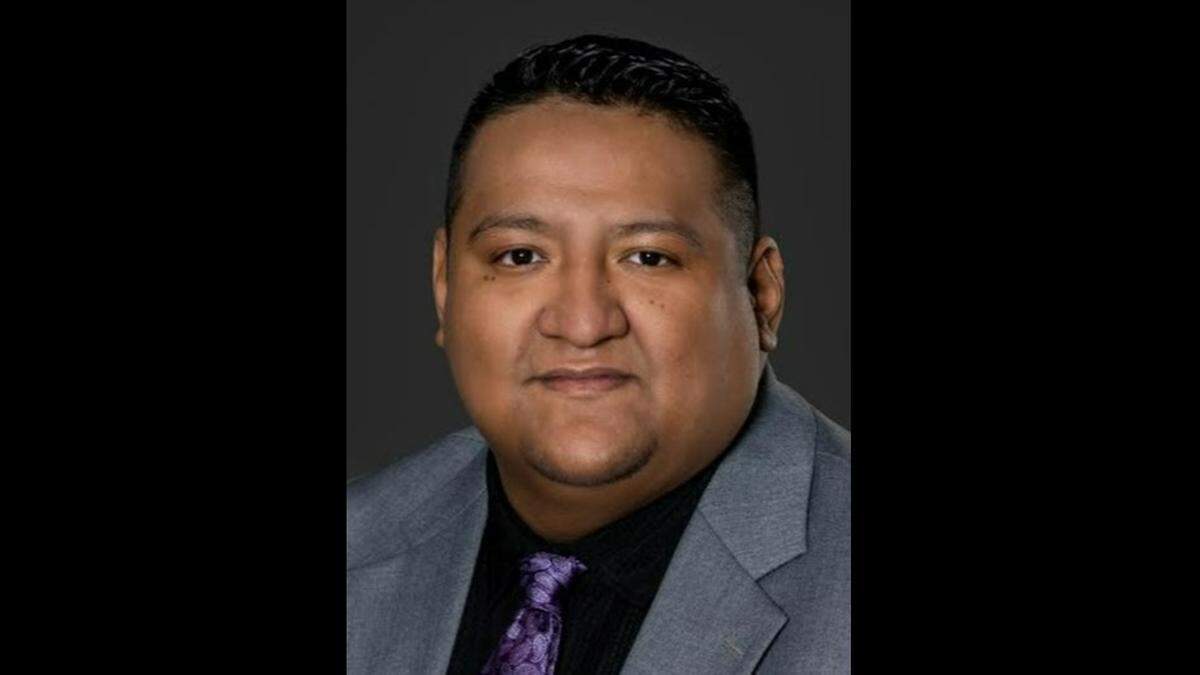
Jesus Jara was nominated to be the full-time director of the Boise Office of Police Accountability on in August 2021. He was fired in December 2022. City of Boise
The mayor’s office declined requests for an interview with McLean and to answer a list of questions, citing the ongoing Jara lawsuit. This list included questions about why Henson didn’t interview Lee or any Boise Police Department employees, and whether access to those employees was considered.
McLean, during a deposition in Jara’s lawsuit, said Henson was tasked with determining whether policies or procedures were violated by reviewing the complaints, and if they had been, an “investigation would have ensued.” In her deposition, Washburn referred to Henson’s review as a “thorough investigation.”
McLean previously declined to identify the law firm involved in the Lee assignment, noting that the firm’s findings were “squarely in the personnel space.” Attempts to reach Henson were unsuccessful.
Medema ruled against the city’s efforts to keep the documents confidential, saying they should no longer be considered personnel because the city took an “adverse employment action” against Lee. Medema asked the city and Jara’s attorneys — who didn’t want anything sealed — to refile hundreds of pages of documents publicly, and those were released as a part of Jara’s lawsuit.
“You have a choice either don’t file these or … when you file them electronically, you can’t mark them as confidential,” Medema said.
Complaints about Boise officer with excessive-force history
Several of the complaining officers raised concerns about Boise Police Officer Tyson Cooper over allegations that Lee gave preferential treatment to Cooper, who had a checkered history, because they practiced martial arts together.
“The consensus from the BPD staff that met with (the Office of Police Accountability) is that Officer Cooper should no longer be on the force,” Jara wrote in his report.
Though the reports redacted Cooper’s name, the Statesman was able to identify him based on matching details from an incident detailed in Jara’s report. In November 2019, Cooper handcuffed and threw a Black teenager onto the sidewalk, according to body-camera footage obtained by the Statesman.
Boise Police Chief Ron Winegar called the arrest “troubling” and “unacceptable.”
Boise Police body-cam video of an arrest on Nov. 26, 2019, shows a 17-year-old Black youth on the sidewalk in handcuffs shortly after police officer Tyson Cooper threw him onto the ground. Boise Police Provided
Cooper faced a discipline board review and was placed on a performance plan to address his use-of-force and de-escalation skills, according to Jara’s report. Less than two years later, he was placed on restricted duty because of another incident.
In between that time, from September 2020 to May 2021, there were four documented incidents that saw officers raise concerns about Cooper to Jara — including an incident in which Cooper allegedly choked a man several times during an arrest, according to Jara’s report.
In May 2021, Cooper was assisting two officers when he placed his left hand on the suspect’s neck, “choking” them into compliance, according to Jara’s report. The report said Cooper continued to keep his hands on the suspect’s neck and at one point pushed down the person’s head — while their face was directly on the street — with “significant pressure.”
While Cooper was taking the suspect to jail, he pulled his patrol vehicle over because the suspect had taken off their “safety helmet,” which was placed there during the arrest, along with extra restraints. The suspect said it was causing them to sweat too much, to which Cooper responded, “tough s**t, now I am pissed,” Jara’s report said.
Jara said Cooper then grabbed the suspect using different choking and restraint techniques. After this incident, the police department’s Internal Affairs division opened an investigation into Cooper and recommended that Lee place the officer on restricted duty, according to Jara’s report.
Lee rejected doing so — a move ultimately reversed by then-Deputy Chief Winegar — and several officers raised concerns about their relationship in their complaints.
Cooper was hired in 2016 and has had nine use-of-force investigations, nine citizen complaints, three department-initiated complaints and one critical incident, which could range from a police shooting to any situation in which someone dies or is physically injured, Jara’s report said.
The law firm’s third-party review found that Lee didn’t violate any policies when it came to Cooper’s status and was authorized to refuse an Internal Affairs recommendation. Henson said that Winegar eventually placed Cooper on restricted duty, so it could be assumed that was done with Lee’s knowledge.
Mauk said Lee was entitled to make his own decision.
“What is Henson supposed to do?” Mauk told the Statesman. “He’s supposed to conduct further investigation to see if Ryan Lee registered a different opinion, and then what? Sanction him for expressing an opinion that may be different?”
While he was deputy chief, now-Boise Police Chief Ron Winegar placed an officer on restricted duty after then-Chief Ryan Lee had not taken action while an Internal Affairs investigation was initiated. Darin Oswald doswald@idahostatesman.com
Henson, however, said Winegar “properly reversed” Lee’s decision not to discipline Cooper, because had the officer been involved in a critical incident without being placed on restrictive duty, the “liability to the city could be compounded with propensity and failure to supervise claims.”
It’s unclear what the findings of the internal affairs investigation were. Boise police spokesperson Haley Williams declined to comment, saying that personnel records aren’t available for public release. Cooper is still employed as a senior patrol officer, Williams told the Statesman by email.
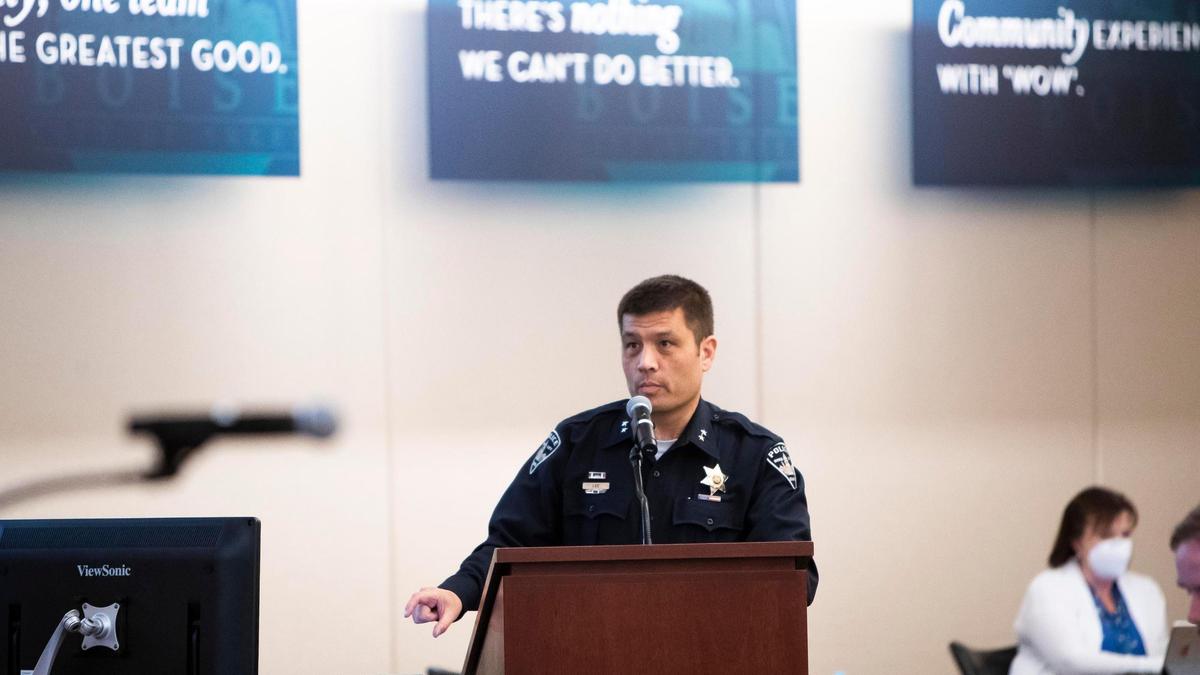
Boise Police Chief Ryan Lee addresses the Boise City Council in 2022. In an interview, Lee’s attorney said that officers who filed complaints against him had a “bone to pick” with Lee. Darin Oswald doswald@idahostatesman.com
‘Orchestrated effort’ to oust Lee, attorney says
Several of the officers who filed complaints against Lee were high-ranking members of the command staff, including three captains, along with investigators from Internal Affairs, according to the reports.
One of those captains, Matt Bryngelson, was later connected to a white supremacist conference and was found to have expressed such views on blog posts, prompting the city to investigate whether racism was a widespread problem in the department.
Lee is Chinese American.
“This was not nine people who all of a sudden decided to make complaints. It was an orchestrated effort by numerous people to ruin Ryan Lee’s employment and his career,” Mauk told the Statesman.
He said that the officers had a “bone to pick” with Lee, were going to find a way to file their complaints and were “forum shopping.” Documents previously obtained by the Statesman showed that officers had difficulty in reporting their complaints to the city’s human resources department and instead were sent to the oversight office or Internal Affairs.
Mauk said many of the complaints were nothing but disagreements with Lee’s managerial decisions, pointing to one filed by two officers that charged Lee with retaliating against them when they raised concerns about the efficacy of changing patrol cars to hybrid vehicles.
“What are they going to do? Do an investigation as to whether or not the chief made the right call on the police cars?” Mauk said.
Mauk also pushed back on claims that Lee hired an officer who had a “history of questionable sexual conduct” from the Portland Police Department, since that’s where Lee spent the majority of his career.
“The people in Boise didn’t like that,” Mauk said. “They thought there was favoritism.”
Boise Mayor Lauren McLean swears in Ryan Lee as the new police chief in a ceremony in 2020. Lee resigned at the request of McLean roughly two years later. Katherine Jones kjones@idahostatesman.com
At least two officers who were hired by Lee from outside of Idaho left after Lee’s departure because they didn’t feel comfortable as men of color in the department, Mauk said.
He also said that Lee conducted an investigation early in his career in Boise regarding concerns about discrimination in the city’s hiring and promotion practices, finding that there was “aberrant statistical evidence” that women and people of color weren’t being hired or promoted.
“Ryan Lee, when he was chief, changed that, and no decision could be made to reject applicants without his final approval,” Mauk said.
Lee was also accused of using derogatory language toward many staff members, including a female employee who said she wasn’t going to meetings anymore because of Lee’s “condescending” and “sexist” remarks, according to Jara’s report.
Henson addressed allegations of a hostile work environment by writing that without an opportunity for Lee to respond, it was difficult to assess whether such complaints were “pervasive” or “relegated to a minority.”
“Without further information and input from Chief Lee, taking the expressed concerns in sum, it appears that Chief Lee’s current management style may be alienating some members of the Boise Police Department,” Henson wrote in the third-party report. “If true, BPD could incur loss, financial and morale, as a result of turnover and lower output from its employees.”
When Lee seeks jobs throughout the country, including at large police departments, the hiring agencies read news coverage of what happened in Boise and want an explanation, Mauk said.
“He can’t offer the explanation because he never had the information, the ability to respond to it,” Mauk said. “It becomes a black hole and he loses his job after job after job, because the way it was handled journalistically, because of the way it was handled internally by the city of Boise.”
Alex Brizee covers criminal justice for the Idaho Statesman. A Miami native and a University of Idaho graduate, she has lived all over the United States. Go Vandals! In her free time, she loves pad Thai, cuddling with her dog and strong coffee.Support my work with a digital subscription