Why was Boise police oversight director fired? Court records shed light on city’s reasoning
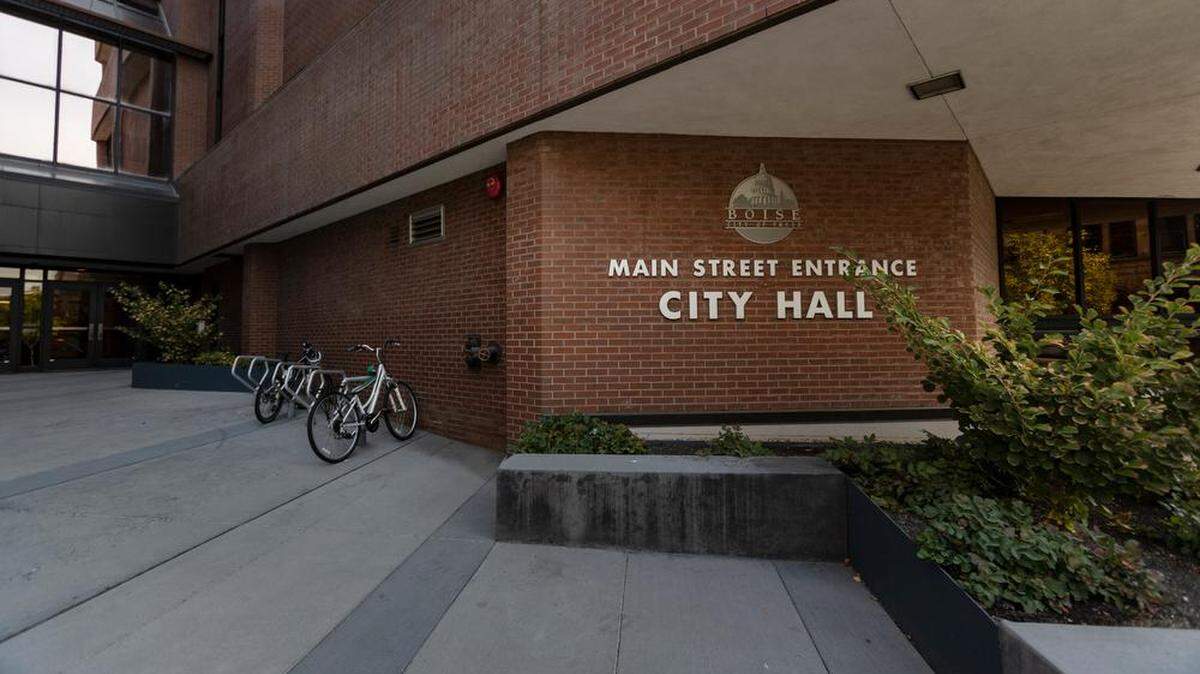
Newly filed court records revealed that Boise city officials’ decision to fire their police oversight director was driven in part by accusations that he leaked a confidential memo to the media, and that he handled officers’ complaints improperly.
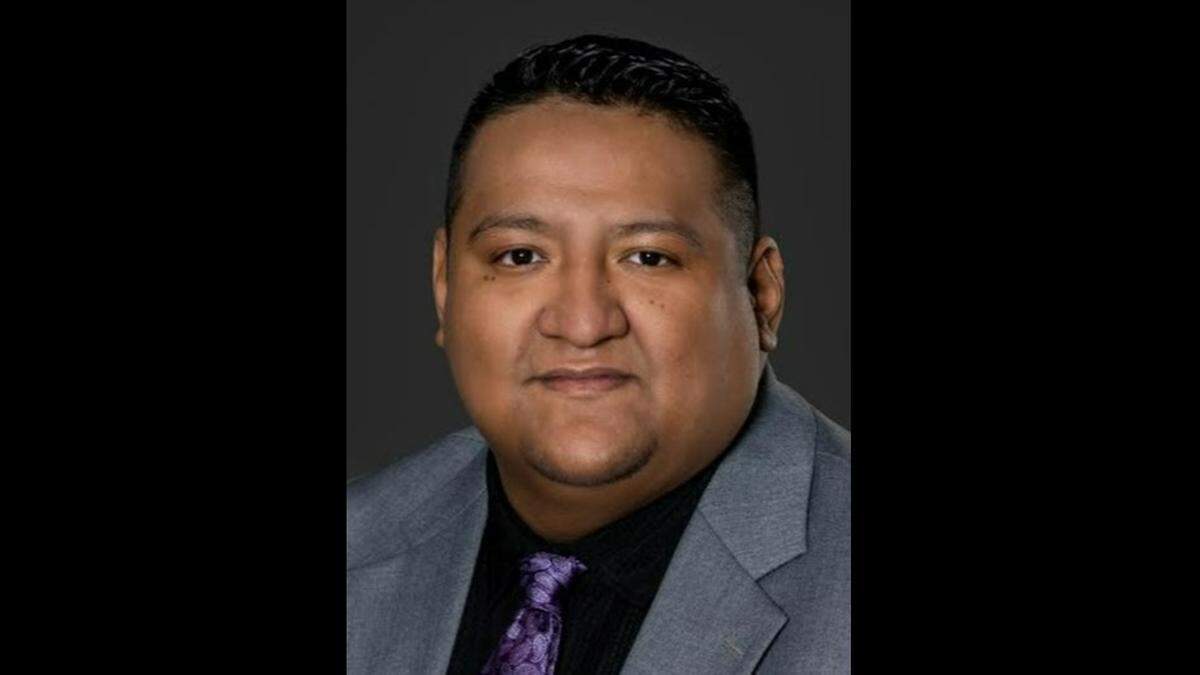
Statements made by city officials in depositions, which were obtained by the Idaho Statesman, shed light on the city’s reasons for firing Jesus Jara. The hundreds of pages of court records were entered as part of a lawsuit Jara has filed alleging that city officials “illegally retaliated against him” for investigating complaints against former Police Chief Ryan Lee.
The confidential one-page memo in question, which recommended that city officials place Lee on administrative leave, was used in a KTVB article that first publicized complaints against Lee. According to the court records, Jara released the memo to officers who had complained but denied providing it to KTVB.
The city hasn’t yet responded to the court filings, but a hearing on the motion has been scheduled for March 18, online court records showed. The mayor’s office declined to comment and did not respond to a list of emailed questions.
To win his case, Jara will need to prove three things: that he engaged in a protected act; that the city took “adverse action” against him; and that there is a “causal connection” between the protected act and the city’s action against him.
Jara’s Boise-based attorney, Grady Hepworth, argued in a memorandum released as part of the Feb. 13 court filings that the city “unreasonably restricted” Jara’s ability to investigate the complaints — specifically, allegations that Lee was interfering in an internal affairs investigation. He also argued that the city violated its own ordinance by demanding that Jara stop taking complaints from Boise officers.
Hepworth also argued there is “strong evidence of retaliation” because the city placed Jara on administrative leave less than two weeks after he filed a grievance against the city, and subsequently fired him.
“Mr. Jara is concerned leadership is trying to avoid investigating and documenting matters that may be viewed as ‘negative’ or may otherwise create political liabilities,” according to the grievance, which was documented in the February memorandum.
Hepworth argued in the memorandum that the “undisputed factual record” proves Jara was wrongfully discharged as the city’s police oversight director for “courageously and professionally” documenting complaints against Lee. Hepworth declined to comment for this story.
Lee resigned at the mayor’s request in September 2022.
Jara’s handling of complaints contributed to termination
When the city fired Jara in December 2022, Mayor Lauren McLean in a news release accused him of “randomly viewing” over 8,000 body camera videos. She called this a “serious violation of the privacy of our residents,” arguing it amounted to “unauthorized surveillance” of people “often at their most vulnerable.”
In excerpts from depositions of senior city officials, Hepworth argued that Jara’s viewing of the body cam footage was legitimate, given concerns that officers in the department were inappropriately muting or turning off their cameras during some interactions. In a declaration, Jara cast the mayor’s accusations in the news release as defamatory.
“I believe the memo was intended to portray me as some sort of voyeur or creep,” Jara wrote.
But comments from city officials, in depositions included as part of the newly released court documents, suggest that Jara’s handling of officers’ internal complaints also contributed to his termination, though the issue was not mentioned in the release.
The depositions aren’t public, and the excerpts that were filed as part of Jara’s motion were heavily redacted and only show a portion of the total transcripts. But in her deposition, Council Member Luci Willits, the one council member who voted against firing Jara, recalled that Jara’s handling of complaints against Lee contributed to the council’s decision to fire him.
“There was concern that he performed the investigation, or pseudo investigation, took the complaints in. That was a concern,” Willits said. “And then later the concern over public video.”
In her own deposition, Boise Chief of Staff Courtney Washburn cited rising concern among council members about Jara’s handling of complaints against Lee — in particular, his decision to disseminate a memo to the complaining officers that contained his recommendation to place Lee on leave. She argued that this action constituted a release of confidential information.
“I specifically remember sending, I think it was an email, it could have been a memo regarding the scope and policies of procedure regarding OPA and asking him to follow them,” Washburn said. “I also sent the email asking him to not violate the confidentiality agreements of the city. And then I remember emailing him at some point on behalf — I think it was a memo from (the) mayor and council. Mayor and council were getting increasingly concerned that Jesus was not doing what they wanted him to do.”
Washburn also alluded to council members’ frustration with Jara for documenting officers’ complaints.
“I had been made aware that he was continuing this activity — meaning, he was taking employee-related complaints from police officers even after being asked repeatedly to stop that practice,” she said. “The mayor, the council president and the council pro tem directed me to remind Jesus that he was not an HR department.”
The city has never disclosed the full scope of the complaints against Lee, though emails previously obtained by the Statesman revealed allegations that Lee retaliated against officers, made derogatory comments about residents and brought “substandard training” to the department. The police agency at the time faced a swirl of complaints, including a widely reported accusation that Lee injured an officer’s neck.
The newly obtained court documents include a February 2022 email from a former internal affairs investigator to Jara raising concerns that Lee was improperly interfering in an internal affairs investigation into a senior officer for making “inconsistent or potentially dishonest” claims about a fatal off-duty shooting. In Jara’s initial lawsuit, he alleged his office was being barred from investigating those allegations.
Lee denied those accusations and said his actions were based in “established practice,” according to prior Statesman reporting.
Jara documented and summarized the complaints into an investigative report and delivered it to Washburn in April 2022, with an additional copy for McLean, according to his attorney’s February memorandum. A sealed copy of that report has been filed into the court record as part of Jara’s lawsuit.
McLean has continually said the complaints represented personnel concerns, adding that a third-party review of the complaints found no crimes were committed and no policies were violated. The city has repeatedly denied attempts by the Statesman to obtain and review those complaints through the public records process, citing privacy concerns for personnel records.
Records highlight confusion, unclear processes
When Willits was asked in her deposition to describe the process for officers to file a complaint, she acknowledged it could be convoluted.
“I always called it, like, a bowl of spaghetti when it came to the police because it’s different for different folks,” Willits said in her deposition.

The depositions offer a behind-the-scenes look at a confusing landscape facing Boise officers trying to file complaints, who in theory could bring those complaints to the human resources department, the Office of Internal Affairs, or the Office of Police Accountability. Senior city officials offered conflicting perspectives about what kinds of complaints should go to each of these offices.
In her deposition, Washburn argued that the Office of Police Accountability was the wrong office to document officers’ complaints against another officer. She said any complaint made by one officer against another needed to go through the city’s human resources department.
But in McLean’s deposition, she acknowledged that human resources had “turned away” officers’ complaints. Agreeing that officers might reasonably be concerned about filing their complaints with the police department’s internal affairs office — given that the chief oversees that office — the mayor said she was “not critical of the decision” for the Office of Police Accountability to receive the officers’ complaints.
Those statements conflicted with a perspective McLean offered in a previous interview with the Statesman in October 2022, when she equated officers’ attempts to file complaints to “venue shopping.” At the time, she said officers were filing complaints through several departments, until they got the result they wanted.
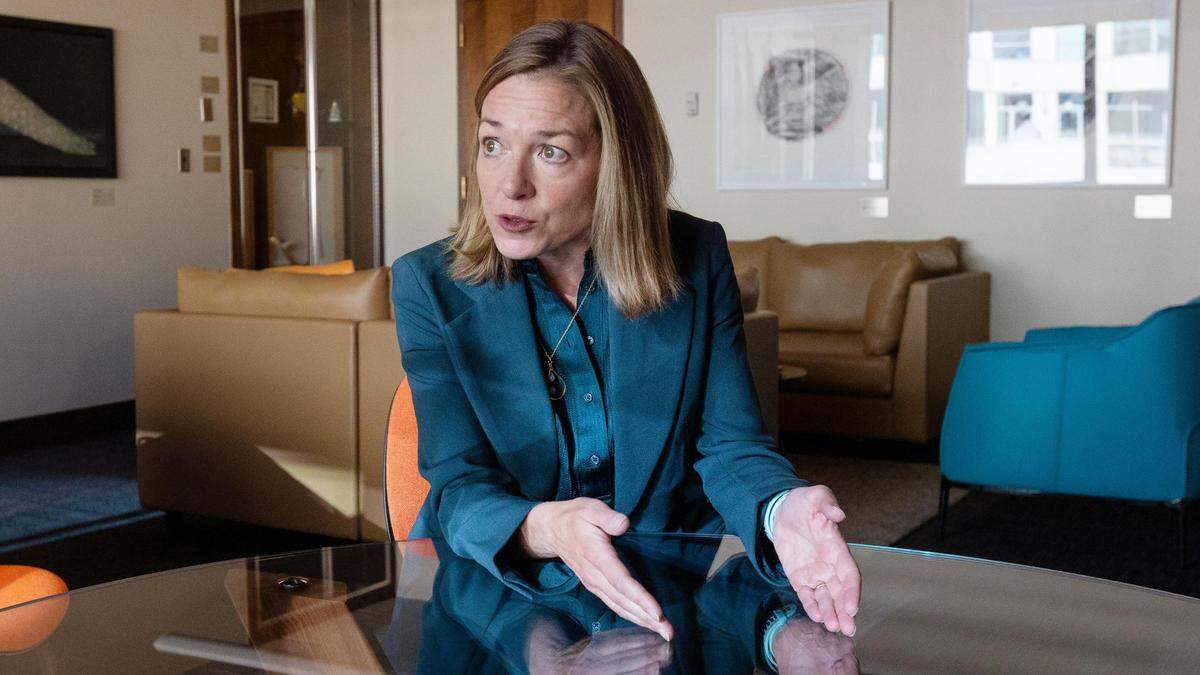
“Complaints filed here, complaints filed here, complaints filed here, complaints filed here,” McLean said in 2022. “No other employee at the city of Boise gets to do that.”
In 2022, McLean said the city needed to create a “clear process” for on-duty officers to file complaints against other on-duty officers. In a presentation from July, Deputy Chief Tammany Brooks said investigations into himself, the chief, or the head of internal affairs should be routed through human resources. He added that any complaints regarding the general police force could be sent to the officer’s supervisor or to internal affairs.