‘Coveted’ property, golf course on State Street to be redeveloped. What’s changing?
A large-scale redevelopment of a golf course along State Street in Garden City received approval on Monday night.
The project calls for converting golf property fronting a main Boise thoroughfare into a multistory apartment and retail development, along with townhouses on the back side. The new buildings would preserve a reconfigured golf course to the southwest along the Boise River.
The 18-hole golf course, called the River Club, was sold to Lincoln Property, a Texas real estate developer. Will Gustafson, who runs the course, previously told the Idaho Statesman that the revenue from the development is needed to finance much-needed golf upgrades, which are expected to cost $10 million.
Lincoln plans to invest $250 million in the project and to redesign 22 acres to build about 750 housing units. Mark Johnson, Lincoln’s liaison with the neighborhood and a former KTVB TV anchor, previously told the Statesman that the site is “probably the most coveted piece of property in Ada County for development.”
The Garden City Council approved the project on Monday, but added conditions. One requirement, which was suggested by the developer following the objections of some neighbors, restricts the heights of buildings closest to a neighborhood along West Plantation Lane to a maximum of 35 feet. The developer had initially proposed four- or five-story apartment buildings for that flank of the project.
A second condition blocks a pedestrian and bicycle connection between the new development and North Fair Oaks Place, a cul-de-sac that extends north toward the golf course.
“This is great for Garden City,” Gustafson told the Statesman on Monday.
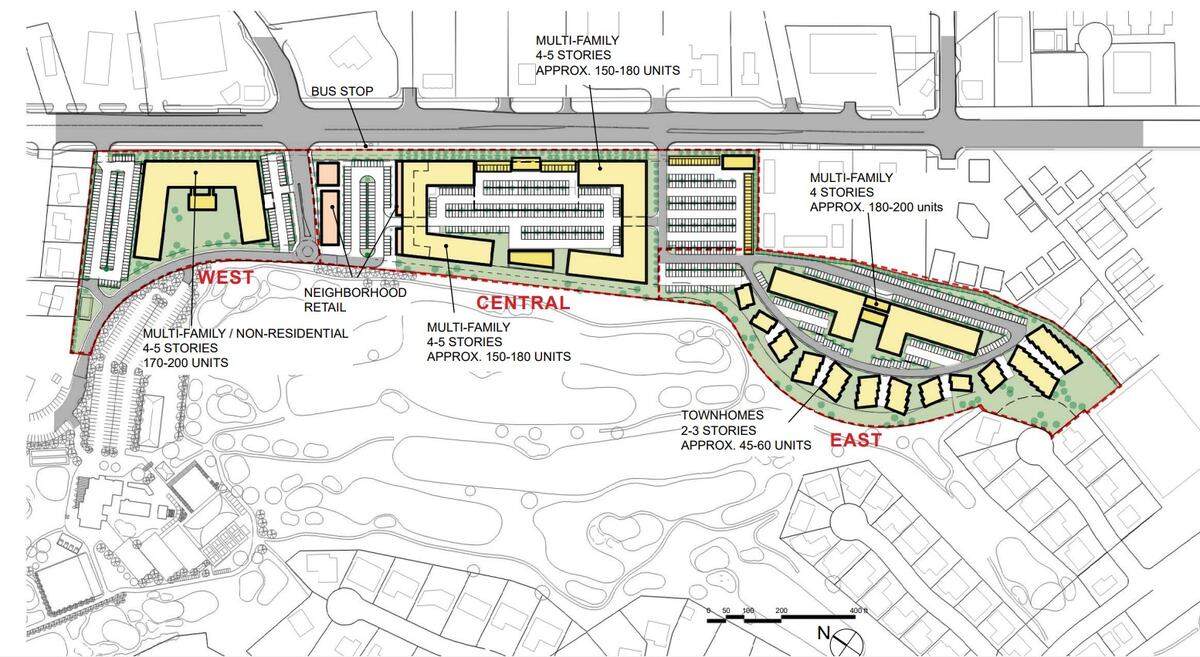
How will the development change State Street?
As the course looks now, cottonwood trees and lawn abut the busy State Street corridor. The proposal to bring more urban development to the property comes as leaders in Boise and elsewhere are pushing to enhance bus service on the street, and to promote higher-density housing so that people living in apartments can use public transit to get around.
Lincoln’s proposal includes up to 30,000 square feet of commercial space, a mix of apartment sizes and walking paths connecting the development to a bus stop.
The golf club has 500 members and abuts a suburban Garden City neighborhood.
Earlier this month, dozens of local residents came to testify about the course, many of whom were opposed to seeing changes in their neighborhood.
During deliberations on Monday, City Council members focused their discussion on the southeastern portion of the development, which is closer to the neighborhood.
Council Member Bill Jacobs said he wanted to see a path connecting the new development with the Greenbelt to the south because he worries about those traveling on bikes or walking to catch the bus along State Street, which has a speed limit of 40 mph.
“I’m concerned about the children,” he said.
Other council members disagreed, saying that bike and pedestrian connectivity would be better along established roads, such as Plantation River Drive to the east. That would mean that cyclists or walkers trying to get from the new commercial development along State Street to the Greenbelt would need to travel east along State before turning south on Plantation River Drive.
The potential for adding a bike lane along Plantation River is up to the Ada County Highway District and might not happen for another decade, Jacobs said.
Council Member Teresa Jorgensen said she opposed a neighborhood connection at all.
“Connectivity in neighborhoods creates conflict,” she said. She added that she “strongly prefers” that connections to the Greenbelt not go through neighborhoods.
A final, written version of the council’s decision is expected in July.
This story was originally published June 26, 2023 at 9:01 PM.