In a first, 5 of Boise council’s 6 members may have to run against colleagues. Will they?
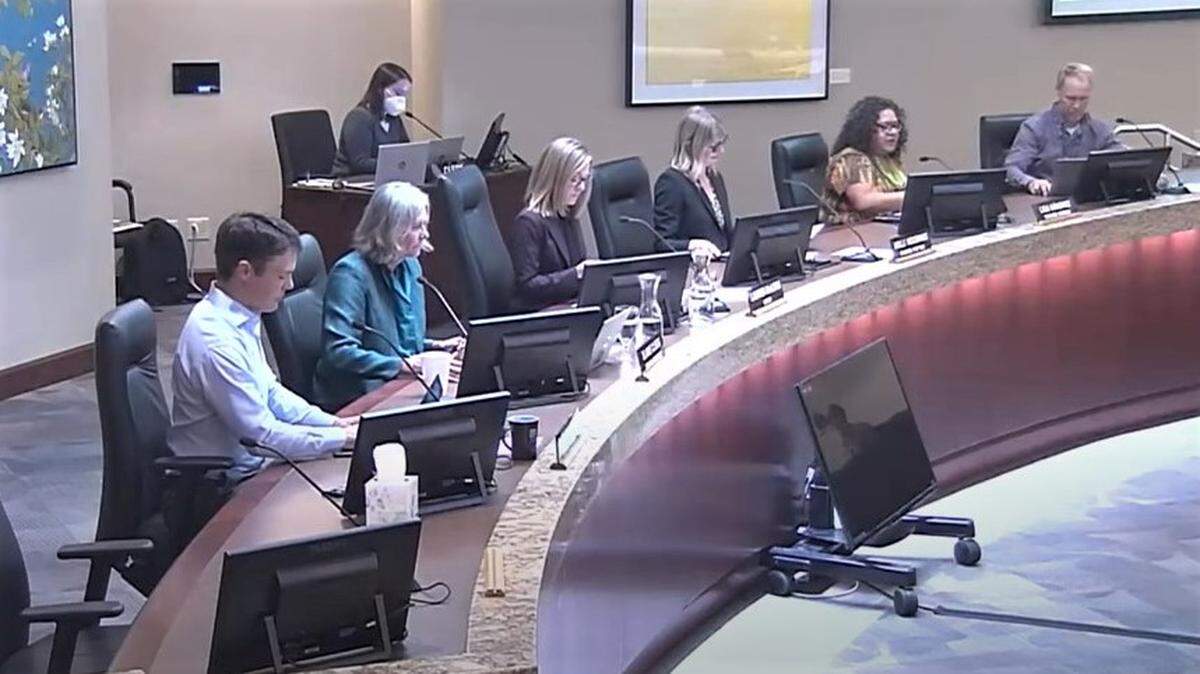
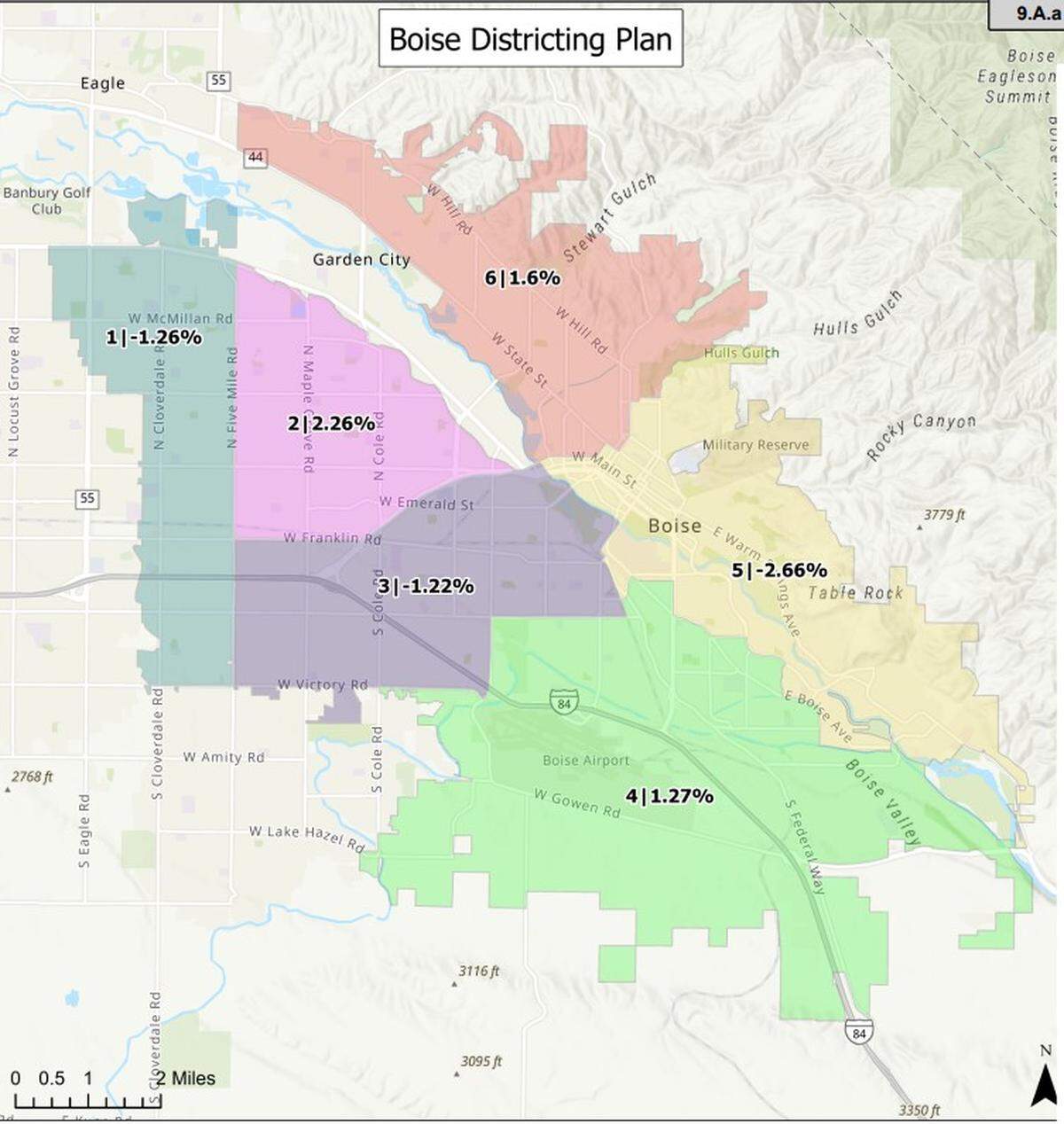
New Boise City Council districts will reshape the body, bringing representatives from across the city to City Hall. The new districts may also pit sitting council members against each other in the 2023 election.
The city’s new map was prompted by a 2020 state law that requires cities with populations over 100,000 residents to elect council members by district. Boise is one of only a few Idaho cities that the law applies to, and the city initially considered a legal challenge of the law.
Until it passed, council members in Boise were elected at large, meaning citywide, just as the mayor is. Now, members will come from six geographic districts spread across the city.
In 2021, a consultant drew a temporary map for the city, which was used to elect three council members by district in time for that year’s election. No incumbents had to face each other.
For two and a half months this year, the Boise Districting Commission, with five members appointed by the mayor and approved by the council, worked to come up with maps that followed federal, state and city requirements. The commission also held two public hearings.
Federal protections require that voting districts be as equal in population as possible, while not diluting the votes of racial or language minority groups, Hannah Brass Greer, Boise’s director of strategic initiatives, said at a Tuesday council meeting. Idaho law requires districts to include contiguous voting precincts, which are determined by Ada County.
A Boise ordinance added other requirements, including a maximum population variance of 10% and a stipulation that districts be compact and not drawn to protect incumbents. Other considerations the council asked the commission to take into account were keeping neighborhood associations together where possible and minimizing the break-up of precincts.
The commission considered about 20 maps and incorporated input from the public meetings. The final map had a maximum population variance of 4.9% between districts, no precinct splits and 11 neighborhood-association splits, Brass Greer said.
Will the makeup of the council change?
The new district would shake up the membership of the council, since multiple sitting members would have to run against each other. On Tuesday, the council voted to have the ordinance read a second time. If it’s read a third time, likely next week, it will be adopted.
Council members Lisa Sánchez, Patrick Bageant and Jimmy Hallyburton all live in District 6, which covers most of the North End and Northwest Boise. Both members of council leadership — Council President Elaine Clegg and President Pro Tem Holli Woodings — live in District 5, which covers East Boise and portions of downtown and the North End.
Until now, all but one City Council member has lived in the northern portion of the city, with three members living in the North End, one of the city’s most prosperous neighborhoods. The new districts will limit that proportion significantly.
“I think it’ll be an interesting exercise in politics,” Woodings said.
Most council members haven’t announced their plans yet.
In District 6, Sánchez plans to run. Bageant told the Statesman he would decide whether he is running soon, and Hallyburton said he would announce his decision early in 2023.
And District 5? Clegg declined to comment. Woodings told the Idaho Statesman that she is not yet sure whether she will run again in 2023.
Willits, who is the only incumbent, lives in District 1 and said she plans to run again.

Sánchez has to move
The day after Thanksgiving, Sánchez, the only renter on the council, learned that her landlord was not renewing her lease.
“Since candidates and sitting council members are required to reside in their districts, affordable housing options for me are limited to the boundaries of my current district,” she told the Statesman by text. At Tuesday’s council meeting, she said an acquaintance has offered her a place to live in her district, but she said she has been stressed because the new system limits the areas where people can look for affordable places to live.
She also expressed frustration about how the district numbering shook out.
Under the new rules, established in city law last year, odd-numbered seats held elections for 2-year terms in 2021. In 2023, even-numbered seats will be up for two-year terms, while odd-numbered seats will be for four-year terms. The intent is to re-establish a staggered cycle to council elections, according to the law, bringing half of the council up for election every two years.
In 2021, nearing the end of her first four-year term, Sánchez was re-elected to the council. Because of the new districts, she would have to run again next year, and if she won, she would have to run again two years after that, in 2025, because her new district has an even number.
“The changing of the district number is not insignificant,” she said.
Opposition from West Boise
At Tuesday’s public hearing, residents of West Boise criticized the map, arguing it was politically motivated to keep Republicans off of the council, which is nominally nonpartisan but had no Republicans just before Luci Willits won the interim 2021 districting election to represent West Boise.
“District 1 really focuses and shifts the Republican vote to the west edge of Boise,” Dave Kangas, the president of a citizens group, Boise Working Together, told the council. “We all know, the further out you get from Boise, the more Republican your voting gets.”
Other residents complained that the map divides too many neighborhoods, giving them split representation.
Woodings, who led the effort on the council to write the new ordinance, told the Statesman the city’s law makes a point of not considering incumbency in drawing the districts.
She said the GOP-controlled Legislature’s move to require districts was politically motivated.
“The Legislature is generally not happy that Boise has very progressive representation,” she said. “We have nonpartisan elections, and we don’t have a lot of Republican or very conservative representation on City Council. We generally have one member who identifies as Republican, so I think that it was maybe a little bit of ... trying to get more conservative representation on City Council.”
The state law also required redistricting in Meridian and Nampa, which are predominantly Republican cities, because they have more than 100,000 residents each.
Woodings added that the concentration of council members living in the north and eastern parts of the city has not led the city to favor those areas.
“When you look at the investments that we’ve made in parks, the investments that we’ve made in infrastructure, those are by and large happening in places that are not in the North End or the north end of town,” she said.
While Woodings said she worries having districts will dilute members’ ability to focus deeply on particular issues that affect the entire city, she also said that being elected to a district in 2021 — Woodings, Willits and Sánchez were elected to districts that year — has allowed her to spend more time with citizens in her area.
“I hope that this process doesn’t create the notion that your City Council member only represents a small portion of the city or a small interest within the city,” Clegg said. “While I might have done something different personally if I’d been drawing this map ... what’s important to me is that it is balanced by population, it doesn’t split precincts, it tries to the extent it could to keep communities together, and at the end of the day, all of these districts represent the people of Boise.”
Willits said she didn’t like how the map dealt with West Boise, but that she doesn’t think the council should try to influence how the maps are drawn.
Hallyburton said that the city should continue to educate the public about the new maps.
“There’s probably 75% of our community that’s going to start paying attention to the next City Council races in mid-September or October of next year, and for the first time find out that they’re not going to be voting for six people, or that they’re now in a different district,” he said.
Boise residents can check what district they live in on the city’s website.
This story was originally published December 1, 2022 at 2:21 PM.
CORRECTION: Odd-numbered Boise City Council seats will be on the November 2023 ballot for four-year terms. An earlier version of this story reported an incorrect number of years.