Multi-use bike paths. No more HOV lanes. What’s new in the State Street corridor plan?
For years, Ada County leaders planned special lanes along State Street for buses and high-occupancy vehicles to speed up public transit times.
But Ada County was not authorized to build such lanes, which stalled the project. And a recently completed study found that the project with such lanes would be less efficient than other traffic designs.
While Valley Regional Transit, which control’s the Treasure Valley’s bus system, had initially looked at having two lanes of car traffic and single high-occupancy lanes in both directions as well as bike lanes along the curb on State Street, the transit agency now hopes to go in a different direction.
During a Tuesday presentation at a City Council work session, Stephen Hunt, the transit agency’s chief development officer, said the study found that bus stops in traffic lanes worked better than bus pull-outs, which are special sections of road where buses can leave traffic to pick up passengers.
Without the bus pull-outs, people carpooling in the high-occupancy lanes might be discouraged from driving in those lanes, because they would have to wait behind a stopped bus.
But those pull-outs can act as “traps” for buses, Hunt said, making it more difficult for them to get back into traffic.
Using a traffic model put together by a consultant, the study found that scrapping the high-occupancy lanes and instead having buses stop in regular lanes of traffic worked as well as the high-occupancy lanes for regular traffic, and doing away with the bus pull-outs allowed transit to move more quickly.
Based on the study’s findings, the corridor could see six lanes of car traffic with bus stops in the far-right lane.
Instead of having bike lanes in the road, Hunt also said Valley Regional Transit would like to see multi-use paths alongside the road to take bikes around bus stops and off the street. That could make cyclists feel safer.
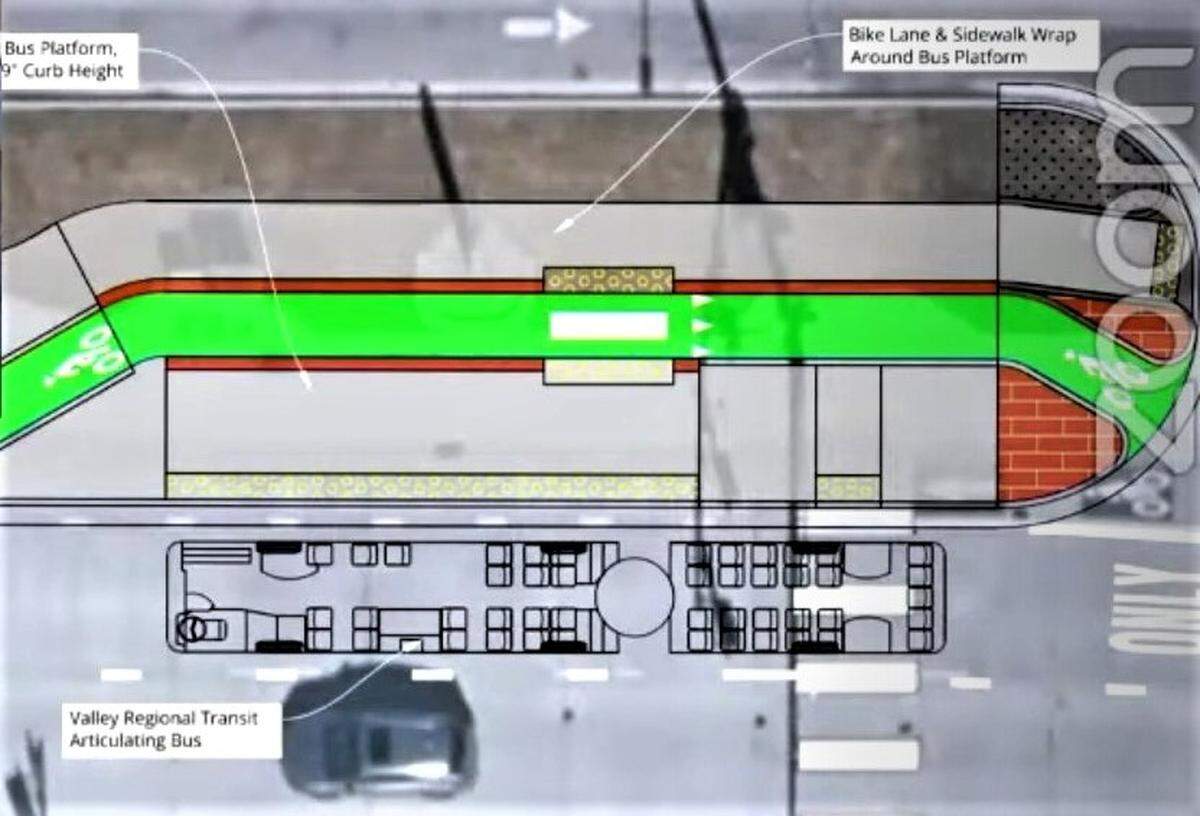
“I think we see all sorts of evidence from all around the world that that’s kind of the thing that’s going to get more people riding,” Council Member Jimmy Hallyburton said at the meeting.
One issue, Hunt said, is safety concerns for cyclists turning at intersections, since cars may not be focusing on travelers not in the road.
Hallyburton suggested that the agency look at various designs for how to safely handle such crossroads, noting that “there are a lot of treatments out there,” but that some of them may not be common in Boise.
Make cyclists, pedestrians more visible at intersections?
In a text, he told the Statesman that he would like to see infrastructure that would slow turning cars and help make cyclists and pedestrians more visible. He said about 43% of bike and pedestrian fatalities occur at intersections, where a common claim is that the driver couldn’t see them.
Consolidating some bus stops that are close together, building higher curbs to speed up on-boarding of mobility devices like wheelchairs, and allowing all-door boarding could also reduce the time buses linger at stops, Hunt said.
The agency could also consider adding short bus lanes just before intersections, to allow buses to move to the front of the line of cars.
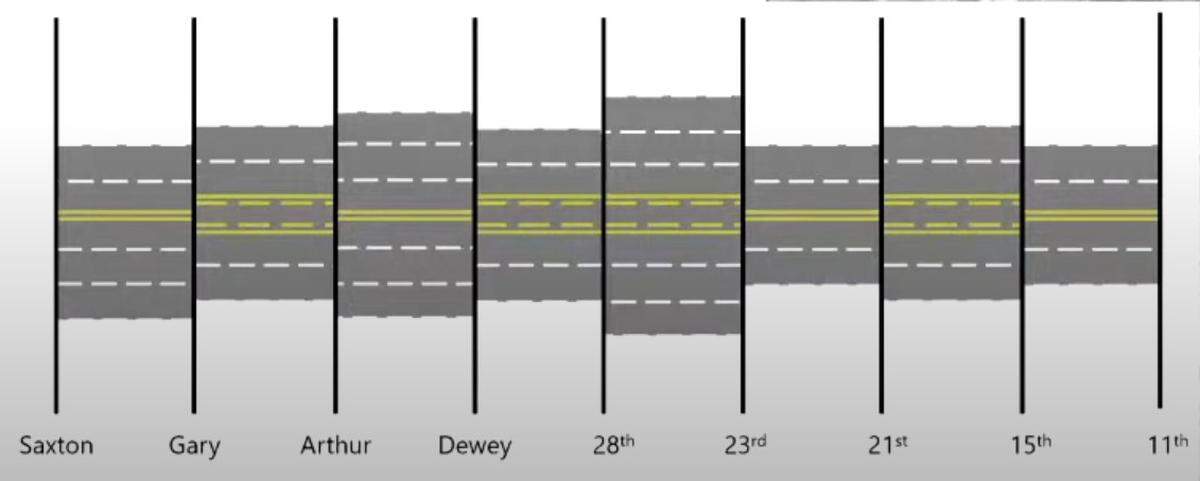
Another issue identified was the irregularity of street widths along State Street, which can be difficult for traffic planning, Hunt said.
In August, the U.S. Department of Transportation granted $8.5 million to the State Street Premium Corridor project, which will help fund efforts to improve public transit along the corridor.
Much of that money will go toward building bus stops at 23rd and 27th streets in Boise, Hunt said. Though there isn’t enough room on the north side of the street between those blocks to have a multi-use path, there’s a small street that parallels State that could be used instead.
In an interview, Hunt told the Statesman that the transit project requires cooperation and buy-in by multiple agencies, and that the improvements will likely occur in segments.
In addition to Boise and Valley Regional Transit, the Ada County Highway District, Idaho Department of Transportation, Community Planning Association of Southwest Idaho, Capital City Development Corp. and other local cities are part of the planning group.
“The complete vision will come over time and through multiple projects,” Hunt said.
This story was originally published November 2, 2022 at 1:08 PM.