Changing Boise River flow. A huge playground. What designers propose for Expo Idaho
After receiving the go-ahead from Ada County, three finalist design firms took their charge — to design a park — and ran with it.
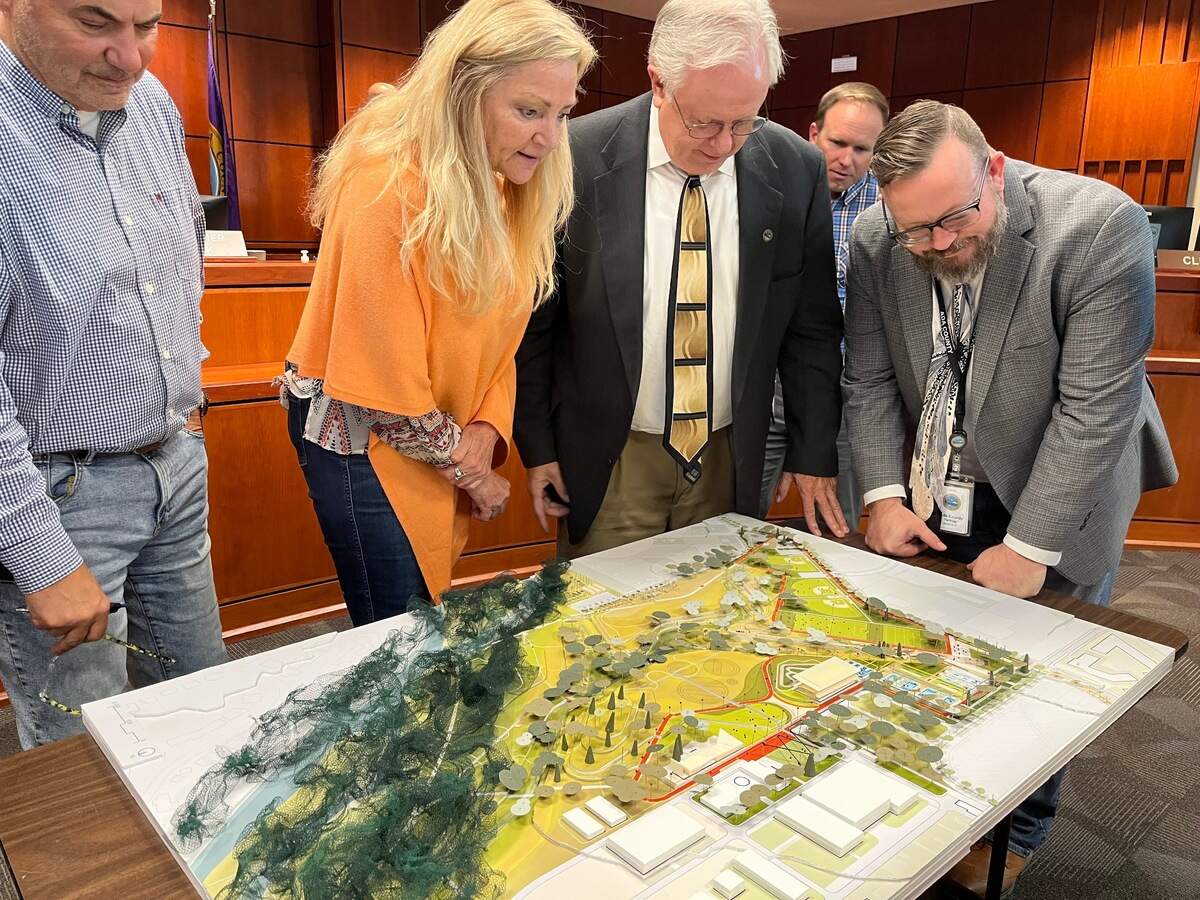
The three firms — two of which were national firms that flew in presenters, and one of which is local — presented concept proposals to the County Commission on Tuesday, seeking to win a competition over who will get to reinvent an 88-acre parcel on the Expo Idaho grounds near Garden City.
The grounds the county has offered up for redesign include the eastern portion of the Expo but do not include the stadium and the Expo itself, to the west. The full property is about 247 acres.
Rerouting the Boise River. Building a “destination” playground. Transforming the existing horse racetrack into a mix of ecosystems rich with biodiversity. All three firms came with ideas on how to build a new park, and each firm’s proposal included playing fields, trails with different types of year-round access to the river and other portions of the expansive area, and locations where concerts and other staged events could be held.
All groups also proposed keeping some version of the grandstand. But each group also had distinct proposals.
Rios
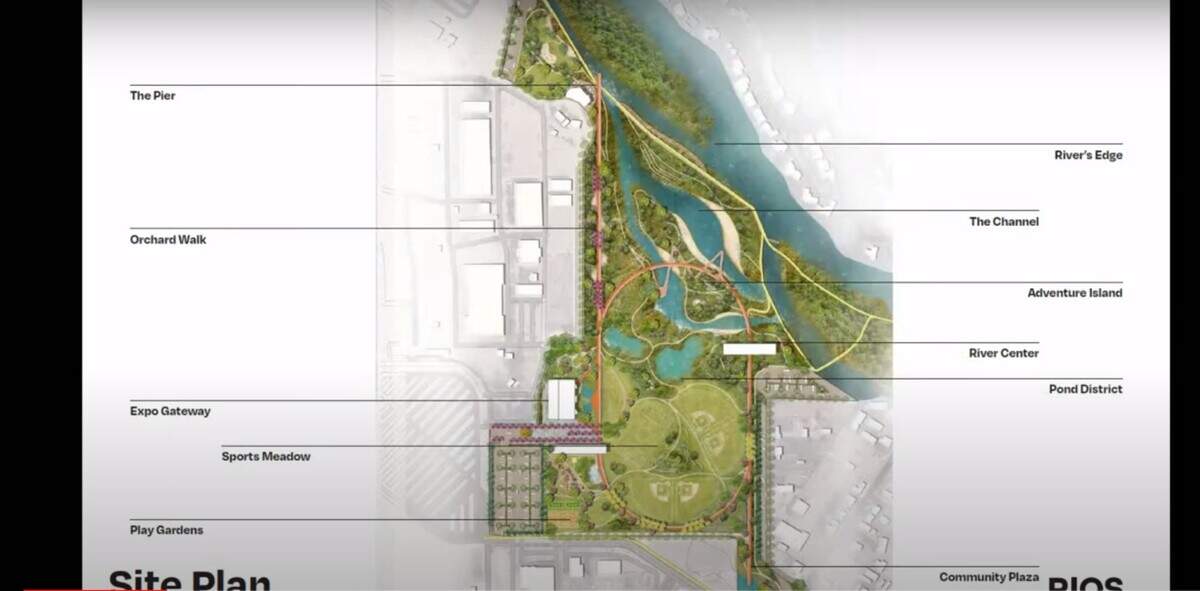
Rios, a national firm with offices in Portland, proposed changing the flow of the Boise River to bring river channels onto the Expo property, which would add beaches, float opportunities and an island to the site.
The group also proposed keeping some of the history of the site intact by maintaining the shape of the former horse track and turning it into a multi-use path. The team said it also intended to preserve the existing grandstand, though with major modifications: cutting holes in it, adding stairways and opening it up from both sides.
“It’s such an important building on the site,” said Brent Jacobsen, a studio director for landscape architecture at Rios, noting that it could be changed later on in construction. “The grandstand is a really interesting icon for the site, even if you don’t change it immediately.”
The group also proposed adding a pier to extend out into the river, and a focus on ecological resilience.
A large portion of the site is in a flood zone, and by bringing the river into the site, the group suggested making a park that would adjust as the river flows change with the seasons.
Jacobsen said the expanded river plain would provide “dual infrastructure” by serving people and the ecology of the river.
Some members of the Ada County staff who watched the presentation appeared unsure of how feasible shifting the river would be. The move could require lengthy environmental reviews, while the county wants to use time-limited funds from the American Rescue Plan Act to build the park.
“Logistics are hard on big visions ... and if we can’t achieve this, I think we want to still create what feels like you’re next to the river and in this riparian channel,” Jacobsen said.
Rios also proposed adding a “River Center” building that would provide access for boat put-ins.
The Land Group
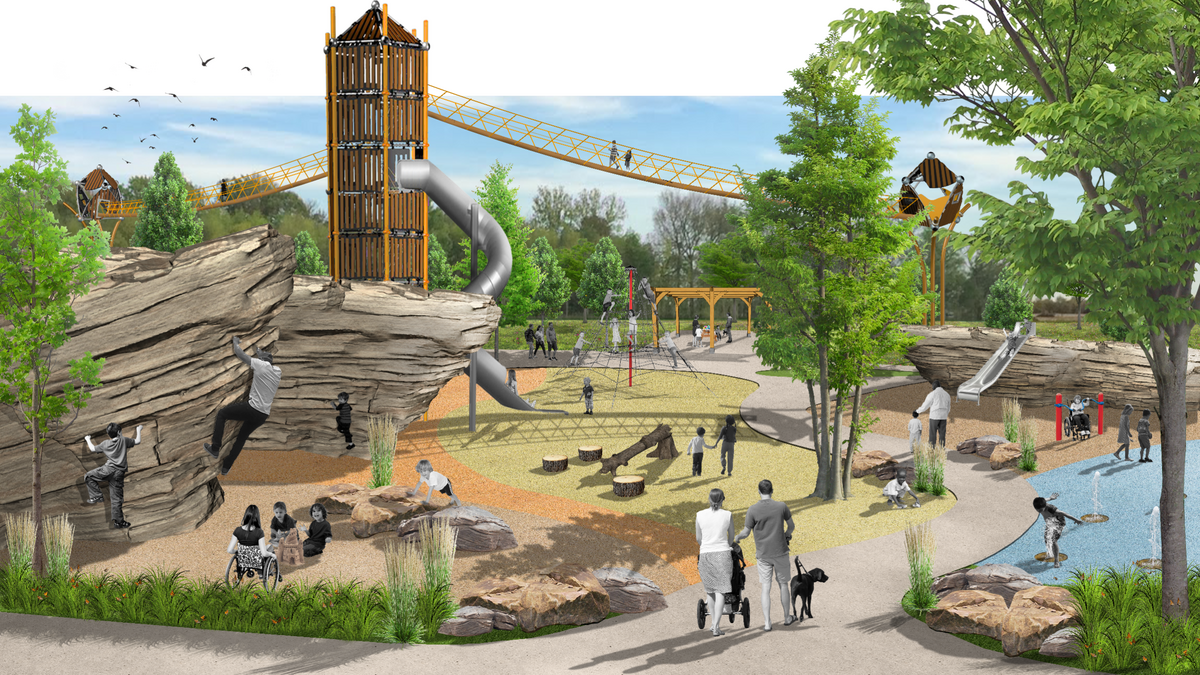
The Eagle firm proposed adding an incubator kitchen and space for food trucks along the southeast portion of the park, which the group also proposed extending past the Expo boundary.
An incubator kitchen is a managed and commercially licensed kitchen that small vendors can use to produce goods, which Adams said could then be sold at an on-site market.
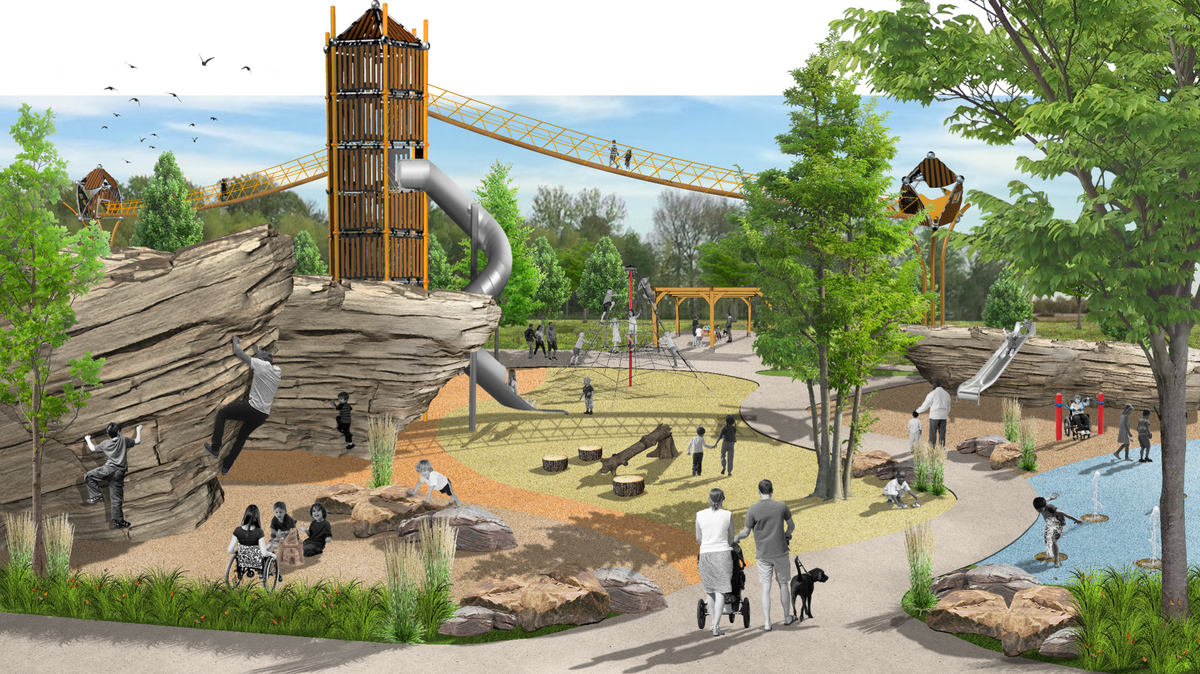
In a “movement” district further north, the group proposed a “destination playground” that could be 10 or 12 times the size of a regular playground.
Matt Adams said risk and water are essential to a popular playground.
“If there’s no risk its boring, and (children) use it incorrectly,” he said.
A youth learning center would also be added to the grounds at the site of the existing Turf Club. An orchard and gardens could also be built.
Adams stressed the importance of green space and access to nature for mental health.
“Good mental health strengthens social fabrics,” he said.
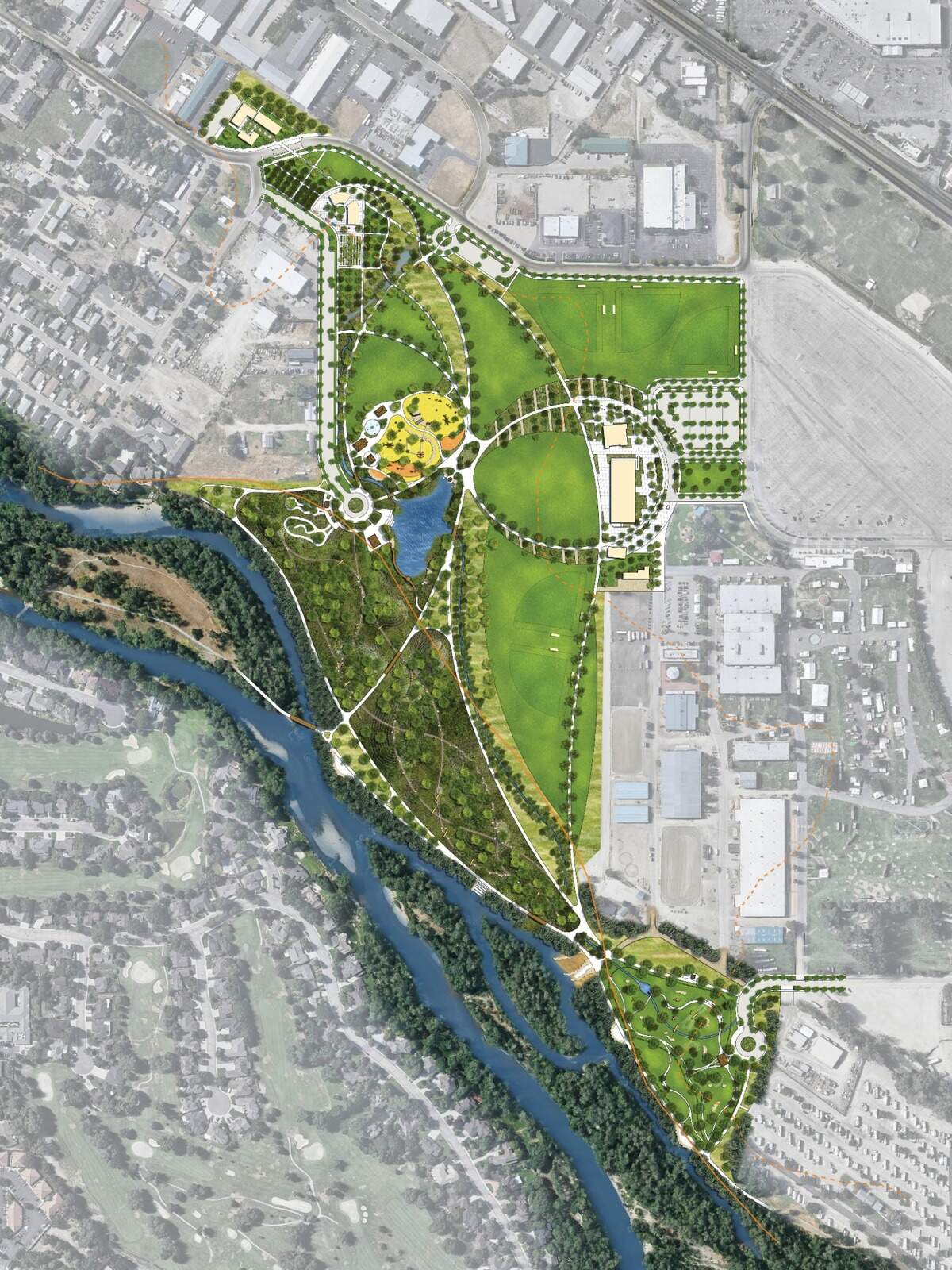
Ada county staff members and elected leaders watching the presentation asked multiple questions about the kitchen incubator, with questions about how such an enterprise would be funded and managed.
Commissioner Kendra Kenyon, a Democrat, also asked about traffic issues.
“If this is going to be 10 times the size of any other playground, I kind of worry about congestion,” she said.
Adams said that the natural and playground attractions would bring people from around the Treasure Valley to the park, but he said he hopes that some traffic would come from runners, bikers or walkers along the Greenbelt.
“This will bring more users and traffic will be busy on the streets,” he said. “I don’t have a solution for that.”
Adams also said the design would make an effort to highlight the Indigenous history of Southern Idaho, as well as the history of Chinese settlement of the Garden City area.
Port
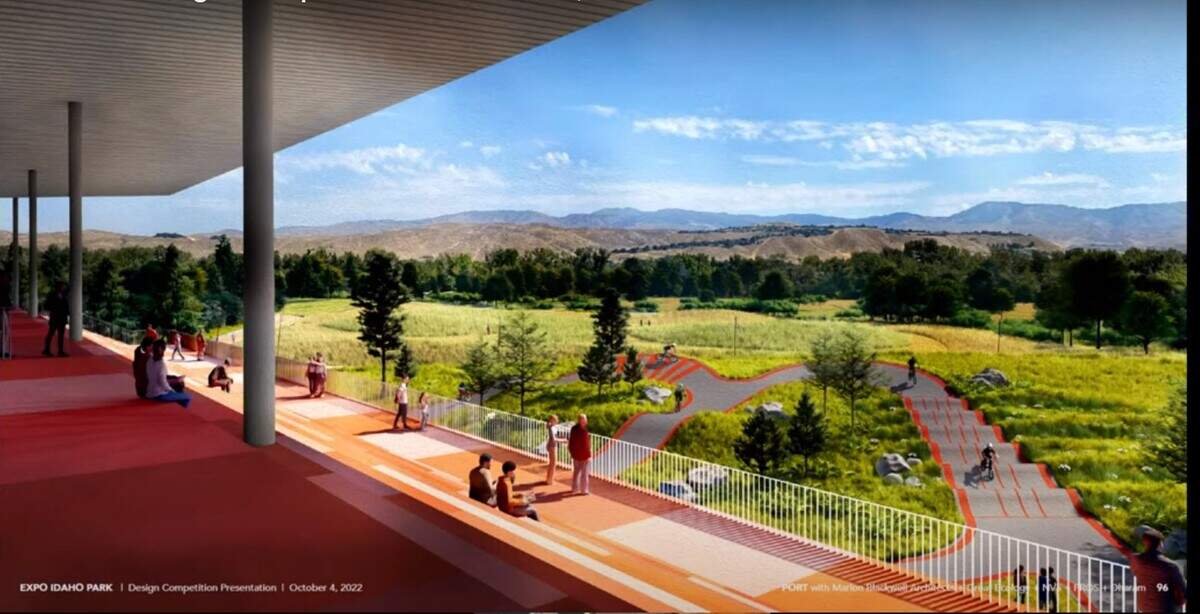
Port, a Philadelphia and Chicago-based national firm, emphasized the landscape potential in its design, noting how eight ecological environments could be supported in a lowlands area running from the center of the park over to the river.
Christopher Marcinkoski, a partner at Port, said those opportunities were extensive.
“We actually see this as an opportunity to set a precedent, an opportunity to create public space on the Boise River that is unlike any other public space that exists in the region,” he said.
But re-routing the river, he said, was not an option.
“We’ve worked with the Army Corps of Engineers, we’ve worked with permitting agencies, we know how long it takes to modify a river. We aren’t going to do that in four years. It’s impossible, so we don’t even want to try,” Marcinkoski said.
In the “Lowlands” portion of the park — which would make up much of the area that does not include the high-intensity recreation areas, which are mostly contained in two “loops” — Port proposed making a long-term investment in improving biodiversity.
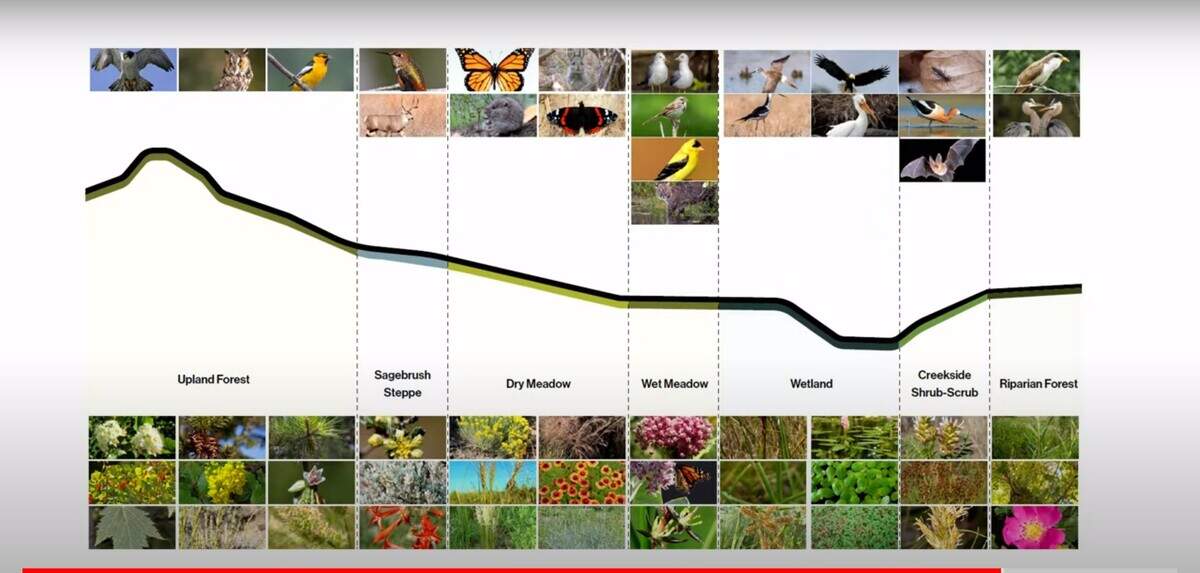
The ecosystems would account for different levels of wetness, and would constitute a long-term community investment, Marcinkoski said, adding that a nursery could be included onsite to produce plants that would later be moved into the ecological area.
Before Garden City was developed, Marcinkoski noted that the Boise River used to flow over much of the area where the park will be.
“This is a transformation that will take time,” he said, noting that soil restoration and new plantings could take into the “second decade” to fully come into fruition.
“That’s actually exciting because that allows people who come to this park to see it, to experience, to witness that transformation in a way that registers in their mind,” he said.
He said doing so, and making investments that will take years to be realized, would require instilling a stewardship mindset.
Port also proposed a “Wheel Sports Garden” for different kinds of human-powered, wheeled recreation.
During a question period, Marcinkoski was asked why Port had put less emphasis on river access for boating, paddle-boarding and other uses, as the other designers had.
“The Greenbelt and the river’s edge I think could be programmed in a more intensive way,” he said. “That’s maybe a thinner area of the programming,” he said.
Next steps?
On Tuesday, Oct. 11, the Ada County staff will present its ranking of each firm to the County Commission, which will then vote on the staff’s recommendation.
Vote for your favorite
Which option for Expo Idaho’s future do you prefer? Let us know by taking our informal survey below.
This story was originally published October 5, 2022 at 11:30 AM.