Discuss your demise and heal over cookies and tea with strangers at Death Café Boise
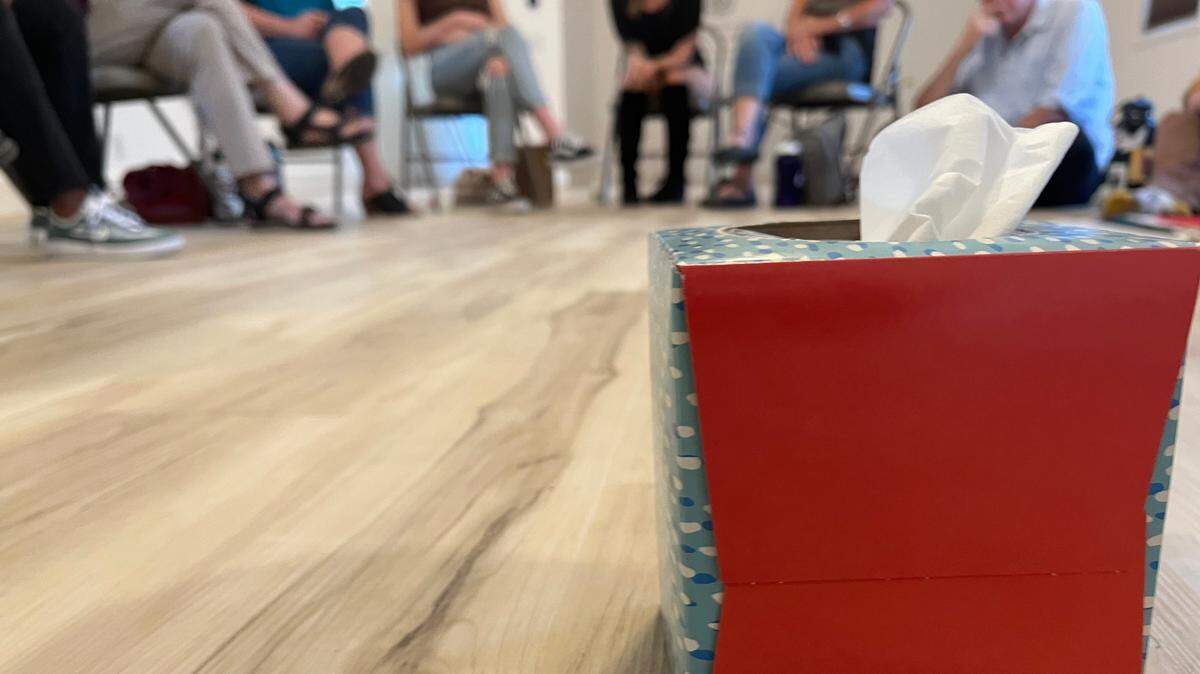
With 13 sets of eyes focused on her, Bernadette Ayala opened up to a room full of strangers on Friday evening about how she thought her mother dying was probably best for herself and her siblings.
When Ayala was 13 years old, her mother passed away after years of dealing with drug addiction.
“She wasn’t mentally well,” Ayala said to the group of onlookers, explaining how their family was homeless, and they weren’t going to be okay if their mother kept raising them the way she had been.
“I feel like losing her [at a] young age made it easier in my adulthood,” Ayala said. “My sister raised us (after her death). I never went to college and don’t have kids; I’m not married, but I didn’t end up being like people in my small town. And so I feel like that death had to happen the way that it did.”
Ayala, now 27 and a resident of Meridian after moving from California, acknowledges that it’s a weird way to look at the death of a parent, but it’s just how she feels deep down.
Fortunately, Ayala’s perception of her mother’s death was received by listening ears and open minds. And she wasn’t the only person to share a story about death with a bunch of strangers in the upstairs room of a North End yoga studio.
For nearly 90 minutes in mid-September, around 30 people met at True North Yoga to talk about all things related to death: their first experience of death, first time seeing a dead body, and even how Queen Elizabeth II’s coffin is lined with lead.
It’s called a Death Café and happens in Boise about four times a year. One of the first rules of the gathering is “what’s said in Death Café, stays in Death Café.”
That is until now.
Death Café Boise organizers allowed the Idaho Statesman to sit in on one of their meet-ups and detail what it’s like to embrace the concept of death in a public forum. All individuals quoted expressed their willingness for their stories and experiences to be publicly told.
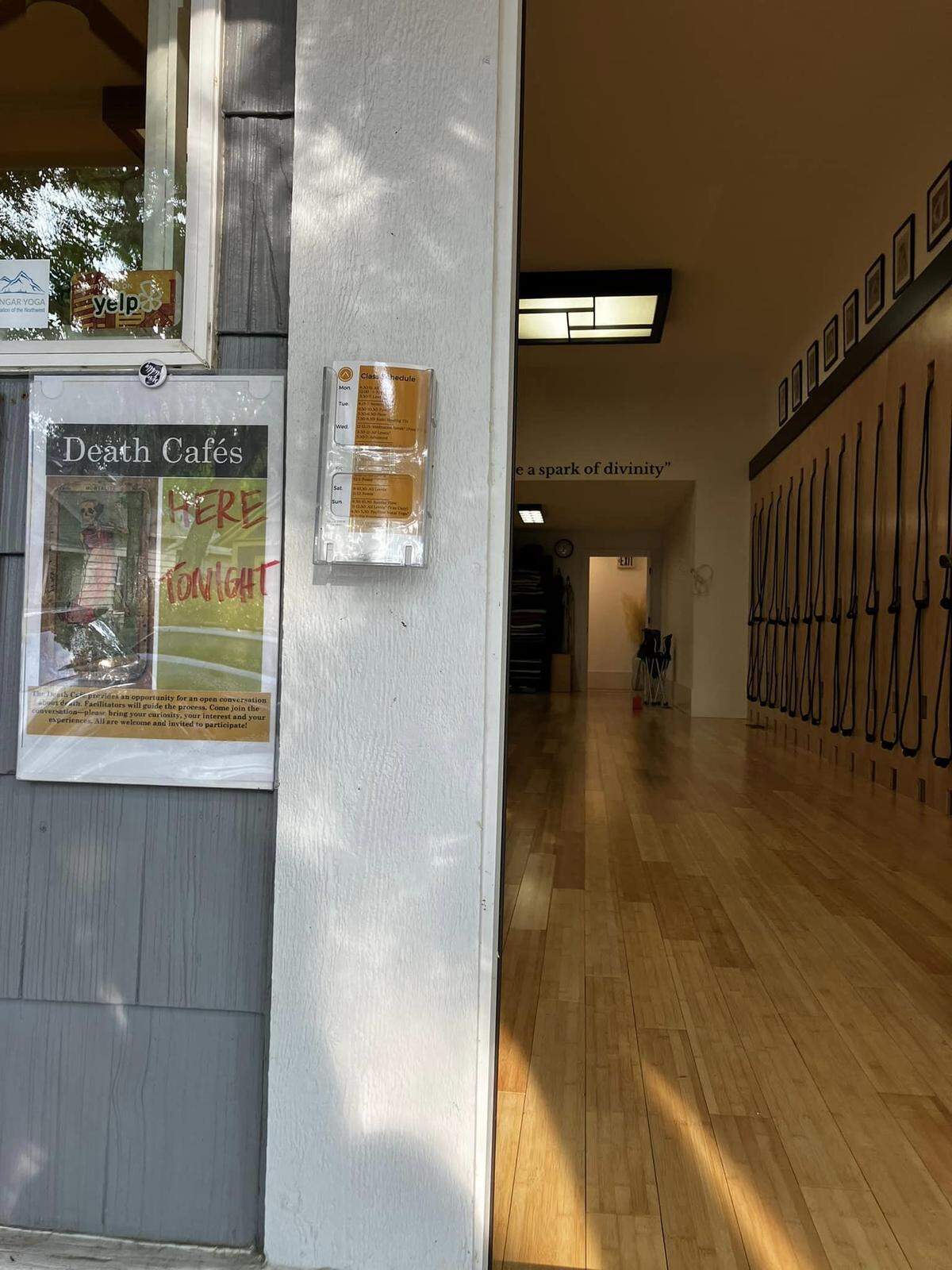
What is Death Café?
In the backroom of True North Yoga stood a table laden with cookies, biscuits and tea. But that’s the only aspect this café has in common with the traditional coffee shop or café.
Despite the first Death Café taking place in the small London borough of Hackney in September 2011, the name comes from the French meaning of café, according to Boise facilitator Tammie Sherner.
“Death Café does not mean eating. Although, we do eat at Death Cafés,” Sherner, a death doula, explained to the circle of attendees who had split off with her to an upstairs room at the Boise September meeting. “It has to do with the French term, like a salon or a café where people gathered together to talk.”
Sherner was one of three facilitators last Friday at True North Yoga. She took her group to an open, bright room on the second floor of the building. The other two facilitators of the night — organizer Amy Pence-Brown and Susan Randall, who has been a facilitator at Death Café Boise since they began in 2014 — also took a group each into separate rooms.
One thing that all three facilitators emphasize is they’re not therapists or counselors. They’re simply individuals who are comfortable and experienced in talking and leading a conversation about death.
Pence-Brown, a Death Café facilitator since 2018, spent her early 20s in Corvallis, Oregon, collecting dead bodies from crime scenes for a mortuary. Since then, she’s been both secure and fascinated with death.
“People come here to talk about death; for whatever reason. Sometimes people are actively grieving, and sometimes people are actively dying,” Pence-Brown told the Statesman.
“Some people are terrified of death, and they’re coming to face their fears,” she continued. “Some people have worked forever in death, and they just like talking about it and hearing other people’s experiences; some people are just along for the ride.”
‘Talking about the realities’ at Death Café
A lot can be taken from just a 90-minute session, but one thing that stands out is that death doesn’t have to be negative. As Ayala finished her story, Sherner quickly swept in to offer a wise quip from her years of experience:
“I think people overwhelmingly view death as a negative. It’s not a negative; it’s a neutral if anything,” Sherner said. “You talked about how it was a positive in your life because it changed the trajectory of where you were going.”
Ayala was attending her first Death Café, but she plans to return for the winter session, which will most likely be held at the Library! At Collister in late December or early January.
“It is beautiful. But also, I feel a little bit empowered, I feel comfortable,” Ayala told the Statesman. “Talking about death is not easy with the general population. So being in a space where I feel safe to do that was super nice because I literally only talked to my siblings (beforehand).”
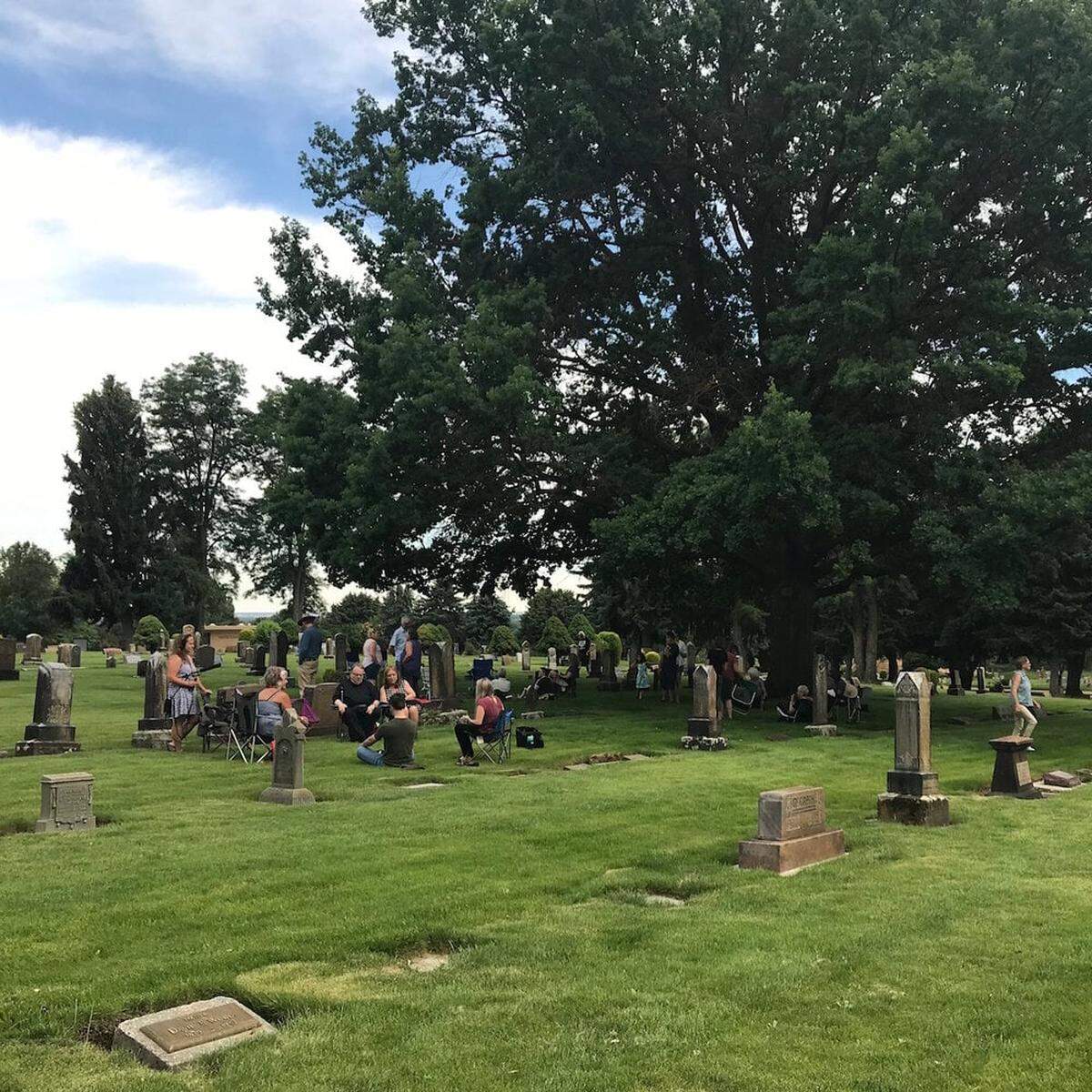
Of course, not every death has to feel like a neutral or a positive.
One attendee talked about how her father passed away at work when she was five years old, and her family has rarely discussed it since. He was a test pilot for the U.S. Air Force, and ahead of a family vacation he was asked to make a short trip to the airfield to deal with a plane that was having issues.
It was supposed to be a quick fix before the family vacation, but the plane never touched back down on its wheels.
Another person in the circle recalled their first experience with a dead body being their own father’s at the age of eight. She and her sibling had to sit through the sound of the fire department entering their house and “stomping around upstairs” in their parents’ bedroom without the pair knowing what was going on.
Sometimes tears are shed, too.
Sarah Sailors, a 22-year-old from Meridian, told the room about her father committing suicide by poison when she was 12 and having to cut life support in the hospital. She recalls it taking up to a year to process her emotions, going through waves of extreme feelings, or feeling nothing at all.
Tissues were quickly on-hand as she finished her story.
“I knew it was a possibility (getting upset); it’s like a 50/50 shot whether I get teary talking about it,” Sailors told the Statesman with a laugh following the session.
“But I liked that it was nice to have a place to talk about it in a group that wasn’t like getting therapy,” she continued. “Nobody was trying to fix each other’s problems. It was just talking about the realities.”
How to get involved in Death Café
Death Café has been hosted in over 80 countries since it became a national movement in 2011, including every state in the United States.
The Boise group announces its events on its Facebook page. Although the next session has not been scheduled, it will likely happen in December or January, Pence-Brown said.
The Boise sessions are entirely free, too.
“You don’t have to pay. We aren’t paid; we’re volunteers. That’s one of the rules,” Pence-Brown said. “We don’t require preregistration or signing up either. We just wing it.”
Death Cafés were previously held in Ketchum and Idaho Falls, but the only active Idaho group is now in Boise.
If you want to start your own Death Café outside of Boise, you can find more information on the global Death Café website, such as how to host, how to be a facilitator and how to organize a session.
This story was originally published September 22, 2022 at 4:00 AM.