Affordable housing at risk? Garden City neighborhood has problems. What future may hold
More bikable and walkable streets. Preserving the arts. Retaining affordable housing. Clustered retail stores. Better flood control.
With development happening at a fast pace in Garden City, land-use experts have recommendations about how the small city can preserve its assets, improve its infrastructure and plan for future redevelopment.
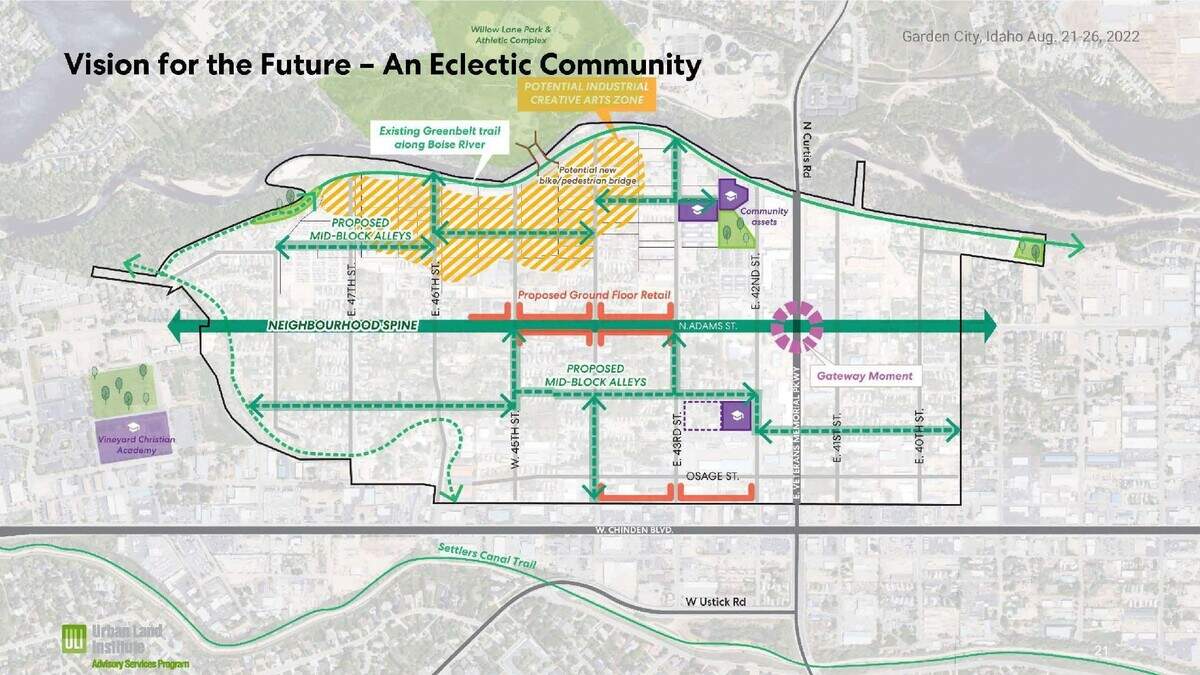
A panel of visiting experts commissioned by a Boise developer offered some preliminary ideas Friday for a riverside neighborhood in Garden City that stretches from Osage Street, just north of Chinden Boulevard, to the Boise River between 40th and 48th Streets.
Convened by the Urban Land Institute, based in Washington, D.C., the architects, developers, and consultants — including the former mayor of Pittsburgh — met for a week in Garden City after Galena Equity Partners, a Boise developer with major projects underway in Garden City, funded the study. The city also chipped in.
The panel, which interviewed about 100 people, presented its preliminary findings at Fisher’s Technology, an information technology company.
Preserve affordable housing
Garden City has multiple mobile home parks, and its relatively affordable housing costs and industrial spaces have brought artists to the area in recent years.
Panelists suggested the city focus on retaining some of that affordability by creating a housing commission.
“Garden City has been affordable, but as we build new market-rate units, some of the affordability disappears,” said Agnès Artemel, noting that multifamily development was appropriate for the area.
While the city’s arts district is to the east of the Parkway neighborhood, panelists discussed zoning requirements or developer incentives that could keep space for artists to live and work. In other locations in the U.S., neighborhoods that became hubs of creativity became popular, and the artists got priced out.
In some instances, “you end up the victim of your own success,” Artemel said.
Artemel also called Garden City’s industrial space a “hidden gem” that can have a lot of uses and be transformed into creative space or technology companies. She also said that retail shops should be grouped together as destinations.
Improving the Greenbelt and flood control
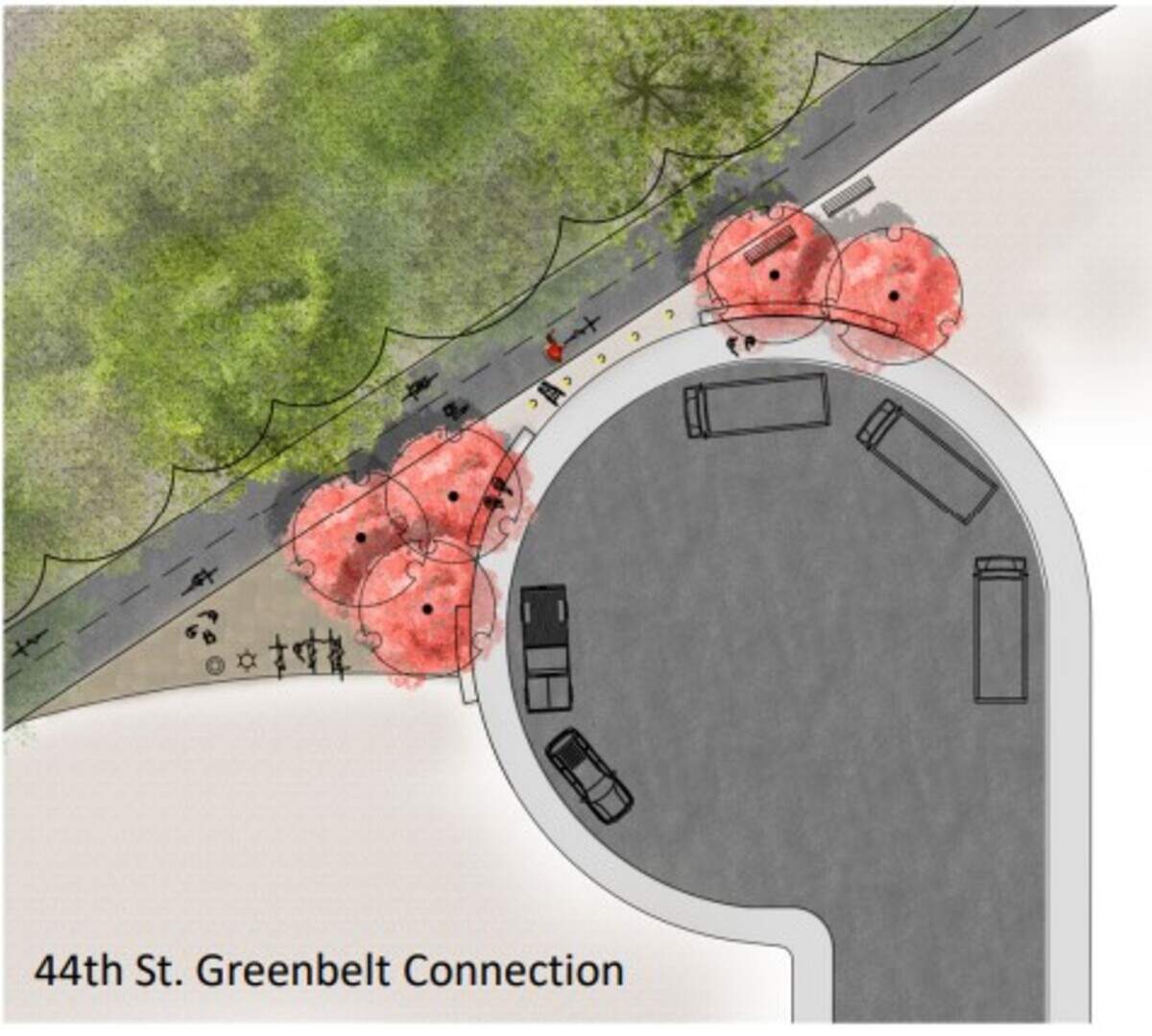
Panelists discussed the quality of the Greenbelt as an amenity, as well as the need to make it safer and prepare for flooding.
Geeti Silwal, an urban designer in San Francisco, said Garden City, parts of which are in a floodplain, needs to focus on “environmental resiliency” and better stormwater collection and treatment.
Emily Rogers, a landscape architect in Albuquerque, said multiple needs can be accounted for at once, as in instances where a city park can also be used as a stormwater basin. “On the days it’s full of water, you don’t use the park, but that’s only a couple days a year,” she said.
Raising the height of the Greenbelt could also help protect nearby property from flooding, she said.
Rogers said the city could invest in buying land for more parks, like along Adams Street, and could encourage property owners to create gardens to “help put the garden back in Garden City.”
Panelists also said there was wide support for adding pedestrian and bike bridges across the river, and to viewing the whole area — on both sides of the river — as a large park.
Better transport
“You have an enviable cultural and natural resource,” said Rogers. But “many access points” to the Greenbelt are unclear, which can lead to safety issues. And there often isn’t room where people can pull off the bike path to get out of the way of traffic, she said.
Erwin Andres, an engineer at a transportation firm, said that as the area gets more crowded, it would help to have alternative bicycling routes, like Adams Street. Andres also suggested reducing the number of parking spaces developers need to build for parcels north of Adams Street, which is close to the Greenbelt and alternative ways of commuting.
He said that the city’s blocks can be very wide, making it difficult for vehicles to circulate and for people to walk around.
“What’s pretty glaring is when we looked at the sidewalk network, it is not connected very well,” Andres said. “It’s piecemeal in many places, and some places it doesn’t even exist.”
The city could find ways of creating alleys or other pathways to break up the large blocks, he said.
Need for a ‘vision’
Tom Murphy, a senior resident fellow at the Urban Land Institute and the former mayor of Pittsburgh, stressed the importance of having a specific vision to work toward.
“You have the raw material to do it, and it requires the vision and then the leadership to make it happen,” he said. “And that’s our frustration really here is that you have that foundation, and you’re still figuring out how to put it together.”
He said that the world is changing rapidly, and “if you don’t get in the front of that, it’s going to run you over.”
Murphy said he’s been in many meetings where the cost of a potential project is brought up immediately, before planning for it gets off the ground.
“Stupid excuse,” he said. “There’s always money for a great idea. Don’t ever get stopped by simply saying we don’t have any money. You build the partnerships around a vision and that’s what you need to develop.”
City, Galena look to final report
Over the next couple of months, the Urban Land Institute panel will put together a more detailed report with its findings.
Bill Truax, CEO of Galena and the driver of the study, called the panel’s findings a “call to action” for the city and people who are invested in the area to “become part of the solution.”
“We will only be able to solve these challenges if we start working together more collaboratively,” he said.
He said that the availability of federal money from recent legislation and the opportunity for the city to work with other agencies, like the Ada County Highway District and Valley Regional Transit, should not be passed up.
He said he would like to see more specifics on ways to preserve and build more affordable housing.
“I do think that the challenge from a housing perspective is not one that’s going to be easily resolved,” he said.
Garden City Mayor John Evans told the Statesman that he was out of town and could not attend the panel, but that he and other city leaders were interviewed during the week. Jenah Thornborrow, the director of the city’s Development Services Department, attended Friday’s presentation and said it was valuable.
“I think that they gave the city some really good recommendations that the city can build on,” she told the Statesman.
She said some of the suggestions, like reducing parking requirements for developers, would likely require public vetting to “make sure they’re viable.”
She said she will look to the final report for more details on the possibilities.
“We’re looking forward to progressing and implementing some of the recommendations,” she said.