Boise mayor criticizes property assessments. See how much they rose where you live
Most Ada County residents have received their property assessments in the mail and perhaps were surprised by how much their home values increased.
Boise Mayor Lauren McLean says she’s been hearing from Boiseans about that. McLean took to Twitter to lament an assessment process that she said lacks transparency and has led to homeowners paying a higher share of local taxes while businesses pay less.
Overall, the Ada County median residential property assessment is up by 30%, as the Idaho Statesman reported a month ago. Now comes new data showing how big the increases were by neighborhood. Star tops the list with a 36% surge, followed by Eagle at 35.2% and Northwest Meridian at 35%.
At the low end is North Boise, whose increase was a mere 25.9%. Just above it were Northwest Boise, at 26.6%, and West Boise at 27.7%.
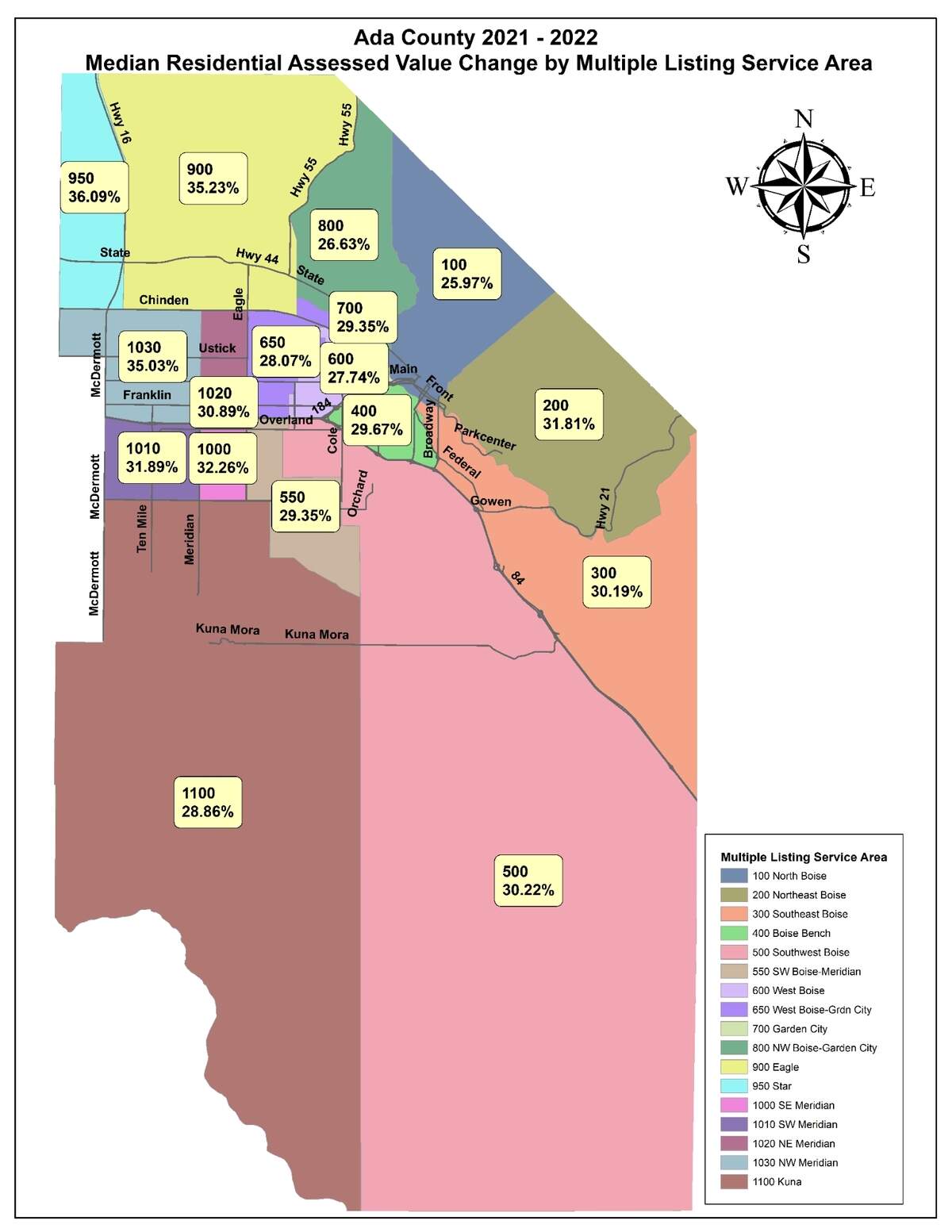
Idaho law requires county assessors to assess commercial and residential properties as of Jan. 1 of each year. The assessments are the market value of properties as of the Jan. 1 date. According to the Ada County assessor’s website, the assessed values are based on a variety of factors like location, distance from schools, quality of surrounding properties and neighborhood amenities.
Appraisers do not set their own value of a given property. They estimate what a typical buyer would likely have paid for a home on Jan. 1.
The assessments are also based on the sales price of homes in a given area. Since home sales prices continued to rise in 2022, so have the assessed values.
Mayor calls tax burden on homeowners ‘unacceptable’
On Monday, McLean tweeted that the high assessments seen by her constituents were “unacceptable.”
“These rising tax assessments put a strain on family budgets,” she wrote. “It is incredibly frustrating — beyond frustrating — to be doing everything we can to provide relief to residents, even adding a new circuit breaker program, while those who can provide transformational property tax relief and address rising assessments fail to do so.”
Idaho’s circuit breaker program, formally known as the Idaho Tax Reduction Program, provides relief for low-income seniors and disabled people, among others. This spring, a bill increasing the maximum home values allowed for those who qualify for the state’s circuit breaker program became law.
Another new law — which McLean pushed for — will allow cities to issue additional tax relief to qualifying residents in the form of rebates. That’s the new circuit breaker McLean’s tweet referred to.
In an email, Boise spokesperson Maria Weeg said the mayor disapproves of residential rates rising faster than those of commercial properties, “which means that homeowners are footing the bill for businesses.”
“This year we’re seeing increases that are substantially higher than they have been in recent years with very little transparency in the assessment process,” Weeg said.
The mayor would like the Legislature to increase the homeowners’ exemption, index it to property values, expand access to the circuit breaker program, allow school districts to assess development impact fees and “conduct a comprehensive review of the way county assessments are done to provide more uniformity in the process,” Weeg said.
The homeowners’ exemption, also known as the homestead exemption, is a tax break for a person’s primary residence. It allows owners to exempt 50% of the value of a home and land up to $125,000 from property taxes each year.
After the legislation allowing cities to issue rebates passed this year, Boise plans to build in $1.2 million in relief into next fiscal year’s budget, Weeg said.
County Assessor says his office doesn’t set tax rates
In an interview, Ada County Assessor Robert McQuade disputed criticism of his office, noting that the Legislature determines much tax policy and that the county does not set all the tax rates. Rather, taxing districts — one of which is the city of Boise — set their budgets annually, and use the assessed property values to determine what portion each property owner will pay.
Therefore, McQuade’s office isn’t setting the taxes — the taxing districts are. Rises in values don’t necessarily translate into increases in individual tax burdens, he said. And if his assessments don’t line up closely with the price property is selling at, the Idaho State Tax Commission will come in and raise assessments itself, he said.
“I think we have done an excellent assessment this year,” he said.
McQuade added that he’s in favor of indexing the homestead exemption to property values, which the Legislature nixed in 2016.
Since 2017, the value of a single-family home in the county has risen from $211,000 to $534,000. Since the homeowners’ exemption is fixed at $125,000, it has fallen from 47% of the median value to 23%, McQuade said.
“That exemption is just slowly degrading,” he said.
He added that much of the reason homeowners pay a higher portion of the taxes — around 80% this year — is because there is more value in residential property.
There are more than 200,000 residential parcels in the county, versus 13,000 commercial ones, he said. And residential properties have around $99 billion in value, versus $20 billion in commercial ones.
Last year’s median assessed value in Ada County increased by 27%, the Idaho Statesman reported. That was the highest Ada County Assessor Bob McQuade had seen since 1994, and this year’s increase was even greater.
The median home sales price increase was 26% in Ada County in 2020 and about 31% in 2021, said Ada County Deputy Assessor Brad Smith said in a previous Statesman interview. Idaho law requires the assessor’s office to have assessments within 10% of actual sales price values.
Eagle and Northwest Meridian both saw median increases over 35%, the data showed. North Boise saw a 26.6% increase.
100. North Boise
2022: $681,874, +25.9%
2021: $541,600, +22.5%
2020 $436,415, +6.3%
2019: $410,550, +18.3%
2018: $342,450, +10.4%
2017: $305,800, +8.6%
2016: $276,100, +13.3%
2015: $243,700, +7.4%
2014: $227,000, +11.5%
200. Northeast Boise
2022: $793,699, +31.8%
2021: $602,200, +24.3%
2020: $496,264, +2.8%
2019: $482,700, +13.1%
2018: $426,900, +11.9%
2017: $381,300, +8.8%
2016: $347,350, +11.7%
2015: $311,100, +6.8%
2014: $291,300, +10.8%
300. Southeast Boise
2022: $533,559, +30.2%
2021: $409,800, +26.4%
2020: $322,338, +5.7%
2019: $305,100, +14.8%
2018: $266,300, +14%
2017: $233,800, +10%
2016: $211,400, +8.5%
2015: $194,800, +10.9%
2014: $175,700, +12.3%
400. Boise Bench
2022: $420,552, +29.6%
2021: $324,500, +25.1%
2020: $257,670, +9.7%
2019: $234,800, +20.3%
2018: $194,100, +12.8%
2017: $170,700, +9.7%
2016: $155,700, +7.2%
2015: $145,250, +10.04%
2014: $132,000, +16.5%
500. Southwest Boise
2022: $527,570, +30.2%
2021: $405,200, +27.6%
2020: $320,312, +6.3%
2019: $301,300, +16.7%
2018: $240,500, +10.6%
2017: $233,450, +8.7%
2016: $214,500, +5.1%
2015: $192,200, +4.4%
2014: $184,100, +16.2%
550. Southwest Boise/Meridian
2022: $500,520, +29.3%
2021: $387,100, +25.7%
2020: $298,804, +4.8%
2019: $285,200, +18.3%
2018: $257,650, +10%
2017: $215,000, +8%
2016: $198,800, +9.3%
2015: $189,200, +4.7%
2014: $180,800, +12.9%
600. West Boise
2022: $417,195, +27.7%
2021: $326,700, +25.6%
2020: $258,778, +7.1%
2019: $241,600, +18.7%
2018: $203,400, +13%
2017: $179,800, +9.5%
2016: $164,600, -7.9%
2015: $178,300, +6.3%
2014: $167,700, +15.2%
650. West Boise/Garden City
2022: $461,056, +28%
2021: $360,200, +26.4%
2020: $286,779, +5.6%
2019: $271,700, +16.7%
2018: $230,700, +11.6%
2017: $204,400, +7.3%
2016: $189,700, +6.4%
2015: $150,300, +6.3%
2014: $141,350, +17.5%
700. Garden City
2022: $425,526, +29.3%
2021: $329,100, +22.7%
2020: $257,125, +8.8%
2019: 236,350, +19.1%
2018: $190,200, +12.5%
2017: $169,500, +10.8%
2016: $144,800, +6%
2015: $136,600, +13.2%
2014: $120,700, +18.9%
800. Northwest Boise
2022: $517,034, +26.6%
2021: $408,400, +25%
2020: $315,597, +5.7%
2019: $298,550, +17.4%
2018: $253,100, +11.5%
2017: $219,200, +7.5%
2016: $200,000, +9.6%
2015: $182,400, +5.4%
2014: $173,100, +15%
900. Eagle
2022: $223,379, +35.2%
2021: $634,600, +27%
2020: $490,945, +5.1%
2019: $467,300, +12.3%
2018: $418,800, +9.8%
2017: $379,800, +6.6%
2016: $353,500, +7.3%
2015: $329,300, +5.1%
2014: $313,400, +13.2%
950. Star
2022: $611,456, +36%
‘2021: $449,600, +27.2%
2020: $340,898, +4.3%
2019: $327,000, +16.8%
2018: $276,000, +12.1%
2017: $243,500, +7%
2016: $225,200, +10%
2015: $204,800, +7.5%
2014: $190,500, +16.8%
1000. Southeast Meridian
2022: $594,106, +32.2%
2021: $449,400, +26.9%
2020: $351,672, + 3,2%
2019: $340,900, +13.1%
2018: $301,200, +12%
2017: $266,100, +6.3%
2016: $247,800, +5.8%
2015: $234,200, +2.5%
2014: $228,600, +12.9%
1010. Southwest Meridian
2022: $648,521, +31.8%
2021: $492,050, +26%
2020: $397,197, +6.6%
2019: $372,500, +15.7%
2018: $322,100, +9.4%
2017: $294,300, +6.8%
2016: $274,900, +33.6%
2015: $205,700, +4.8%
2014: $196,300, +12.5%
1020. Northeast Meridian
2022: $494,708, +30.9%
2021: $392,800, +27.2%
2020: $307,375, +3.3%
2019: $297,700, +16.2%
2018: $254,200, +10.9%
2017: $229,100, +7.2 %
2016: $211,200, +7.2%
2015: $197,100, +7.2%
2014: $183,800, +11.1
1030. Northwest Meridian
2022: $518,130, +35%
2021: $383,800, +26.7%
2020: $297,996, +5.6%
2019: $282,300, +14.4%
2018: $243,350, +10.3%
2017: $218,900, +7.8%
2016: $201,050, +5.2%
2015: $191,200, +6.9%
2014: $178,800, +15.4%
1100. Kuna
2022: $440,238, +28.8%
2021: $341,800, +25.5%
2020: $263,636, +7.3%
2019: $245,700, +17.8%
2018: $205,800, +11.6%
2017: $183,500, +8.7%
2016: $166,500, +7.9%
2015: $154,300, +6.3%
2014: $145,100, +18.9%