Poor design or inattentive driving? Cars strike new bus stops on busy Boise street
Chris Quiggle estimates that vehicles strike or nearly strike a new bus stop once a day in front of Black Eagle Tattoo, the business he owns on the northwest corner of North 17th and West Main streets.
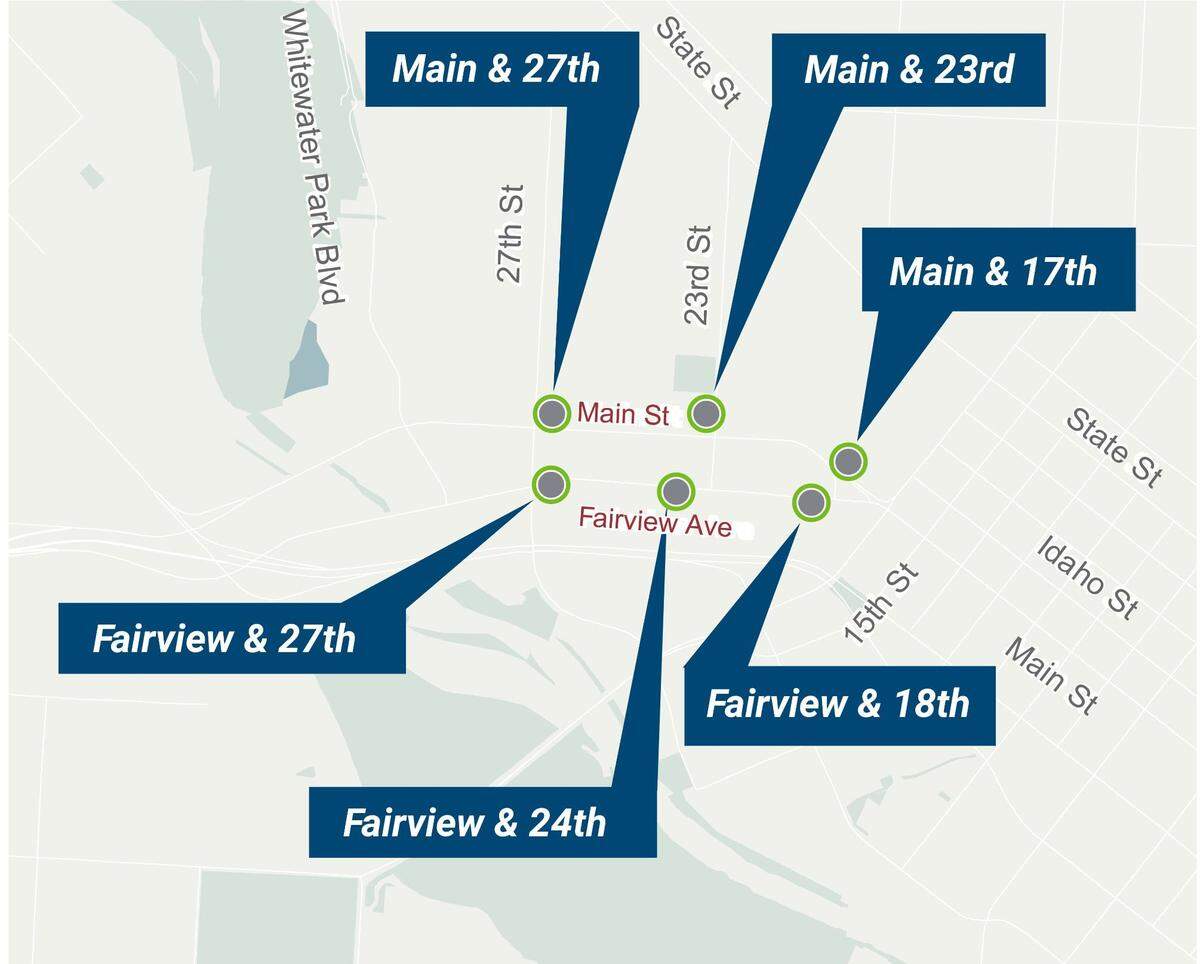
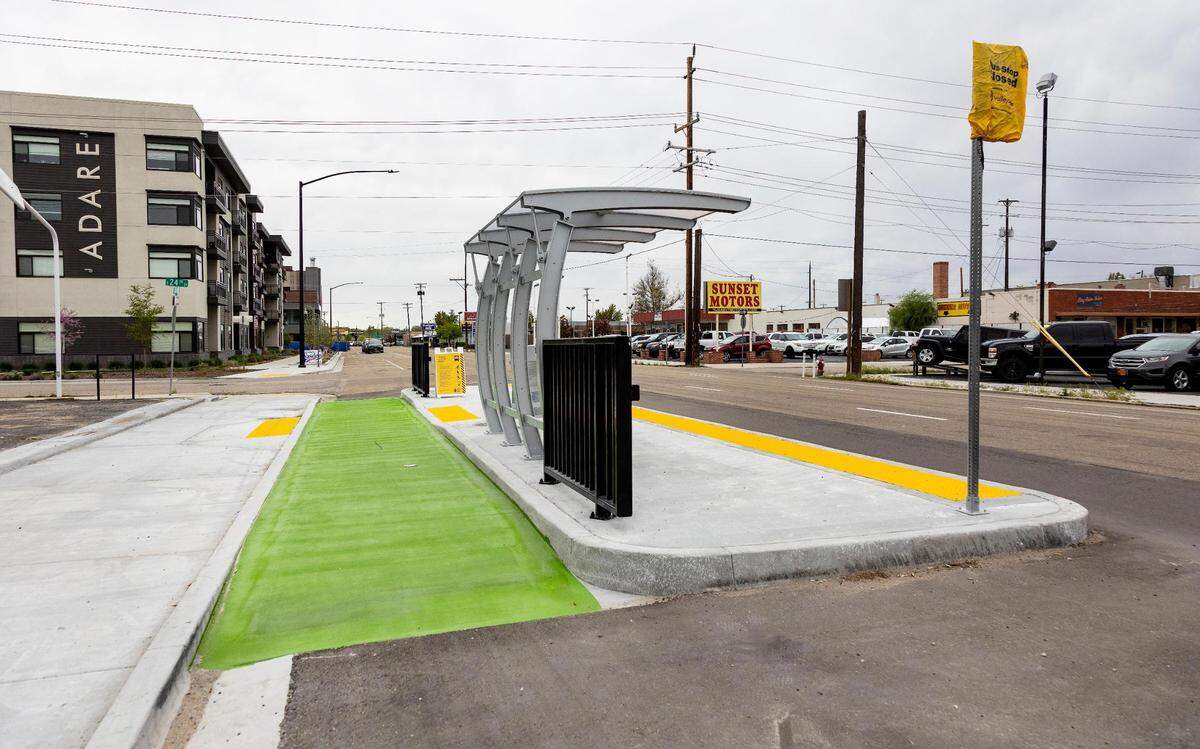
Late last year, Boise’s urban renewal agency, the Capital City Development Corp., began to build five bus stops along Main Street and Fairview Avenue from North 16th to North 27th streets, and a sixth is planned. The stations are between bicycle lanes and car lanes, and they are designed to make a safer bicycling experience.
But they sit right next to the driving lanes, leaving no margin for inattentive drivers. That’s causing problems as some drivers strike them. Adjacent business owners have noticed. They’re speaking up, warning that the stops — which are not yet finished — are unsafe.
The evidence is in the chunks of concrete missing from the curb, the skid marks on and next to the elevated platforms, and recorded videos. Nearby business owners are concerned.
“Nobody’s gonna care about the going-green stuff when somebody dies,” Quiggle said by phone.
The owner of Fairly Reliable Bob’s, a used car dealership, Bobby Petersen, has security-camera videos showing vehicles smashing into the transit stations. The videos were first reported by KBOI (Channel 2).
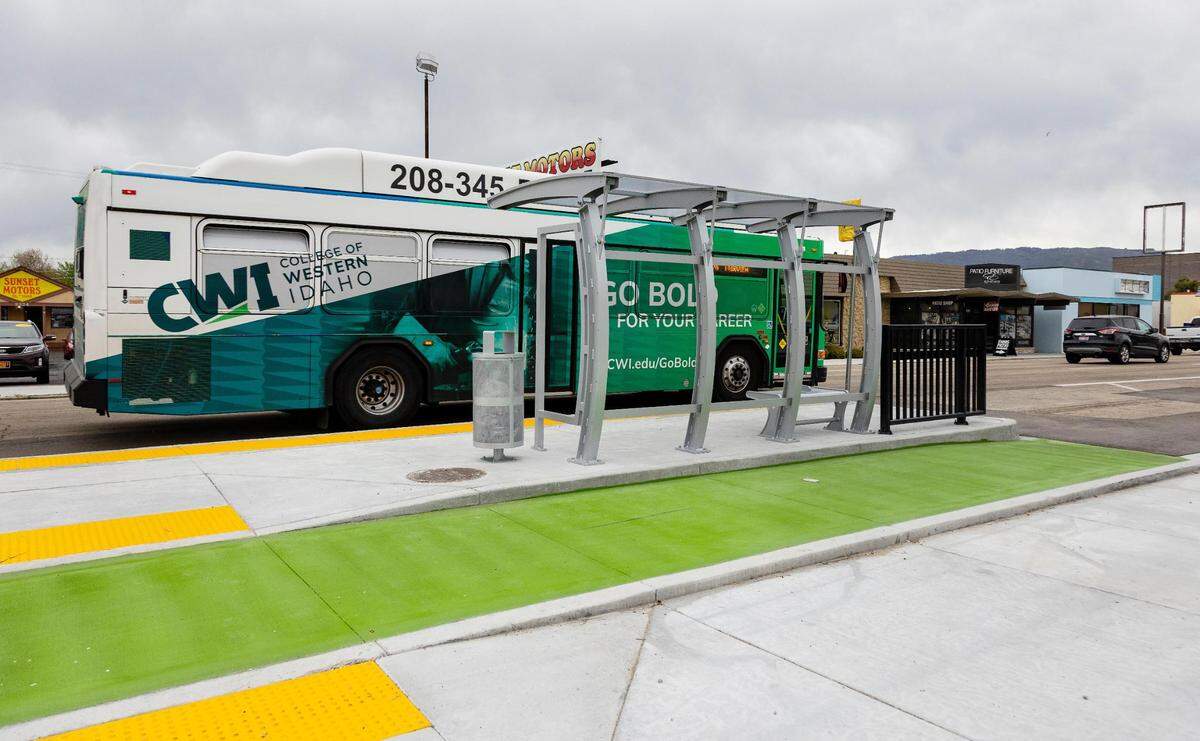
Petersen’s business is on the northwest corner of West Main and North 23rd streets, right behind one of the transit stations. He has disliked the bus stops since before they were built.
Petersen’s security footage shows cars blasting into the corner of the raised platform and knocking down poles. Since the stops aren’t yet in use, there haven’t been people standing nearby. But he’s worried about a car hitting someone who is waiting for a bus.
“It goes out too far into the road,” Petersen said. “So where the white line would normally be when you’re driving down the lane, there’s now a curb that’s almost a foot tall. All of us drive, all of us have touched or crossed the white line on the side of the road at some time or another. But if you do that on Main Street or Fairview near a bus stop, you’re going to crash.”
Construction of the bus stops cost Capital City Development Corp. $800,000, spokesperson Jordyn Neerdaels said. She referred questions about the stops’ safety to the buses’ operator, Valley Regional Transit.
Valley Regional Transit spokesperson Mark Carnopis said the design follows “best practices and federal safety standards.” Valley Regional Transit hired HDR as the project’s engineer, and the design, which followed guidelines set by the National Association of City Transportation Officials, was reviewed by the Ada County Highway District, Carnopis said.
Carnopis said there are about five instances a year where bus-stop shelters, benches or signs on sidewalks need to be replaced because of people crashing cars into them. He described it as “something that we can expect any year.”
“We would guess that inattentive driving is one of the major reasons for this stuff,” Carnopis said by phone.
Boise Police spokesperson Haley Williams said the department is not aware of any complaints or reports involving the newly built bus stops.
In 2019, an ACHD restriping project on Main and Fairview created a buffered bicycle lane. But that “came with unforeseen lane crossing conflicts between buses and bikes at each transit stop, necessitating additional infrastructure to ensure a safe interface for all users,” according to Capital City Development Corp.’s website.
The restriping also caused confusion among drivers, as lane strips veered suddenly at intersections. ACHD then restriped the two streets again, solving that problem.
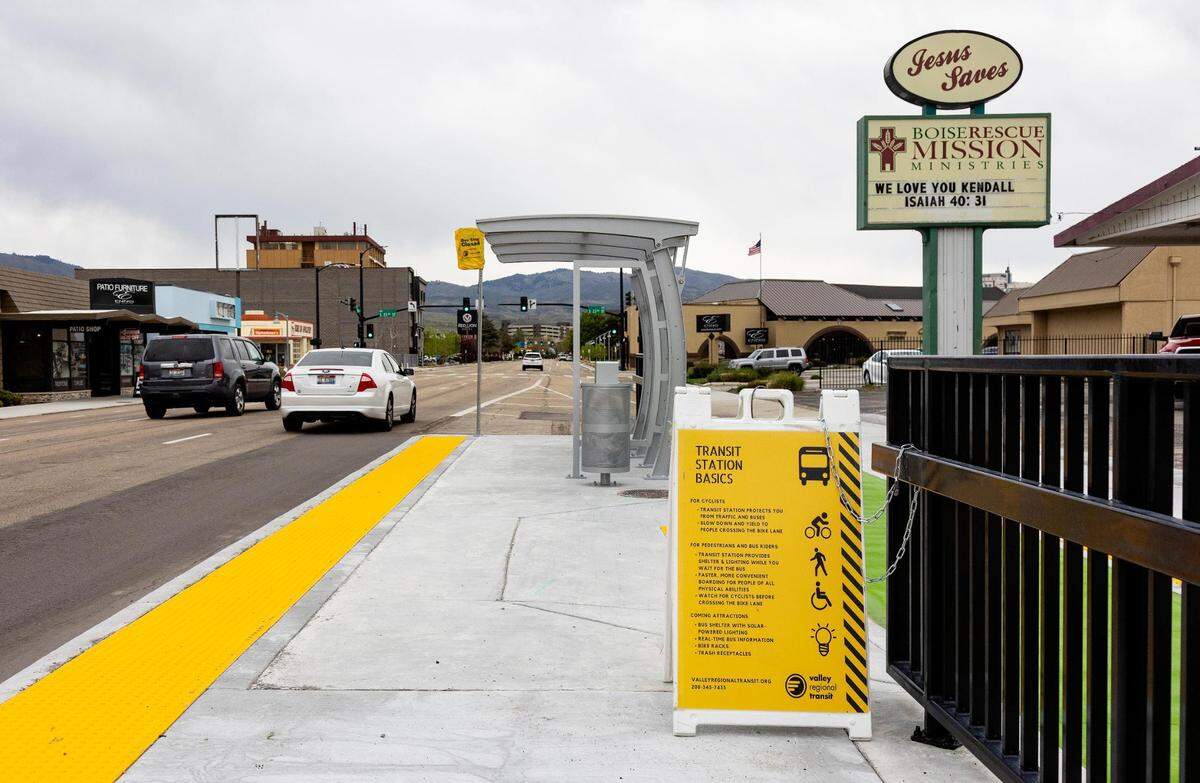
The new bus stop islands are designed to allow for buses to make in-lane stops without having to cross over into bicycle lanes. Bicyclists wouldn’t need to worry about being cut off by a bus.
Joe Jaszewski bicycles to work along these routes several times per week. He called the bus stop islands “fantastic” because they eliminate potential collisions between cyclists and buses crossing into bike lanes.
Though his preference would be a concrete curb protecting bike lanes along the entire street, he is happy that the bus stop islands offer some protection.
“It’s going to make that route even safer for cyclists,” Jaszewski said by phone. “And I think ultimately that’s going to mean more cyclists will be riding, because people will ride more when they feel comfortable and feel safe.”
Jaszewski said drivers can choose other lanes if they don’t want to be next to the bus stops. The security-camera videos show drivers straying to the side — which is where a cyclist could be if not for the built-in buffers.
“It’s better to be hitting a curb than a person,” Jaszewski said. “And it’s ultimately on the driver to stay in their lane.”
Local agencies hoped to implement bus stop islands for many years, Capital City Development Corp. Executive Director John Brunelle said in a news release last August, when construction was announced.
“One of CCDC’s focus areas is to enhance and expand mobility options within our districts to support the needs of the future,” Brunelle said. “We feel this design will accomplish that goal.”
Valley Regional Transit Executive Director Kelli Badesheim said in the same news release the transit islands “are part of VRT’s plan for making Fairview a premium transit corridor.”
Once the bus stops are fully built, they’re expected to have covered bus shelters with solar-powered lighting, benches and pedestrian ramps.
Quiggle said most of the cyclists who ride by his shop go on the sidewalk anyway. His business is west of the Cabana Inn and between confusing triangular intersections. He said there’s no problem with the bus stop already in use at the end of his street that’s located on the sidewalk.
Grant Petersen, the president and CEO of Bronco Motors, a longtime Idaho business on the northeast corner of Main and North 27th streets, said he, too, disliked the design when it was first proposed.
Petersen recalls thinking at the time, “People are going to hit these things.” A few months later, that prediction is being proved right.
This story was originally published May 6, 2022 at 1:08 PM.