
Boise City Council just ruled on Interfaith’s new homeless shelter. What it did, and why
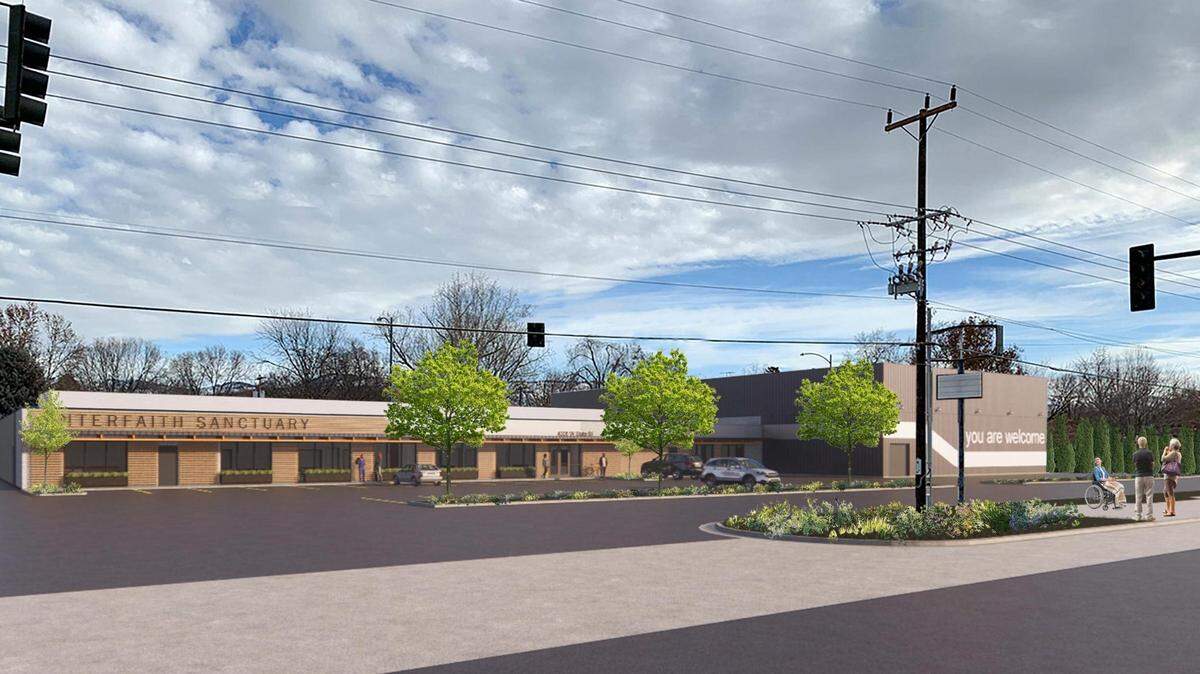
The Boise City Council on Monday overturned a decision by the Planning and Zoning Commission and allowed Interfaith Sanctuary to move its homeless shelter to a former Salvation Army building on State Street.
The council voted 4-2, with Patrick Bageant and Luci Willits opposed, to allow the shelter to be located at 4306 W. State St. The decision, which provides Interfaith a conditional use permit, came after 11 p.m. following more than seven hours of discussion.
“People who are experiencing homelessness in our community are also Boise residents,” Council President Pro Tem Holli Woodings said. “Our work is not just spent on people who live in apartments or live in houses or in hotels. Our job is really for every single Boise resident.”
The decision, which came after four days of hearings last week, would allow the shelter to move 3 miles northwest from Interfaith’s shelter at 1620 W. River St. Opponents are likely to challenge the decision in court. For months, opponents have argued the shelter would bring noise, crime and other problems to the neighborhood.
More than 100 people attended the meeting in person, and 216 were watching online as the vote was taken.
Interfaith and its supporters say Boise needs more emergency-shelter beds and space for services that Interfaith cannot provide at its River Street shelter. This winter, Interfaith ran out of space and started sheltering people in heated tents outside its building.
Interfaith Sanctuary will be allowed to have 205 beds in the new shelter. But the council rejected a request to allow the shelter to house 50 or more additional people during periods of freezing winter temperatures.
Woodings said using a day-use area for emergency placements would displace other shelter guests during the day and increase the chance for negative impacts to the neighborhood.
Jodi Peterson-Stigers, Interfaith’s executive director, pushed to be able to exceed the 205-person limit during overflow situations. And she bristled when Council President Elaine Clegg asked whether Interfaith had considered limiting the shelter to families and those with medical issues.
“Interfaith Sanctuary was founded with a mission to serve all that didn’t have a place to go, and we take the person that you might think isn’t deserving of that bed space,” Peterson-Stigers said. “There’s no one who is undeserving.”
The shelter will feature a medical clinic and a hospice. It also will connect guests with other needed services.
The guest limit was one of 30 conditions the council imposed to mitigate the impact of the shelter, which will be located across State Street from Willow Lane. Other conditions require physical barriers to separate individuals and families and restrict nighttime ejections unless transportation is provided to another shelter or police respond.
No tents will be allowed for camping on the shelter property, and no one will be allowed to sleep in a car on the property.
Peterson-Stigers said the shelter will provide intake services on the north side of the building, away from State Street. That will keep guests from congregating in front of the building. Separate entrances will be provided for individuals and families.
A fence on the back side of the property will prevent guests from slipping into the neighborhood. They will have access only from the State Street side.
Bageant said he tried to come up with conditions that would allay his concerns over the impact to the neighborhood, but he couldn’t. He didn’t think the 30 conditions adequately covered everything.
“I don’t know with enough certainty that they’re going to produce the outcome we’re saying,” he said.
The Planning and Zoning Commission voted 5-1 in February to deny the application. The commission ruled that the shelter would harm the surrounding area and public services. No number of conditions would mitigate the impact, the commission said.
After five days of testimony over the past week, the City Council thought it could temper the impact through the 30 conditions and by holding shelter managers responsible for keeping the peace with neighboring residents and businesses.
Shelter officials will be required to meet monthly with the Boise Police Department and Our Path Home, a public-private partnership of more than 50 agencies that tackles homelessness problems.
They will also have to hold a meeting to review shelter impacts after six months, a year, and then each subsequent year, and to submit reports to the council.
Residents upset by alleged misbehavior by shelter guests will be able to file complaints and have them addressed by shelter managers.
All of the council members said they struggled with the issue. Several wondered whether any location was proper for a shelter if the State Street spot was rejected.
“There would be an impact if this was a hotel, which is allowed,” Woodings said. “There would be impact if this was a drive-thru coffee shop. We have to look at the impacts and how we can mitigate them.”
Guests at homeless shelters are already the victims of adverse impacts, Council Member Lisa Sanchez said.
“One of the things we don’t like to admit is, we don’t like the sight of poverty,” Sanchez said. “A lot of it has to do with how it makes us feel. It doesn’t make us feel good to be at a store and see somebody who, by their appearance, looks like they don’t live the kind of life that we do.”
With Boise’s volatile rents and housing prices, more people are inching closer to homelessness, she said. As the only renter on the council, Sanchez said she worries her rent may one day become too much to afford.
Clegg thanked the neighbors who opposed the application and said their objections helped shape the conditions placed on the shelter.
“I’m not completely comfortable with this decision,” she said. “This application doesn’t solve the problem. We’re going to have to come together and provide even more than what is proposed here.”
This story was originally published April 26, 2022 at 1:52 AM with the headline "Boise City Council just ruled on Interfaith’s new homeless shelter. What it did, and why."