‘What does Boise want to be?’ Proposed loss of ‘permanent open space’ raises question
Blue signs springing up along South Umatilla Avenue in Southwest Boise are becoming a familiar sight:
“SAVE BOISE OPEN SPACE FROM DEVELOPMENT.”
Several homeowners have placed the signs in front of their houses. They want to save the land at the back.
The land east of South Umatilla Avenue, rubbing up against homeowners’ properties, is owned by the Boise Airport. The houses are a little more than 2 miles southwest of the airport. On the Monday, Jan. 10, Planning and Zoning Commission agenda, the city of Boise is proposing to rezone 153 acres from open lands to light industrial.
That means the neighbors’ picturesque view of the Foothills could disappear, and Southwest Boise’s fight for open space could take a hit.
New industrial buildings on the site would join a growing list of projects planned or already under construction that have transformed the open land south and southwest of the airport into Boise’s newest hot spot for development. A potential Amazon project is in the works east of the 153 acres, and more than 2,000 homes are planned in homebuilder Corey Barton’s Locale subdivision to the south.
By rezoning the acreage to industrial, the city of Boise could generate property tax revenue from new buildings and warehouses, and the Boise Airport could make money from a ground lease. The city, which runs the airport, selected Adler Industrial, a Boise industrial real estate development firm, as the preferred developer for future projects on this piece of land, City Hall spokesperson Justin Corr wrote in an email.
Boise’s planning staff is recommending the approval of the rezoning, because it meets the intended use of the land in the city’s comprehensive plan: industrial.
Current zoning can be changed to meet the future zoning designated on the land-use map in the comprehensive plan. Boise’s Interim Deputy Director for Current Planning, Celine Acord, said there are many situations in which current zoning and future zoning don’t match. But that doesn’t mean nearby residents embrace such changes.
“Zoning classification can always change,” Acord said by phone.
This situation in particular has caused a stir because part of the open land is zoned as “permanent.” About two dozen properties abut the land in the proposed rezoning.
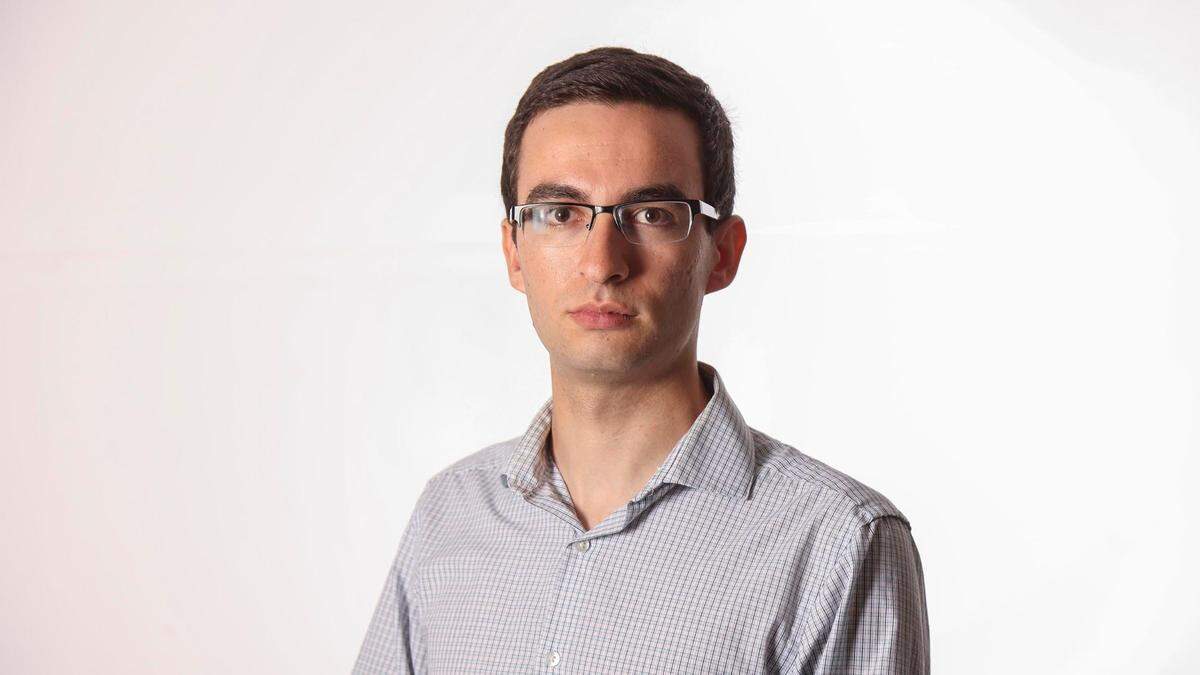
Gregg Russell, president of the newly formed Boise Open Space Alliance, has helped rally neighbors to save the open space. His backyard touches the western edge of the 153-acre site. A petition sent to the city opposing the rezoning includes about 200 signatures, and several dozen emails have been sent to city staff members.
“When it’s gone, it’s gone,” Russell said in an interview. “There’s no re-do button. That’s what’s tough.”
Adler Industrial CEO Mike Adler said property closest to homes would be the last to be developed, and there would be a buffer of at least 60 feet from the property line.
“We don’t intend to develop near those houses,” Adler said by phone. “I think that’s the part that the neighborhood people may not fully understand.”
‘What are you going to choose?’
South Umatilla Avenue runs north to south alongside and south of Indian Lakes Golf Club. The nearly 50 houses on the street are outside Boise city limits, part of unincorporated Ada County.
But they are in the city’s area of impact and affected by city decisions. That’s because Idaho law requires cities and their surrounding counties to designate as areas of impact any lands that a city intends eventually to annex from its county. The law gives the city authority to plan there.
The houses are also in an area of Southwest Boise that many residents say is starved for open space. In recent months, residents fought to preserve the Murgoitio Park site, just over a mile away.
At the southern edge of South Umatilla Avenue is a gate to a trail where neighbors frequently take walks alongside the land that’s been preserved — for now. These days, it’s accompanied by signs highlighting Monday’s Planning and Zoning Commission meeting and the proposed rezoning.
“Just take a look and see. Is this a good place to put an industrial park?” Russell asked from his living room, in front of a window with a view of sagebrush, the Foothills and the sky. “Or is it a good place to leave open and let residents have a space in the city?”
At the crux of neighbors’ discontent is that 77.5 of the 153 acres in the proposed rezoning is zoned A-2. In Boise’s zoning code, that’s the “zone intended for permanent open space.” The rest of the land in the proposed rezoning is A-1, which means open land, but not necessarily permanent.
Boise’s land use map, which guides future development, shows the full 153 acres is set for industrial use. While neighbors recognize development may occur, their issues hinge on the definition of “permanent open space.”
The acreage is in a horizontal strip that stretches west from Orchard Street to the Umatilla Avenue houses, about two-thirds of the way to Cole Road. Industrial warehouses occupy other land closer to the airport, but a ridge in the middle of the 153 acres keeps them out of view from the backyards of houses.
In the emails sent to the city staff, many neighbors said they don’t oppose development on the land that’s zoned A-1 — the land below the ridge to the east. But west of the ridge, closer to their houses, that’s what they want to save.
“If this would have been A-1, this would have made more sense,” Russell said. “When you see A-2, that’s like the Foothills. It’s a protected space. That’s great.”
Adler noted that it was City Hall, not his company, that proposed the rezoning. He said his company simply responded to the city’s request for information about potential projects if the land designation was changed to industrial.
Corr, the city spokesperson, said the project is “still in the due diligence phase,” since no master development agreement has been signed and no building plans have been confirmed.
According to the city’s request for information, obtained by Russell, the Boise Airport aims to “create a city for everyone by providing the aviation infrastructure that attracts the services desired by the community; maximizes the airport’s role as an economic generator; and be a strong community partner that benefits all.”
The request for information also included 3.2 acres on Victory Road in which single-family residential and A-1 open land would be converted to light industrial.
Outlined in the request for information includes the airport’s goal of “revenue maximization.”
“When you have situations like this, what are you going to choose?” Russell said. “Are you going to choose the things that make Boise amazing, or are you going to choose the things that make you money?”
As first reported by BoiseDev.com, Adler Industrial responded to the city’s request for information by projecting that its proposal could create $3.3 million in property tax revenue.
In an interview with the Idaho Statesman, Adler said the airport would benefit from making money through land rent, and the new buildings would support new jobs.
Aligning with airport, city goals
Ground-lease revenues for the airport could help pay bond debt for projects included in an upcoming expansion. The Boise Airport plans to build a third terminal with up to a dozen more passenger gates, two new parking garages and a relocated rental car area.
The airport has already issued about $56 million in bonds to build the 1,150-space parking garage for the public and the 700-space garage for employees. Construction of both is scheduled to start later this month and take about two years, according to Shawna Samuelson, an airport spokesperson.
Total cost of the expansion projects is estimated at as much as $250 million, with completion targeted for late 2025 or early 2026, airport officials said. Funds from the ground lease, which is still under negotiation, would go to the airport’s general fund once the industrial park is finished in what Adler projects will be in about a decade.
Those dollars could go toward paying down debt on the airport expansion, but the airport already has revenue streams identified to support the bonds, Samuelson said. They include fees paid by rental car users as by passengers toward facilities every time they pay for airfares.
The airport chose Adler’s proposal ahead of the six other responses “based upon criteria such as the project scope and vision and alignment with the city and airport goals,” according to a statement from the airport.
The four “permanent open space” parcels were annexed into Boise in 2005. Acord, the city planner, said Boise typically keeps the same zoning when a piece of county land becomes city land. In this case, the city made the distinction of setting this land aside for permanent open space rather than just open space.
“The definition does say permanent open space, but unless there is an easement or some sort of deed restriction or something more legally binding, it doesn’t mean that zoning district will stay with the land in perpetuity,” Acord said. “Anyone can apply for any zone change within the city.”
Acord said open-land districts are a “holding pattern” until development happens. The future land use map frequently takes priority over current zoning, she added. Boise’s comprehensive plan, Blueprint Boise, was adopted in 2011.
“Permanent open space probably should be reworded,” Acord said, “because a zoning designation is truly never permanent. It can and likely will change over time, whether that’s in one year or in 50 years.”
‘What makes Boise Boise’
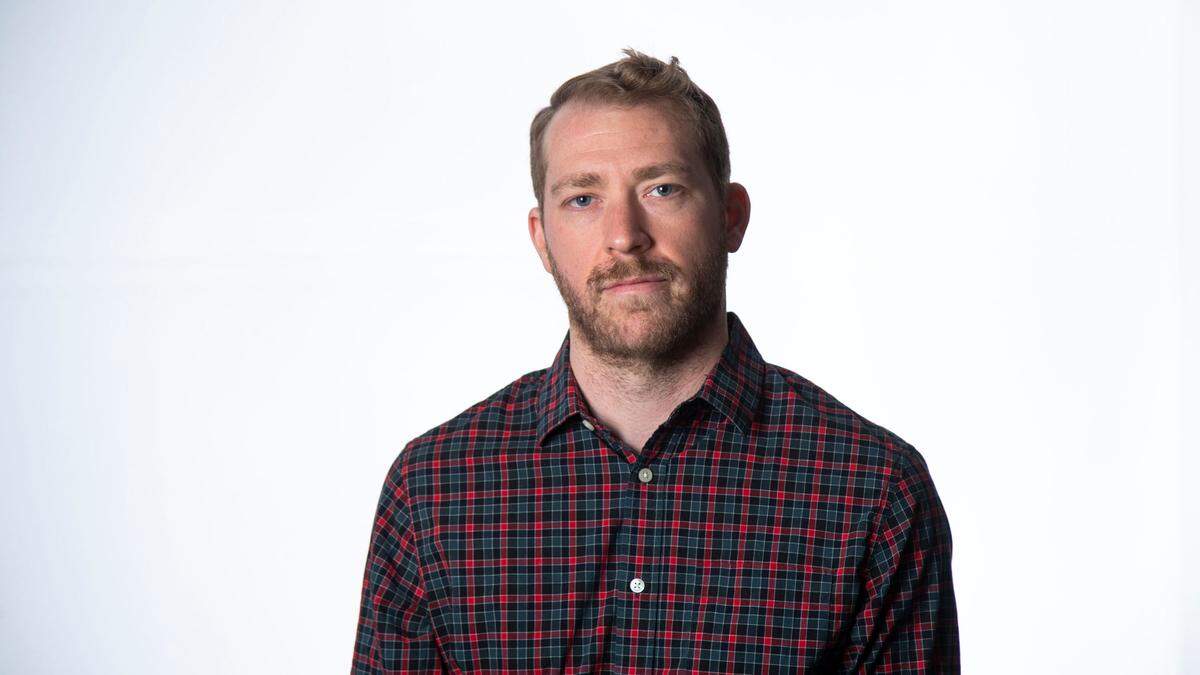
Eight years ago, Heather and Josh Ray planned to move into the last house on the southeast tip of South Umatilla Avenue. Both were born and raised in Boise. Heather grew up down the street, eight houses away.
Before buying, the couple negotiated a livestock lease with the Boise Airport to use a piece of the airport’s land for their three horses, goats, llamas and chickens.
Next to their property is the trail that runs east-west along the southern edge of the airport’s land. Josh estimated his family sees 20 to 50 people a day walking their dogs and using that trail. Heather grew up making forts in the sagebrush, riding horses on the open land and watching wildlife like coyotes, owls and rabbits.
They now have two kids, ages 6 and 4. Their intent was to be there forever — as they thought the open land behind them would be too.
“It’s a complete devastation of our whole lifestyle,” Josh Ray said by phone.
If the industrial buildings are approved and built, neighbors have expressed concerns about traffic, safety and declining property values. Some are worried about preserving the habitat for wildlife, especially since the World Center for Birds of Prey is nearby. The most common sentiment, though, is wanting to preserve the land, the unobstructed views and the lifestyle because that’s what neighbors believe “permanent open space” means.
That’s “what makes Boise Boise,” Ray said, “and it’s special.”
“Permanent — that doesn’t leave any room for interpretation. Permanent is such a strong word and intentional too,” Ray said. “... When they gave it that zoning as A-2, that really, at least in my mind, cemented that land into being exactly what it is.”
According to the information packet with Monday’s agenda, 15 minutes after receiving a Dec. 8 email from Ray opposing the proposal, Boise Mayor Lauren McLean emailed Acord asking if staff told neighbors about “our intent to retain an open space buffer.”
“Yes we did,” Acord replied.
While city officials and Adler have repeatedly leaned on the proposed minimum 60-foot buffer, neighbors argue that’s not enough to make up for the 77.5 acres zoned as “permanent open space” that could be built on.
Adler acknowledged if some of the parcels aren’t rezoned, he would focus on continuing with the project on whatever land is allowed to be developed.
“We would certainly be looking at how could a project mitigate (neighbors’) concerns,” Adler said. “… I know the airport is looking at how best to address the issues so that it would work for everyone.”
The future of Southwest Boise
Adler is involved with other industrial use projects in the Southwest Boise area. He described this proposal as an infill project, because he believes it matches with other industrial areas closer to the airport.
At the same time, subdivisions featuring hundreds or thousands of homes are under construction or being planned in the area. Several building companies have placed signs next to Southwest Boise roads advertising their developments.
Some residents — like the ones advocating for Murgoitio Park — argue that Southwest Boise lacks sufficient open space.
Though chunks of Southwest Boise aren’t technically within Boise city limits, the area has proved to be a crucial part of the city’s growth.
All these factors have combined to make Southwest Boise a ripe battleground for debates about what’s coming next. The most recent conflict shines a light on the wedge between the present and the future.
The Foothills above Boise’s North End feature a combination of A-1 and A-2 zoning. Ray worries that a reversal of “permanent open space” in Southwest Boise could foreshadow losing more open space in other places too.
“If this really isn’t protected and it’s not permanent, then who’s to say the zoning for the Foothills is protected either? That scares me,” Ray said. “That really sets a precedent moving forward that A-2 doesn’t mean anything and that permanent isn’t permanent.”
Acord said the difference with Foothills land has to do with easements, deed restrictions, master plans and more binding legal measures protecting that land.
Russell believes the issue comes down to equity. He described Boise as being divided between “haves” in the North End and “have-nots” elsewhere. For Russell, it’s about a 20-minute drive, or longer, to get to Foothills trails above the North End. He hopes at least some of the open land around his house can be preserved.
After Monday’s Planning and Zoning Commission meeting, the rezoning proposal will likely land before the City Council. Whether Planning and Zoning recommends approving or denying the rezoning, the City Council will be required to consider it.
“The question is: What does Boise want to be?” Russell asked.
This story was originally published January 9, 2022 at 4:00 AM.