
Residents say homeless shelter would multiply police, fire calls to Boise neighborhood
Boise is inching toward one of the most contentious decisions its city government will face this year or next: whether to approve a permit for a State Street shelter for people experiencing homelessness that many neighbors vehemently oppose, while advocates argue the expansions are necessary.
Those parties will have to wait a little longer for a resolution. More than 100 people had signed up for public comment at Monday’s Planning and Zoning Commission, pushing the meeting past its 10:30 p.m. deadline.
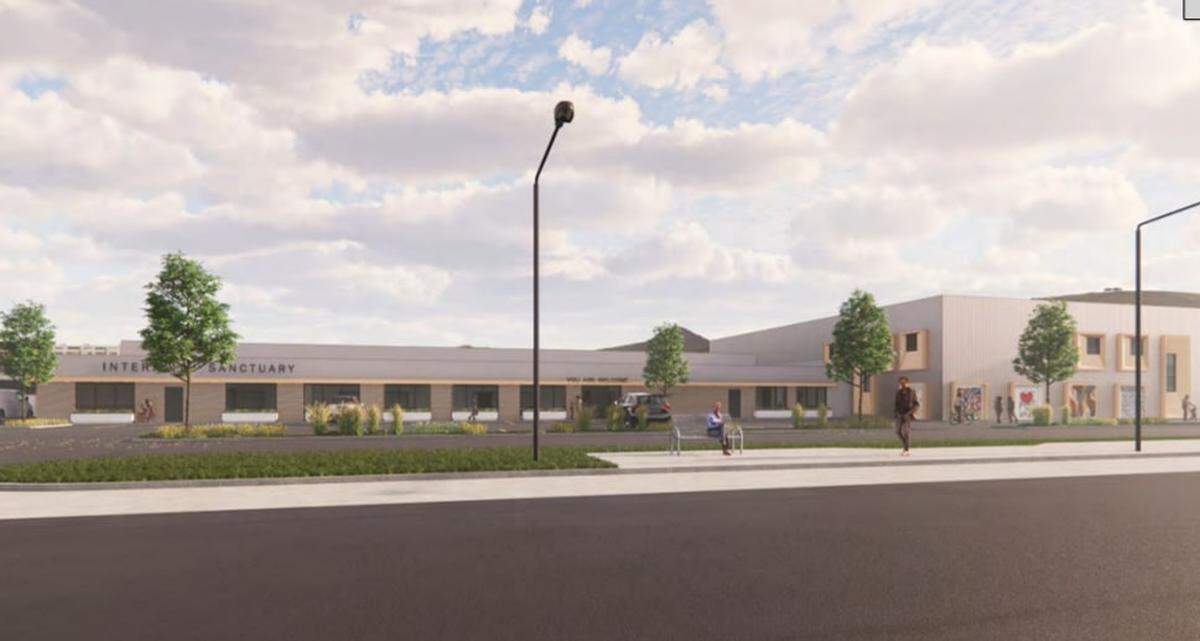
Four hours of testimony concluded with no decision regarding a conditional use permit for a new Interfaith Sanctuary shelter at 4306 W. State St., a former Salvation Army thrift store and office. Instead, the Planning and Zoning Commission will resume the hearing in three weeks.
More than 100 people attended the meeting at City Hall, both in the chambers and in overflow seating in the lobby. Commissioners heard testimony on parking, crime, density, level of services and property values, themes that have dominated community discussion around the proposed shelter for months.
Katy Decker, president of the Veterans Park Neighborhood Association, zeroed in on emergency-service calls and blaring police and fire sirens that she said would disrupt the quiet residential streets just off busy State Street. Interfaith’s current shelter at 1620 W. River St. gets three to four calls for police or fire service per week, while the area around the proposed shelter gets five per year, Decker said.
“The noise impact alone would make the site incompatible with residential uses,” Decker testified.
The shelter would serve up to 205 people 24 hours a day. The existing shelter can serve 164, though Interfaith now is serving 245 men, women and children by housing some in a Boise hotel, said Jodi Peterson-Stigers, executive director of Interfaith.
Peterson-Stigers told the commission that space has long been inadequate at Interfaith’s current location, a problem now exacerbated by the COVID-19 pandemic. Interfaith shelters families and the medically fragile at the hotel to help reduce the demand for space at its main location. Interfaith has declined to name the hotel publicly.
“Interfaith has known for a very long time that we needed a new building,” Peterson-Stigers said. “The pandemic forced us to speed up our process to find a location to serve the number of guests that are currently in our shelter system.”
Interfaith announced its desire to buy the Salvation Army building in January. Opposition emerged quickly, but Interfaith went ahead and purchased the building in April and soon after filed an application for a conditional use permit.
Decker told commissioners that the conditions placed by the city of Boise on the shelter’s proposed permit have done little to mitigate the anticipated impact.
The question of whether the new shelter would hurt nearby properties was a common thread throughout the night.
Multiple agencies, including the police and fire departments, also testified about the respective impacts they would face and what requirements they would like placed on the shelter. Police Chief Ryan Lee said the shelter will have an impact, but proper communication could prevent any significant problems.
“We need Interfaith Sanctuary to keep lines of communication open,” Lee said.
Geoffrey Wardle, a Boise attorney representing Interfaith, told commissioners the shelter had gone above and beyond to meet the requirements set by the city, which would lessen any impact. This includes requirements to have a part-time medically trained staff member on site and quarterly meetings with the police department.
“(The conditions) go far beyond the conditions of approval that have ever been imposed by the city of Boise on any other conditional use permit for a shelter home,” Wardle said. “We believe that their standards are appropriate.”
Commissioners gave few hints on which way they leaned on the decision before them. Nevertheless, multiple commissioners questioned the relevance of some of Decker’s arguments, which included zoning maps of shelters in cities across the country.
“We make our decision based on the Boise City Code,” Chairwoman Meredith Stead said. “The standards in another city or another country have little impact on how we can make our findings.”
Ultimately, the commission decided to defer a meeting on the permit until its Dec. 6 meeting, which starts at 4 p.m. at City Hall. The meeting will be mostly public comment.
The commission’s decision likely won’t be the last. Any decision made by the commission can be appealed within 10 days to the City Council. Peterson-Stigers and Decker have said they will appeal should the commission rule against them.
This story was originally published November 16, 2021 at 4:00 AM.
.jpg)