‘Insanity,’ ‘negligent,’ ‘disappointing’: After criticism, Boise Marathon vows changes
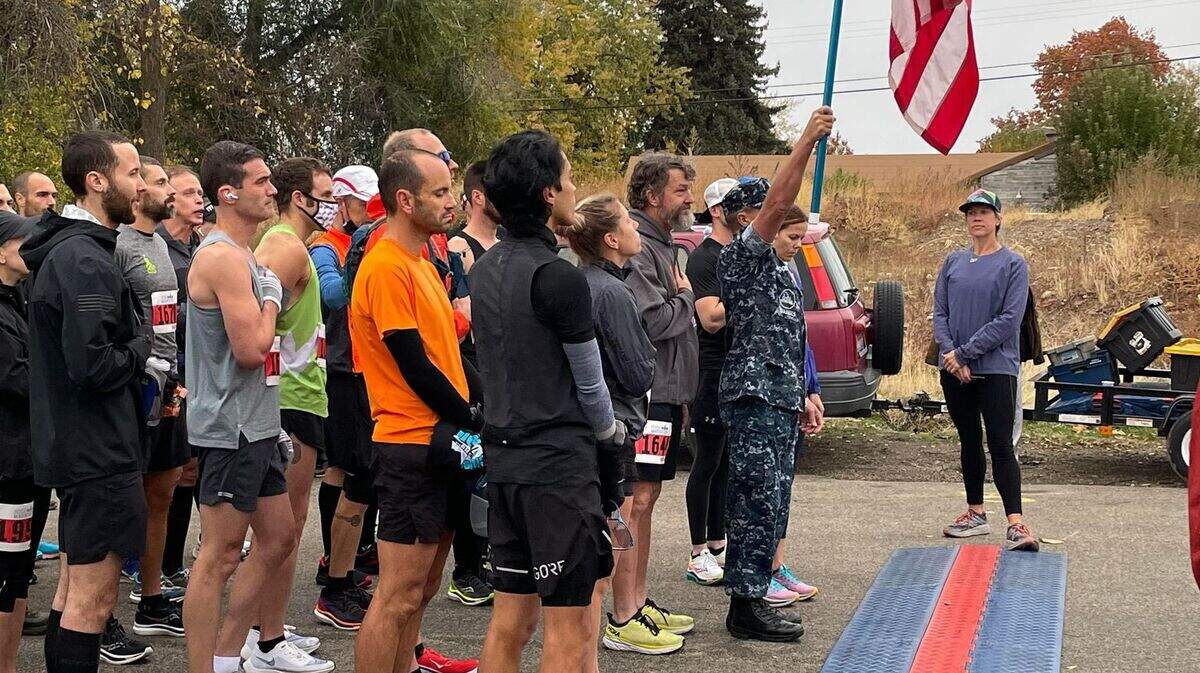
Close to a thousand runners gathered Oct. 24 in Garden City for the Boise Marathon and a series of other races along the Greenbelt. Participants arrived that cold, rainy, windy morning to compete in the grueling 26.2-mile run, or a half-marathon, 10-kilometer or 5k race.
It was an inaugural distance race for some. For others, it was their sixth marathon, or even more. And for many, it was the culmination of months of training, including for runners hoping to clock a fast enough time to win a coveted spot at the Boston Marathon, with the Boise race serving as an official qualifier.
But for a parade of runners, regardless of what distance they were going, it ended up being the worst such event they’d ever experienced.
“I have never been in a race that compares to this,” Dona Driscoll-May, who has been running since 1974, was an All-American at the University of Wisconsin and competed in the 10k, told the Idaho Statesman in an interview. “It was very disappointing.”
Complaints flooded in after the race — ranging from a lack of water, drinks and energy gels, to poorly marked running courses that led to a host of problems, to a lack of portable toilets.
In a comment responding to a negative review of the race on Facebook on Oct. 27, the organizers wrote, “We know that this race was a failure and nothing went as we wanted it to this day.”
The race was organized by the Go Agency, a multilevel marketing company in the Treasure Valley that operated a “virtual” marathon last fall because of the COVID-19 pandemic. The Go Agency purchased the marathon — formerly called Onward Shay — in 2019, and operated it for the first time that year.
In an interview with the Statesman, the race’s director, Julia Sanchez, and assistant director, Lauren Brill, said that numerous volunteers who were supposed to help on race day by directing runners and supplying the aid stations did not show up.
“Unfortunately, the weather the day of just really didn’t help us out,” Sanchez said. When she and her team found out volunteers hadn’t arrived, “a lot of our staff ourselves went out on the course to try and be out there. We did what we could with the networks that we had.”
She vowed that organizers are working to address all of the participants’ concerns. Sanchez and Brill said a board of runners is being formed to advise on next year’s race, and steps are being taken to make sure there is no repeat of 2021.
“We want to make it very clear that we’ve heard all this feedback, and we want to make sure every runner has felt heard during this whole process,” Sanchez said. “We’re aware that major changes need to be made. … All the feedback we get is taken straight to heart.”
Which way do we go, runners wonder?
A marathon is 26.2 miles and a half is 13.1. A 10k is 6.2 miles and a 5k is 3.1.
But how much extra mileage all of the runners piled up that day is anyone’s guess.
Driscoll-May said there were few mile markers and no signs or volunteers at the designated turnaround point for the 10k race, so she and a group of others went way past it. Along the way she asked volunteers what the mile marker was or which direction she should turn, but none of them knew, she said. Driscoll-May said she ended up covering about 8.5 miles.
Matthew Allphin, who flew from Kansas City for the marathon with hopes of running a qualifying time for Boston, overran the turnaround in that race and said he ended up running 28.5 miles by the time he reached the finish line. The winning marathoner — Anthony Jacobs — told the Statesman that he ran an extra half-mile.
Jessie Nilo, of Boise, sat at the Coffee Mill at Warm Springs Avenue and Eckert Road in Harris Ranch to cheer on her daughter, who was running the marathon. The course extended east from Garden City, following the Boise River, and was mostly along the Greenbelt or streets right near it.
Nilo said she soon noticed that runners were missing a turn on the course and heading in the wrong direction. She said she ran out in the pouring rain to warn runners.
“It’s hard enough to run a marathon,” she said. “(The runners are) not supposed to know the route by heart or memorize the route.”
Nilo said she posted on the Boise Marathon’s Facebook page to inform race organizers that runners were missing a turn and suggested they send a volunteer to direct traffic. She said no one responded until the day after the race.
Sanchez told the Statesman that there were mile markers all along the course, but the weather “knocked a lot of them down.” “We tried to get out as quickly as possible to set them back up,” she said.
Brian Baker, a Boise runner who measured the course for the organizers so that it could be certified for the Boston Marathon — and also ran it — told the Statesman that a friend was out on the Greenbelt on his bike that day, supporting the racers. That friend noticed the spot where Baker had marked the turnaround point with a 4-inch piece of duct tape — an indicator not intended for use by runners, but rather a marker for where organizers should install more obvious signage.
Seeing that there was no other signage, Baker said his friend grabbed a couple of nearby construction cones and lined them up at the turnaround. Allphin said he saw the cones but no signs, so he “blew right past.”
Allphin said he and the woman he was running near eventually decided to turn around, roughly a mile past the halfway point. At that point, he realized “there’s no way I can actually finish this race and have any hope of qualifying (for Boston). It was not good and not like any race experience I’ve ever had before for something claiming to be a Boston qualifying course.”
Ben Wentz, a runner from Walla Walla, Washington, said he had never tried a marathon. He signed up for the race six months ago and had been training for four. He said things “really got off the rails” when he got to a point in the course where the Greenbelt intersects with Warm Springs — right where Nilo was stationed to watch her daughter — and he saw no indication of where he was supposed to go.
“That’s just insanity to me,” he said. “Like, how do you not mark a major intersection on your race and tell people where to go?”
Brill, the race’s assistant director, said that “for the signs at the turns, we definitely didn’t have enough of those, and that’s what the course marshals were supposed to be directing. So for next year, we’ve decided to make sure we have all the turn signs just in case anything does happen with volunteer groups.”
‘A very dangerous thing’ at the aid stations
Runners were told there would be aid stations every 2 miles along the course — complete with water, energy gels and electrolyte drinks — according to a social media post from the race organizers. They also said there would be portable toilets along the course.
But according to several people interviewed by the Statesman, none of the aid stations had energy fuel, and several were unmanned and had no accessible water. One runner told the Statesman she saw a single portable toilet, while others said they saw none. Allphin told the Statesman that by the time he got to many of the aid stations, he didn’t see any electrolyte drinks.
“It is a very dangerous thing to have a marathon and not have what you claim you’re going to have at each aid station,” said Emily Allphin, Matthew’s wife, who ran the 5k.
Matthew had brought energy gels with him but wasn’t able to take them for miles because there was no water readily available, he said, to consume the viscous substance. An experienced marathoner, he said he couldn’t imagine being out on the Boise course as a first-timer.
“So many things about how this race was run, honestly, just seem terribly negligent,” he said.
According to nutritionists, most people who run marathons are unable to ingest enough food to last them all 26 miles, so they have to take in calories along the way. Many distance runners use energy gels, which are concentrated doses of carbohydrates meant to be taken with water.
Jacobs, the winning marathoner, said distance running for hours makes people operate at a “huge calorie deficit.”
“Things can get a little bit dicey if you aren’t properly hydrated, or taking in nutrition or calories,” he said. “All other races I’ve seen have that available at regular intervals during a race.”
Sanchez said runners must have missed the gels, because “we know they were out there.” Brill said they ran out “faster than we expected them to.” Sanchez added that there were three portable toilets along the course, and multiple at the start line.
Questions about race times, and looking ahead
Allison Evaro, the director of races and events at the Treasure Valley Family YMCA, was contracted to conduct the official timing of the race. She told the Statesman that she delayed submitting results to Boston Marathon organizers because she is unsure whether her submission is expected to verify the course or just the times themselves.
Evaro was not involved in organizing the race, but her group placed timing mats along the course, which read the transponder chips in race bibs. For the marathon runners, there were mats at the start and finish, and a mat by the Idaho Shakespeare Festival stage, between miles 13 and 14.
Evaro said the Boston Marathon requires that qualifying results be submitted from a certified course, which Boise’s course was.
“The course might have been certified, but it doesn’t sound like everyone ran the correct course,” she said.
She said there were not issues with her timing mats, but there is no way she can tell whether a runner went too far or not far enough. “So I’m waiting to hear back (from Boston) on that,” she said.
On Friday, she said in an email that she has now submitted her results to the Boston Athletic Association, which organizes the Boston Marathon, but that she hasn’t heard back about her questions.
In an email to the Statesman, the Boston Athletic Association said the association “does not comment on other races.”
Sanchez and Brill both said their goal is that no such problems or questions will arise next year.
Depending on when a runner registered, the cost of the marathon was between $80 and $145, according to the website, while the other races cost less. For runners who had problems with this year’s race, Sanchez said the Go Agency is offering free entry into one of its races being organized for next year: the Spring Run in May, the Boise Women’s Classic in June or the Boise Marathon in October.
Baker, the runner who measured the race course — and who said he has run more than 100 marathons — was asked to be on the board the organizers formed.
“I appreciate the fact that they’re trying,” he said. “I’d rather work on doing what I can to make (the race) better, rather than doing what I can to make it go away.”
He said that not having volunteers show up is a “race director’s nightmare” that’s difficult to fix. “Even a good race is going to have people who are angry at us, let alone one that goes south,” he said.
Organizers will have to wait and see whether people turn out for next year’s event.
“When you spend months or even longer (preparing),” Driscoll-May said, “and you’re lost on the course, that leaves a very sour, bitter taste in your mouth, and that’s not what you would expect from any road race at all.”
This story was originally published November 17, 2021 at 4:00 AM.