The lasting effect of 9/11: ‘PTSD is still there,’ but ‘moving to Idaho’ was a godsend
An insurance worker at Morgan Stanley. A military veteran who was a student at Boise State. A Boise firefighter. A New York paramedic.
Twenty years ago, they had nothing in common. Then the United States was rocked by the terrorist attacks of Sept. 11, 2001 — which reached into every corner of America and spurred a kind of unity that might be hard to imagine in today’s divided nation.
At least two Idahoans were killed the day of the attacks, and more have died in the nation’s wars since then. Brady Kay Howell, a 26-year-old Rexburg native, and Navy Commander Ron Vauk, of Nampa, were killed by the third hijacked plane, which struck the Pentagon in Arlington, Virginia, at 9:37 a.m.
For those who survived the attacks or who changed the course of their lives because of them, the effects still reverberate today.
One of the mantras from 9/11 is “Never Forget.” Twenty years later, the list of those who don’t includes Robert Ryan, Dan McKnight, Tom Moore and Brian Katcher — four men whose lives were altered that late-summer morning, and four men who now have something in common: Idaho.
Ryan, who moved to the Gem State in 2007, was on the 74th floor of one of the twin towers that fateful day. McKnight, who had served in the military and was inspired by the attacks to go back, was sleeping in his home in Meridian. Moore, a Long Islander who wasn’t on duty with Boise Fire, was glued to his TV at home. Katcher, who resettled in Meridian for a while, was working at a New York hospital and was sent to Manhattan from Long Island by emergency dispatch.
For Saturday’s 20th anniversary of the attacks, the four talked to the Idaho Statesman about 9/11, its aftermath and where they are now. Ryan said he’s happy to be on this side of the country.
“Moving to Idaho was one of the things that helped me the most,” he said.
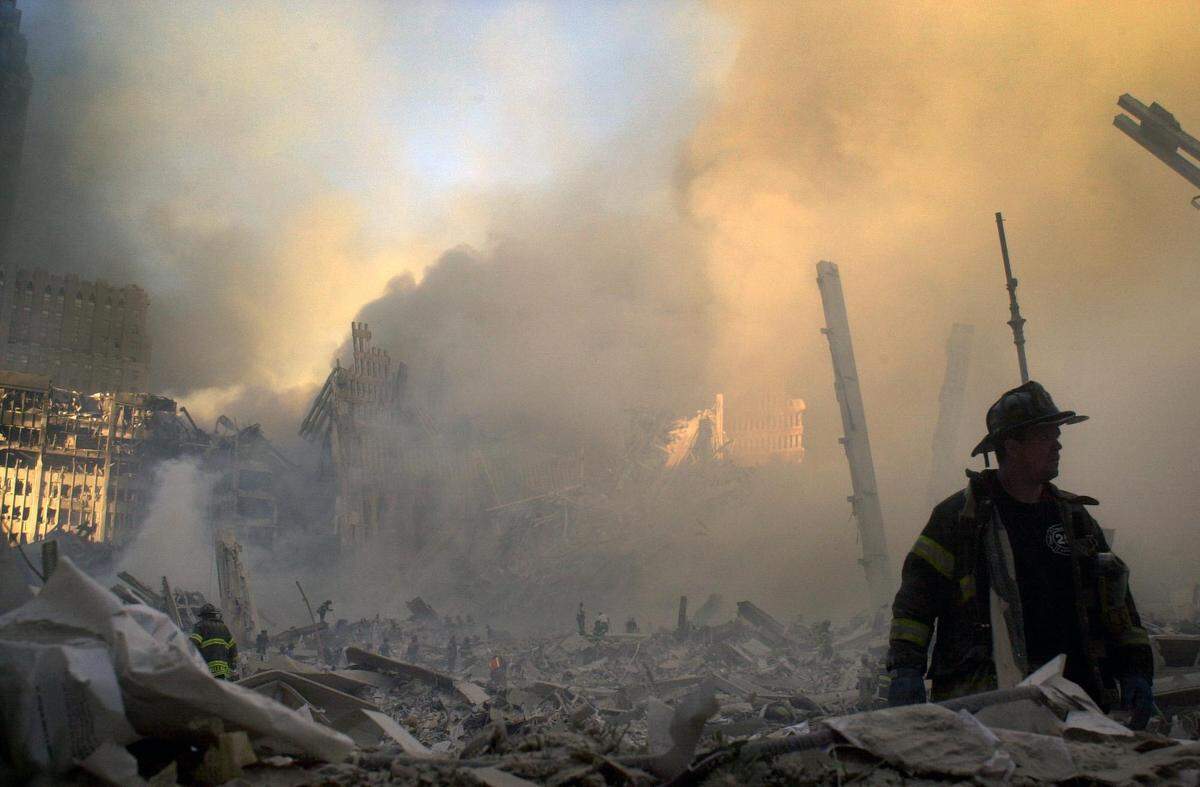
A morning of smoke, dust and disbelief in New York City
Ryan, a project manager in the insurance services division of Morgan Stanley at the time, had just gotten to his Lower Manhattan office when he felt the effects of the first hijacked airplane colliding with the World Trade Center tower adjacent to his. He took an elevator down to the 36th floor, where it stopped, and took the stairs the rest of the way.
The building was congested with people, Ryan said, but he noticed they were not panicked walking down the stairs. Something had happened in the building next door, but it was unlikely to happen in theirs, they thought.
He left the building and walked to the crowded street. A woman he didn’t know was crying, so he put his arm around her. At 9:03 a.m., five minutes or so after he’d exited his building — the World Trade Center’s south tower — the second plane hit it. People began running, and now there was panic. Ryan and the woman next to him got knocked down and trampled, he said. They eventually got to their feet and took off. He never saw her again.
“When I saw a piece of the airplane in the street, it didn’t make any sense to me that that’s what it was,” he told the Statesman.
Katcher, meanwhile, was transferring a patient at North Shore University Hospital, on Long Island, when he saw the second plane hit the south tower on a television. He was sent to Manhattan from Queens by emergency dispatch. Driving with his partner on the Brooklyn Queens Expressway, the two saw the first tower fall — and said they knew “immediately” that they likely had lost at least a couple hundred fellow first responders.
They made it to Manhattan, which was filled with smoke, dust and debris. Police officers and others stopped his ambulance to ask for masks. Not having enough, Katcher gave out water bottles or saline solution with bed sheets, so that officers could soak them and put them over their faces.
When the second tower collapsed, Katcher and other responders were sent to the Brooklyn side of the Brooklyn Bridge, where they took people in need of medical attention to local hospitals.
“It moved the line for me on what a disaster could be,” he said. “There was some fright, but there was also a realization (that) it’s what we do. Our job was to go and do what we can.”
‘The PTSD is still there,’ says man who moved to Idaho
Back in Manhattan, Ryan heard snippets of car radios in the street and learned that a third plane had hit the Pentagon. He sat down to rest at 14th Street and 6th Avenue. He lived in Jersey City, but trains weren’t running. So he walked to 38th Street, where he waited in line for two hours for a ferry to Hoboken.
Once he crossed the Hudson River and had all of the dirt and dust hosed off him, he said he walked home, dripping wet. (By this time, the fourth hijacked plane had crashed to the ground in Shanksville, Pennsylvania, killing everyone on board but saving another attack.)
For the next two weeks, Ryan worked in Jersey City, where his 20 subordinates slowly trickled back into the office. Though he’d touched base with each of them over the phone — none had perished in the attacks — he felt he had to see them in person to assess how they were.
His last employee to come back to work was a woman he knew well, whose 5-year-old son called him “Titanic Robert” because they liked to talk about the infamous trans-Atlantic voyage of that ship. When she returned to work, a tenseness inside him broke, he said.
The next evening, Ryan went to a therapy appointment and couldn’t sit down. His therapist asked him whether he thought he might harm himself, and Ryan said yes. He said he spent two weeks in New York Presbyterian Hospital, and left his job.
Unemployed in New York for two years after 9/11, Ryan said he spent nearly all of his savings, until he had $12 left in his account. He then moved outside of Philadelphia for a job, before visiting friends in the Treasure Valley and deciding to come to the Gem State.
“I didn’t realize that being back there was holding me back,” he said of New York City and the East Coast.
Ryan still lives in Idaho, where he is an account executive at an insurance company in Meridian. He has suffered from post-traumatic stress disorder since the attacks.
“About a month before the anniversary each year, I start to notice that it’s creeping up again,” he said. “I lose focus, I get a little distracted, I start to think everybody around me has lost their minds — when, really, it’s me.”
This week for the anniversary, Ryan was traveling to New York, where he’ll visit the 9/11 Memorial & Museum. He said he stays at a hotel across the street from the original towers, in honor of the nearly 3,000 people who died that day.
“Some of the survivors that I have talked to, we’ve all been walking through this alone, and going through the same things,” he said. “The PTSD is still there. It doesn’t go away.”
Katcher said he spent months after 9/11 attending the funerals of firefighters, medical workers and police officers he had known from his five years working in the region.
“It took a long time to emotionally deal with the loss of so many co-workers and friends,” he said.
He moved to Meridian in 2005, where he worked as a flight paramedic for Saint Alphonsus Regional Medical Center. He left Idaho in 2012 and now lives in northern Virginia, but he told the Statesman that he misses living in the Treasure Valley.
Idaho man watches from afar, and decides to ‘raise my hand’
McKnight, a 26-year-old junior at Boise State University in 2001, slept in on 9/11. His phone kept ringing and he kept ignoring it, until he heard someone pounding on his door. He opened it to find his younger sister, telling him to turn on the TV. Just as he did, he saw the second WTC tower fall.
The explanations on television had slowly shifted from supposition about a dreadful accident to the dawning realization that this was something deliberate and sinister.
“I was glued to my TV screen,” said McKnight, who by then had already served in the Marine Corps, the Army and the Idaho Army National Guard. He had left the service shortly before 9/11 and returned to school, he told the Statesman.
Watching TV, he said he knew “right then I was going to raise my hand and volunteer to go back and avenge whatever just happened.”
Moore was off work that day, but his attention was on a group of people thousands of miles away who do the same thing for a living. Watching the first responders in New York, he told the Statesman that he wondered how they could continue to enter one tower after the other had just collapsed — knowing well what might happen.
“I just can’t imagine what’s going through their heads,” he said. “But they still move forward with it.”
Moore said a solemn mood hung over his colleagues at his Boise firehouse for weeks after the terrorist strikes.
Moore grew up on Long Island, and returned to New York that November to christen his daughter. While there, he said he and his friends discussed people they had known in school who died in the attacks.
“It makes you think, that could happen at any time,” Moore said.
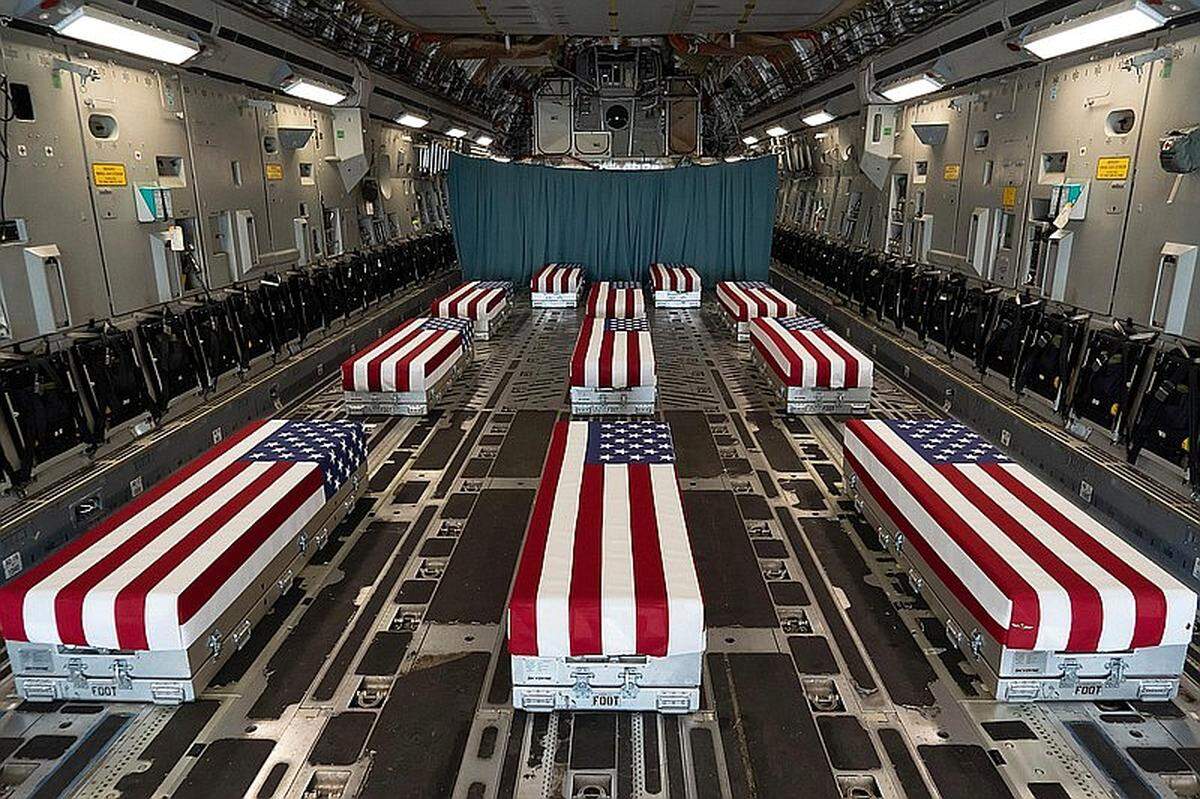
Joining the war effort after 9/11, and then trying to end it
After 9/11, the United States military entered into two conflicts, invading Afghanistan and then Iraq. Both wars dragged on, with the fight in Afghanistan, which became the longest military conflict in U.S. history, just wrapping up prior to this 20th anniversary.
McKnight followed through on the commitment he made to himself on 9/11, deploying in 2005 as part of an attack helicopter unit in Afghanistan. He didn’t return stateside until 2007, after a noncombat injury.
McKnight said he began to become disillusioned as America’s mission shifted from the tactical targeting of al-Qaida and other terrorist groups, including the hunt for Osama bin Laden, to broader assignments.
“We should be going home, but instead we’re building schools and ensuring their free and fair elections,” he said, referring to the U.S.-backed government in Afghanistan. “You took me away from my home, my family and my business to fight a war, but we’re not fighting a war, we’re nation-building.”
The veteran said he became convinced that part of the problem was that Congress had allowed the president too much leeway in determining American military involvement abroad. He founded a group called Bring Our Troops Home, which advocates ending U.S. “misadventures overseas.”
“We feel we’ve gotten into this mess of forever wars because Congress has abdicated their responsibility,” he said.
“I am not an isolationist,” McKnight added. “I believe in the goodness of America and I believe we have a lot to offer this world. What I don’t want America to do is to become an empire … to push our way of life on people.”
Ryan said that when bin Laden was killed by U.S. forces in 2011, a decade after 9/11, he almost felt nothing to rejoice about.
Though he supports the U.S. military, he said what’s struck him about recent U.S. military action has been the effect on civilians. Since October 2001, for instance, more than 46,000 civilians have been killed in Afghanistan, according to the Watson Institute at Brown University.
“That’s what I think about,” he said. “The Afghan folks who were just trying to live their lives and by happenstance were born Afghans and live in that area.”
This story was originally published September 11, 2021 at 5:00 AM.