This plan would improve habitat along Boise River, redirect some users to prevent damage
The Boise Open Space and Clean Water Advisory Committee last week unanimously backed a $48,000 proposal to restore a large area around the Boise River. If approved by the Boise mayor and City Council, the proposal from the Golden Eagle Audubon Society and its partners would remove invasive species, restore native plants, clean up litter, streamline river access and educate the public about conservation.
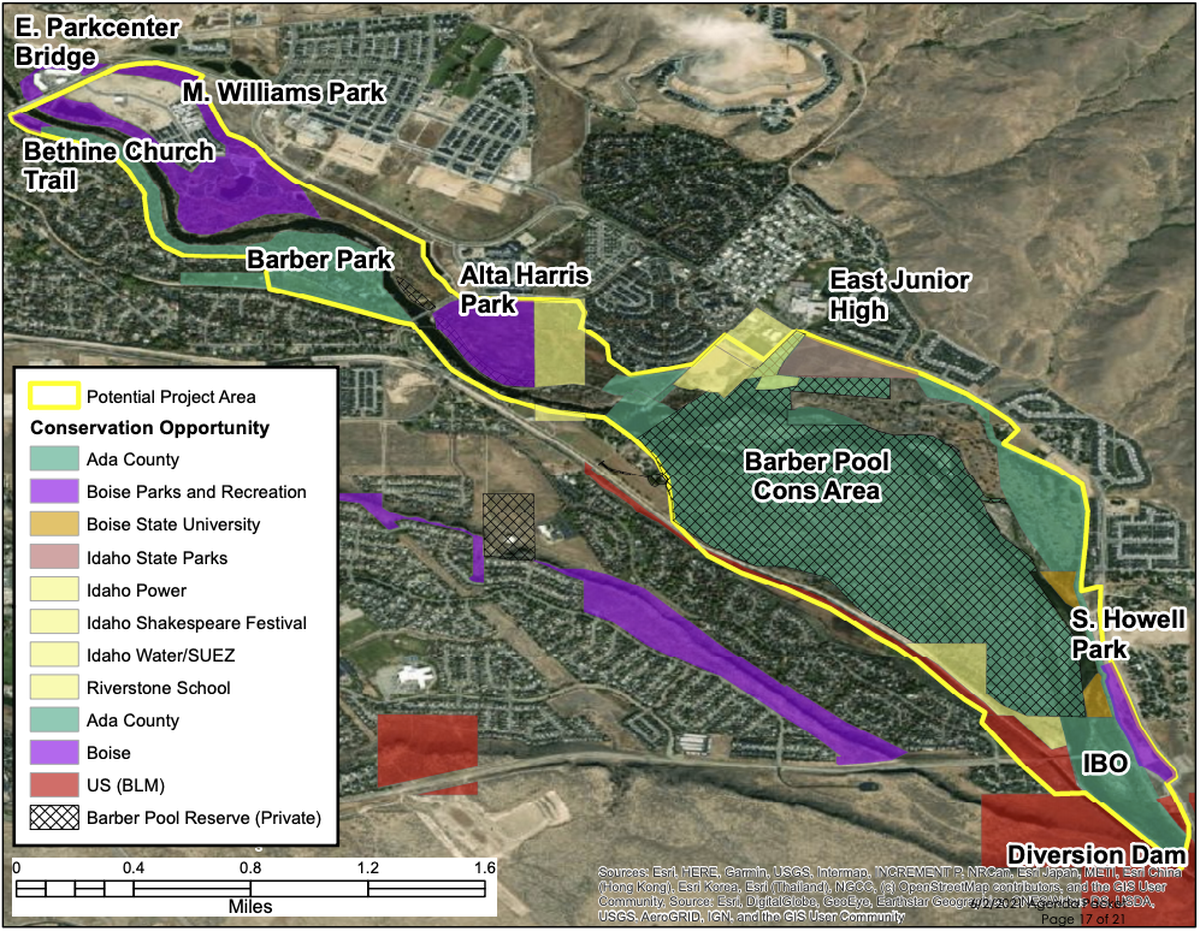
The project focuses on a 1,028-acre region from the Boise River Diversion Dam to the East ParkCenter Bridge. On 40 acres of the land, volunteers, society staff members and contractors would remove invasive plants.
“We have a great menagerie of invasive species” near the Boise River, said Sean Finn, a past president of the Golden Eagle Audubon Society, in a phone interview. Some of these species, like cheatgrass and medusahead, can increase wildfire risk in the area, he said. Others, such as goathead, are notorious for hurting pets and inducing flat bicycle tires.
With the help of local K-12 students and other volunteers, the society and its partners would plant about 11,000 native seedlings on around 50 acres of the area. They would also protect existing plants by, for example, wrapping trees to prevent beavers from chewing on them.
In to-be-selected areas, the society and its partners also plan to divert river access from vulnerable areas through new plants, fencing and signage. If a heavily trafficked area brings a lot of sand into the river, they might plant rosebushes, Finn said.
Restoring native species and changing river access could improve water quality by reducing erosion in the Boise River, which supplies around 30% of Boiseans’ drinking water and is home to many fish.
“The river gets a lot of use and a lot of love, and a lot of the citizens of Boise don’t recognize that they may be damaging (it),” Finn said.
He pointed out that for most cities with rivers the size of Boise, “usually the river has reduced in quality such that the water is too expensive to treat” and residents get water from other sources. As the Treasure Valley’s population grows, “the potential for the river quality to decline is quite high,” Finn said.
Throughout the region, the Golden Eagle Audubon Society would also engage the public in webinars, litter cleanup and other events. The group hopes to encourage future caretakers of the river by involving and educating community members in the restoration process.
These conservation efforts would continue through November 2022. One of the goals of the project, said Golden Eagle Audubon Society Executive Director Liz Littman in a phone interview, is to have a “much deeper impact in this area, rather than trying to do small, kind of one-off projects.”
OPEN SPACE AND CLEAN WATER LEVY
The Open Space and Clean Water levy was passed by Boise voters in 2015 — and reapproved in 2017 because of a clerical error. It gave the city of Boise $10 million to spend on conservation, protecting clean water, and improving trails and other recreational opportunities. The Open Space and Clean Water Advisory Committee was established to handle this money, which would fund the Golden Eagle Audubon Society’s proposal.
The city has about $8.6 million left, said superintendent for Boise Parks and Recreation Sara Arkle. This includes some money left over from a similar 2001 tax, according to Stacey Donahue, the committee’s chair.
The project would cost the city about $48,000, mostly for materials and supplies, according to the society’s application. Besides providing additional funds of around $85,000, the society and its partners would deploy “thousands of volunteer hours.”
Committee member Matt Cryer said during the meeting: “This is one of the most well-thought-out proposals we’ve ever had. … I am impressed.”
All proposals to use Open Space and Clean Water levy funds go through the Open Space and Clean Water Advisory Committee before they’re approved by the mayor and council.