Boise voters, your ballots will likely offer fewer choices this November. This is why
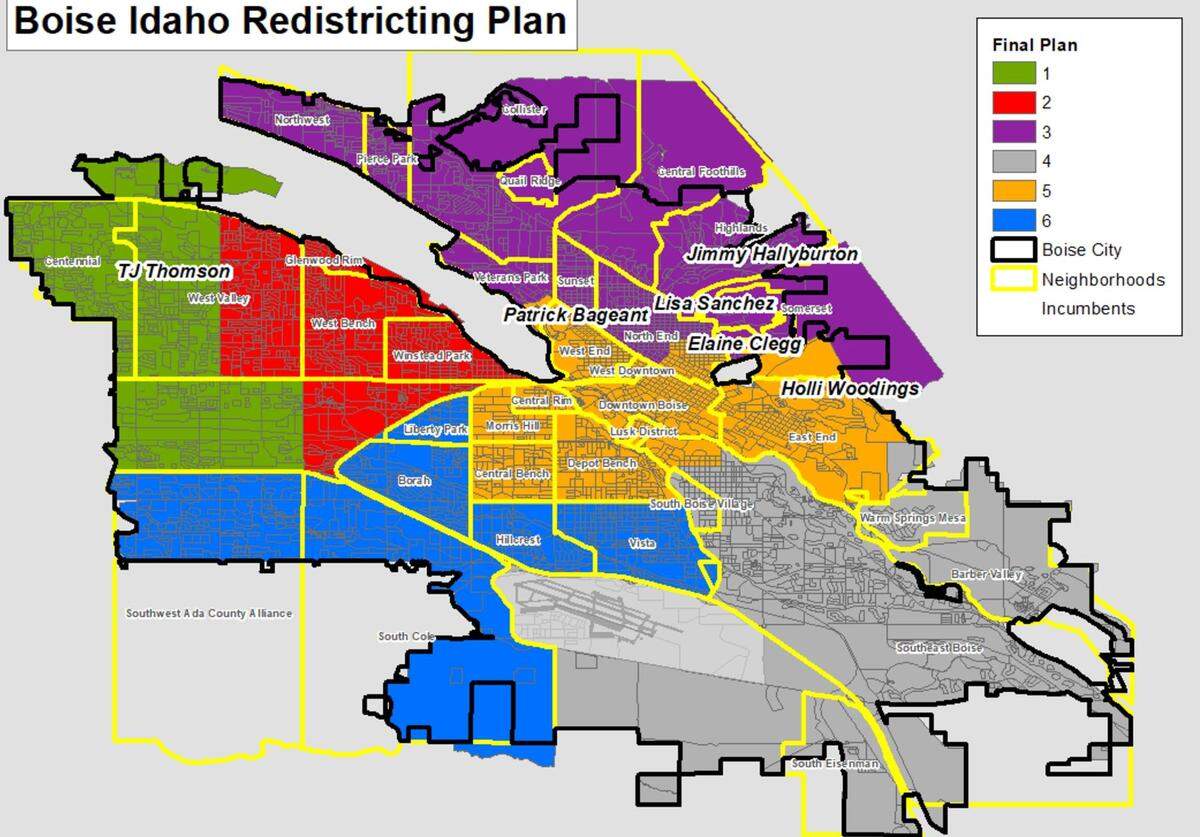
No longer will Boise City Council members be elected at large. Starting this November, each Boise voter almost certainly will be casting a ballot for just one council member — the one who will represent the voter’s soon-to-be-created district, one of six citywide.
City Council members plan to hear and vote on Tuesday an ordinance that creates the six geographic districts for the November elections and beyond.
A council candidate must live in the district the candidate seeks to represent. The ordinance will force representation from areas of town that have no residents on the council now, such as the Bench and Southeast Boise, including the Barber Valley. That will change council politics and campaigns.
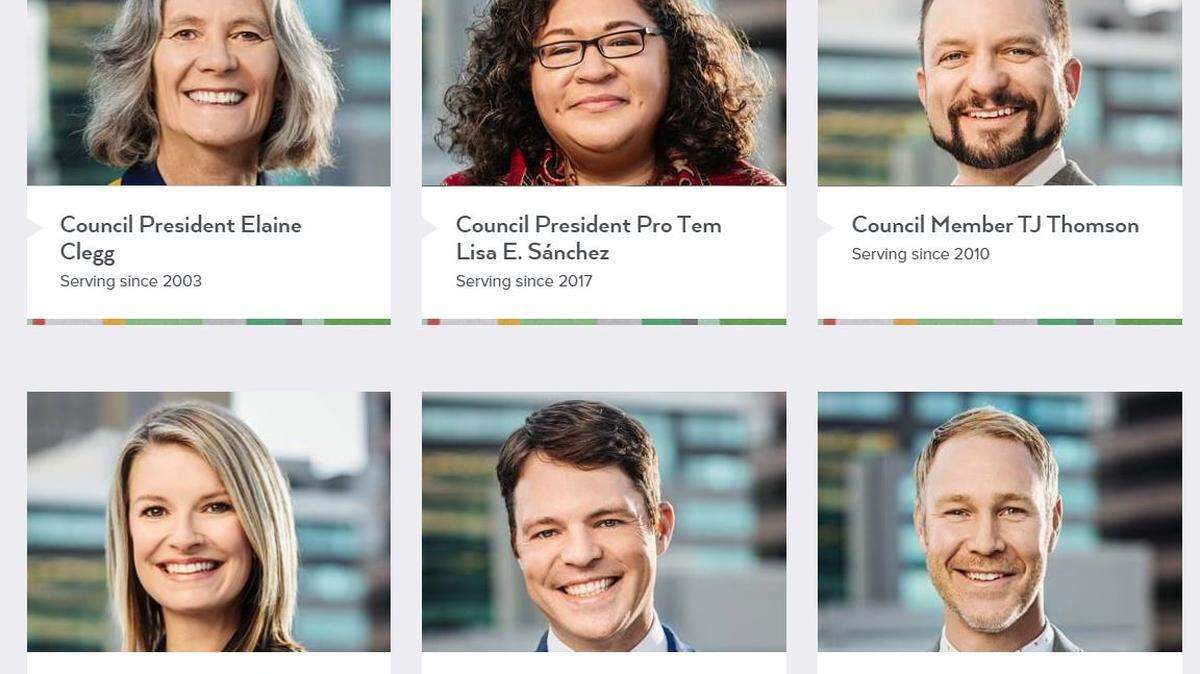
The current six-member, at-large council is dominated by residents of the North and East ends and the Highlands neighborhood. Only one member, T.J. Thomson, comes from another part of town: the Centennial neighborhood on the far west side of the city.
The ordinance is a potential threat to some incumbent council members who may have to run against each other if they want to keep their seats. Lisa Sanchez, Patrick Bageant and Jimmy Hallyburton all live in the new District 3. Elaine Clegg and Holli Woodings live in the new District 5.
The districting does not affect the mayor, who will still be elected citywide. Mayor Lauren McLean, another North Ender, votes only to break City Council tie votes.
Districting is the result of a law the Legislature enacted in 2020 to require that all Idaho cities with more than 100,000 people choose council members by geographic districts. The law affects only Boise now, but will affect Meridian and possibly Nampa after 2020 census data are released.
Boise officials had delayed acting on the law, hoping the Legislature would first clarify some of its provisions this year. But a bill to do that was amended in the House to make cities hold their elections in even-numbered years. Rather than put that contentious change to a Senate vote, the clean-up bill’s Senate sponsor used a legislative rule to kill it.
Boise council members say they are creating districts just in time to comply with the requirement that a map and implementation plan be approved by July, 120 days before the November election.
(Meridian, meanwhile, does not plan to redistrict until the 2023 election. Its 2010 Census population was nowhere near 100,000, so Meridian officials believe they can wait for the 2020 census count.)
“The goal of the map is, to the extent possible, to create districts that are equal in population, geographically contiguous, and avoid splitting up our recognized neighborhood associations by following recognized districting principles,” said Clegg, the council president, in a news release Thursday on City Council letterhead.
“We are confident that we have proposed carefully considered balanced districts, but we are greatly disappointed that, due to the severely shortened time frame, we were not able to engage residents in the process,” Clegg said. “We look forward to a robust public process with new census numbers going into the 2023 election cycle.”
The ordinance would place on this November’s ballot only the three seats held by incumbents whose terms expire at the end of this year: Thomson, Lisa Sanchez and Holli Woodings. Candidates would run only for two-year terms, instead of the standard four years.
Thomson lives in the new District 1, Sanchez in District 3 and Woodings in District 5, so they would not run against one another.
The other three council members, all elected or re-elected in 2019, can complete their terms. They are Clegg, Bageant and Hallyburton.
Come 2023, every seat will be on the ballot for the usual four-year terms. That’s when Sanchez, Bageant and Hallyburton could face one another, assuming they’re all still on the council and want to run again. Ditto for Clegg and Woodings.
For the district map this November, the council has given up waiting for the decennial Census data, whose release has been delayed. Officials are using estimates of population changes since the 2010 census instead.
“In 2022, the city will begin the process to engage with the public on how the districts will be adjusted in preparation for the 2023 elections once the new census data is available and the 2022 legislative session is complete,” the council’s news release said. Then a revised map may be drawn.
“The district map and implementation plan released today was created in partnership with a consultant team who are experts in drawing districting maps,” the release said. “It meets recognized districting criteria, and while it is based on the 2010 census data, it attempts to anticipate growth that has taken place since that time to reflect the population of the city as closely as possible. The intention is to keep as many neighborhoods whole as the numbers allow and minimize splitting county election precincts. Each of the six districts is balanced population-wise within the +/- 5% requirement.”
The city’s redistricting is separate from state redistricting of congressional and legislative politics. That redistricting threatens to be contentious after census data for Idaho’s population are released, likely in August.
Tuesday’s meeting begins at 6 p.m. at City Hall. The council invited feedback at citycouncil@cityofboise.org.
This story was originally published June 25, 2021 at 4:00 AM.