
Interfaith Sanctuary is shaking up its plans for a new Boise location after outcry
Interfaith Sanctuary homeless shelter is scaling back plans for its new location on State Street.
Leaders of the shelter for homeless people are looking to move the space from its downtown location on River Street to occupy a new space at 4306 W. State St. As part of that move, it would take over a former Salvation Army thrift store.
But some neighbors of the new location have a lot of concerns over what that would mean for the surrounding community. During the shelter’s public outreach, people have told the shelter staff that they were worried about drugs, property values, their children’s safety, crime and more. One man told Jodi Peterson, the shelter’s executive director, that it may sound heartless, but he didn’t want to welcome the shelter into his neighborhood.
So Interfaith delayed the project to have “more real conversation” with neighbors, Peterson told the Statesman last month.
Now, she hopes the new plans will address people’s concerns while still protecting Interfaith’s core mission.
“We didn’t feel like we had gotten the traction,” Peterson said by phone Wednesday. Public meetings were largely dominated by people against the project, although some people were supportive, she said. “I knew we could have different kinds of conversations, so I spent the time with different groups and different individuals.”
So she and her team came up with a new plan based on serving a smaller number of people. The new location would still serve more people — 200 people, up from about 140 right now with COVID restrictions but down from the 276 originally proposed.
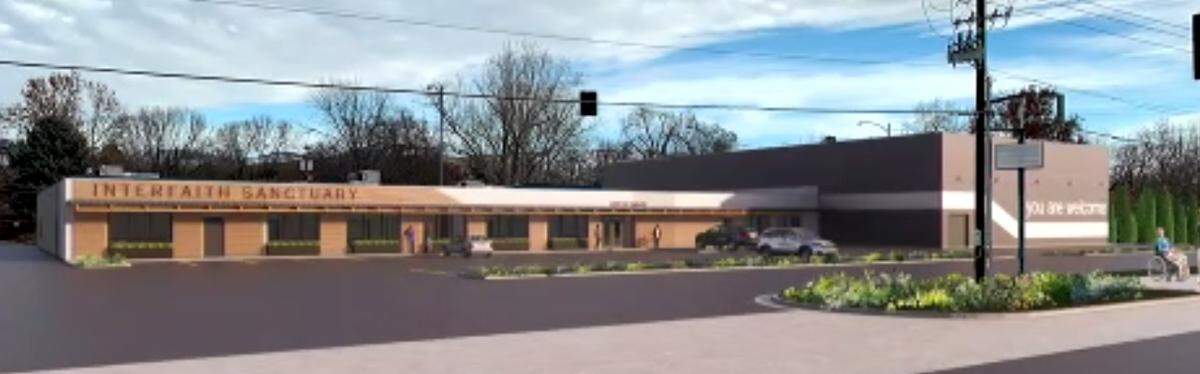
The space for the 200 would be split into three main types of housing for people who are homeless. That includes:
- 24 “emergency” beds for people who just need a place to sleep. They may be new to the shelter or back after having a place to stay.
- 40 “incentive beds,” dormitory-style spaces with a place for people to store their possessions. To access that space, people would need to be engaged in the shelter’s programming and potentially participating in work programs and case management.
- 20 private rooms split between single and double occupancy. Those rooms would have doors with locks, a dresser and a desk. They would be for guests who are stable and employed but on a waiting list for housing.
There would also be medical space for guests who need respite care and space for families.
The goal, Peterson said, is to limit the trauma guests experience and help them get to a better place. The new plans still include many of the biggest things shelter staff wanted to see in a new location: a kitchen for job training, a community garden and more.
A representative of the Veterans Park Neighborhood Association, where the new shelter would be located, did not return a call for comment. But Peterson said she had heard from some people who were happy with the adjustments. Not everyone was in favor, but she said she was feeling more confident in the project.
“I’m really proud of what we’re trying to create,” she said. “We’re creating something that could be duplicated across the country, and I’m excited to be part of that innovation.”
Something that has changed for the project is, in part, how it will be funded. Peterson told the Statesman in January that the new building would cost $2.4 million while renovation was expected to cost $2.5 million. Part of that money was to come through donations. The Idaho Housing and Finance Association was going to help with financing through community development block grant funding, Peterson said, but that fell through.
“As the process evolved, it became clear that other funding sources may be a better fit, so we’re no longer pursuing a CDBG-CV grant as one of the funding sources,” Benjamin Cushman, spokesperson for IHFA, wrote in an email.
IHFA is still contributing $1.5 million for the project, Cushman said. The money that was originally going to come from the grants will instead come from a private loan, Peterson said.
Mayor Lauren McLean said during a news conference Wednesday that she considered Interfaith an “important partner” as the city works to address homelessness. McLean has recently re-upped the city’s commitment to ending homelessness, announcing last week the city would “reignite a community-wide conversation” about what can be done. The effort includes tours at Housing First developments in the city and roundtables with Boise Police Chief Ryan Lee and other community members.
She said she recognized that the emergency services Interfaith Sanctuary offers are important, but said the conversation on what a move could like like needed to be had as the shelter moved through the application process required to relocate.
“People want to be involved in the conversation,” McLean said. “And so, through the planning and zoning process, we will make sure that specific to that application, we hear from our own police department, we hear from our own staff, and we hear important from the community. We need to understand better what they’re proposing and whether or not it’s appropriate to put it there.”
The application to the city to relocate the shelter is now set to be submitted April 12, Peterson said. Depending on how quickly it is able to move through the approval process, she estimated work on the shelter could begin in the summer for an opening as soon as March 2022.
This story was originally published April 2, 2021 at 4:00 AM.
.jpg)