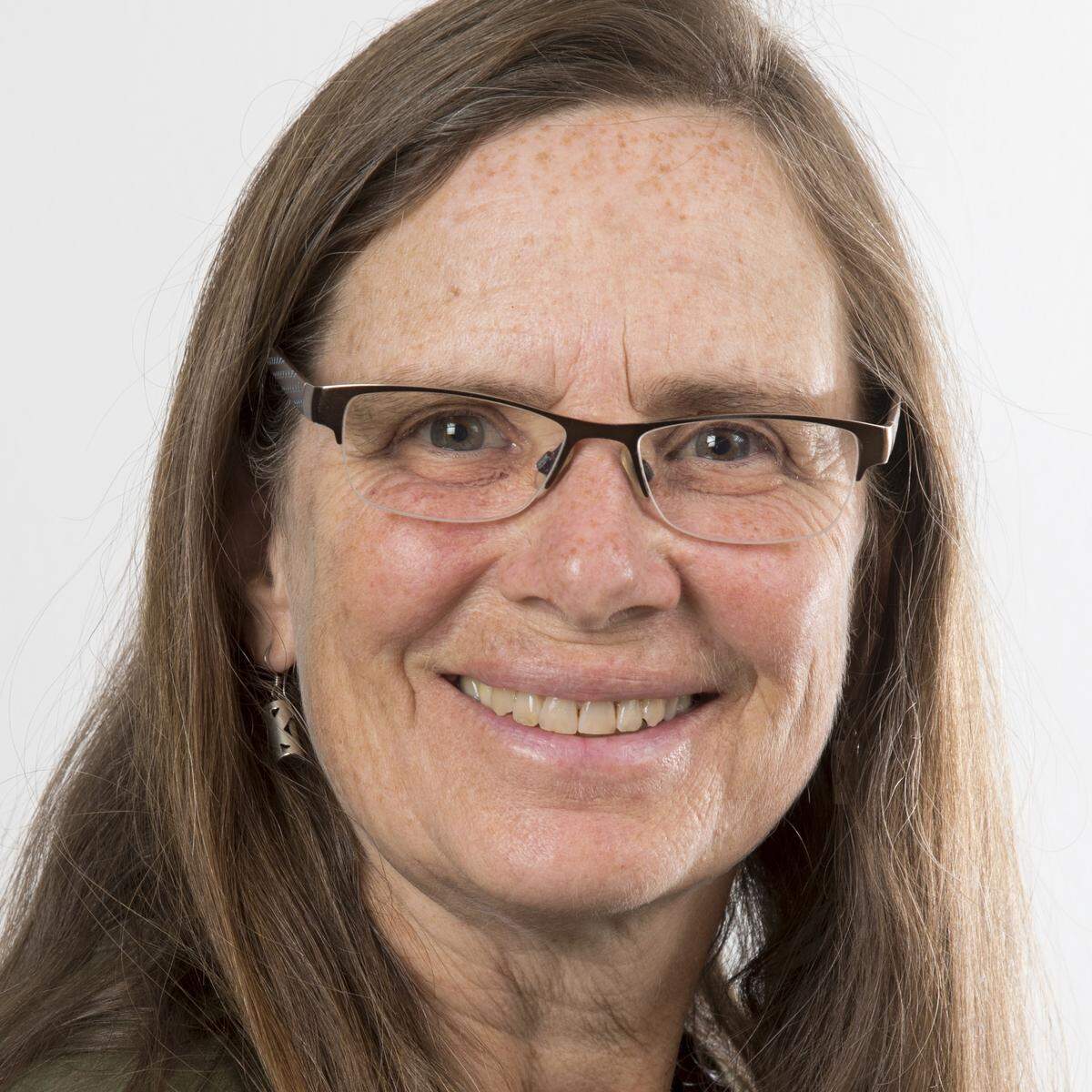
From Africa to BSU to Zoo Boise: Gorongosa’s first female safari guide educates Idahoans
Her favorite place at Zoo Boise is by the crocodile.
She watches as parents, children and groups of visitors stroll past the otters and vervet monkeys on their way to see Pandora, the Nile crocodile. If people pause or stop and look curious, she’ll approach them.
“Hi,” she says. “My name is Gaby.”
The lucky zoo visitor has scored.
Gabriela Curtiz, 21, can speak with authority about all of the animals in the Gorongosa National Park exhibit in the Zoo. Not only is she from Mozambique, where the park is, and where vervet monkeys and crocodiles live, but she grew up in a village on the edge of Gorongosa.
Visitors disappointed that Pandora is inside on a cold day can still get an explanation about reptiles, how they regulate body temperature and the word “ectothermic.” If visitors check out the exhibit’s warning sign from Mozambique — in Portuguese and a native dialect — telling villagers about the dangers of crocodiles in the river, she reads it to them fluently, in both languages.
But what makes her a wealth of knowledge to a curious zoo visitor is that Curtiz is not merely a volunteer at Zoo Boise: She is a professional safari guide.
She is, in fact, the first female safari guide in all of Gorongosa National Park’s history.
Female scientists inspiring girls
Curtiz didn’t always know she wanted to be a guide. Although her mother, a single mom of five and a traveling teacher, instilled in her children the opportunities that education offered, Curtiz’s world was pretty small.
And although her village was just on the edge of the park, few villagers had ever been inside the park.
But when she was 12 years old, workers from the park came to her, to her school. They were scientists and biologists — and some of them were women.
“In rural areas, females are only taught to stay at home and take care of children,” said Curtiz, who remembers how she felt then. “This is good inspiration.”
The workers showed Curtiz and the children National Geographic movies about the restoration project going on, right next to their village, in a park the size of Yellowstone in the United States.
They talked about zebras and elephants and lions — wild stories for children who had never seen such animals. They talked about ecosystems and ecology, about science and leadership — big, heady ideas for the youngsters, most of whom wouldn’t graduate from high school.
The children also went on a field trip to the flanks of Mount Gorongosa, to the rainforest that is the lifeblood of the entire park. There, Curtiz saw thousands of plants being raised, waiting for volunteers and workers to restore the forest. “I got more interested in biology,” she said. “I felt more like, ‘I really want to do this.’”
That dream was unlikely given the poverty of Mozambique, the need for everyone to work, and the assumption that girls would simply get married very young. But the very reason park rangers and scientists visited villages around the park was to plant those dreams.
Especially in young girls.
Opportunities for women
Greg Carr is the Ketchum-based philanthropist and founder of the Gorongosa National Park restoration project. He has committed millions of dollars to restore the ecosystem and make the park sustainable.
“Our mandate is not only the national park, but the communities around the park, where 200,000 people live,” he wrote in an email. “Our goal is to create a green economy where the healthy ecosystem of the park creates employment opportunities.”
But not just for men; Carr estimates that 15 years ago, 1 percent of park employees were women. Today, more than half of the scientists are women, and he says 50 percent of all employees, including management, will be women within a few years.
Getting there has been intentional. To meet that goal, park employees visit primary schools and help teachers. They run after-school girls clubs to help girls stay in school and avoid child marriage. They offer seminars and internships for girls.
“The ideas is that we may first encounter a girl when she is 10 years old,” Carr said. “We would like to help provide a lifetime of opportunity for her. … Maybe she’ll be a farmer like her parents, but perhaps she would rather go to college and be a teacher or nurse or businessperson or work in the park as a ranger or scientist or safari guide.”
The first time she went into the park, Curtiz was awestruck. “We saw waterbuck and kudus and monkeys. … I think it was my best day of the year.”
For the record, waterbuck, kudus and monkeys are pretty humble fare for what else lives in the park. But that was the start of a weeklong high school science seminar that merely whetted Curtiz’s appetite.
After she graduated, Curtiz sought out — and got — a yearlong internship at the park, where she worked alongside research fellows, learning paleontology, botany and archaeology. She collected bones in the Great Rift, searching for evidence of the earliest humans in the park, in what was cutting-edge research.
Hungry for more, she applied to a Mozambican university and then a college biology department — and was twice denied. As her third choice, she returned to the park to work in the community recycling program.
But, she laughs, the rejections were a blessing in disguise. “I didn’t feel annoyed or stressed or sad. I feel like something was coming,” she said.
Because soon she was working in the tourism department activity center and sometimes helping take Girls Club girls on safari.
Now, she was the role model, the inspiring woman, who showed village girls that they could be anything they wanted to be.
Gorongosa / Boise State connection
Curtiz’s dreams were bigger still.
She started studying English, and for five months, quizzed herself, learning mammals and ecology, astronomy and grasses, insects and rocks, birds and trees. A year after she started in the tourism center, she took a rigorous test — in English — and passed with the highest score the examiner had seen: 94 percent.
She was a safari guide.
“When I am in the park, I feel peace. It nurtures my soul,” she said. But there’s something even more important. “It’s more about how to transmit that information to the world. We need to help and connect people with the nature.”
And specifically, what Gorongosa is contributing to the world is this: a model of how to create a sustainable economy, heal an ecosystem and empower women.
Someday, Curtiz would like to open another tourism camp inside Gorongosa park, expanding the park’s sustainability and reach — where she would also be in a position to provide training and jobs to many other local people.
“When we saw this potential in Gaby, we offered to pay her way to Boise State,” wrote Carr.
Curtiz has settled in to BSU’s Honors College dorm and is studying English full time before launching into her business administration major next semester.
“It’s a blessing,” she said. “This is kind of like a challenge. Gorongosa is trying to show to the world that we all can make an impact in our own backyard if we just look for a way to help others.”
That’s what Curtiz is doing, too, even while she’s in Boise.
“I would like to invite people from Boise to go to Gorongosa and Mozambique, to see our happy place,” she said. “I really would like to receive some people from Boise to be my guest, to be their guide.
“Or even to come to Zoo Boise … If you want to learn more about Gorongosa, come to the zoo. I would be happy to do that.”
This story was originally published November 9, 2020 at 6:00 AM.