
‘Businesses that stay open can succeed’: How Boise officials want to help restaurants
Socially distanced patio dining may soon be an option beyond 8th Street in Boise.
Responding to requests from restaurants all over Boise, the City Council and the Ada County Highway District, which controls most of the roads in Boise, are collaborating on ways to expand patio dining options for restaurants into streets and sidewalks that ACHD controls.
Restaurants on one block of 8th Street already have been allowed to extend their patios into the street to increase seating.
Social distancing requirements have meant that restaurants have had to significantly cut down on seating to allow for patrons to stay 6 feet from other tables, a requirement to reopen amid COVID-19 restrictions. Sean Keithly, Boise’s economic development director, said that after 8th Street was closed for extended patio dining, the city got “upwards of 90 separate proposals” from other businesses to do the same.
The two agencies agreed to collaborate Tuesday in a joint meeting of the council and the highway district board.
Options for extended patios
There are four potential ways restaurants could be permitted to expand their patios.
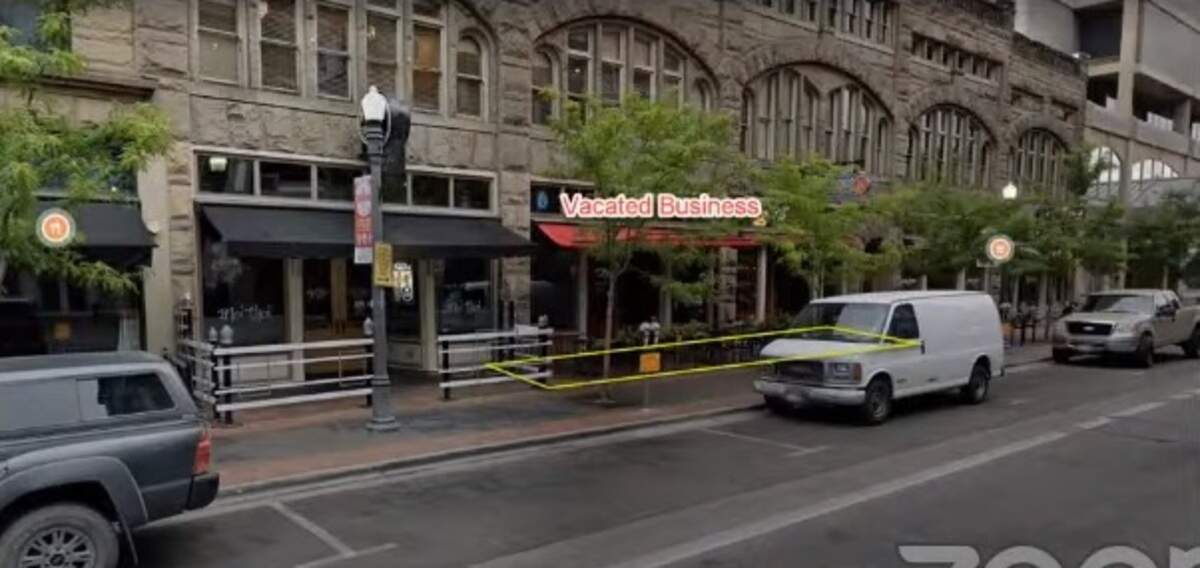
In the first, called “longitudinal expansion,” restaurants expand their street-facing patios sideways into spaces fronting adjacent properties, such as closed storefronts. Sidewalks remain open to pedestrians. Streets remain completely open.
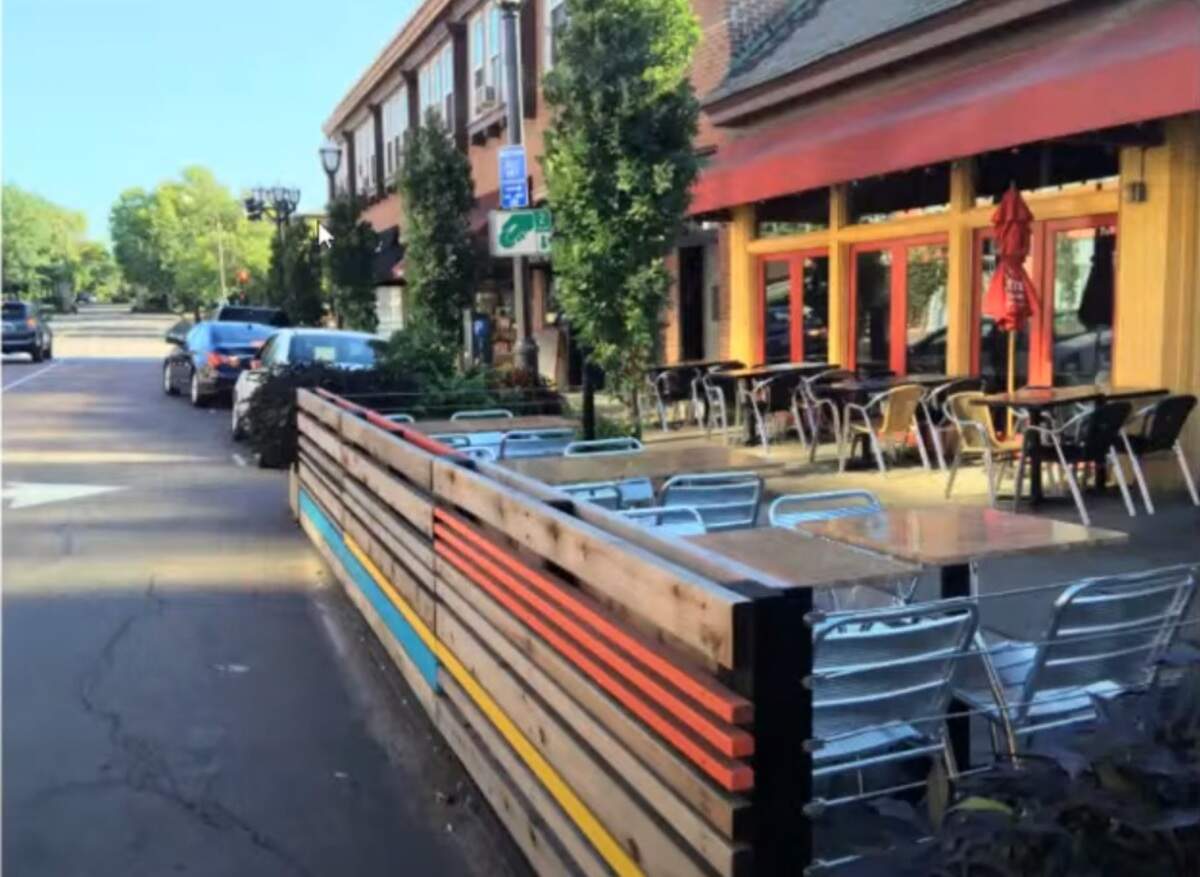
The second option, “parklet expansion,” expands a patio into on-street parking spaces. The sidewalk in between remains open to pedestrians. This option has seen success from Boston to Green Bay, Wisconsin, to Palo Alto, California. It can be tricky to use parklets, because open container laws are different on streets. Allowing them would likely require approval from Idaho’s Alcohol Beverage Control.
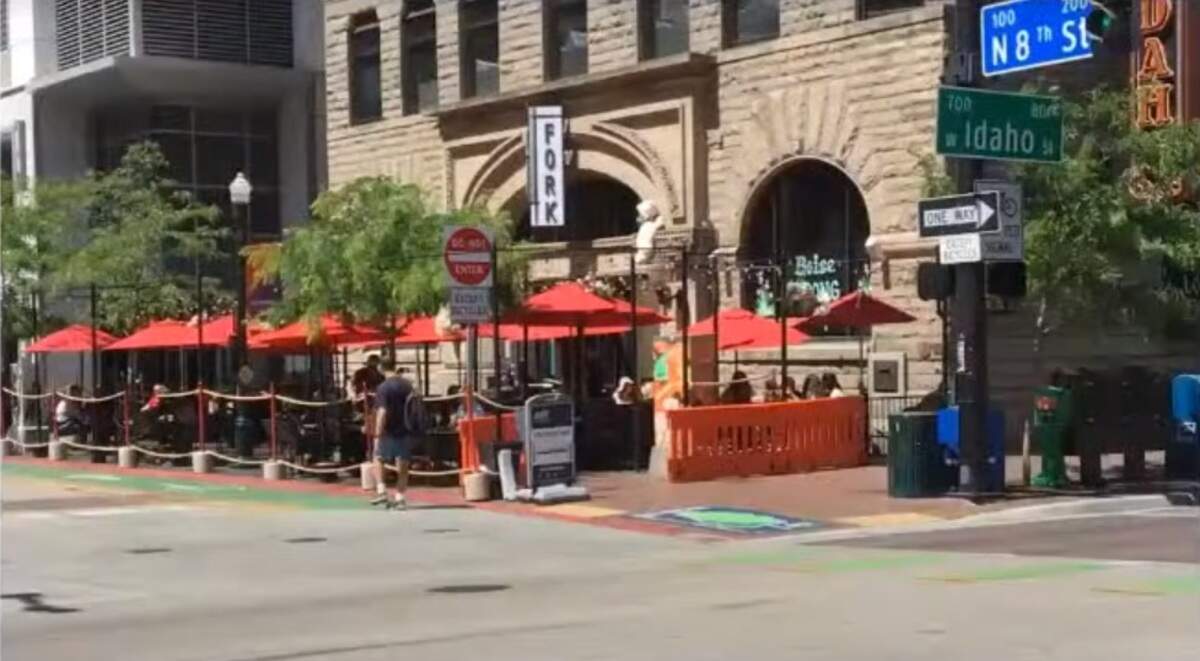
In the third option, patios would occupy the entire sidewalk, requiring pedestrians to detour into the street’s parking lane. If there is no parking lane, a driving lane would be closed.
The final option is to close a street to cars partially or completely. Boise completely closed 8th Street between Idaho and Bannock streets. Drivers must find other routes.
Next steps for Boise, ACHD
The city is considering requests for extended patios and will grant them individually as officials select the best option for each area and developing temporary traffic control plans with ACHD if necessary, Lavin said.
Officials did not give a timeline for when people may be able to expect more expanded outdoor seating at local restaurants, but officials overwhelmingly favored moving quickly to help local businesses.
ACHD Commissioner Jim Hansen said the highway district often relies heavily on “level of service” numbers, which indicate how convenient an area is to drive through at peak hours, but now it should focus on businesses’ survival.
“The very businesses that stay open, they can succeed and have healthy patrons, they stay in business and they pay taxes that we rely on,” Hansen said.
Rebecca Arnold, an ACHD commissioner, wanted to make sure that any approved plans were able to comply with the Americans with Disabilities Act. T.J. Thomson, a Boise City Council member, registered a concern over how safe it would be to either have tables in streets or having pedestrians routed to walk through them.
Council President Elaine Clegg said that in her day job as a program coordinator at Idaho Smart Growth, she had seen parklets on “a number of streets” in Boise with no problem.
“As long as you have a barrier on the street side, we haven’t encountered any issues with those in terms of safety,” she said. “I think if you have something visible on the edge of the parklet, I think most people are smart enough not to drive into it.”
The district will work with the city to try to develop a single large application for multiple restaurants that could be approved as a batch rather than case by case.
Council Member Jimmy Hallyburton asked that officials try to assist businesses not downtown “who may be trying to do things in parking lots or other things,” on private lots not owned by the city or ACHD.
This story was originally published July 15, 2020 at 4:00 AM.
.jpg)