
Foes worry about radiation, cancer. 1000s of 5G antennas are coming fast to Ada County
Cell phone antennas delivering offering 5G phone signals — an emerging technology that promises faster speeds and reduced signal lag — are coming to Ada County “fast and furious,” an Ada County Highway District official says.
But deciding exactly where they go may not be easy.
ACHD commissioners voted last week on Ordinance 244, which would establish standards and requirements for companies that want to put up small cell 5G antennas in public rights-of-way, which ACHD oversees.
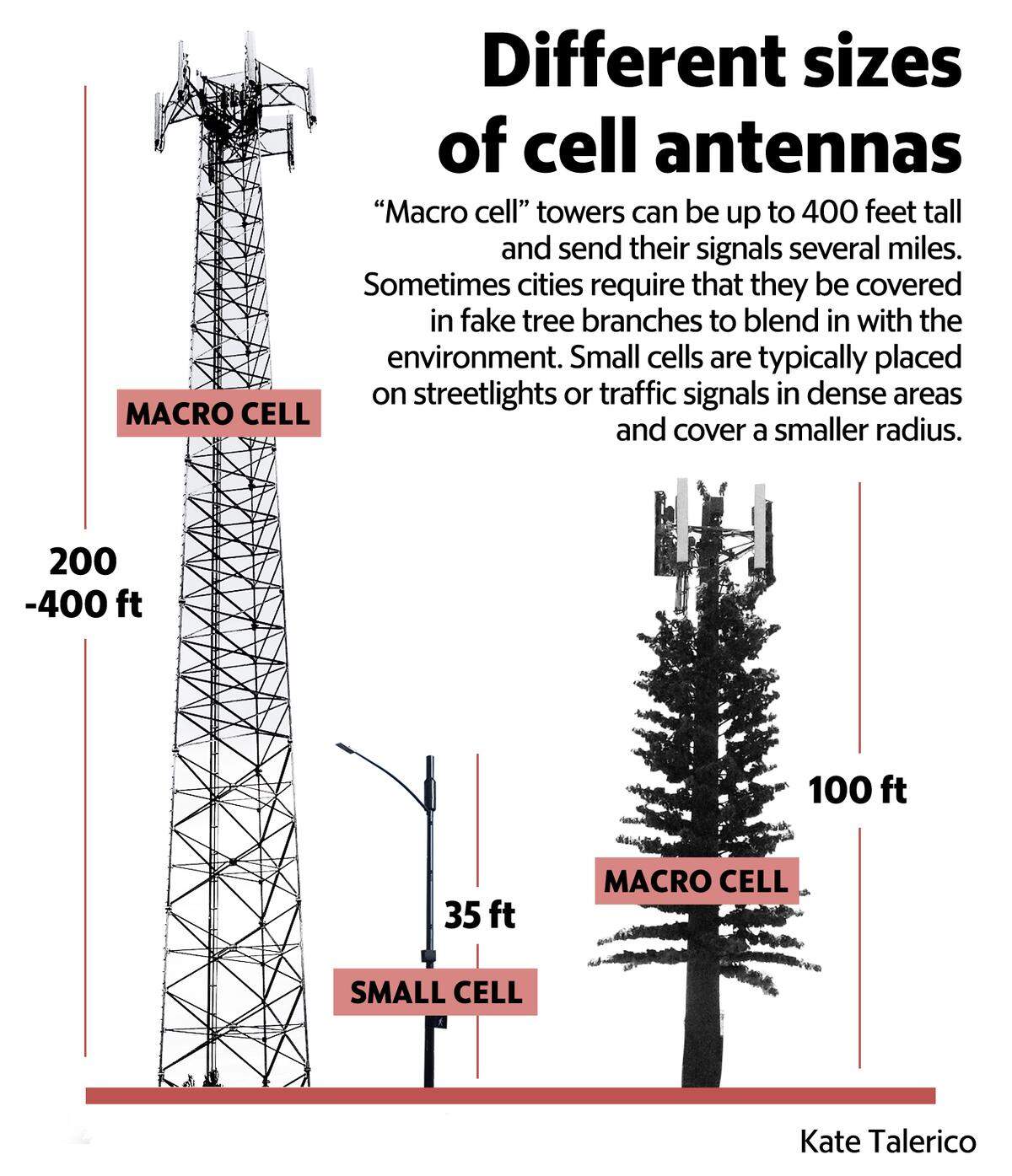
The antennas are much shorter than typical cell towers and can be placed on existing roadway infrastructure such as traffic poles. 5G signals reach a smaller area, even if they have greater bandwidth, so many more towers are needed than for 4G or 3G.
Cellphone companies say 5G, or fifth-generation, wireless will enable technology such as self-driving cars and could allow someone to download movies in seconds instead of minutes.
The Statesman previously reported that Verizon representatives worked for two years with officials in Ada County and Boise to enact ordinances that allow the company to deliver 5G cell service. In some parts of the county, companies have already started putting towers up.
Steven Price, the district’s general counsel, said Thursday in a phone interview that uniform standards are required by federal law. The ordinance would have meant the district no longer would have to negotiate separate licensing agreements with each company for each location.
ACHD has 81 applications waiting, Price said, and expects as many as 2,000 more.
Part of the ordinance, he said, would require applicants to go to land-use authorities, such as city councils, to obtain approval for how the facilities would look and where exact placement would be.
The ordinance needed a supermajority, which on the five-person commission is four yay votes, to pass. It got three.
Voting for the ordinance were ACHD Commission President Mary May, Commission Vice President Kent Goldthorpe and Commissioner Sara Baker. Commissioners Rebecca Arnold and Jim Hansen voted against it.
Hansen told the commission that he felt like there were “much better ways we can do this” than the ordinance as proposed. He suggested signing a joint-powers agreement with cities to establish what roles belong to which agencies. During the meeting, Price said that was a good idea, but he didn’t believe it was allowed by Idaho law.
Arnold said she agreed that the district needs an ordinance but she was unhappy with the way the meeting was held. Because the meeting was held via teleconference — and doors to the auditorium where ACHD meetings were held were locked, she said — she didn’t feel public participation was adequate.
People could testify virtually, but she said that wasn’t enough.
“Not everybody has access to Zoom, and frankly, it’s a less-than-perfect process, to be kind,” she said.
Arnold said she wouldn’t vote in favor of the ordinance until the commission was able to have a hearing that “allows the public to participate in the manner that works for them.”
Sixteen members of the public did testify remotely last week. Some of them expressed concern over potential radiation from 5G towers. Some people said small cell towers could cause health problems including cancers, though federal regulators who have spent years reviewing research have say no conclusive evidence has found that to be true.
David DeHaas, a Boise resident, testified that he believed the towers would increase cancer and tumor rates while decreasing property values, increasing fire risk and killing pollinators.
“There is real harm by passing 244,” he told commissioners.
Commissioners weren’t debating health effects, however — Price said the district has a legal obligation to allow small cell towers in public rights-of-way.
“That’s kind of the end of the story,” Price said, although he said his office was monitoring several federal bills that may make rules more or less restrictive. “We’re a public agency, we have to follow the law. And whether we agree with it or not, philosophically or politically, that’s irrelevant.”
ACHD will still attempt to get companies to go to cities to approve locations, Price said, but “it’s uncertain at this time whether or not we’re allowed to.”
He did not indicate if the ACHD staff would again seek the ordinance sometime later.
This story was revised June 18 to reflect that federal regulators say no conclusive evidence has found small cell towers to cause ill health effects.
This story was originally published June 12, 2020 at 4:00 AM.
.jpg)