
Boise stadium, library measures all but sure to make ballot after signatures verified
Ada County confirmed Thursday that two ballot initiatives focused on Boise’s proposed library and stadium projects have enough signatures to put the measures on city voters’ ballots.
That all but guarantees that voters will have the chance to weigh in on the projects when they head to the polls in November.
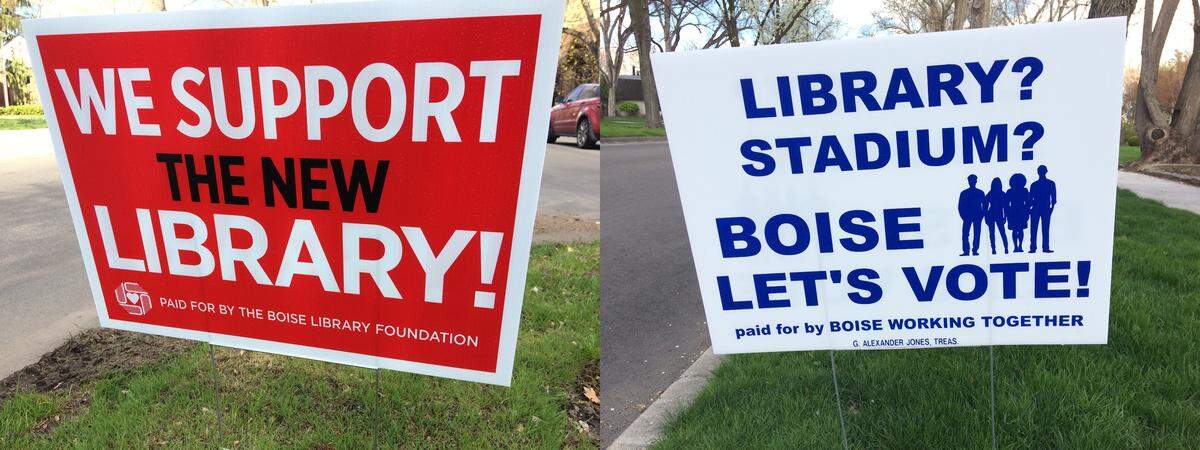
A citizens group, Boise Working Together, ran the initiative to collect signatures in March and April. The group submitted 7,148 signatures to put the stadium on the ballot and 7,311 signatures to put the library on the ballot, spokesman David Klinger told the Statesman in April.
To get on the ballot, Boise Working Together needed 4,962 valid signatures on each petition from registered Boise voters. Guillermo Velasco, an elections specialist in the Ada County clerk’s election office, said there were 5,610 valid signatures for the stadium petition and 5,698 for the library.
Adelia Simplot, the president of Boise Working Together, said in a phone interview that more than 5,000 signatures had been verified for each petition.
The success of the signature gathering demonstrates that people want to participate in their government and they’re interested in what comes next, Simplot said.
“We had our first meeting in mid-February,” Simplot said. “To think we were able to get more than 7,000 signatures is amazing.”
Bieter, who has been strongly in favor of both projects, released a statement after news of the verification broke.
“I respect the citizen engagement behind it and the passion for our community it represents,” Bieter said. “Now we will continue the conversation with Boise voters about the Main Library Campus, a project I strongly support as a tremendous asset for economic equality and prosperity for Boise’s future and people.”
The statement did not address the stadium project, which would be privately developed but publicly owned eventually. Mike Journee, Bieter’s spokesman, said that did not need to be addressed because the stadium is a private development for which an official proposal has yet to be submitted.
The petitions call for a vote on “any aspect of a city library facility reasonably expected to exceed $25,000,000. in total” and any stadium expected to cost more than $5 million.
The library would cost an estimated $85 million and the stadium $50 million, much of which would come from taxpayer money.
Boise plans to replace its existing main library on Capitol Boulevard at River Street with the $85 million building on the same site. To make room for it, The Cabin, a historic log cabin just south of the existing library, would be moved across Capitol to Julia Davis Park.
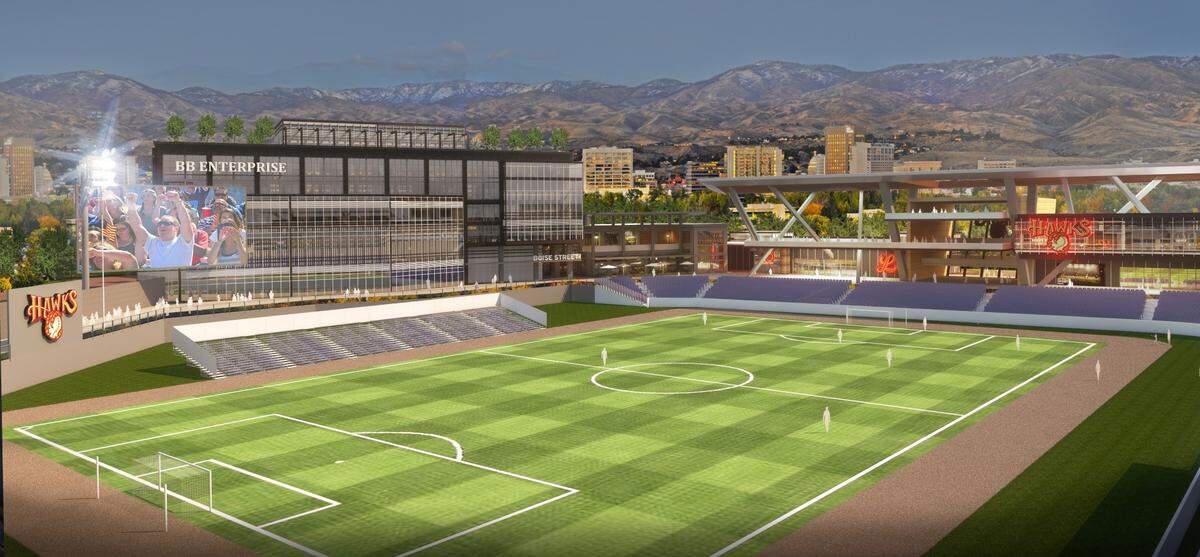
The baseball and soccer stadium would be built by Atlanta-based Greenstone Properties between Main Street and Fairview Avenue, and between Whitewater Park Boulevard and 27th Street, in the West End.
Greenstone’s plan would produce more than $100 million of development in the urban-renewal district surrounding the stadium to generate the tax dollars that would cover the local-government bonds needed for construction. Chris Schoen is the managing principal of Greenstone and the managing partner of Agon Sports and Entertainment, which owns the Boise Hawks and the rights to a a United Soccer League pro team.
The only things now standing in the way of the two issues being on the ballot are verification that the people who notarized the petitions are all in good standing, and verification that the circulators who gathered signatures were at least 18 years old and Idaho residents.
Velasco said the verification process could be finished as early as next week.
The urban-renewal complication
The petitions are unrelated to separate potential ballot measures on each project if they use property tax revenue raised by urban renewal districts.
Idaho legislators changed the state’s urban-renewal law earlier this year by passing a bill that Bieter said targeted Boise unfairly. When the law takes effect in July, it will requires an election if the cost of a stadium or a municipal building or a major remodel exceeds $1 million and is funded by at least 51 percent non-federal public money that includes as little as $1 of urban-renewal money.
Bieter has considered other options to fund the projects that would avoid the new law’s requirements. That could potentially include creating new budgets for the proposals that do not include urban-renewal funding.
Bieter has said he sees “a route forward” for both projects. He has not provided details.
However, the new law exempts from elections the spending of urban-renewal funds on infrastructure, such as sidewalks and utility connections, and on parking, including parking garages. Those are the ways Boise officials have said they plan to use $15 million in urban-renewal money on the library. A parking garage is planned across River Street from the library’s north side.
Urban-renewal districts are created by cities to help restore blighted areas. During the years an area is a designated urban-renewal district, existing taxing districts, such as schools, cities and counties, continue to collect whatever taxes they collected within the district’s territory when the district was formed, but no more.
Any new property-tax revenue — known as the “tax increment” — resulting from new development or higher property values goes to the district to be spent on public improvements to foster development.
“The Legislature has made clear they don’t think urban renewal is the proper tool for these projects,” Journee said in a phone interview Thursday. “Obviously, there are some citizens that agree.”
Business Editor David Staats contributed.
This story was originally published May 30, 2019 at 4:08 PM.
.jpg)