
House in the Boise Foothills is made of what? Check out this earth-friendly home
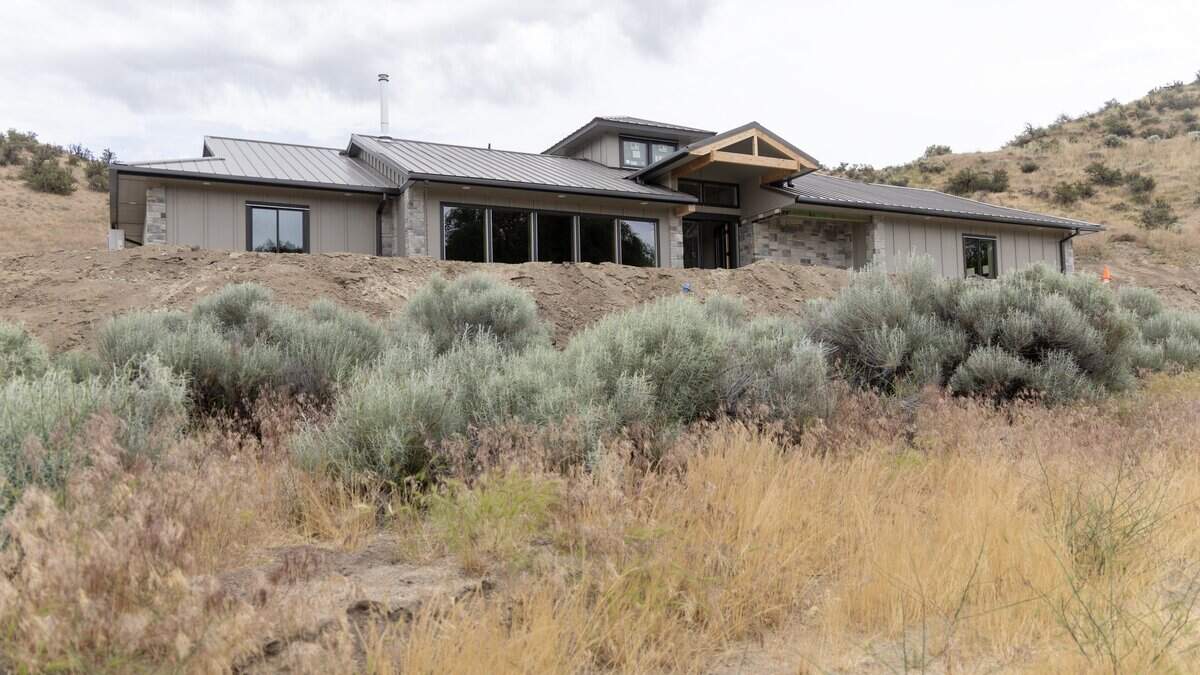
Driving around Idaho, you’ll find countless barns filled with straw bales. These big blocks of plant fibers make great beds if you’re a horse, but they could also line the walls of your forever home.
One such house is Bitterbrush, a house built with straw bale walls that sits at the end of a cul-de-sac in the Foothills above Boise. Built by Boise firm EarthCraft Construction, the property features several low-tech solutions to familiar problems such as environmental controls and heating water, and is built with centuries-old techniques to produce a luxurious property.
At $600 per square foot, the sticker price of the property, which includes a 2,500-square-foot, three-bedroom house and a 1,200-square-foot workshop, exceeds $2.5 million. But Jon Clark, president and CEO of EarthCraft Construction, said his company does far more than just build a house.
“We consider the houses we build to be generational assets,” Clark said. “In this case, we had to do a lot of work on the land itself before a foundation could be built. We’re designing everything ourselves. We do the carpentry, the electrical, and we have an incredible community of local businesses we work with to source our materials, and we educate our customers on every decision throughout that process.”
Further, studies have found that straw bale homes require substantially less energy for heating and cooling than conventional homes because of their insulating properties, which means lower utility bills for homeowners, according to a study from Oslo Metropolitan University.
Clark, a U.S. Marine Corps veteran, bought EarthCraft from founder Ron Hixson in 2018. Hixson, who has been building homes in the Pacific Northwest since 1978, has put up thousands of homes, including several hundred in Idaho. Clark told the Statesman that EarthCraft has been working with straw bales since Hixson first embraced the concept in 2000.
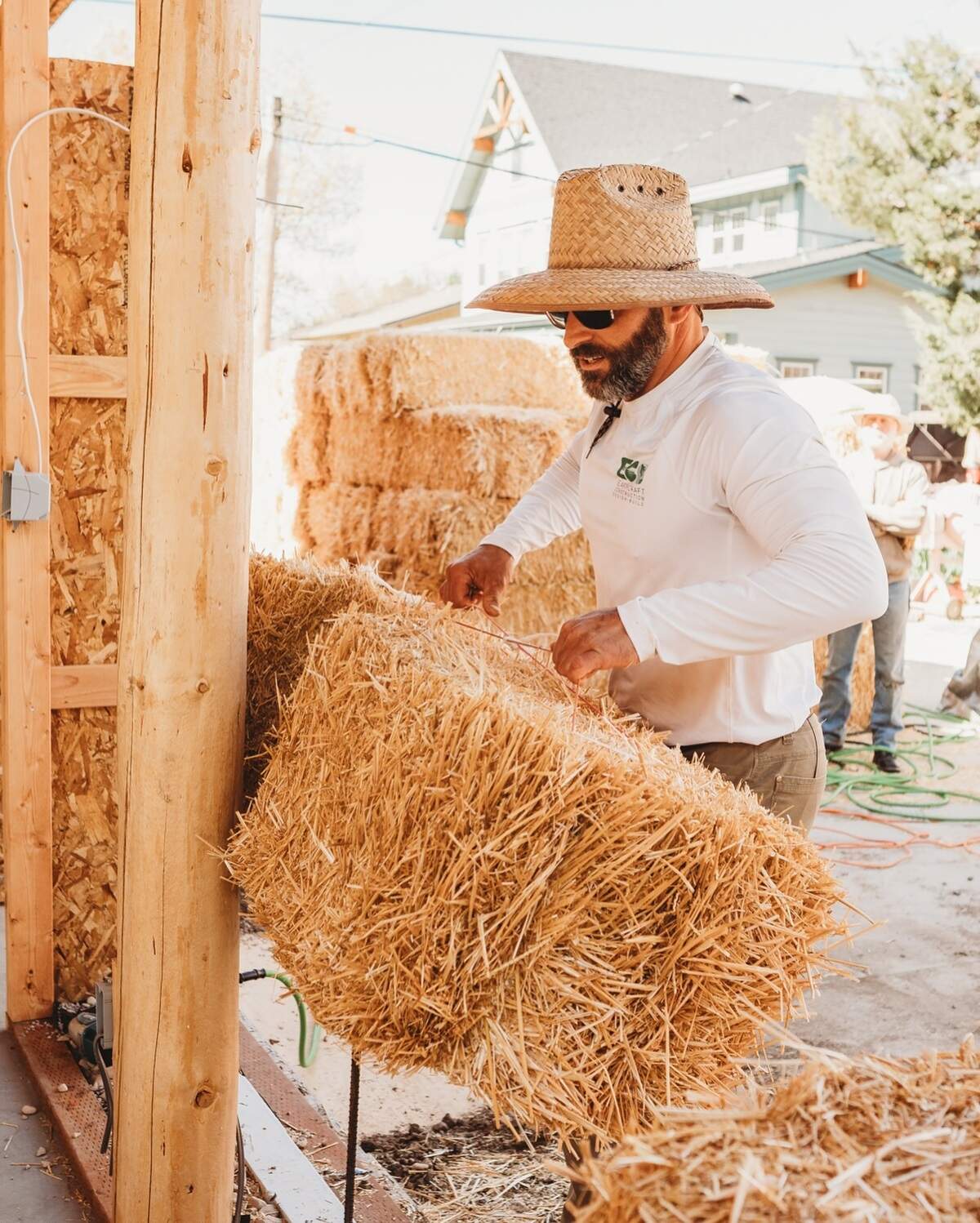
Straw is the agricultural byproduct of harvesting cereal grains such as barley, wheat and rice. Unlike hay, it has no nutritional value. When combined with clay, it is used to make sun-dried adobe bricks.
The first documented use of straw bales in construction was a Nebraska schoolhouse built in 1896 or 1897, according to the International Association of Certified Home Inspectors. Without any fencing or protective outer layer, the house was demolished in 1902, devoured by cows. EarthCraft Construction is doing something different.
“We take locally produced straw, keep it nice and dry, and then stack it on a frame between two walls of plaster made with clay found in the area,” Clark said.
Straw naturally repels water because its outer layer is coated with a naturally occurring wax. When packed tightly together, the stalks wick water away, where the microscopic pores in the clay plaster absorb it and slowly shed it into the air, regulating the humidity in the house without environmental controls that require additional electricity.
Straw bale homes are fire-resistant
Contrary to popular belief, Clark said, straw bale homes are fire-retardant.
“A plastered straw bale wall is not loose, fluffy tinder,” Clark said. “The same natural compounds that keep the straw dry also make it extremely difficult to burn, and by sealing the bales tightly between clay plaster walls, there’s too little oxygen for a fire to use, so it just smolders.”
As the size and frequency of wildfires in Northwestern rangelands increase, fire-resistant options like straw bales are becoming increasingly popular. A recent article in The New York Times highlighted how straw bale homes sequester carbon dioxide and greenhouse gases while concrete and bricks emit more of them.
Building with straw bales is still considered a niche market in Idaho. In a review of local companies and individual artisans advertising straw bale construction, the Idaho Statesman found fewer than half a dozen based in the Gem State.
However, the national market for straw bale construction is expected to nearly double from $260 million to $462.7 million by 2033, according to research by the consulting firm Grand View Research.
Smart design used in straw bale home construction
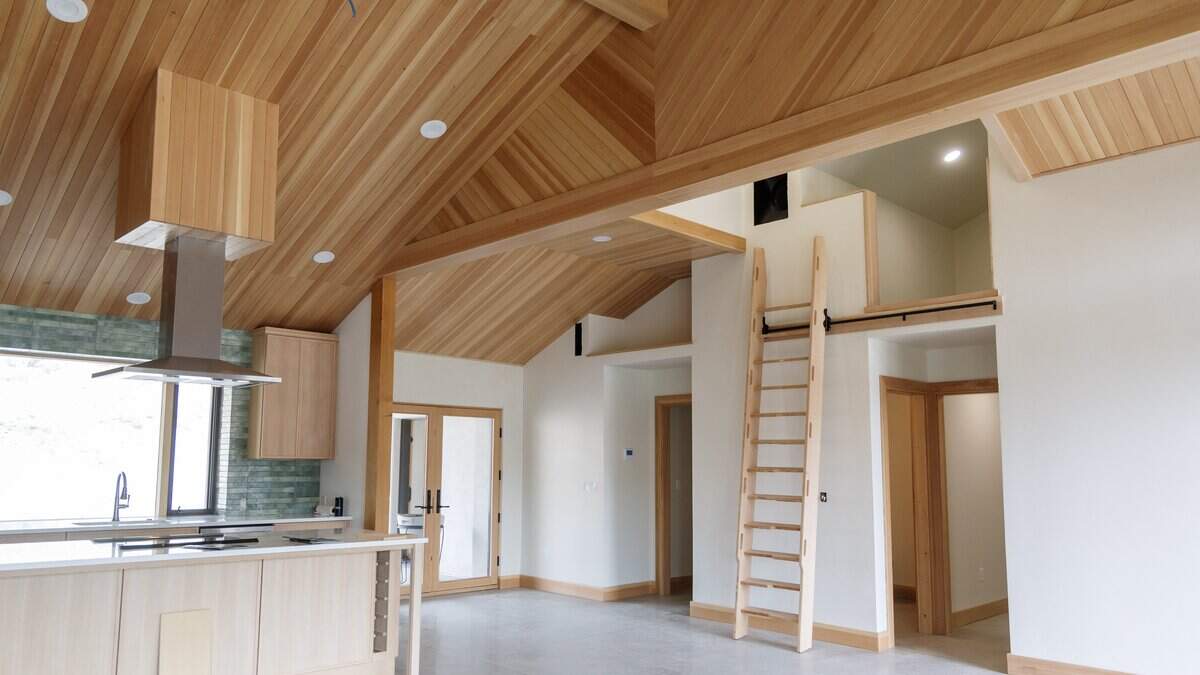
Walking through the EarthCraft home, small details help keep energy use to a minimum.
For example, using geometry and the longitudinal position of the home, the team angled the awning over the windows in the main living space so shade falls in front of the house in summer and moves deep into the living area in winter to heat the polished concrete floor.
Drawing from a well dug on the property, a solar hot water collection tank pulls water through a series of tubes heated by the sun, which then flows into a simple electric water heater.
“Normally a water heater is one of the biggest consumers of electricity in homes,” Clark said, “but not when the water is pre-heated by the sun.”
For Clark, the appeal of straw bale construction goes beyond energy efficiency or fire resistance. It is, he said, about reuse.
“I’m taking something that has already had its useful life cycle completed, and I’m giving it a whole other useful lifecycle — that’s pretty cool.”