
Idaho judge OKs video streaming of preliminary hearings for Chad and Lori Daybell
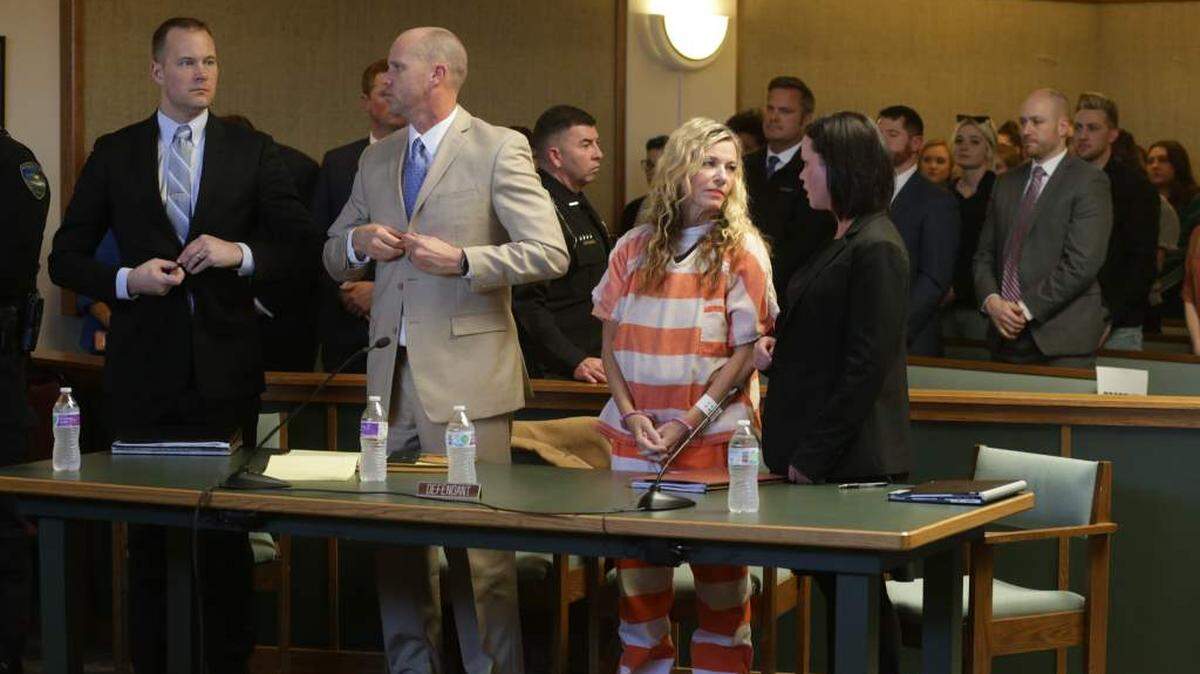
ST. ANTHONY – A judge ruled Monday that the Chad and Lori Daybell preliminary hearings set for next month could be broadcast via video streaming.
Madison County Prosecutor Rob Wood had asked Magistrate Judge Faren Eddins to not allow video cameras in the courtroom. He said broadcasting or livestreaming the hearing would make it more difficult to pick unbiased juries. Both the media — including the Idaho Statesman — and the defense attorneys, Mark Means for Lori and John Prior for Chad, filed objections to Wood’s motion.
“We’re not asking for a closed hearing. We’re not asking for a sealed hearing,” Wood said.
The Daybells are facing felony charges in Fremont County after investigators discovered the remains of Lori’s children, 7-year-old Joshua “JJ” Vallow and 16-year-old Tylee Ryan, buried in the backyard of Chad’s Salem home. Court dockets indicate that Chad’s hearing will start Aug. 3 and Lori’s will begin Aug. 10.
“The public has the right to access court proceedings and should have the ability to scrutinize the court proceedings, even scrutinize what each of us do in our own roles during the judicial process,” Eddins said in his decision.
Lori did not appear with Means in Monday’s hearing, but Chad was present with Prior. Chad Daybell did not speak Monday afternoon.
“This is simply not a hypothetical issue,” Wood said at the motion hearing Monday afternoon. “The level of public interest, in this case, is so high. … Exposure of evidence in a courtroom setting not only will create bias to potential jurors, but also the fact that it creates the appearance and possibility of bias is sufficient for the court not allowing video cameras.”
If Woods’ request had been approved, it would have essentially closed off the courtroom to the public, though the public and media would have been allowed to view transcripts or audio recordings of the hearings after.
Under an Idaho Supreme Court Order, public access to hearings is limited to prevent the spread of COVID-19. As an alternative, many hearings have been broadcast or livestreamed over Zoom or YouTube.
“We believe that the video feed is really the very appropriate solution balancing all the factors in this case,” said Steve Wright, an Idaho Falls attorney hired by the media. “It’s the least intrusive method. It is a way to provide accurate information.”
EastIdahoNews.com jointly hired Wright to object to Wood’s motion with other media outlets, including the (Idaho Falls) Post Register, KIFI Local News 8, KPVI NewsChannel 6, KIVI Idaho News 6, KSL TV 5, Court TV and NBC News.
“Publicity is not a bad thing,” Wright said. “In fact, it’s a good thing. The concern is bias arising from inaccurate information and there is no better way to make sure accurate information is provided than through a video feed.”
Wood argued that having the hearings broadcast is not protected under the U.S. Constitution. He said the U.S. Supreme Court has not broadcast its hearings during the COVID-19 pandemic.
“That accomplishes nothing other than interfering with the media’s ability to try to provide appropriate coverage in this case,” Wright responded.
Both Means and Prior agreed with Wright in that allowing livestreaming of the hearing is the best solution to the COVID-19 restrictions in place.
Prior said the only other option to keep the hearing available to the public would be to open the doors for everyone. He said that is not an option amid the pandemic.
Eddins noted that many people already have strong feelings about the Daybell case. He said he has a priority to be transparent and make sure the public can be assured of the fairness of the judicial system.
“The court finds no other viable option beyond allowing one news media outlet to broadcast the preliminary hearing and one media outlet to photograph the preliminary hearing in order to protect the public from the spread of COVID-19 while still guaranteeing their constitutional rights,” Eddins said.
This story was originally published July 27, 2020 at 5:01 PM.