New CDC guidelines on COVID indicate Boise residents might not need masks — for now
An updated map of the COVID-19 risk levels in Idaho shows that large numbers of Treasure Valley residents might not need to wear masks as coronavirus metrics continue to improve in Idaho, according to the Centers for Disease Control and Prevention.
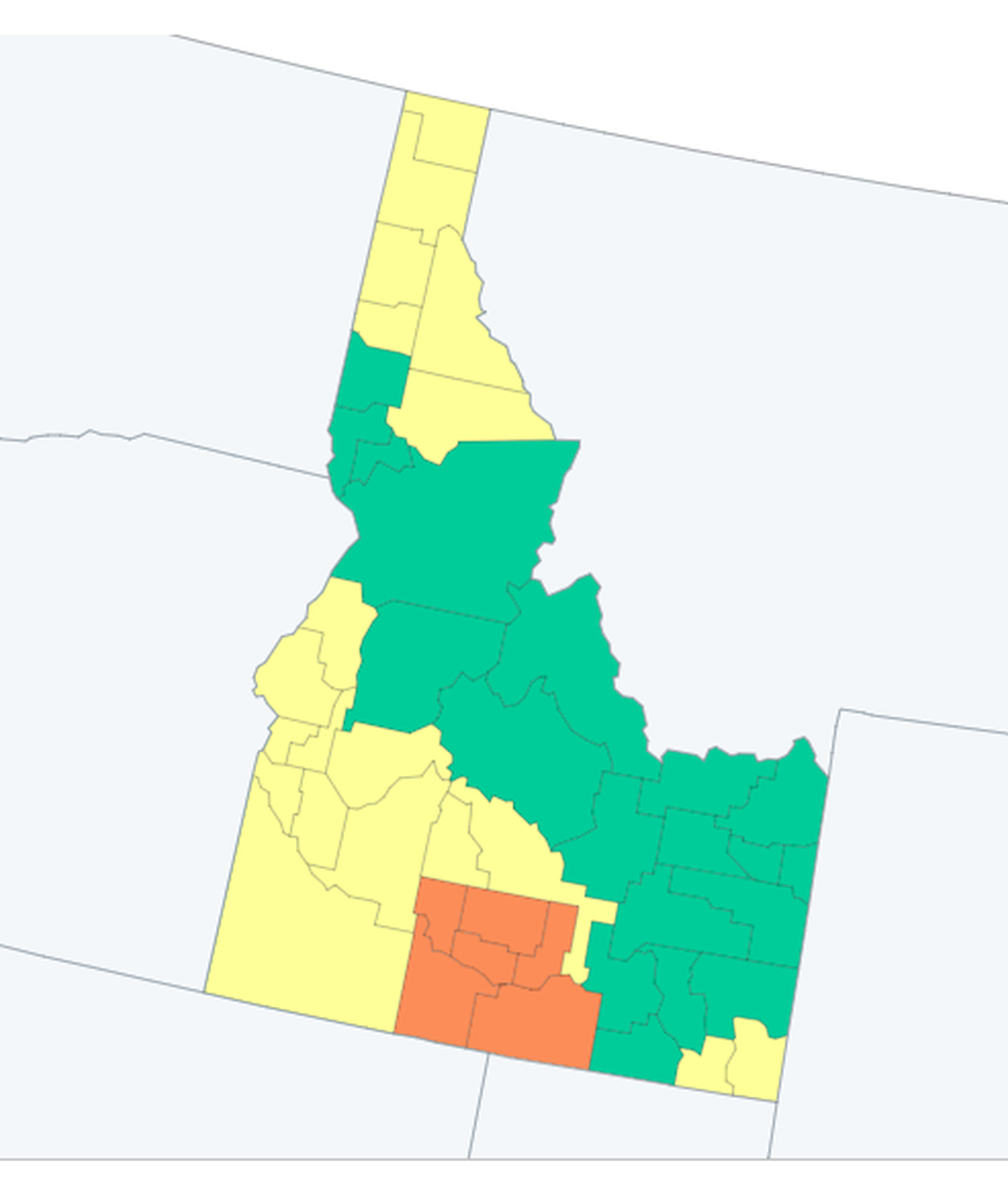
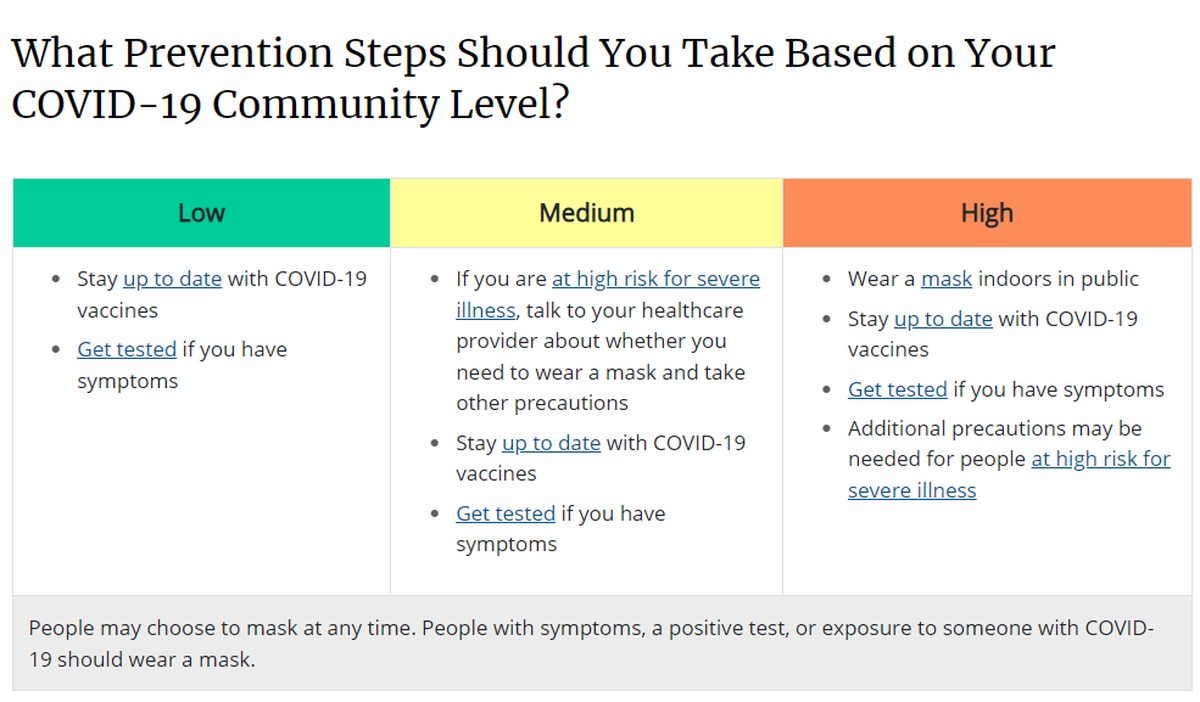
The new map, updated Thursday, shows that only south-central Idaho — Twin Falls, Cassia, Minidoka, Lincoln, Jerome and Gooding counties — remains at the “high” community risk level, which means all residents are recommended to wear a mask indoors, in addition to getting vaccinated and getting tested if symptoms are present.
Counties in the Treasure Valley have moved down to the “medium” risk category, which means residents are urged to talk to their health care provider about wearing a mask if they are at high risk of severe COVID-19 illness. Others likely do not need to wear a mask, the new guidance says.
The updated guidelines were brought about by a new method for calculating community risk levels, which the CDC unveiled last month. While previous guidelines recommended that Americans should wear masks indoors if COVID-19 transmission levels were high or substantial in the county they live in, the new guidance includes factors other than case levels, including the number of hospital beds in use and hospital admissions.
Though transmission levels are still elevated in the Treasure Valley, the new guidelines have concluded that the overall risk to the community is lower. On Thursday, the state’s latest test positivity data was released, and it showed that for the week of Feb. 20, the rate fell to 6.2% — the lowest it’s been since December.
Health officials aim for a positivity rate of 5% or lower to show control of a virus’ spread, and Idaho finally is close to that figure again.
In recent weeks, hospitalization, case rates and test positivity levels have all improved as the omicron wave has waned.
The new CDC metrics were first released Feb. 25, when the Treasure Valley and the rest of Southwest Idaho were still at “high” risk. The updated map shows improvement in several Idaho counties, including in North Idaho, where Bonner County also dropped down to the medium risk level.
The CDC’s shift in how risk is measured is buoyed by vaccination levels across the country, which health officials have said has reduced the overall risk of severe disease. Idaho still has one of the lowest vaccination levels of any state, though, with around 53.9% of residents 5 or older fully vaccinated. Around 44% of Idahoans 12 or older who are fully vaccinated have received a booster dose, which health officials say is a key part of a person’s protection.
Despite the changes, the CDC notes that people can still choose to wear face coverings when they like, with higher-quality masks shown to provide better protection.
On Tuesday, Idaho health officials said at a press briefing that they were “still evaluating” the new guidelines and that they had not received information from federal officials about how the various factors that determine community risk are calculated.
A “CDC analysis showed that their new COVID-19 community levels provides a sizable improvement over the community transmission levels that they had previously in identifying regions that will experience severe outcomes, including (hospital intensive care) admissions and deaths, in the weeks ahead,” Elke Shaw-Tulloch, administrator for the Division of Public Health, said at the briefing.
“We support these current recommendations linked to community levels as determined by CDC,” she added, while emphasizing that the pandemic is far from over.
“Despite improvements in COVID cases and test positivity and hospitalizations in the past few weeks, and despite what you will see with CDC’s new community levels ... some communities in Idaho still continue to have high rates of illness and hospitalizations, and we really need to pay attention to those.”
The CDC risk maps will be updated weekly on Thursdays, Shaw-Tulloch said.
In a Feb. 25 statement, the president of the American Medical Association, Gerald Harmon, said he would continue wearing masks indoors for the time being, and recommended others do the same.
“Even as some jurisdictions lift masking requirements, we must grapple with the fact that millions of people in the U.S. are immunocompromised, more susceptible to severe COVID outcomes, or still too young to be eligible for the vaccine. ... I personally will continue to wear a mask in most indoor public settings, and I urge all Americans to consider doing the same, especially in places like pharmacies, grocery stores, on public transportation — locations all of us, regardless of vaccination status or risk factors, must visit regularly,” Harmon said in a statement.
“Although masks may no longer be required indoors in many parts of the U.S., we know that wearing a well-fitted mask is an effective way to protect ourselves and our communities, including the most vulnerable, from COVID-19.”
This story was originally published March 3, 2022 at 5:44 PM.