Is the omicron variant milder? Here is what Idaho health officials are seeing, saying
Idaho medical experts are expecting to see major strain on the health care system in the coming weeks as the latest coronavirus variant, omicron, continues to spread throughout the state.
But not for the same reason that previous strains have put the health care system under threat.
Although Idaho is seeing daily positive COVID-19 cases climb nearly as high as they did in September and October during the delta variant wave, Idaho Department of Health and Welfare officials are more concerned about the quick spread of this variant rather than its severity.
“Health care systems across the state are seeing the number of COVID patients increase, while simultaneously seeing a decrease in the number of health care workers available to provide care due to the large number of health care workers who have been infected or exposed to COVID,” DHW Director Dave Jeppeson said Tuesday.
That situation has become a reality in the Treasure Valley, where seven Primary Health urgent care clinics and three Saint Alphonsus clinics have temporarily closed or reduced hours because of a lack of workers.
Nearly 90% of positive tests sequenced in Idaho recently are omicron, according to Dr. Christopher Ball, chief of the Idaho Bureau of Laboratories. As of Saturday, 250 individuals had been confirmed with omicron, said deputy state epidemiologist Dr. Kathryn Turner, with none of those cases resulting in hospitalizations or deaths.
“What that indicates to us is that the percentage of omicron cases is probably still on the rise,” Ball said. “So I think what we’re expecting to see is that to go close to 100%, much like we saw with delta.”
The good news with the omicron variant is that research suggests it results in a more mild illness. That could mean hospitalization and ICU numbers don’t rise as they did during the delta surge, and it could mean people who are hospitalized have shorter stays.
“There’s growing evidence from multiple countries, including reports out of the United States, that omicron is less severe,” state epidemiologist Dr. Christine Hahn said Tuesday. “The line in the sand for many of these studies is hospitalizations, or in some studies, emergency department visits, and those are reduced in omicron outbreaks.”
Why is omicron less severe but more transmissible?
In layman’s terms, the omicron variant is less effective at attaching to the lung cells than it is to the upper respiratory system, according to Hahn.
Other COVID-19 variants would enter the body and attach to lung cells, in turn causing more severe symptoms, such as persistent coughing and breathing problems that required ventilators.
The omicron variant produces symptoms more similar to the common cold in many people: scratchy and sore throat, sneezing and a runny nose.
“This makes it more catchy, potentially because it’s right there when you cough and sneeze and talk and breathe,” Hahn said. “But it also means that it is maybe less prone to causing severe illness.”
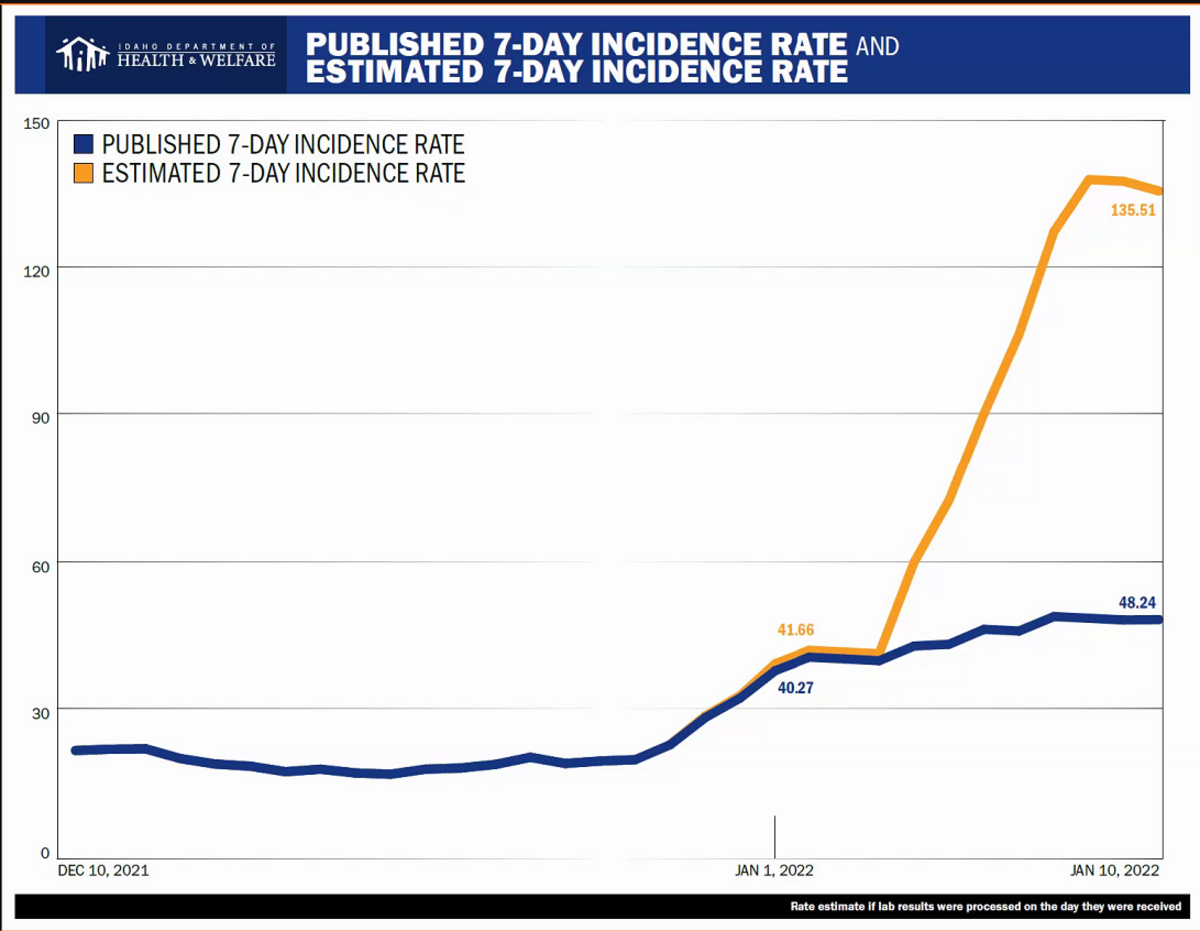
The statewide average for the past seven days is about 48 cases per 100,000 people, but health officials estimate that number is closer to 135 cases based on pending positive lab results. That would indicate one of the highest seven-day averages seen in the state over the course of the pandemic, according to Turner.
Just because the data thus far indicate a less severe illness, the potential for long-term COVID-19 symptoms is still there with the omicron variant, including a loss of smell and taste, brain fog, and respiratory and cardiac issues, Hahn said.
Jeppesen said Idaho could enter crisis standards of care at hospitals again if the caseload keeps increasing. Hospital workers have already returned to being on weekend call, not long after they returned to a regular five-day week, and the potential to reschedule nonurgent surgeries because of staff shortages is on the table.
“I don’t know of any hospitals that have officially made that decision to start to curtail less critical procedures, but I can tell you that those conversations are actively happening, and I would expect that to be the case shortly,” Jeppesen said.
This story was originally published January 12, 2022 at 4:00 AM.