More cases of the omicron variant are coming to Idaho. What do we know about its spread?
Only weeks after the new coronavirus variant, omicron, was discovered, Idaho and U.S. health officials are worried about how it may affect an already-strained health system. In Idaho, where only one case of omicron has been officially identified, new cases of delta are already causing COVID-19 metrics to flatten or increase, likely due to indoor gatherings this holiday season.
But what do we know about omicron, and how dangerous might it prove?
Omicron ‘appears to spread more quickly’
Preliminary data from South Africa and countries in Europe show that omicron is spreading very rapidly — faster than the delta variant did, which caused the spike in cases in Idaho this fall.
The Centers for Disease Control and Prevention reported a similar finding, with the prevalence of omicron jumping seven-fold in a single week earlier this month. Between Dec. 4 and Dec. 11, the percentage of new infections in the U.S. that were omicron likely grew from 0.4% to 2.9%.
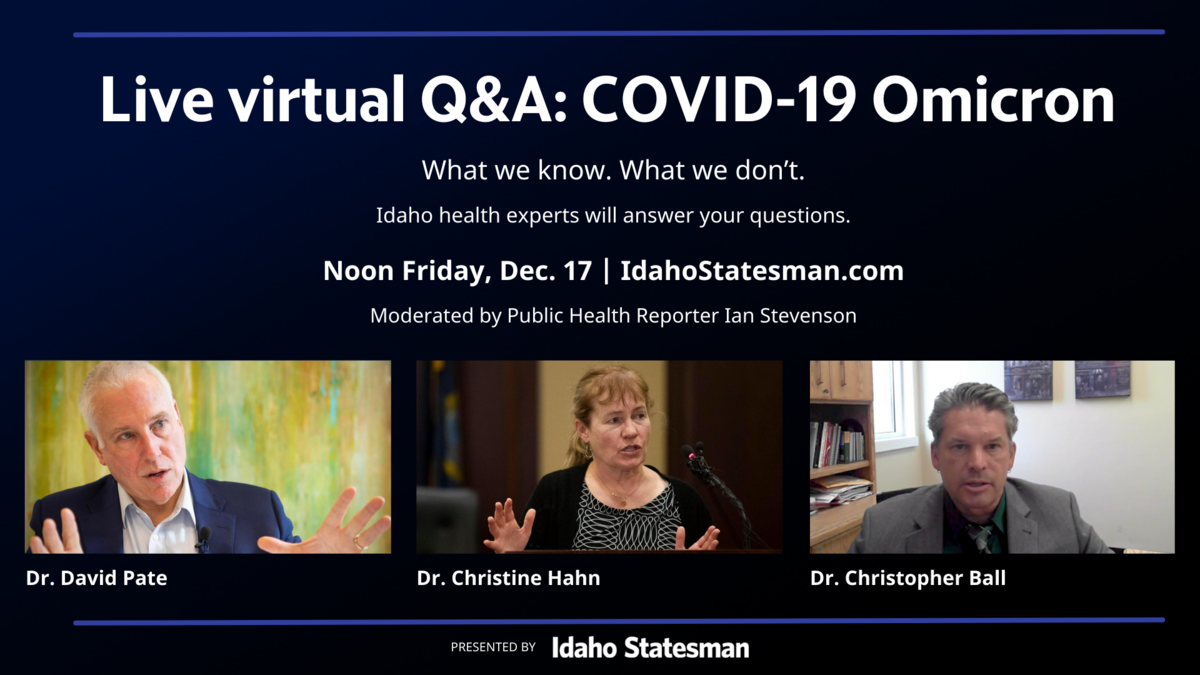
“Omicron appears to spread more quickly than delta did,” said Dr. Christine Hahn, Idaho’s state epidemiologist, at a press briefing on Tuesday.
An analysis published Tuesday by South Africa’s largest private health care insurer, Discovery Health, found that people who were previously infected with the coronavirus were less protected against omicron. According to a CDC study published in August, the chances someone who previously had COVID-19 would contract the disease again were two times less likely if they got vaccinated.
“At least in South Africa, prior infection is not as protective as it has been against the delta variant,” Hahn said.
Is it less severe than earlier variants?
While data from South Africa indicates that a lower proportion of people infected with omicron so far have ended up in hospitals than with previous versions of the virus, Hahn said that data shows the new variant can still cause severe disease.
The Discovery Health analysis found the risk of hospital admission for adults is 29% lower than during the first COVID-19 wave to hit the country in the summer of 2020.
“That’s great, but that still means a significant number of folks were in the hospital, and omicron certainly can’t be construed … as a mild virus that isn’t going to end up with folks in the hospital,” Hahn said on Tuesday.
Hahn emphasized that South Africa’s pandemic experience has not mirrored the U.S.’s, and that there are major differences between the two countries, including a lower vaccination rate in South Africa. More people in South Africa may also have been exposed to the virus, and the country has a significantly younger population than the U.S., according to Our World in Data.
So the impact of omicron could differ markedly in the U.S.
“The hope is that it is going to be less severe, but the concern is that the numbers could be so great, even if proportionally less people have to be hospitalized, the numbers are much higher and a lot of people are going to be really sick and overwhelm things,” said Marcus Plescia, chief medical officer for the Association of State and Territorial Health officials, at a Tuesday press briefing.
Could omicron evade vaccines?
New data indicates that COVID-19 vaccines may be less effective at preventing omicron infection than they were against previous variants. But the vaccines are likely still quite effective at preventing severe illness.
The South Africa analysis indicates that the Pfizer-BioNTech vaccine may provide 33% protection against COVID-19 infection, down from 80% earlier in the pandemic. In the U.S., studies have shown that the Pfizer and Moderna shots were 60-70% effective against infection during the delta surge, according to National Public Radio.
Hahn noted that the analysis found that the vaccine was 70% effective against hospital admission. That’s a significant drop from the 93% rate the insurer reported for South Africa during the delta surge.
“That is good news,” Hahn said. “Not as good as we would have liked, but that is showing that the Pfizer vaccine is still protective against severe disease, which is what we really want to see from our vaccines.”
The South African research did not include the Moderna vaccine.
How many cases are in Idaho?
The Gem State has recorded only one confirmed case of omicron, from an Ada County resident who had recently traveled out of state. The individual, who is older than 50, received two doses of the Moderna vaccine as well as a booster shot, said Rachel Garceau, a spokesperson for Central District Health.
The infected person had “very mild symptoms, likely due to being fully vaccinated,” according to a news release from the public health district.
But Idaho health officials suspect there are more cases in the state.
Dr. Christopher Ball, director of the Idaho Bureau of Laboratories, said Tuesday that the state sequences about 10% of positive PCR tests, which are a type of COVID-19 test, to identify the prevalence of different variants. At the moment, “the vast majority” of cases in Idaho are still delta, he said.
After falling for several consecutive weeks, the state’s test positivity rate — which measures the number of COVID-19 tests that come back positive — has stalled recently, and even ticked up slightly the week of Nov. 28, to 7.1%. The week of Nov. 21, the state’s positivity rate was 6.9%.
“Over the past few weeks, we have seen key COVID indicators flatten out or, in some cases, go the wrong direction,” Department of Health and Welfare Director Dave Jeppesen said Tuesday. Case numbers have begun “slightly increasing,” he added, as have hospitalizations.
Over the weekend and on Monday, Idaho added 665 new cases, according to state data.
Jeppesen said more time spent indoors due to cold weather and an increase in family gatherings during the winter holidays likely explain the uptick.
“The delta variant is still very transmissible, and so I think when you take that in combination with people in more crowded indoor settings, holidays, I think all of those things are working collectively,” Ball said.
Hahn added that with delta or omicron, practicing public health guidelines is still effective.
“We need to continue to social distance, wear masks when we’re out in public places,” Hahn said. “We should be vaccinated and have booster shots, and we just need to double down on those efforts as this unknown variant comes our way.”
This story was originally published December 15, 2021 at 4:00 AM.