‘Light at the end of the tunnel’: After year apart, vaccinated Idahoans are reuniting
For most of the last year, Erin Riley and her parents found ways to spend a little bit of time together when they could do it safely — with masks, outdoors and at a distance.
Riley, 37, and her parents Jim Bigelow and Sheila Ames, decided early on in the coronavirus pandemic that they’d have to stay apart. Riley works for an independent living organization and often crosses paths with health care providers, while her roommate worked at a local hospital intensive care unit at the outset of the pandemic. With Bigelow at increased risk for COVID-19 due to existing health issues, Riley said the choice to stay apart was an obvious one.
“Maybe we were being overly cautious, but I’d rather err on the side of caution, personally,” Riley told the Idaho Statesman in a phone interview.
The family met in their Boise neighborhood — they live just a few miles apart — for masked, distanced walks, but it wasn’t the same. The holidays felt especially heavy as they waved through windows or met over video calls.
But a few weeks ago, life began to shift. Riley was able to receive a COVID-19 vaccine fairly early because of her work alongside in-home health care providers. By March, her parents were vaccinated, too. Finally they felt comfortable enough to close the distance of the last year.
They’re three of more than 325,000 Idahoans who’ve been fully vaccinated four months into the state’s vaccine rollout. For many, it means they can finally see family or friends indoors or without masks for the first time in more than a year. As vaccinated Idahoans reunite with loved ones, they say they’re feeling joy and relief while remaining vigilant about safety precautions.
Vaccines turn simple meetups into reunions
Now that Riley and her parents are able to spend time together again, even routine gatherings are a great joy. Their first maskless meeting was a simple embrace.
“We ended up meeting down near the Co-op and we were able to hug each other without masks for the first time,” Riley said. “We’re just standing on the street corner just giving some long hugs and able to feel comfortable without masks. It was nice to do that.”
Recently Riley and her roommate went to her parents’ house, where Riley made dinner and dessert, and the group played Mahjong. Even eating indoors together felt like a victory, Riley said.
For other Idahoans, similar small returns to normalcy have had a big impact post-vaccine.
A year ago, Kimberlee Johnson’s daughter was dropping off coffee on Johnson’s front porch, wiping it down with sanitizing wipes before the 57-year-old would pick up the cup. Johnson, her daughter and son-in-law work in health care and took precautions seriously.
“Early on, I did not see my daughter and son-in-law or my grandkids or anyone else, any friends or anything, for quite a few months,” Johnson said in a phone interview.
As cases settled down and more information on the coronavirus became available, the family felt safe enough to see one another outdoors while wearing masks once or twice a week. After getting vaccinated, Johnson was able to see her grandsons, ages 6 and 2, without wearing a mask.
“They were so thankful,” she said. “It was like they hadn’t seen me forever.”
For Gail Heylmun and her husband, Gary Sandusky, his birthday marked both the beginning of the pandemic and their return to some sense of normalcy. Their family celebrated Sandusky’s March 15 birthday a few days early in 2020 with dinner at a Boise restaurant. Soon after, the state went into lockdown.
Heylmun and Sandusky signed up for the Pfizer-BioNTech vaccine trial last year not knowing whether they’d be vaccinated or receive a placebo shot. In February, officials unblinded the study. Heylmun learned she’d had the vaccine — which she suspected after some side effects early on — while Sandusky had not. Soon, Sandusky qualified for a vaccine as part of Idaho’s rollout.
When his 70th birthday arrived last month, they decided a small gathering would be safe.
“By that point this year, everyone has either had COVID-19 or is vaccinated,” Heylmun said of the family members who participated. “Two of our kids got together and really made it a big deal, partly because we could all get together and partly because it was his 70th. We didn’t even eat at home, we didn’t wear masks and we hugged.”
While many families reunited, Amelia Doty-Jones’ experienced a first thanks to the COVID-19 vaccine. Doty-Jones’ first child, Margaret, was born in May “right after things went kind of haywire,” the 36-year-old health care worker said in a phone interview.
Through the warmer months, she introduced Margaret to family when they could meet outdoors with masks on, but avoided gatherings in the winter. After Doty-Jones’ parents received their COVID-19 vaccines, they felt it was safe to finally meet Margaret without masks.
“Her eyes were wide, like, ‘Whoa, what is happening,’ ” Doty-Jones said of the baby’s first time seeing her grandparents’ unmasked faces. “It was really special for my mom.”
She said having vaccinated friends and family able to spend time with Margaret is a normalcy the family never got to experience when the baby was born.
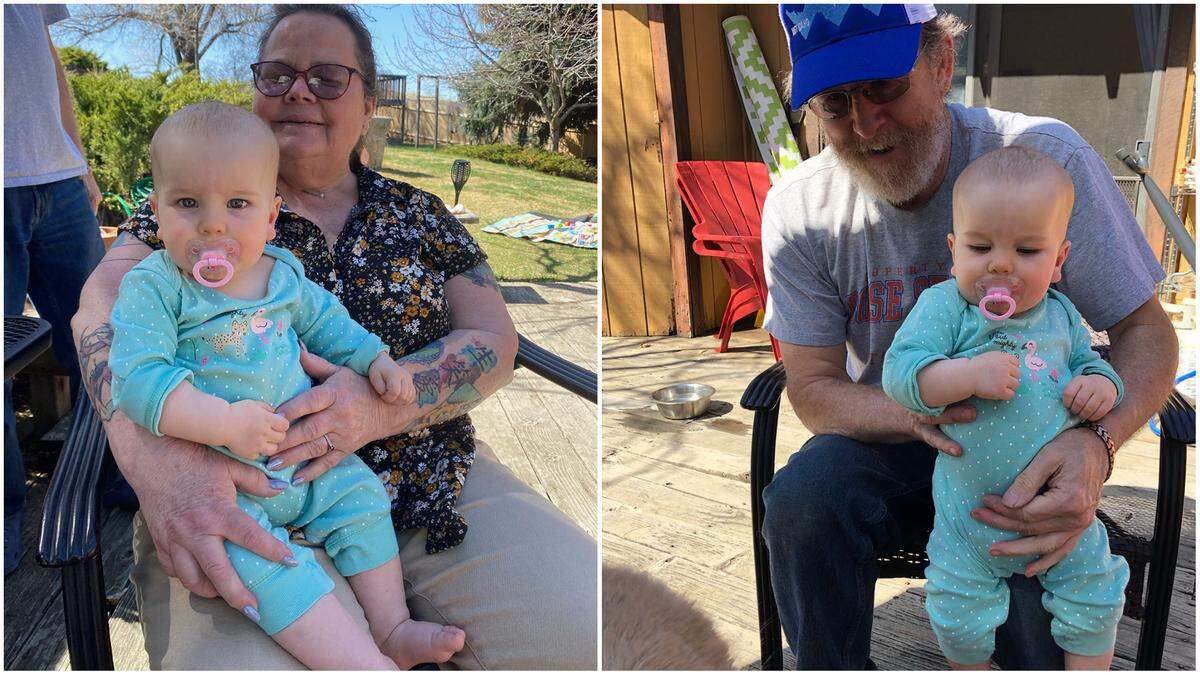
“That’s been the hardest part of the pandemic is people not knowing her in the same way as they would if they came over for a couple hours and hung out,” Doty-Jones said. “Now people can get to know her and her quirks and personality.”
Karen Veljkovic, of Eagle, said being vaccinated meant she was able to return to the volunteer work that made up a huge part of her life pre-pandemic. She was an NICU cuddler at St. Luke’s, offering love and support to babies in need of critical care. She’s still not back in the NICU yet as the hospital is keeping COVID-19 precautions in place, but she’s overjoyed to once again lend a hand — this time helping in the health system’s effort to dispense vaccines.
“I’m really anxious to get back in the NICU, but for now I just want to help as many people as I can get vaccinated,” Veljkovic said. “For the most part, people come in and say, ‘I never knew I’d be so happy to get a shot.’ ”
Idahoans venture out post-vaccine
The Centers for Disease Control and Prevention announced last week that it’s safe for fully vaccinated people to travel in the U.S. with little risk to themselves. For some Idahoans, that meant the chance to see far-away loved ones.
Greg Briggs’ 86-year-old father, Ralph, had held off on his usual travel in 2020, but after most of the Briggs family was vaccinated, Ralph felt safe to make the trip to Boise from North Carolina in March. Briggs said his family typically meets up with his father three or four times a year. They’d tentatively planned a trip last year, but canceled over coronavirus concerns. Before March, the last time Briggs had seen his father was December of 2019.
“It was that situation where someone leaves and you don’t get to say goodbye,” said Briggs, a firefighter who was vaccinated early on in Idaho. “It wasn’t like the last time we saw him we said, ‘See you in two years.’ ”
Briggs, along with his wife, 17-year-old son, Tucker, and 7-year-old daughter, Cassidy, filmed their reunion with Ralph outside the Boise Airport a few weeks ago.
Tucker said he was happy to reconnect with his dad’s side of the family.
“It was odd because we’re able to see my mom’s parents pretty regularly with masks on and distanced,” Tucker said. “With my (paternal) grandparents, it felt like it had been so long that I knew them less. Two years in my life is a lot — it’s more than 10% of my life so far.”
Greg Briggs said seeing his dad brought a wave of relief.
“You always worry with this pandemic whether you’re ever going to see your parents again or if they’ll make it,” he said. “I just got this great feeling of: ‘We made it. I get to see you again.’ ”
Sarah O’Keeffe, of Boise, did some traveling of her own. She got vaccinated through an AstraZeneca trial in 2020.
“There was a 60/40 chance that I would get the real thing and get it early,” she said.
She spent the pandemic caring for her parents, who are high risk. They both were vaccinated in recent weeks, which meant O’Keeffe was able to attend her niece’s wedding in Arizona in late March without worrying that she would put her parents at risk.
Seeing her niece was a huge morale boost after a year of tension and anxiety, O’Keeffe said. But even during the celebration, she didn’t let her guard down completely. Attendees double-masked during the small event.
“Not everybody at the wedding had been vaccinated, so we were very careful about social distancing,” she said.
After vaccine, a feeling of relief
Vaccinated Idahoans say they’re still diligent about wearing masks in public spaces, practicing good hand hygiene and keeping gatherings small and safe. They know the state isn’t out of the woods yet. But many said knowing they and their loved ones have been vaccinated has lifted a weight that settled on them in 2020 — even if it’s an adjustment to return to normal.
“I’d been on edge for so long. I couldn’t stop feeling a little bit uneasy for the first couple of hours,” Tucker Briggs said of reuniting with his grandparents. “The No. 1 thing you’re not supposed to do is hang out indoors with your grandparents without masks on.”
Tucker received his first vaccine dose March 31. He said it made him feel a little safer before heading back to high school in person. His dad likened the feeling to the first warm day after a long winter.
“You can go outside in shorts and you’re like, ‘Wow, I forgot how great this is,’ ” he said.
For O’Keeffe, vaccination has calmed her enough to taper off the anxiety medication she started taking at the height of the pandemic. And for Riley and many others, it looks like the beginning of hope after a difficult year.
“I do see the light at the end of the tunnel,” Riley said. “Time apart and missing those holidays and missing those moments were really hard. But in my mind, in the long run, it was worth it to be this cautious so that we weren’t spreading (COVID-19) to other people.”