Denmark weighs killing mink over COVID-19. What does that mean for Idaho mink farms?
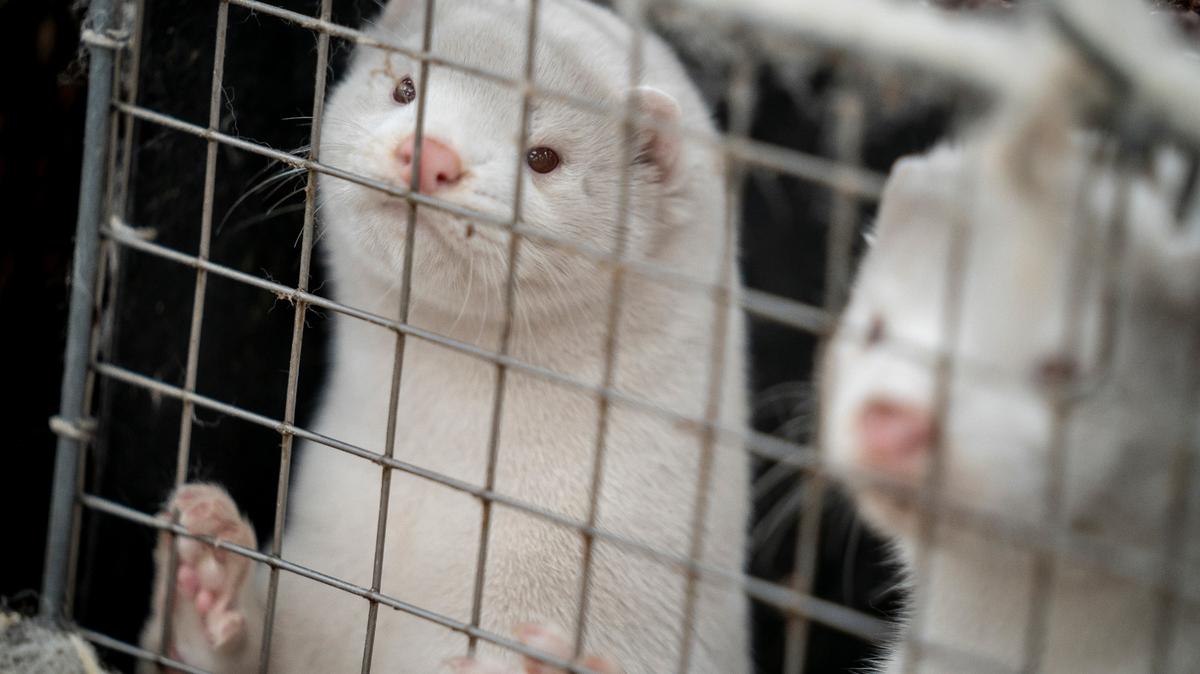
As officials in Denmark debate culling millions of mink, which are known to contract coronavirus from and transmit the disease to humans, Idaho fur farmers are warily watching their own mink populations.
Denmark’s mink pelt industry is the largest in the world, producing between 12 and 13 million mink skins each year. It’s one of several countries where COVID-19, the disease caused by the coronavirus, has been transmitted to mink, which are small mammals that are part of the weasel family. Recently, scientists in Denmark warned that they believe a mutation to the coronavirus originated in mink and was transmitted back to humans, raising concerns that outbreaks at mink farms could threaten the efficacy of COVID-19 vaccines for humans. As a result, Danish officials announced plans to cull about 17 million mink across Denmark — a plan they briefly paused and then again moved forward with early this week. Other experts, including U.S. immunologist Dr. Anthony Fauci, said they don’t believe the mutation will be a major vaccine hurdle.
COVID-19 infection transmissions between mink and humans have also occurred in the United States. In August, several cases of COVID-19 were discovered in deceased mink from fur farms in Utah, according to the U.S. Department of Agriculture. In October, additional cases were found at mink farms in Wisconsin and Michigan.
Though no cases of COVID-19 have been diagnosed in Idaho mink, Fur Commission USA lists Idaho as the third-largest producer of mink pelts in the country after Wisconsin and Utah. In 2019, Idaho produced nearly 270,000 mink pelts, according to USDA statistics, and 2017 data shows almost two dozen mink farms in the state.
Bill Barton, the state veterinarian with the Idaho State Department of Agriculture, told the Statesman his agency reached out to the USDA for guidance once cases of COVID-19 in mink began cropping up around the world. The USDA recommends workers at mink farms take precautions recommended in most situations to prevent the spread of coronavirus — wearing face masks, social distancing, hand washing and isolating when sick.
“All the things we do on the human side are critical on the mink side as well,” Barton said in a phone interview.
Barton said mink seem to be affected by the coronavirus in much the same way as humans are — with respiratory issues and, in some cases, gastrointestinal symptoms, as well. A Utah veterinary pathologist that performed necropsies on several Utah mink found their lungs were “wet, heavy, red, and angry,” according to Science magazine.
While some mink farm workers in Europe are believed to have contracted the virus from infected mink, it’s still unclear if infected mink have transmitted the virus back to humans in the U.S.
“It’s highly likely that humans — either asymptomatic or symptomatic — introducing the disease into the mink farms,” Barton said. “There’s no hard evidence that animals, including mink, are playing a significant role in transmitting the disease to humans.”
One Idaho farmer culls mink
As a precaution, at least one Idaho farm has preemptively culled many of its animals. Ryan Moyle, co-owner of Moyle Mink & Tannery, said his business reduced its mink population by about 98%. The Moyle family owns multiple farm and ranch properties in south-central Idaho.
“All our farms are empty except one,” Moyle said. “And it’s run by two family members who live on the farm and are (pretty much) isolating.”
Moyle said the business retained a “genetic reserve” of animals to breed when concerns about COVID-19 have passed. The USDA does not currently recommend culling mink.
It’s not clear why mink are being affected so severely by the coronavirus. Barton said mink aren’t particularly susceptible to other human diseases but speculated the coronavirus may spread easily in mink farms over other livestock operations because mink are often kept in very close quarters, with numerous animals kept together in small enclosures.
“There’s not six feet of separation between each mink on a farm,” Barton said.
Several other species of animals have contracted the coronavirus — including tigers, lions, cats and dogs — with typically mild symptoms.
This story was originally published November 17, 2020 at 4:00 AM.