
Moscow killings affect people with no ties to them. These are the unseen economic costs
Crime scares people, even those who are not directly involved in a crime. Fear is unpleasant, and it reduces the satisfaction in life that economics assumes we all try to maximize.
Moreover, the reactions of individuals and societies to crime add up more broadly, further taxing our well-being and changing the social as well as economic environment.
Consider the stabbing deaths of four University of Idaho students in mid-November, for which a Washington State University graduate student, Bryan C. Kohberger, is accused of murder. The brutality of these crimes outweighs more mundane murders in my home area of Minneapolis-St. Paul. But crime is still a concern for many here.
We had a gunfight between youths at our large Mall of America two days before Christmas that left one dead and a bystander wounded. We had two fatal shootings near a much-used light rail line joining our two cities. St. Paul had the highest number of murders ever, though homicides and other violent crimes in Minneapolis were down and well below 25 years ago. And property crimes, especially a very frustration wave of catalytic converter thefts in even the “safest” neighborhoods.
In examining the economic repercussions of crimes like this, we find patterns of instinctive reactions and societal adjustments occurring. This includes our responses to property crimes, such as the catalytic converter thefts in many U.S. cities, and violent crime, such as light-rail station muggings, carjackings, and even drunken brawls in the Lido deck of low-end cruise ships, among others. We react because our perception of safety is harmed, even though the reality, statistically, might be different.
So, most people agree that crime is bad and harms society. But what can economics tell us about this?
Historically, as an academic discipline, not much. Economists generally left the subject of crime and its responses to sociologists, jurists and political scientists. That changed in the late 1960s as Gary Becker and his colleagues at the University of Chicago pioneered “the new microeconomics of the family.” This applied conventional models of rational humans weighing costs and benefits to decisions about marrying or having children, rather than, more traditionally, about how many workers to hire or buying ground beef versus chicken.
The same reasoning Becker applied to families was applied to criminal activity and its control. Rational people might commit crimes if the benefits of doing so, increased satisfaction for one reason or another, were greater than the costs of doing so. The pain of violating one’s own values of right or wrong were acknowledged as an important factor for most people. But the logic was that if we, as a society, wanted to reduce crime, we had to increase the costs. This could come from a greater likelihood that perpetrators would be caught and punished, and then harsher punishments.
Economic insights for murders, assaults, rapes
These were not bad insights and had relevance for property crimes but little for murders, assaults and rapes. Some researchers took the implications further, noting that little attention was paid to the external costs of crime, beyond what happened to direct victims. That is happening to people now in a deeply visceral sense for University of Idaho students and residents of Moscow and its environs.
When someone cut the catalytic converter off my truck, I suffered a loss in dollars and time. I was a victim. But that it happened in the well-lit parking lot of our condo complex scared other residents too. “If they cut the converter off Ed’s old Ford, will they do it to our Prius?” It was another source of unpleasant worry for many. Their satisfaction in life dipped. This was what economists call an “external cost,” a loss to someone not directly involved in the “transaction.”
The same is true for street crime involving persons rather than property. If I read of someone getting mugged at a train stop or stray bullets at a shopping mall, I will feel more fear the next time I consider going to these spots. I will be less relaxed and will do more nervous eyeing of everyone else. Who of these other passengers or shoppers might hurt me? I might just stay home. Extrapolated over all other law-abiding would-be train riders and shoppers, such behavior could doom the transit system and bankrupt the mall.
Reason says: Moscow, Pullman remain safe
Gruesome and tragic murders raise this an order of magnitude. Moscow and Pullman residents might know rationally that decades may pass before any similar atrocity is perpetrated. Their reason tells them that west-central Idaho and eastern Washington remain very safe places to study, work and live.
Yet it is entirely human to shudder when driving past the scene where a grisly atrocity took place, or when hearing of someone who had some social or professional tie to the victims. It is impossible to avoid thinking, “If it could happen to those four students, it could happen to my child, or it could happen to me.” One can feel less safe in a fundamental way. That is a cost to society as a whole.
Stepping back, the obvious prevalence of these secondary responses by people who were not directly victimized answers one economic question: Does all crime make all of us together worse off or better off?
Most people will instinctively answer: Worse off. But consider: As kids, we probably read about how Robin Hood stole from the rich and gave to the poor. The rich had more than they needed, and so it was easy to justify any improvement in the dire situation of the poor as outweighing the harm to the rich and making society better off.
Is that still true for some?
I know a pastor who was an adolescent in the “hunger winter” of 1944-45 in the Netherlands. Caught in the no-man’s-land between Allied and German forces, the Dutch suffered mass malnutrition. This man stole food, broke and entered, and once assaulted someone to grab some food for his mother and siblings. Yet would any of us fault him?
Some thefts, some assaults, in our society may stem from absolute need. Some may stem from a desire, especially among the young, to have things that everyone else seems to be able to have, or to “fit in” with a particular criminal element that is prevalent in their subculture. There are many other motivations, some potentially justified, excusable or merely understandable.
But in almost all cases, the loss to the victims, and the costs borne by others in society, outweigh the benefits to the successful thief or mugger. Someone gets $100 for a stolen catalytic converter, and the car owner has to spend $1,800 and hours of hassle to get it replaced. And 10 or 20 other people in the neighborhood fret just a bit more about whether their car is safe when parked in a lot or on the street.
Economists would observe that potential losers would be better off if they got together and spent money on deterring crime. But that involves “coordination problems” and a political process with people of greatly differing views. Students and low-wage workers in apartments with only street parking face a financial crisis if their car is hit. Retired econ profs and doctors with secure underground parking girded with an array of CCTV cameras are less threatened. Young women who may have to walk back at night to a highly insecure student apartment have more to worry about than suburbanites who, along with all their neighbors, have alarm systems, security cameras, firearms and perhaps even safe rooms.
Shootings, muggings repel customers
In my home town, the plight of mall patrons and store owners is real. So is the plight of transit riders. For such entities, every shooting, mugging or unwanted importuning by a scary individual repels customers. Fixed costs stay the same, or rise, but revenues drop. People may have to drive farther to a facility with fewer and less attractive stores, but they don’t want to be hit by a stray bullet. The freeway may be more clogged and getting into and out of high-priced parking may frazzle you, but you don’t want to be all alone at an isolated rail station returning from your concert.
Suddenly feeling confronted with murder in an area where one felt safe is hard. Two decades ago, there were two murders within two blocks of my house in two weeks. I knew one of the victims, and a close friend actually roomed with the victim for a time. It was unsettling to drive past either house even though the circumstances — a parent bludgeoned by a child with severe mental illness, and someone killed by an anonymous partner brought home for sex — signaled that I should not worry.
Yet my unease was an external cost of these crimes. The eerie feelings of vulnerability faded over time. That will happen in Moscow too.
Politicians claim to be tough on crime and “tough on the causes of crime,” but both property and violent personal crimes are problems that ever will be with us.
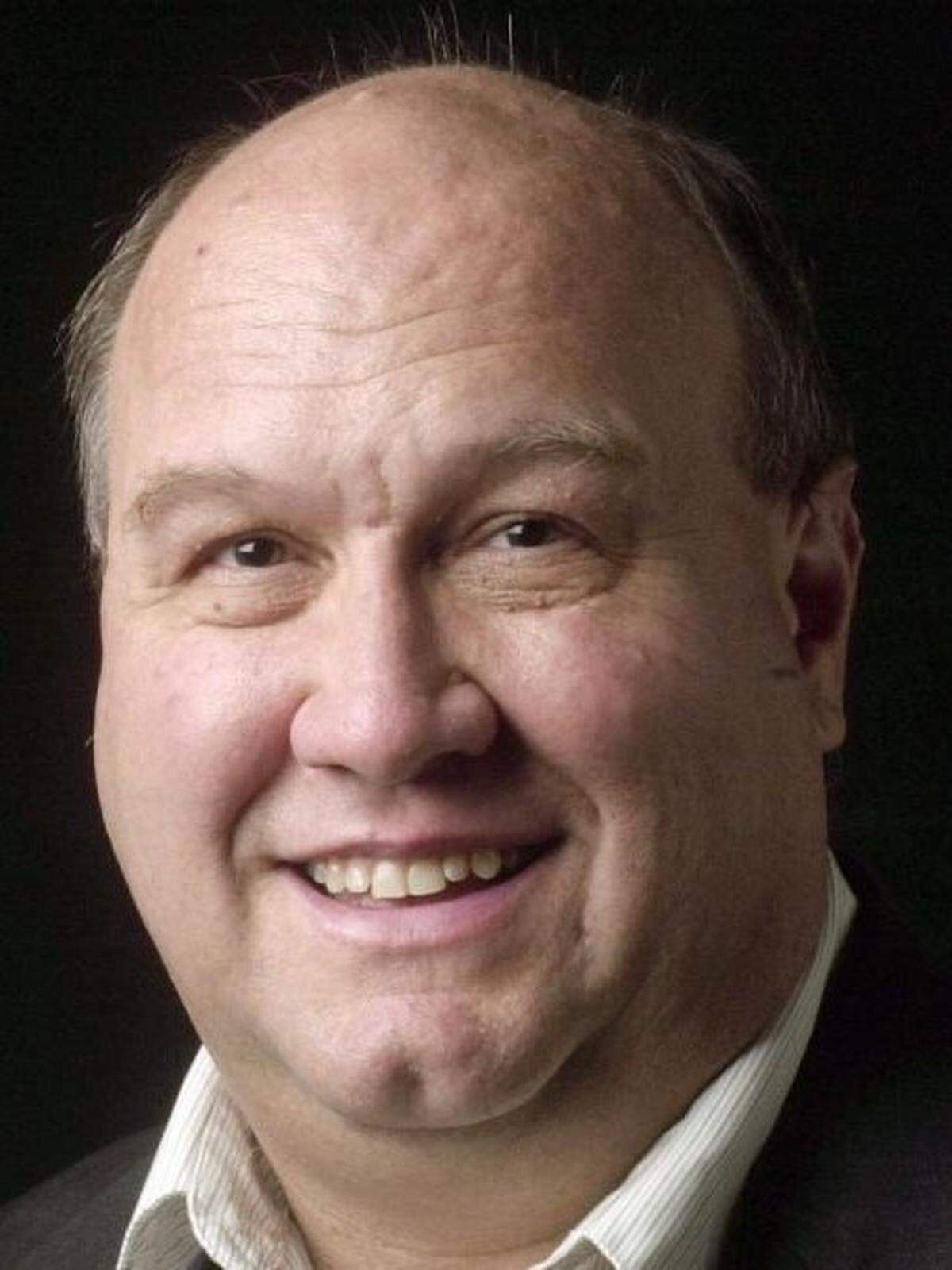
Economist and writer Edward Lotterman, a former Idaho Statesman columnist and now an occasional contributor, can be reached at stpaul@edlotterman.com.
This story was originally published January 13, 2023 at 4:00 AM.