
I’m good at spotting wildlife in the African bush. What good does that skill do me?
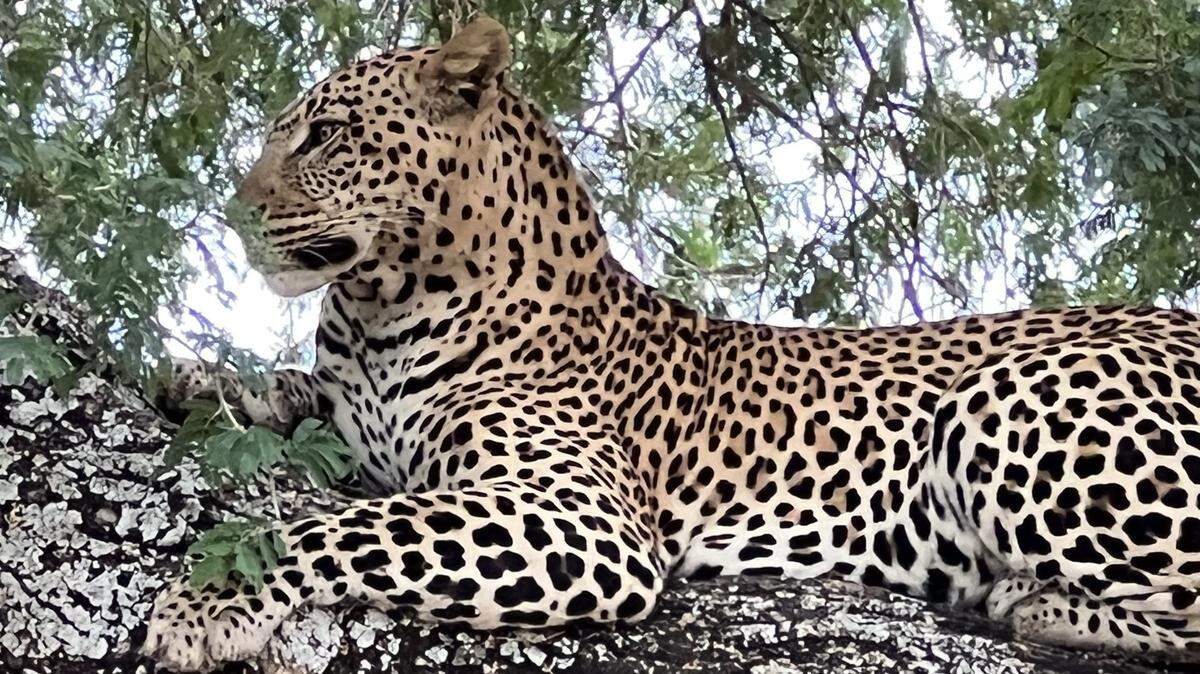
In a particular context that I don’t visit often, I have a wonderful skill. Oddly, I’m a decent animal spotter in the African bush, able to find animals that sometimes the experts miss. But away from that setting, the skill loses value.
On our first safari in Botswana many years ago, I saw a huge male lion before anyone else, spotted a monitor lizard, and pointed out a pride of lions tucked behind a termite mound. Flukes, maybe, but I was hooked.
I queried the guides about how they spot animals and tried their techniques: looking for silhouettes, shapes (tail, body, ears, legs, etc.) and size. A bulky solid beast could be a hippo in the woods, out of the water for the evening. A black horizontal stripe could be the back side of a lion’s ear, signaling danger to any nearby being. A pole-like shape could be a tree or a giraffe’s neck. I’ve not mastered bird calls, but I can recognize alarm calls: water bucks, Lechwe antelopes and some birds shrieking to alert others about predators in the area.

Then one of the guides pulled a master stroke that shows I’ll never be really good at this. On a drive, I spotted a bird — a Senegal coucal — tucked into a shrub. We stopped to talk about the bird and its behaviors, and suddenly our guide said, “A lion … in the grass, over there.” Nothing stirred.
“How do you know that?” my husband whispered.
“I heard the lion sniff.”
Sniff?
Sure enough, we backed up and drove through tall grass (called “adrenaline grass” because you can’t tell what’s in it so you’d better be careful). A male lion looked up, waking from his nap.
“How did you know it was there?”
“Guiding is all about teamwork. If Nancy hadn’t pointed out the bird, we wouldn’t have stopped and turned off the vehicle as we talked about it. Because it was quiet, I could hear the lion sniff. And there it was.”
But outside of the bush, my newly found skill seems useless. I’m not a hunter, so I would never have to search for deer or snakes or porcupines in the Idaho wilds. I suppose looking for herons and eagles on the Greenbelt might count, but those sightings are relatively few.
So what good is my useless skill in an urban setting?
If you’ve read my columns, you know I often try to find connections across different fields or between odd dots. And as I think about it, this odd dot — skill for the bush but not for the city — may have some value after all.
To search for animals meant I had to be completely focused and in the moment. If I drifted, I’d miss the flick of a leopard’s tail. Of course, being present and focused are good skills for life in general. I tend to think a lot in the future, rather than exactly in the present moment. I also get distracted too often, and scouting reminds me to focus on one task alone.
So I’m trying to practice my scouting skills, even in the not-so-wild corners of Boise.
Nancy Napier is a distinguished professor at Boise State University in Idaho. nnapier@boisestate.edu. She is co-author of “The Bridge Generation of Vietnam: Spanning Wartime to Boomtime.”
This story was originally published July 20, 2022 at 3:08 PM.