
Inflation is up. Stocks are volatile. What to do? Why the Fed likely has no idea
No one likes uncertainty. Especially financial markets.
Prices in the U.S. stock market, among others, have been volatile this year. The Dow Jones Industrial Average has declined more than 11% but has done so in a very up-and-down manner. Prices are moving up and down more so than usually.
A common measure of market volatility and uncertainty is the CBOE Market Volatility Index, or VIX. The index reflects the cost of mitigating risk through the sale or purchase of option contracts on large U.S. stocks. This cost rises when prices move dramatically in one direction or another, reflecting greater uncertainty over the outlook for corporate profits and the economy.

The VIX’s long-term average value is 20, but for the past few weeks it has hovered near 30. That means stock-market uncertainty is 50% higher than normal.
Much of the source for this uncertainty can be attributed to what is sometimes called Fed Speak.
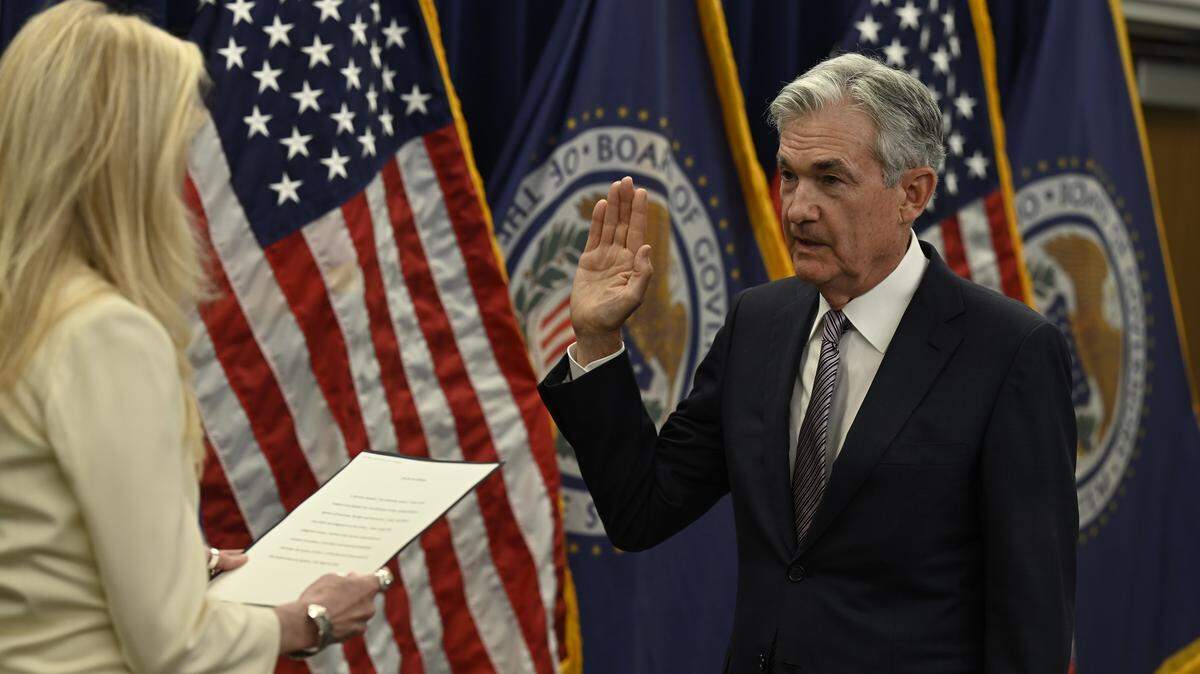
Federal Reserve Board Chairman Jerome Powell and other members of the committee that sets monetary policy have given speeches recently that are leaving investors puzzled as to the outlook for interest rates and the economy. Powell said that interest rates may need to rise “beyond common measures of neutral and into a more restrictive stance.” Another board member has said that “inflation is much too high and is subject to upside risks.”
In all, not a clear picture of how the economy is faring or where interest rates are headed. Furthermore, it is not likely that these government policy makers have any idea as to what should be the appropriate policy response to current economic conditions.
It’s another case of the knowledge problem.
In 1945, Nobel prize-winning economist F.A. Hayek identified the knowledge problem that all policy makers face. He wrote that “the ‘data’ from which the economic calculus starts are never for the whole society ‘given’ to a single mind which could work out the implications and can never be so given.” In other words, the Fed will never know what interest rates on bank deposits, government bonds, or mortgage loans should be.
Even if the Fed could collect more data on the economy, setting monetary policy would still be difficult. There are quality and timing issues that arise for the data the Fed does look at.
First, policy makers watch the financial markets in an effort to get quality information in a timely fashion. But as has already been demonstrated, market prices can move quickly up or down. This is true in the stock market as well as the bond market.
Even if the Fed got good information quickly it takes time to implement the policy response. Fed member Christopher Waller recently pointed out that since the Fed’s policy-setting committee is so large, reaching a consensus on the appropriate actions is “gradual.”
The knowledge problem suggests Fed policy makers should first admit there is little they can do, and second, do as little harm as possible. All their talk just creates more uncertainty.
Peter Crabb is a professor of finance and economics at Northwest Nazarene University in Nampa, Idaho. prcrabb@nnu.edu