The Fed will never know enough to fine-tune the economy successfully. This is why.
As Socrates knew, so too should the Fed.
Plato quotes his teacher as saying, “All I know is that I know nothing.”
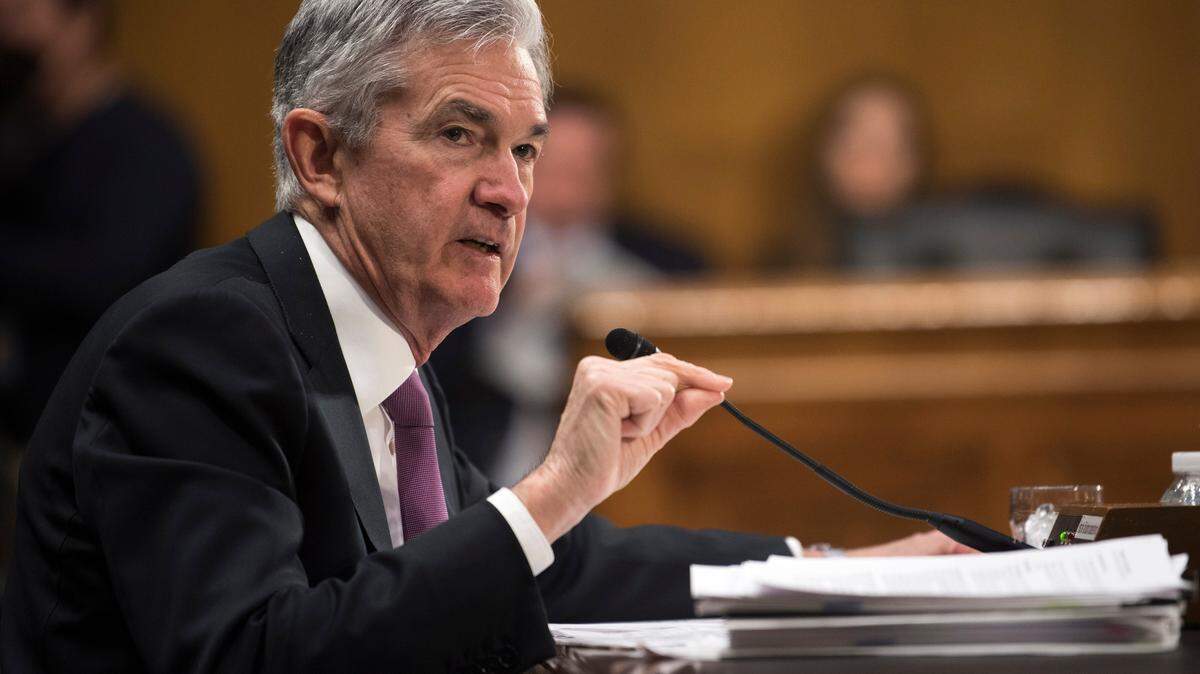
Last week, Federal Reserve Chairman Jerome Powell testified before Congress that the Fed was unlikely to cut interest rates further at its next regular meeting, because they think the economy is doing fine. However, in answer to questioning, Powell said he and other policy makers needed “significant humility” when it comes to what they know and don’t know about the economy.
It’s would be nice if more government policy makers admitted such lack of knowledge.
As I wrote here earlier this year, the Fed has long held rates well below historic averages and increased the U.S. money stock. Despite the incentives such policy creates, banks are still holding on to cash deposits and not lending much. Easy monetary policy has not achieved the economic growth many expected.

What we have experienced throughout this year lends credence to the argument that monetary policy is ineffective. David Hume’s 18th century argument that money is neutral — that is, you can’t affect the real economy by changing the amount of money circulating — appears to hold.
Powell’s testimony this month suggests that the problem of setting monetary policy in our modern economy and financial markets is even harder than it may have been in Hume’s day. Powell said “we don’t know where maximum employment is.”
Nobel prize-winning economist F.A. Hayek identified this as the knowledge problem that all policy makers face. In 1945 he wrote that “the ‘data’ from which the economic calculus starts are never for the whole society ‘given’ to a single mind which could work out the implications and can never be so given.” In other words, the Fed will never know the maximum level of employment in the economy.
Even if the Fed could collect more data on the economy, the problem of correctly setting interest rates or the level of bank reserves for the implementation of monetary policy would still be difficult. At least three issues that arise: the quality of the data, the timing of the data, and the fact that the Fed doesn’t completely control the money supply.
Fed policy makers could watch the financial markets to try and get quality information in a timely fashion. But anyone who has tried trading stocks knows that such information moves too quickly.
Regardless, even if the Fed got good information quickly, it takes time to implement policy in response. As former Fed member Alan Blinder wrote, “Almost all economists, including most Keynesians, now believe that the government simply cannot know enough soon enough to fine-tune successfully.”
So let’s admit what we don’t know and stop expecting monetary policy to help the economy.
Peter Crabb is a professor of finance and economics at Northwest Nazarene University in Nampa. pcrabb@nnu.edu