
For some companies, profits come second: Idaho could create ‘benefit corporation’ rules
Russ Stoddard wanted to make a living when he opened his Boise marketing firm, Oliver Russell, in 1991. He also wanted his business to be a force for good.
For Stoddard, that first meant marketing for other cause-driven businesses. Later it meant integrating waste- and energy-saving measures into his office on 11th Street in Downtown Boise, where his flexing-muscle-man mural with the words “I love you” are a landmark for commuters heading toward the Connector.
Stoddard says his desire to balance profits with a community-based approach was less common then than now.
“There’s been a huge change since 1991, where some of these principles were looked at askance,” Stoddard said. “Especially here in Idaho, they were seen as do-good, tree-hugging, hippie-type principles.”
Companies with social goals such as Oliver Russell aren’t new, but now they’re becoming mainstream, even trendy, in the corporate world.
And they’re starting to receive legal recognition. Twenty-seven states have passed laws authorizing companies to organize themselves as “benefit corporations.” Idaho may join them. A bill to authorize benefit corporations and provide limited protection from shareholder lawsuits is expected to be introduced soon in the Idaho Senate Commerce & Human Resources Committee.
WHAT A LAW WOULD DO
Corporations exist to maximize profits for their shareholder owners. In theory, shareholders could sue corporate officers who choose to dip into savings to pay for expenditures tangential to the core business, said Erik Trojian, policy director at Pennsylvania-based B Lab. The national advocacy group seeks to “use the power of business to solve social and environmental problems” and wrote a benefit-corporation bill template that has been adapted into legislation in many states.
Such expenses could include charitable donations, spending extra on energy-efficient equipment or paying employees far higher than a competitive wage.
Shareholder lawsuits over these issues aren’t common, said Matthew Weatherley-White, co-founder and managing director of the Caprock Group, a Boise firm that meets the desire of some wealthy clients to invest in “mission-based” companies. “But the threat of litigation exists,” Weatherley-White said. “That’s why legislation is being passed. It’s a preventative measure.”
About 1,000 businesses have filed as benefit corporations nationwide, B Lab says.
Idaho’s bill is built on B Lab’s template. The bill is sponsored by a pair of Republicans, Senate Assistant Majority Leader Chuck Winder, of Boise, and Rep. Neil Anderson, of Blackfoot.
Winder said some Republican legislators might question what master they are being asked to serve when they hear words such as “social” and “environmental” benefits. But benefit corporations fit businesses with either liberal or conservative principles.
“As you look at the entrepreneurial nature of younger people in business, they have a strong conscience on issues,” Winder said. “This would give them the corporate structure to do that.”
The bill would provide no tax benefits. It would require a benefit corporation’s board to approve its goals and state them in the company bylaws.
The goal is to give companies flexibility, Trojian said.
“Take environmental benefits. It’s left to your interpretation of what’s good,” Trojian said. “If you are a logger, and you think logging and planting new trees is a good thing, that’s fine.”
The bill also would require Idaho benefit companies to evaluate their performance on benefit-driven goals by submitting to a third-party rating. B Lab’s website, benefitcorp.net, suggests dozens of third-party groups offering ratings for a variety of causes and industry-specific topics.
One, Food Alliance Certified, rates and certifies food growers, processors and distributors based on criteria such as worker safety and fairness, energy conservation and food-chain transparency.
Another, GoodGuide, rates companies’ products on health, environmental impact and social factors, including worker treatment and community benefit.
Idaho companies would not need to complete full audits or receive certification from such a rater to maintain benefit corporation status. The ratings would provide the public with measuring sticks to evaluate the merits of companies choosing to file as benefit corporations.
The Idaho Department of Commerce supports the bill. Director Jeff Sayer wants the state to be “on the cutting edge, the newest thinking.”
“There’s a wave sweeping the nation,” Sayer said. “There’s no reason Idaho shouldn’t be a part of it.”
B CORPS VS. BENEFIT CORPORATIONS
Some companies in Idaho and elsewhere are already certified as “B Corps.” The certifications are provided by B Lab and have no legal status.
B Corps subject themselves to performance audits and must achieve certain scores to be certified. The certifications are repeated every two years. The process is more stringent than what the Idaho bill would require of benefit corporations.
Globally, 1,203 companies have received B Corp certification in 38 countries and in 121 industries, according to B Lab. Idaho has five, including Oliver Russell and Caprock.
The other three are:
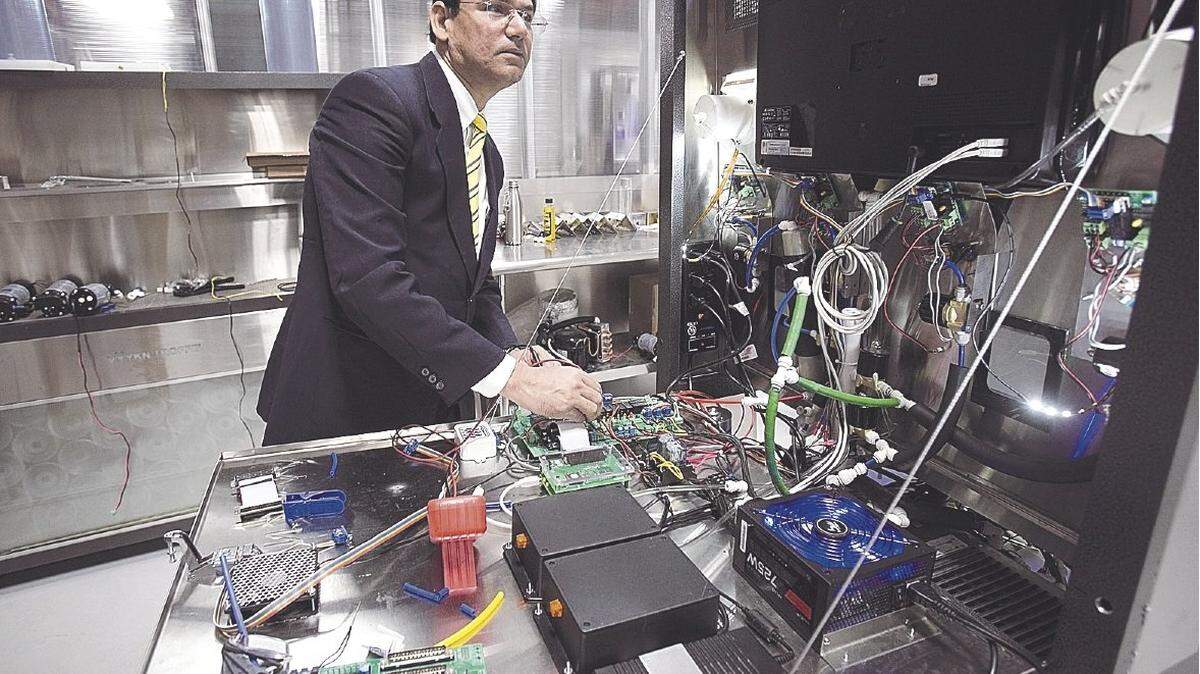
Vyykn Inc. in Meridian, which designs and sells water-purification systems to provide healthier water and reduce waste generated by the bottled-water industry.
Summit Creek Capital in Ketchum, which, like Caprock, offers “impact investing” to investors who want to support cause-driven companies.
Jitasa, a Boise company that provides accounting and bookkeeping services for nonprofits.
Prominent U.S. companies certified as B Corps include ice cream maker Ben & Jerry’s, online artisan marketplace Etsy and outdoor clothing maker Patagonia.
If the Idaho bill becomes law, B Corps wouldn’t have to reclassify as benefit corporations or vice versa. Oliver Russell would likely reclassify. Caprock would probably not, for legal reasons, Weatherley-White said.
Vyykn (pronounced VY-kin) would consider reclassifying as a way to set its social and environmental goals in stone, said Steven Herring, Vyykn’s sustainable growth director.
WHY RECLASSIFY?
Vyykn’s four employees turned down more lucrative job offers because they support the company’s mission, Herring said.
The company leases its filtered-water systems to such companies as Electronic Arts and Microsoft. Employees buy Vyykn’s stainless-steel water bottles and buy monthly subscriptions to access its dispensing machines. Subscribers reduce waste by not buying plastic bottles. They get up to 5 liters of purified water per day with higher purity standards than that of most bottled water.
“Our goal is to destabilize a $100 billion bottled-water industry that is toxic to the environment, that is toxic to our health, that is price-gouging,” Herring said.
Vyykn is soliciting investment capital, Herring said. The B Corp certification lets potential investors know where the company’s priorities lie, he said.
Vyykn has one employee working in a San Francisco Bay incubator in a building owned by Twitter. The incubator gives Vyykn a front-row view to how other companies with social-benefit goals fit into the broader economy.
“We see that entrepreneurial spirit in the Bay Area every day,” Herring said. “It’s not just about the Snapchats and the Twitters and the Ubers. There’s people developing edible food packaging and how to leverage solar power. There’s lots of companies out there like that. This type of legislation can protect their goals.”
Smart, old-fashioned capitalists will see advantages in reclassifying their companies as benefit corporations, Weatherley-White said. Publicly traded companies are slaves to short-term rises and falls in stock values, and that can lead to poor long-term decisions, he said. Weatherley-White argues that many social benefits make business sense: Investing in energy efficiency saves money in the long term. Paying and treating employees well reduces turnover, increasing productivity.
“Benefit-corporation legislation protects the opportunity for executives and board members to make very long-term decisions for the company that might have short-term negative consequences for the bottom line,” Weatherley-White said.
Anderson, the Blackfoot representative, said he was skeptical about benefit corporations at first. After researching how they work, Anderson was swayed by the chance to encourage corporations to support charities.
“Some successful people might choose between buying a BMW or a Cadillac,” Anderson said. “This gives them a corporate option for being generous with their neighbors or the people of Idaho.”
Zach Kyle: 377-6464, @IDS_zachkyle
This story was originally published February 20, 2015 at 12:00 AM.