Saint Al’s coworkers questioned a surgeon’s competency. They say the hospital retaliated
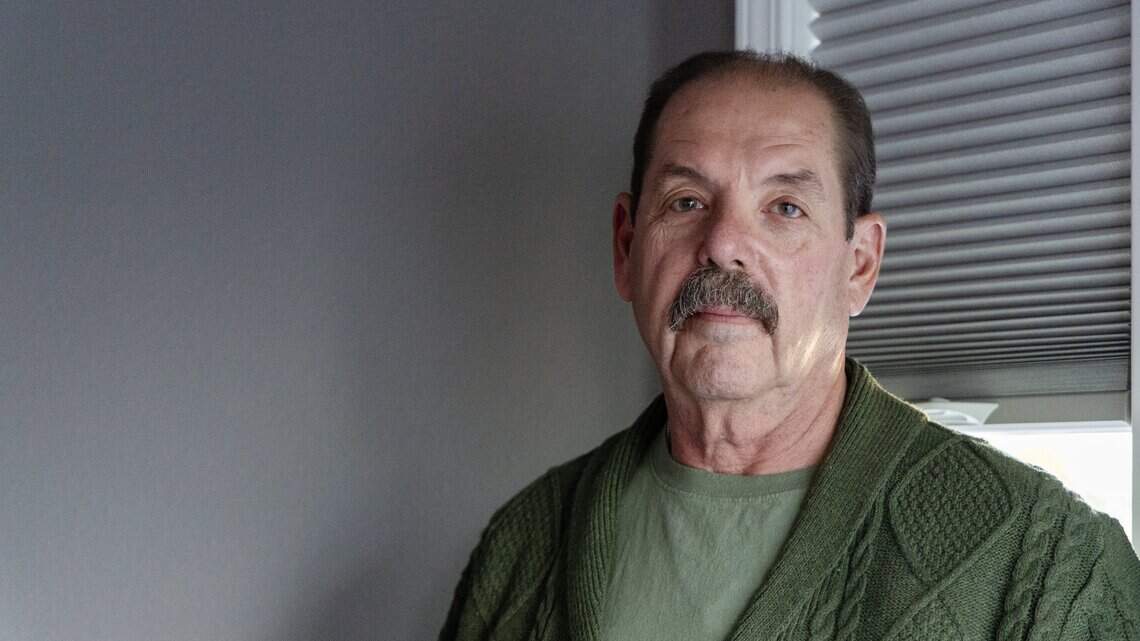
Scott Tighe remembers being prepped for surgery at the Saint Alphonsus Medical Center Emergency Department in Nampa, but having the experience feel more like he was at a used car lot.
The 62-year-old said he thought he had eaten “a couple of bad tacos” when he started experiencing severe stomach pain in October 2022, but he was quickly informed at the hospital that his gallbladder was in rough shape — bad enough to warrant an emergency cholecystectomy, or gallbladder removal surgery.
That’s when hospital staff introduced him to trauma surgeon Dr. Mark L. Shapiro.
“They were giving me a sales job like, ‘Oh, he’s the best, and you’ll be in and out of here in 45 minutes,’ ” Tighe told the Idaho Statesman.
The surgery, which typically takes one to two hours, is a minimally invasive procedure performed with a camera and small instruments to reduce trauma. But for Tighe, it became life-altering.
Shapiro opened Tighe for a more invasive surgery after the initial procedure took “longer than expected,” according to the surgeon’s notes, which Tighe shared with the Statesman. Shapiro said in his notes that he opted to partially remove Tighe’s gallbladder because some of the tissue was “cemented together” and difficult to distinguish.
The surgery took more than four hours, Tighe told the Statesman.
Multiple gallstones remained inside Tighe’s body. His wife, Kristal, told the Statesman that Tighe wasn’t prescribed antibiotics right away, and that Shapiro informed her of the remaining stones immediately after the surgery; they “shouldn’t be a concern,” she recalled being told.
But three weeks later, Tighe arrived at the emergency room with a fever, and fluid leaking from his surgery incision. Medical records showed he had a bile leak, an uncommon complication from gallbladder removal surgery where the digestive system fluid drains into the abdomen. It’s potentially life-threatening.
Tighe also had sepsis, an extreme, life-threatening response to an infection. He needed another procedure, this time to drain the infection from the surgery. Then another when he developed an abdominal abscess again several months later. And another, to flush the gallstones from his abdomen.
After repeated infections and antibiotics, “I was weak as a kitten, and I could barely lift anything,” Tighe said.
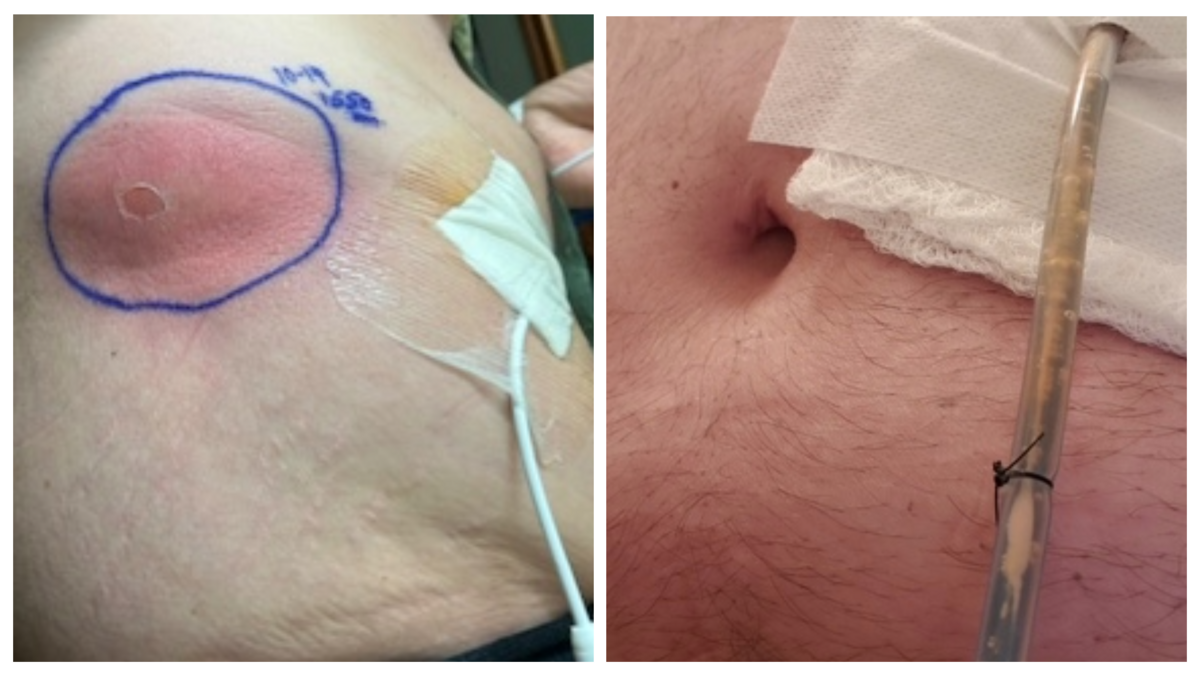
He said Saint Alphonsus providers told him that the complications were due to his diabetes. What he didn’t know: Shapiro had a history of complications with gallbladder surgeries, according to three former colleagues and complaints made to hospital leadership. That history was problematic enough, in fact, for the hospital to assign him a “coach” for surgical procedures, recordings of meetings with Saint Alphonsus leaders showed.
The Statesman reviewed 3.5 hours of recorded meetings, as well as nearly 400 pages of documents that included internal complaints, written warnings, emails, text messages and letters to hospital leadership.
Those records showed that several current and former Saint Alphonsus healthcare professionals who worked alongside Shapiro raised concerns and filed complaints about the surgeon’s abilities and his impacts on patient safety over the course of years.
Three of those employees spoke to the Statesman, and two shared records, on condition they not be named out of concern for professional retaliation.
In interviews, they said Shapiro had a history of injuring patients during gallbladder surgeries. His past coworkers said the surgeon also frequently took multiple hours on emergency procedures that would ideally be done in under an hour to avoid complications like hypothermia, hypotension and clotting issues.
Documents and recordings reviewed by the Statesman showed that the employees raised these issues with Saint Alphonsus leaders, including then-Trauma Medical Director Parker Fillmore, then-Saint Alphonsus Regional Medical Center President David McFadyen and then-Chief Medical Officer Patrice Burgess. Employees said their concerns were ultimately ignored by senior leaders and sometimes became grounds for retaliation.
McFadyen has since been promoted to president and CEO of Trinity Health, West Region — a role that includes oversight of the Saint Alphonsus medical centers in Boise and Nampa. Trinity Health is the parent company of Saint Alphonsus.
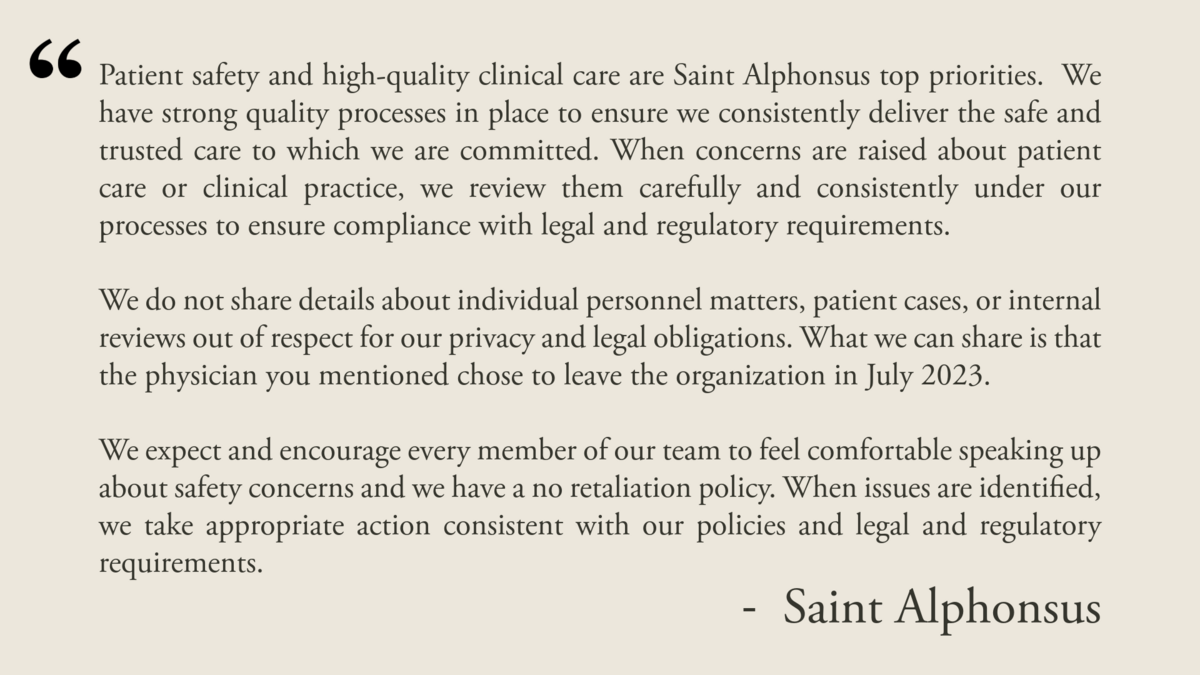
In a written statement, Saint Alphonsus told the Statesman that it prioritizes patient safety and high-quality clinical care. Though it declined to answer most questions about specific cases, internal reviews or personnel, citing “privacy and legal obligations,” the health system said it takes concerns about patient care or clinical practices seriously and reviews them thoroughly. Saint Alphonsus, with a large medical center in Boise, is one of Idaho’s two largest health systems.
Shapiro “chose to leave” Saint Alphonsus in July 2023, the hospital system told the Statesman.
“We have strong quality processes in place to ensure we consistently deliver the safe and trusted care to which we are committed,” the statement said. “… We expect and encourage every member of our team to feel comfortable speaking up about safety concerns and we have a no retaliation policy. When issues are identified, we take appropriate action consistent with our policies and legal and regulatory requirements.”
Fillmore, who sued Saint Alphonsus over the hospital system’s noncompete agreements and his own claims of retaliation, told the Statesman in an interview that he “wanted the very best for the trauma program” and denied allegations that he retaliated against coworkers or ignored patient safety concerns.
“Patients aren’t going to get good care at Saint Alphonsus when you have an organizational culture that’s pushing the people who are advocating for the right thing out of the organization,” Dr. Jeremy Conklin, a surgeon who worked at the hospital, told the Statesman.

Employees complain to Saint Alphonsus leaders
Fillmore told the Statesman he hired Shapiro as a Saint Alphonsus trauma surgeon in 2021 with the intention of having Shapiro help him achieve his “vision” of an improved trauma program. According to Shapiro’s LinkedIn profile, he worked as the trauma medical director at a hospital in Portsmouth, New Hampshire, before arriving in Boise. He held the same position at Emory University’s Grady Health System in Georgia for about a year, and he was the chief of acute care surgery at Duke University Health System in North Carolina, where he spent 11 years, he said on his social media profile. Shapiro did not respond to requests for comment.
Fillmore said he thought Shapiro’s experience in education and research would benefit the trauma program. As an “older” surgeon, Fillmore said, Shapiro may not have been the most up to date on new surgical techniques.
“He’s used to having people who are well-trained around him, competent people, residents and fellows, people with higher levels of training,” Fillmore told the Statesman. “And so when he came, he struggled in that he wasn’t as efficient, I would say, as younger doctors. So it took him longer to do documentation, it took him longer to do cases.”
It wasn’t long before colleagues in Boise began to question his competency.
For one former Saint Alphonsus physician assistant who spoke to the Statesman, Shapiro’s decision-making in surgery became a red flag. Within a few months of Shapiro’s arrival, the behavior eroded any trust that employee had in the surgeon and raised a unique concern for the first time in that employee’s career.
“It made me question my career because I’m associated with whatever decisions surgeons make in the operating room,” the former employee told the Statesman.
Former coworkers said they watched Shapiro make risky or irresponsible decisions in surgery and about procedures, leading to poor patient outcomes. The physician assistant said Shapiro “shut down” any questions about his choices in surgery and carried on, telling support staff they “shouldn’t have a say in surgical decision-making.”
That’s when the physician assistant decided to elevate the problem to Fillmore.
Fillmore told the Statesman he recalled fielding complaints about Shapiro’s speed, claims that the surgeon appeared to struggle during surgery or statements from employees that they “didn’t feel safe” with the surgeon.
“I said, ‘Could you give me some actionable facts?’ ” Fillmore recalled. “I need something besides, ‘You don’t feel safe,’ for me to take action.”
A recording reviewed by the Statesman confirmed that employees expressed outright fear of working alongside Shapiro in the operating room.
“I’m not sure that I want to scrub in and put my license at risk,” one employee said during an early 2022 meeting with Fillmore to discuss concerns over Shapiro’s conduct. “That’s how I feel, and a majority of us feel that way.”
Employees told Fillmore during the early 2022 meeting that Shapiro had recently injured a patient’s common bile duct, a small tube that carries bile from the liver and gallbladder to the small intestine, during surgery.
The injury is “rare,” according to the American College of Surgeons, and occurs in about 3 of 1,000 gallbladder removal surgeries, which the organization describes as “one of the most commonly performed operations.” Staffers said Shapiro’s mistake raised concerns about his ability to keep patients safe.
“We’re still working on that,” Fillmore replied during the meeting, which was recorded by employees. “He’s gonna get a coach.”
Fillmore acknowledged during the meeting that a surgeon “should be able to knock out even a difficult open gallbladder, certainly within two hours.”
Shapiro did receive a proctor, a peer meant to observe his competency, for surgeries. But former coworkers said the monitoring did not improve his skills at the gallbladder surgery. A formal grievance against the hospital system reviewed by the Statesman said Shapiro injured another patient’s common bile duct while being proctored.
Dr. Timothy Gardner, a gastroenterologist at Dartmouth College in New Hampshire, said the procedure can be complicated by inflammation. Gardner said in those situations, it’s more common for surgeons to need to do open surgery rather than laparoscopic surgery, the less invasive approach that is now the standard of care for the surgery.
“If you do cut through a bile duct, or staple a bile duct shut, that’s a major problem, a difficult problem to fix,” Gardner said.
Dr. Michael Brunt, Pruett professor of surgery at Washington University School of Medicine in St. Louis and former president of the Society of American Gastrointestinal and Endoscopic Surgeons, reiterated Gardner’s points.
Brunt told the Statesman in an interview that any surgeon who is a successful graduate of a U.S. medical school is trained to perform a safe cholecystectomy and may go on to have more training in the procedure depending on their residency and fellowships.
Shapiro earned his medical degree from Ross University School of Medicine in the Caribbean and completed a fellowship in surgical critical care at University of Cincinnati Medical Center, according to professional biographies.
Brunt said it’s “probably uncommon” for a surgeon to need a proctor for cholecystectomies when they have years of experience under their belt, as Shapiro did by the time he arrived at Saint Alphonsus.
“Generally the more experienced you are, the risk of having something like (an injury) happen can go down over time, unless there’s a deficit of training or operative ability,” Brunt said.
Other issues with Shapiro’s conduct remained unaddressed, the three former coworkers of his told the Statesman. They said they met with Fillmore three or four times over the course of a year and submitted complaints to the hospital’s internal “event reporting” system each time they witnessed Shapiro making unsafe surgical decisions. One former employee recalled submitting about one complaint to the system per month over the course of about a year.
In the recorded meeting with Fillmore, employees said they felt uncomfortable broaching topics about surgery times and surgical competency directly with Shapiro because he became “very defensive.”
One recording shared with the Statesman showed that an employee told Saint Alphonsus’ then-executive medical director, Burgess, during a meeting in 2023 that there could be as many as 20 patients who suffered as a result of Shapiro’s lacking skills and judgment. It was another attempt, in a string of complaints over the course of a year, to alert leadership about Shapiro. Burgess did not respond to a request for comment.
Meanwhile, Shapiro continued to operate.
Saint Alphonsus allegedly retaliates
While Shapiro continued to work, employees faced reprisals when they spoke up about the surgeon, the three employees told the Statesman.
Fillmore formally wrote up at least one person who raised complaints about Shapiro in meetings, according to a signed document reviewed by the Statesman. The reprimand did not reference the complaint about Shapiro directly but criticized the employee’s conduct.
One of the employees said Fillmore verbally reprimanded them for not being supportive of Shapiro; that employee had told another colleague, who was about to oversee a procedure Shapiro was performing, that “I would not let (him) operate on my dead dog.”
“I said, ‘I have an opinion, I’m allowed to have an opinion,’ ” the former employee recalled. “It’d be like if somebody asked me in the community if they were having appendicitis, ‘Would you let that person operate on you?’ No, I would not.”
Fillmore denied retaliating against anyone. He told the Statesman he never prompted an HR investigation, and was only involved in disciplinary actions in his capacity as a supervisor.
“I did not initiate any complaints,” he added. “I was only a participant because I had to be a participant, but none of them were my own complaints.”
Two of the healthcare workers said they also informed the hospital about the apparent retaliation, which is called out in the Code of Conduct for Trinity Health. The code says Trinity hospitals have “zero tolerance” for retaliation, which “includes direct as well as indirect actions, or the threat of actions, of supervisors, co-workers, or others.” Anyone engaging in retaliation will be disciplined, the Code of Conduct says.
One of the employees left to work elsewhere but retained permission to pick up shifts at Saint Alphonsus. The Statesman reviewed recordings in which the employee informed Burgess, McFadyen and HR representatives about safety concerns and perceived retaliation from Fillmore.
“I can kind of see where, from your lens, some of that could appear like retaliation,” McFadyen said in the recorded meeting.
It’s unclear whether the hospital acted on the employee’s allegations about Fillmore.
The employee also left a written anonymous complaint about retaliation with the hospital’s HR complaint portal, according to documents reviewed by the Statesman. Within a week of the complaint, Saint Alphonsus rescinded their permission to work shifts at Saint Alphonsus, emails obtained by the Statesman showed.
Saint Alphonsus loses trauma certification
In March 2023, Fillmore was called up for a three-month military deployment with the Idaho Air National Guard. In his lawsuit against Saint Alphonsus, he said he identified issues with the Boise medical center’s trauma program that would cause it to lose its verification from the American College of Surgeons, a certification that acknowledges the level of resources and preparedness a hospital possesses to deal with emergencies.
The college offers five levels of verification, with Level 1 indicating the most resources, training and preparedness for trauma situations. Saint Alphonsus’ Boise location is designated as Level 2, while its Nampa center is a Level 3.
Fillmore said Saint Alphonsus didn’t rectify the issues while he was deployed. The hospital failed a November 2023 verification inspection – a decision Fillmore told the Statesman he agreed with. One month later, he was fired.
Fillmore’s lawsuit alleges he was retaliated against for his deployment as well as for urging Saint Alphonsus to improve its trauma program by hiring more surgeons, reducing overtime, paying employees appropriate wages and improving overall trauma care.
The health system and surgeons college declined to provide details on what led to the accreditation slip, and the Idaho Time Sensitive Emergency System Council, the state accreditation organization for trauma hospitals, offered the Statesman only vague details at the time.
Officials with the state council said four findings related to the lapse in verification were related to orthopedic surgeon and neurosurgeon response times, issues regarding alcohol screening for patients, and the hospital’s process improvement and patient safety program, according to prior Statesman reporting.
Saint Alphonsus’ Boise location is one of just a few hospitals in the state with Level 2 trauma certification, and former employees told the Statesman they believed part of the motivation to keep Shapiro was his role in standing up another trauma center at the hospital’s Nampa location, where Shapiro became the interim trauma medical director.

Staffing challenges during this period led to Saint Alphonsus leaning heavily on locum tenens physicians — traveling doctors assigned by specialized agencies to fill shifts on a contract basis — for its trauma department. One was Conklin, a Seattle-based surgeon and healthcare attorney who first came to Boise in February 2024 to help fill physician shortages.
During one visit, Conklin heard that a colleague had faced formal disciplinary action after helping their patient’s family with a request for a second opinion. The employee consulted with a private surgeon outside of the hospital system after a Saint Alphonsus surgeon unsuccessfully tried to treat the patient. The second doctor was successful, Conklin said.
The written warning, which Conklin shared with the Statesman, said the employee violated the Code of Conduct by not informing the patient’s surgeon of the request for a second opinion and plan to provide a referral.
Conklin said he was concerned that the discipline violated federal anti-kickback law — which prohibits healthcare professionals from accepting rewards or being punished for referrals — by trying to punish the employee for failing to refer patients within its own health system. He offered to write an appeal on his colleague’s behalf.
The warning did not specify that the employee needed to get a second opinion from a provider within Saint Alphonsus’ system.
“I felt like any healthcare provider who does the right thing shouldn’t get punished,” Conklin told the Statesman. “There shouldn’t be barriers to you doing the right thing for the patient, because that’s the job, right? It’s about treating the patient and making the patient better.”
A memo from then-President and CEO Odette Bolano, which Conklin shared with the Statesman, showed hospital leadership reversed the disciplinary action, though Bolano still chastised the employee for not elevating the situation to the trauma medical director.
Retaliatory behavior at Saint Alphonsus persisted, Conklin told the Statesman. He said shortly after he argued on his colleague’s behalf, he was told by his locum agency that Saint Alphonsus informed it the open physician positions had been filled, and months worth of locum shifts he was contracted to fill later in the year would no longer be available.
Soon after, he received an erroneous text from the agency that showed another locum tenens provider had been booked for the Saint Alphonsus shifts he’d just lost.
“Disregard,” the agency contact said in a subsequent text. Conklin was stunned.
He contacted Trinity’s Integrity and Compliance hotline to file a complaint alleging retaliation, according to documents reviewed by the Statesman. Conklin said that after several weeks of investigation from Trinity, he was invited to a video conference with Burgess and two representatives from the company — the chief integrity and compliance officer and a compliance specialist who investigated Conklin’s claim.
Conklin said the representatives told him their investigation found that he had been retaliated against and cited emails in which Saint Alphonsus officials told Conklin’s locum agency that they did not want him to return to the hospital system.
Trinity did not respond to requests for comment, and Saint Alphonsus did not address Conklin’s claims directly.
Conklin told the Statesman that, despite the confirmation of retaliation from Saint Alphonsus, he was told during the call that he would receive no compensation for lost wages or shifts. He received no confirmation of the findings in writing, he said. The Statesman reviewed a letter sent to Conklin by an attorney representing Saint Alphonsus that said the “debriefing” was done as a courtesy to ensure the issues he raised were thoroughly investigated. The letter said the hospital system had “no obligation” to provide Conklin a written summary of its investigation.
“(They said) they didn’t owe me any back pay because they could have filled the shifts with a full-time Saint Alphonsus trauma surgeon, and I wouldn’t have lost any money because I wouldn’t have gotten those shifts,” Conklin said. “That’s not the way the law works. The law doesn’t have a prediction of the future when you go to figure out damages. The damages are what you suffered at that time.”
Few alternatives for healthcare in Boise area
By summer of 2023, Shapiro had left Saint Alphonsus. The circumstances of his departure are unclear. He now works at Methodist Health System in Mansfield, Texas.
Scott Tighe said he spent the year following his gallbladder removal surgery with a constant feeling of nausea, but when he spoke with Saint Alphonsus providers, he felt the issues were written off.
“You know that feeling like you’re gonna throw up, but you don’t? If you move quick, you’re lightheaded,” he said. “It’s just a real nasty feeling, so you keep complaining about it.”
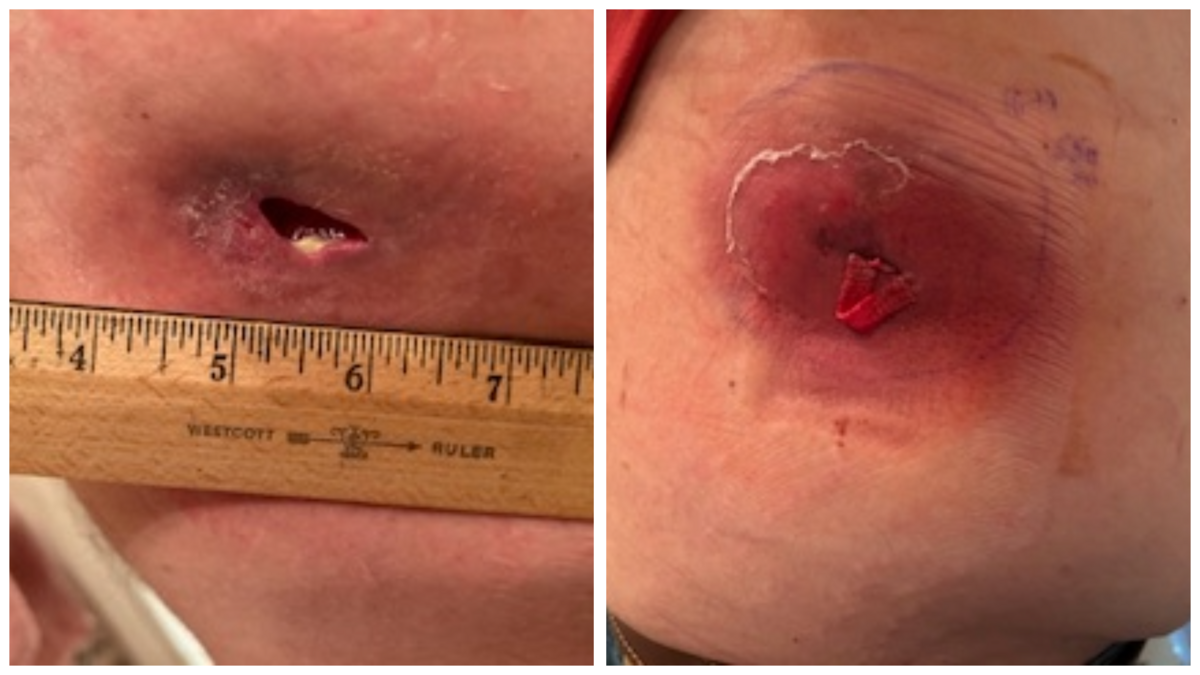
It wasn’t until his health insurance coverage forced him to change providers to St. Luke’s that he felt like his doctors were looking for solutions, he told the Statesman. One surgeon proposed a procedure to flush the gallstones from Tighe’s abdomen, which was completed in January 2024.
“That guy was my lifesaver,” he said.
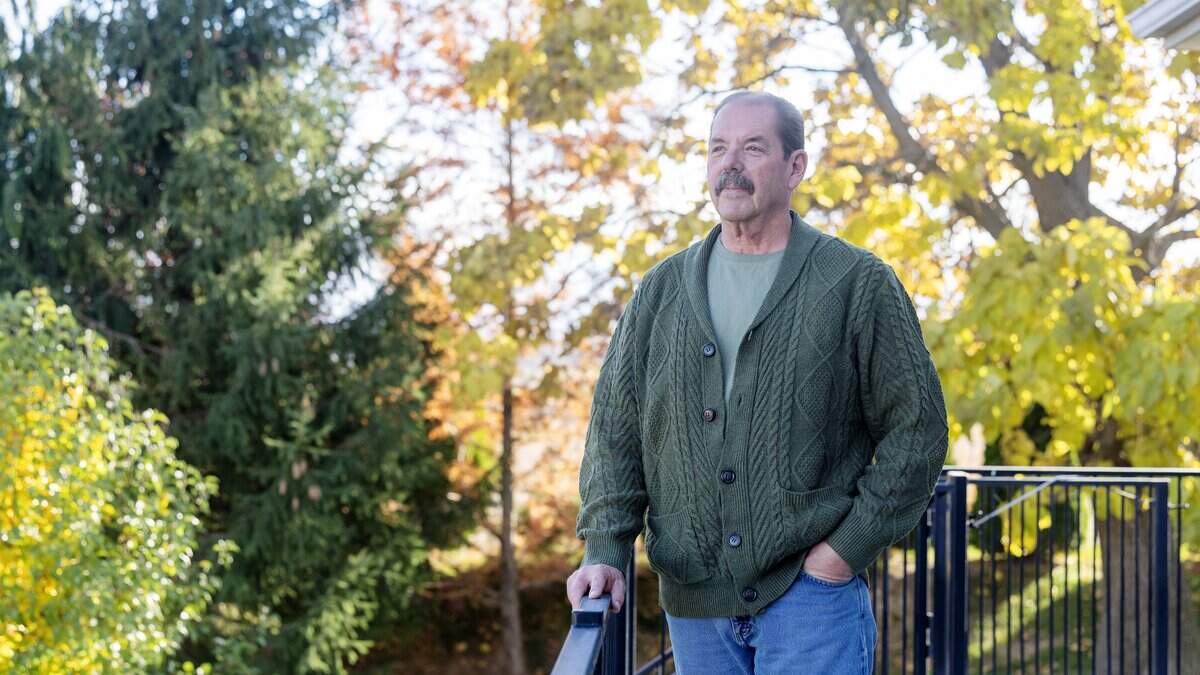
Tighe told the Statesman his experience changed how he handles his healthcare. Now he’s wary of whom he sees and what care he receives.
Conklin said that because Saint Alphonsus is the main trauma hospital in the area, it’s impossible to avoid the health system over concerns.
“If you don’t like a restaurant, you can go to a different restaurant if it’s providing bad service, and hopefully that will influence them to change and do things better and get you to come back,” Conklin said. “But we don’t have that here.”
The surgeon said he thinks Saint Alphonsus is suffering a “brain drain” as employees leave when their concerns are ignored. As a result, he said, the hospital’s quality of care declines.
He noted that the Leapfrog Group, which ranks various hospital procedures and outcomes across the country, rates Saint Alphonsus’ Boise medical center a “B” and its Nampa center, where Tighe was treated, a “C.” When Conklin was working at Saint Alphonsus in spring 2024, the Boise facility’s ranking had dropped to a “D.”
Leapfrog data, which is based on survey results and public safety data, also found Saint Alphonsus‘ incidence of “death from treatable serious complications” after surgery is higher than the national average and than at St. Luke’s Boise, which has an “A” rating.
“I think that data, the higher complication rate,” Conklin told the Statesman, “is directly attributable to the fact that Saint Alphonsus does not listen to people who bring up safety concerns and actually gets rid of them.”