
More than just Micron? What’s driving Boise’s industrial boom
AI-generated summary reviewed by our newsroom.
- Boise added roughly 8 million sq ft of industrial space since 2022.
- Micron’s $50B expansion accelerates demand; developers build large speculative warehouses.
- City plans and infrastructure target south Boise for industrial development
Micron’s hulking worksite warps the scale of every building in Southeast Boise. Spired with cranes and framed in steel, its rising semiconductor factory defies all local proportions, both in its size and 11-figure investment.
On the other side of Interstate 84, the landscape is transforming in subtler ways, nurtured by Micron’s long shadow.
The area south of Gowen Field and west of the highway is the epicenter of Boise’s latest industrial boom, growing one massive, grayscale warehouse at a time into a hub designed not just in support of Micron, or the Treasure Valley, but for a huge swath of the American Northwest.
The Boise metro area has added roughly 8 million square feet of industrial buildings since 2022, said Devin Pierce, a partner at TOK, a Boise commercial real estate agency. That’s four times as much as was built in the five years prior, Pierce said. In square footage, it’s about the footprint of Ann Morrison and Kathryn Albertson parks put together.
Even more is on the way.
As of the fourth quarter of 2025, another 8 million square feet were under construction in and around Boise, according to Cushman & Wakefield, a national commercial real estate firm. Once that’s done, Boise will have added some 360 acres of industrial buildings since 2022, most of it built to rent without a specific tenant in mind. The total addition would be 20% bigger than the National Mall in Washington, D.C.
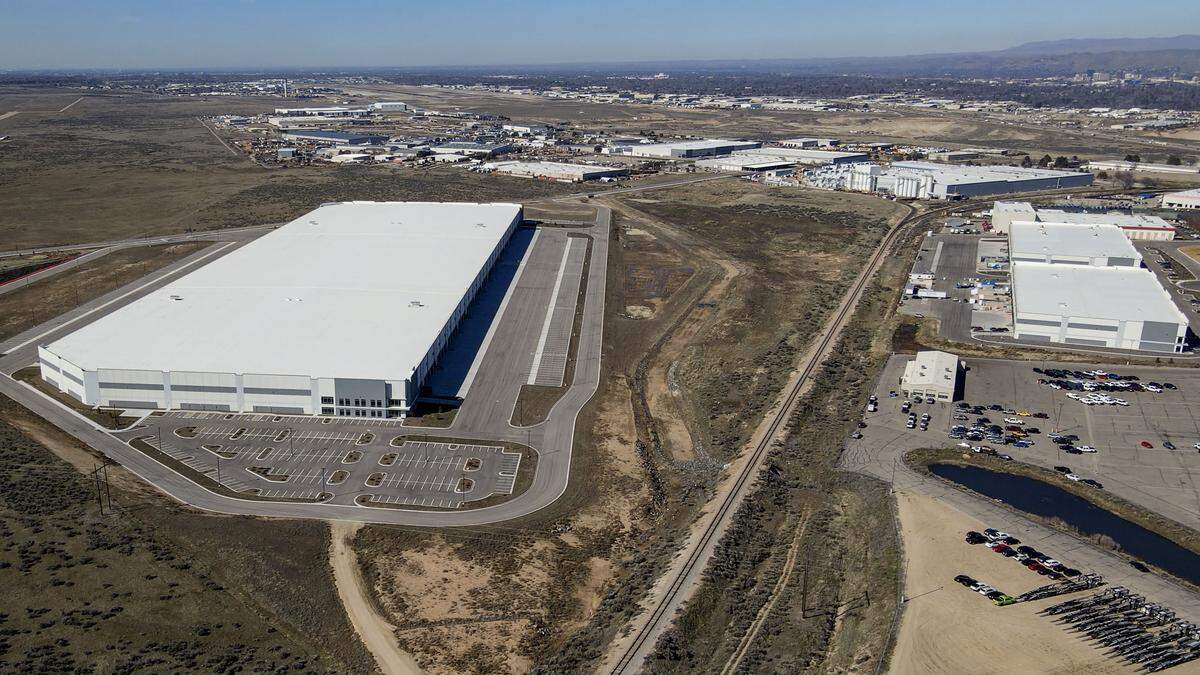
Much of that is centered in a dogleg of land off of Gowen and Eisenman roads in what “has long been a quiet end of town” in industrial real estate, said Harry Sawyer, first vice president at CMRE, a multinational commercial real estate firm. Micron is “a strong, significant tailwind,” he said, but brokers are finding interest beyond Micron vendors and subcontractors vying for space.
“The nice thing about Boise … is that we’re seeing a little bit of everything,” he said.
“Big names are starting to circle,” Pierce told the Idaho Statesman in an interview. Ten years ago, he said, these national investors would have kept flying toward the coast. They wouldn’t take his calls. At a conference, he ran into the CEO of one of the world’s largest warehouse developers. “Boise?” Pierce remembers the man saying. “That’s a market we’re never going to get into.”
Today, the same company has land under contract.
“Quite honestly,” Pierce said, “I really don’t think we’ve even scratched the surface.”
More than Micron?
John Starr lives five or 10 years in the future. As a partner at Colliers, Starr estimates that land he has brokered sits below some 40,000 homes in the Treasure Valley. And these days, a lot of his time is spent looking at land off the “third runway” south of the commercial airstrips at Gowen Field.
Starr specializes in land in transition. That could mean turning farmer’s fields into a full-blown subdivision — or sagebrush steppe into a logistics center.
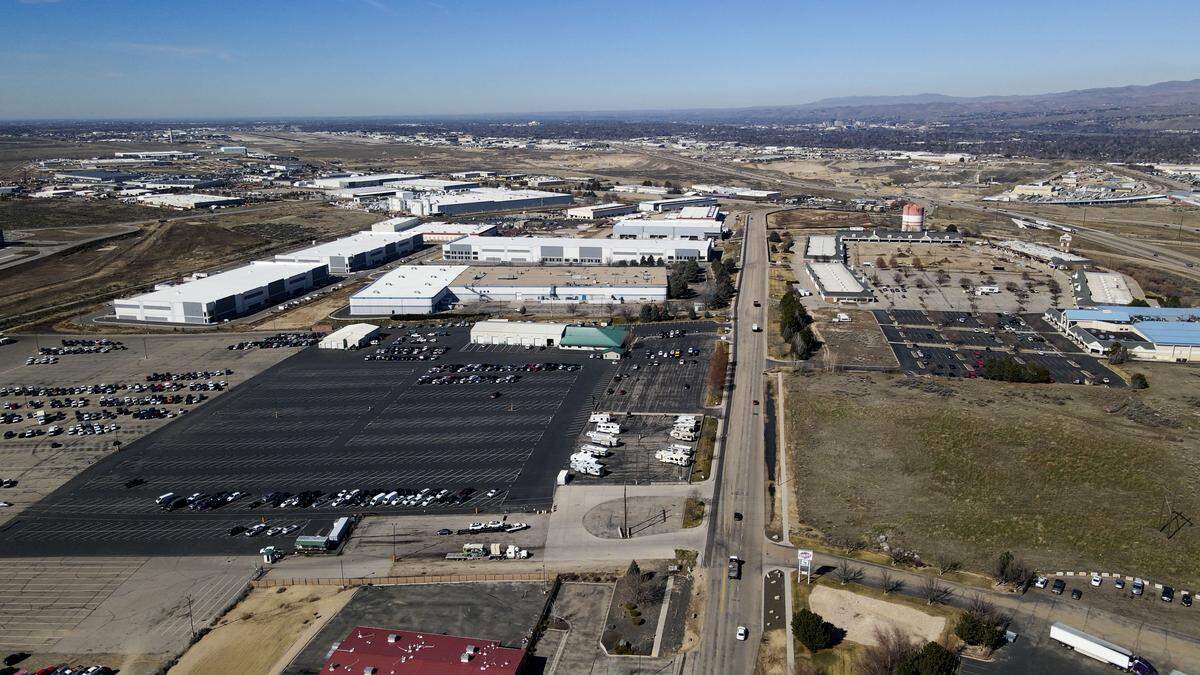
In many ways, Boise’s industrial boom follows its housing trajectory, just five or 10 years behind. National home builders saw opportunity in the 2010s, while industrial developers followed in the 2020s.
There were a handful of reasons, each accelerated by Micron, but not totally dependent on it, Starr said.
“Micron is the most obvious thing — it eats up all the air in the room,” Starr said. “But when you look at all the other growth — including our population growth — there’s a whole other level of support that (growth) needs, too.
“There are some things happening in response to Micron demand. But what we’re doing here extends far beyond Micron.”
Market growth matters, Starr said. By law, truckers can drive 11 hours in a 14-hour work window. At 350 miles, Salt Lake is light work. Portland, Seattle and Reno are all in range. So is Las Vegas, even San Francisco, if traffic sets up right.
That’s not counting markets right here in Idaho. The port of Lewiston is America’s furthest-inland seaport, shuttling bulk commodities to and from the Pacific. And the Boise metro area is on pace to top 1 million people in the decade ahead.
The seven-figures threshold is the consequence of a decade of loudly heralded growth across southern Idaho. The number — as well as the ink spilled over it — captures the imagination of national and global companies, Pierce said.
“You approach that 1 million mark, and a number of companies feel they need to be here,” Pierce said. Add in Micron’s expansion, and “we’ve gone from going 10 miles over the speed limit to 50 miles over the speed limit.”
A company that served Boise at 500,000 people needs a much larger shop to serve it at 900,000 or 1 million. Kenworth is an example of a firm scaling up to meet the market, Starr said.
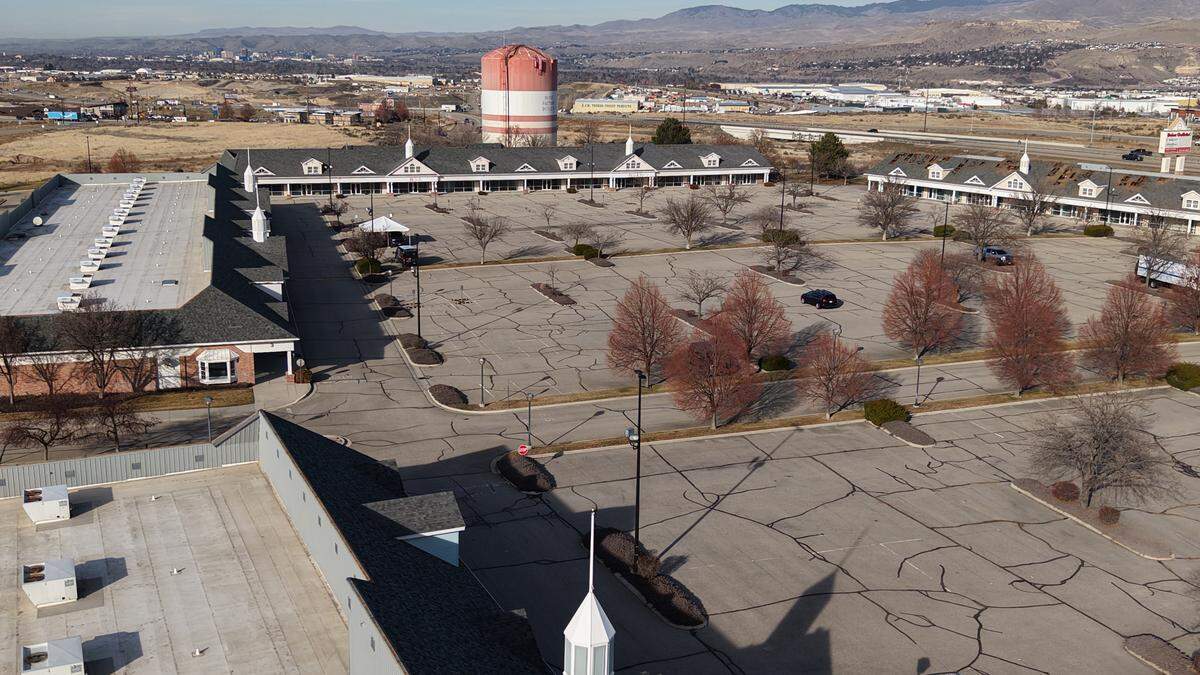
The trucking company has long had a footprint in Boise but is working on moving its sales and service operation 10 minutes south to the now-defunct Boise Factory Outlets mall. Shifting from its toehold north of the airport to the 24-acre mall site would triple the size of Kenworth’s operation, a spokesperson for the company told the Statesman when the plan was announced.
Peterbilt, a trucking competitor, is mirroring the move with an expansion of its own farther south, Pierce said. They’re still retrofitting a new lot and service center, but a new tenant is lined up for Peterbilt’s space as soon as the trucks decamp.
These upshifts “are happening whether Micron is here or not,” Starr said.
The way a market consumes goods matters, too. The pandemic put this in sharp relief: Buyers shifted even further online, and supply chain logistics became dinner-table conversation. Developers saw the need for stronger distribution in more of the country, including the Northwest, and, for major developers, money was easy to come by, Sawyer said. National firms followed the highway into Boise and built on spec — that is, speculatively, betting on market conditions without a specific client in mind. And they built big.
Sawyer is a broker on a pair of such projects, both built by Flint Development. The Kansas developer has built nearly 1.3 million square feet of industrial space across four warehouses west of South Eisenman Road, adding Idaho to a growing $1.2 billion portfolio that spans a dozen states.
The largest building, Flint’s 900,000 square-foot Red River Logistics Center, is like nothing else in Idaho, Pierce said: Four-and-a-half times larger than the state Capitol, and with 172 loading docks, it’s designed with massive players in mind. So far none have come forward, in part because the building can’t be divided any smaller than 218,000 square feet, Pierce said.
Across the street, the remaining buildings, which target smaller tenants, are leased.
At TOK, Pierce has seen a mix of businesses looking to grow and entering the market. About 43% of his firm’s deals last year were expanding businesses seeking more space, he said. An additional 21% were for companies new to Boise.
New building is still lagging behind pent-up demand, he said. Boise is on the “lower end” of industrial space per capita, he told the Statesman, with less than half that of regional hubs like Reno and Salt Lake City.
So far, projects have tackled “the low-hanging fruit,” Starr said, working into areas near other warehouses and distribution centers where infrastructure — roads, water, power — already exist. The next step is harder: breaking new ground further into the desert and bringing it into the city’s plan.
Starr thought the land south of the airport would be “activated” — that is, developed — within his lifetime. Micron “threw gas on a fire,” his colleague Jack Cosca, a broker at Colliers, told the Statesman.
“The change I’ve noticed is that instead of hopping on the phone and talking to big, national developers to sell them on Boise, they’re calling me,” Cosca said. “They’re sold on Boise. Now, they’re asking us, ‘Where can we go.’ ”
The Micron multiplier
“Nobody here has gotten their head around the fact that Micron is spending $50 billion here,” Starr told me. “It’s drinking out of a firehose. In Chicago or Houston, that (investment) is going to move the needle. You invest it here, it’s kind of unreal. It’s beyond what’s conceivable.”
Short term, Micron’s ever-expanding plan has exhausted nearly all the lot space for storing construction gear and materials, called “lay-down yard.” Looking further ahead, as the plants near opening, Micron suppliers and contractors are leasing space to prepare for operations. And over the long term, related industries like electronic manufacturers and data center operators are moving in to be close to the chip-making process — and to access shared vendors and support services.
“Micron is a big domino to fall,” Cosca said. “It just continues on outward.”
Downstream, ripples reach well beyond industrial real estate. Companies that lease warehouses need more than warehouse space. For every 10,000 square feet of industrial space, a firm typically needs somewhere between 500 and 1,500 square feet of office space — 5%-15% of the total, depending on the type of business, Pierce said.
Take Lam Research, a multinational, multibillion-dollar tech company based in Fremont, California. Lam makes machines that Micron uses to make its wafers, adding and excavating material an atom at a time to carve the intricate architecture of a microchip. Lam doesn’t make those machines here, but in February it moved to a much-expanded office to host 150 engineers on East Parkcenter Boulevard.
The morning after Presidents Day, John Whitman, corporate vice president of central engineering and procurement at Micron, toured Lam’s new offices. He said he was happy to see that engineers would have “a place to hang their hats and collect their thoughts” — before heading back to Micron to work.
Lam’s 150 jobs represent just 1% of the 15,000 jobs the Boise Valley Economic Partnership expects Micron to indirectly draw to the Treasure Valley. Those workers will need places to live, buy groceries, get oil changes. They’ll need warehouses for the products they order and lots for trucks that drive those products to their homes or stores.
For big spec developers, though, Micron’s investment is also a signal. “They’re asking, what are the biggest construction projects in the country?” Cosca said. “All of a sudden, Boise, Idaho, is on that map — because of Micron.”
Boise’s shifting center
None of this is new to city planners. In 2019, the Capitol City Development Corp., Boise’s urban renewal agency, inaugurated the Gateway East District to “plan for industrial growth by improving infrastructure and promoting industrial development” around Eisenman Road.
And in January, the Boise City Council instructed staffers to outline a vision for incorporating three new southeastern neighborhoods into the city: East Columbia, Third Bench and South Airport. These areas basically surround Micron on three sides, and the chipmaker and its workforce are central to the shape of the forthcoming plans.
Boise aims to complete the new plans in the next 12 months to capitalize on interest around Micron, Mayor Lauren McLean said. Snug tight to Gowen Field, South Airport “is perfect for industrial development,” McLean told the city council in January.
“We have to do this fast, fast, fast — and for a city, 12 months is fast,” she said.
The focus on Boise’s southern border is a relatively new phenomenon for a region that has broadly grown west along the Boise River. People moved into Meridian and Boise’s western suburbs, and businesses followed suit, Pierce said.
For most of his career, which started in 2004, Pierce said that companies wanted to be in the middle of the Valley, west of downtown Boise. Today, the center of gravity has swung back east, pulled in by Micron’s orbit.
The Valley’s east end is harder for construction. Instead of digging into tilled fields, workers blast into sharp crags of volcanic basalt. It’s expensive and time-consuming and demands a strong return to make it worthwhile. When there were cheaper options to the west, the payoff wasn’t there. Now, Starr says, it’s worthwhile — and unlikely to stop at the exit to Memory Road.
“We went west because it wasn’t time to go south,” Starr said. “Now, it’s time to go south. The mayor wants it. Landowners want it. The stars are aligning.”
This story was originally published March 3, 2026 at 4:00 AM.