‘Misery’ and ‘filth’: PETA investigation alleges neglect at goat dairy near Boise
It was clear from the start that goats at Grand Barr Dairy were unwell.
Some of the animals at the Nyssa, Oregon, farm were so thin that their ribs and vertebrae were visible through their skin. Many had overgrown hooves, and others had abscesses that opened and drained pus, said a former employee, who asked to remain anonymous over fears of retaliation.
The former employee began working at the dairy, which is co-owned by a Meridian man, early this past summer. The former employee had experience working with goats and raised concerns with the dairy owners about animals that looked ill, the individual told the Idaho Statesman in an interview, but nothing ever came of it.
“It became abundantly clear to me that (the owners) just weren’t listening to the vet, to anybody that came out there,” the former employee said.
The former employee tried for weeks to raise concerns with local law enforcement and animal welfare organizations before someone listened, the worker said. This month, People for the Ethical Treatment of Animals, or PETA, publicly accused the dairy of abusing its animals in a campaign that included photos and videos from the farm.
“This evidence shows quite clearly that the misery and the suffering and the neglect and the filth that are a daily reality for animals at this farm do violate Oregon law,” Daniel Paden, PETA vice president of legal advocacy, told the Statesman.
Grand Barr Dairy did not respond to requests for comment via text and email.
PETA, which is known for public and sometimes controversial campaigns to promote lifestyles free from animal products and animal testing, regularly calls out businesses over animal rights issues. Last year, PETA filed a lawsuit against a Kuna ostrich farm over claims that it misled customers by labeling itself “humane.” PETA dropped the lawsuit earlier this year when the farm dropped some of its public claims about animal treatment.
The animal rights organization launched an undercover investigation into Grand Barr shortly after the former employee reached out, Paden said. Two investigators applied for jobs at Grand Barr and were hired. They documented the goats’ conditions in photos and videos, which PETA then turned over to the Malheur County Sheriff’s Office.
The group also brought its concerns to one of the commercial dairy’s business partners, which severed ties with the goat farm, according to a letter the business sent to PETA, which PETA spokesperson Colleen O’Brien provided to the Statesman.
In October, the Sheriff’s Office cited the Meridian man who co-owns the dairy for animal neglect in the second degree — a felony if more than 11 animals are involved. There are more than 100 animals at Grand Barr, though authorities did not say how many they considered to be neglected.
Nearly two months later, the man has not been formally charged by the Malheur County District Attorney’s Office.
.jpg "2025-08-30_10_Nubian doe ear tag 5513 with overgrown hooves_20250830_192442 (1).jpg")
Whistleblower, PETA investigators describe dire conditions at dairy
The whistleblower employee told the Statesman that there were some animals at Grand Barr that left a distinct impression. One was a listless, underweight female goat with no appetite.
“She was just horrifically emaciated, and I had to take her in a pen and, like, beg her to eat,” the former employee recalled. “I will admit I have a mushy, gushy heart when it comes to these animals, but even in an environment where it’s a commercial farm, they shouldn’t be treated like this.”
Eventually the conditions became too much to bear, the former employee told the Statesman, and the whistleblower left the dairy.
The former employee recalled one male goat that was not treated for a horn that had begun to grow into its head.
“He’s got undone hooves, and there’s an abscess on his face, and they’re doing nothing about it,” the whistleblower said. “And at that point, I was going home crying every other day because I was having baby goats die in my arms.”
.jpg "2025-09-27_10_Saanen 111 with abscess_20250927_193755 (1).jpg")
In an affidavit — a sworn statement usually used in court proceedings — and photos PETA shared with the Statesman, one PETA investigator who was hired in August reported she observed conditions similar to those the whistleblower witnessed: emaciated goats, animals infected with lice and filthy pens. PETA declined to name the investigators for safety reasons.
The investigator’s affidavit described multiple allegations of neglect: One goat, which the investigator called Tina, walked on its knees and hind legs for weeks. Others had overgrown hooves that had started to twist or curve up and out. Several animals — including two kids — died of illness without veterinary treatment.
The investigator described seeing employees, whose names were redacted in the affidavit, punching and kicking goats, pulling their tails and whipping them with branches.
The investigator bought one sick goat, which she had started calling Barbara, from the dairy owners for $200 and took her to an animal sanctuary and later Oregon State University for veterinary treatment. According to vet records from OSU, Barbara tested positive for caseous lymphadenitis, a highly contagious bacterial infection that can be fatal to animals and can be transmitted to humans through meat or milk. Veterinary experts recommend culling infected animals or isolating them.
Barbara also had Johne’s disease, a contagious, incurable small intestine infection that causes animals to lose weight and decline in health until they die, according to OSU’s veterinary report.
Barbara was euthanized, and OSU performed a necropsy in which officials noted the goat had “severe emaciation,” according to the pathology report.
.jpg "2025-09-23_01_Barbara_20250923_163327 (1).jpg")
Problems persist, even after deputies visit, PETA says
PETA contacted the Malheur County Sheriff’s Office in July with photos and videos from the whistleblower employee. Sheriff Travis Johnson told the Statesman that deputies visited Grand Barr on July 31 and advised the owners of “things to improve on.”
Paden told the Statesman that PETA contacted the office with evidence from its first undercover investigator in October. Johnson said deputies visited the dairy again in October after learning that conditions had only gotten worse.
Johnson said a veterinarian accompanied officials on the October visit. That’s when the Meridian man was cited for animal neglect.
The Malheur County District Attorney’s Office told the Statesman last week that it hasn’t filed charges, and that it has told the court it needs more time to investigate the case.
Johnson and the Malheur County District Attorney’s Office said the Oregon Department of Justice is now involved. That agency did not respond to a request for comment.
Meanwhile, PETA said the issues at Grand Barr Dairy have persisted. A second undercover investigator was still working at the dairy in December, according to an affidavit shared with the Statesman.
The PETA investigator’s affidavit and a video from December, both reviewed by the Statesman, showed Tina was still moving around on her knees and hind legs, and another goat continued to limp from arthritis months after the first investigator left.
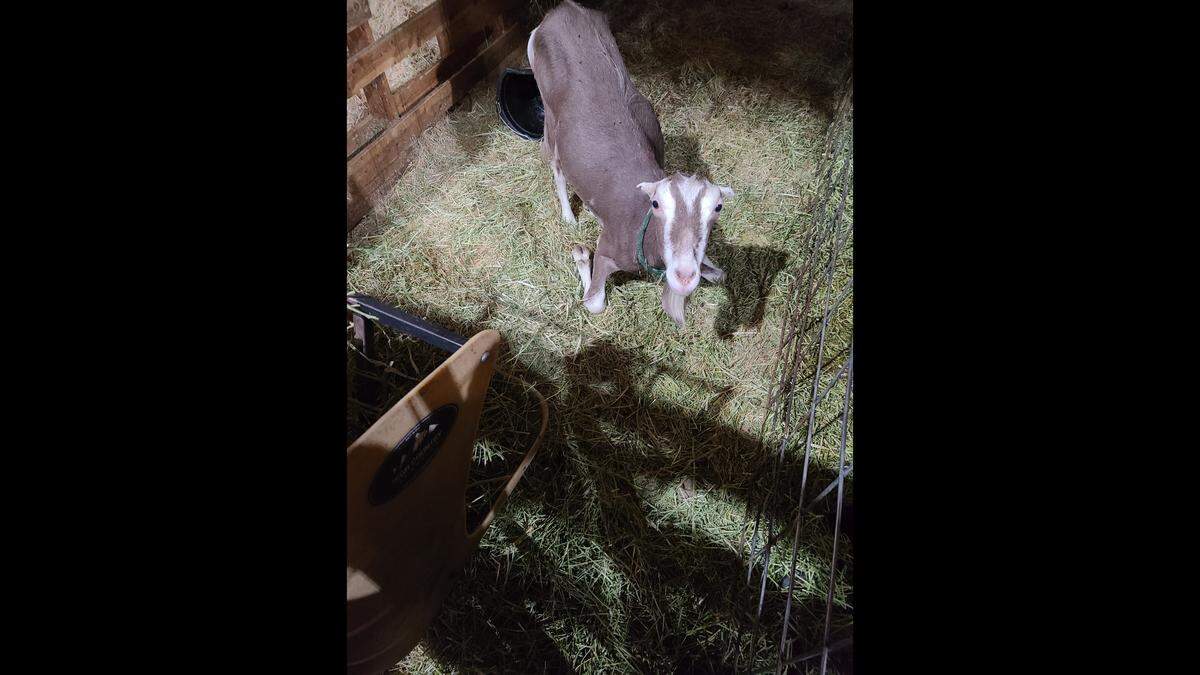
Paden said the ongoing poor conditions show Grand Barr has no plans to address concerns.
“That’s just a crystal-clear example of the neglect that’s going on there every day, and it won’t stop unless law enforcement files charges and removes the animals as they’re authorized to do,” Paden said.
Johnson told the Statesman the Malheur sheriff’s office has not removed any animals from the property because he “personally didn’t feel it was necessary.”
PETA also contacted a California cheesemaker to which the dairy supplied goat milk. The company, Laura Chenel, told PETA in a letter the organization shared with the Statesman that it was “extremely disturbed” by the allegations, and terminated its professional relationship with Grand Barr Dairy after investigating the claims and speaking with the dairy owners.
O’Brien, PETA’s spokesperson, said the organization considered the severed relationship a win.
“Consumers really bear the ultimate responsibility to ensure that goats aren’t suffering for their milk at this farm or any other farm,” Paden said.
.jpg "2025-09-20_13_Severely overgrown hind feet_20250920_174447 (1).jpg")
This story was originally published December 23, 2025 at 4:00 AM.