
A nuclear power plant 120 miles from Boise? This company wants to build one
Idaho’s first nuclear power plant may find a home in the Magic Valley, occupying a site slated for a wind farm as recently as last year.
In a shift that mirrors the Trump administration’s energy priorities, Sawtooth Energy and Development is eyeing 320 acres of public rangeland in northwest Jerome County for a commercial nuclear facility — a portion of the roughly 100,000 acres earmarked for the 241-windmill Lava Ridge Wind Project that was approved by the Bureau of Land Management in December. While the BLM greenlit a version of the contentious wind plan, President Donald Trump froze the plan via executive order on his first day in office.
Now, Sawtooth Energy is working toward developing Trump’s preferred power source — nuclear — on a portion of the same land. Spurred by financial incentives and buoyed by deregulation around commercial nuclear reactors, the Pocatello- and Jerome-based firm expects to submit a preliminary plan to the BLM as soon as next month, according to Project Manager Dan Adamson.
“Nine out of ten things have fallen towards nuclear,” Adamson said. “The whole attitude of the president towards nuclear kind of says it all.”
If approved, the plant would be the only commercial nuclear facility in Idaho, and among the first in the nation to use small modular reactors, a nascent technology that can be built in factories and assembled on site to cut construction costs and save time. Sawtooth Energy’s preliminary plan is to buy six of them, which Adamson expects to produce enough electricity to power 400,000 homes. While substantial, that’s less power than would have come out of Magic Valley Energy’s wind proposal, even after the BLM cut the proposal in half in the face of public opposition.
Adamson says that nuclear has two advantages over wind. First, the plant’s footprint — 40 developed acres within a 320-acre safety buffer — is considerably smaller than the roughly 104,000 acres set aside for the Lava Ridge plan, which would have disturbed nearly 5,000 acres for windmills. Second, the reactors can run 90% of the time, whereas windmills can only generate power when wind speeds are right.
Plus, the proposed nuclear site would be significantly farther from the Minidoka National Historic Site, which became a sticking point for the wind project.
There are downsides, too. Chief among them: Small modular reactors simply don’t exist in the U.S and are likely years away from domestic use. Globally, two plants use versions of these systems, one in Russia and another in China, according to energy industry outlets. In America, the U.S. Nuclear Regulatory Commission this year approved the design of Sawtooth Energy’s preferred model, but the vendor, NuScale, still targets 2030 for deployment, the company says. (Sawtooth CEO Roy Prescott said that his company is not currently in talks with NuScale to purchase reactors.)
Then, there’s the fuel. While the Nuclear Regulatory Commission has a courier service for delivering radioactive materials, there’s no permanent national repository for used fuel. That means spent nuclear rods live in vaults onsite at all plants nationwide, Adamson said. Sawtooth Energy’s plan would be built to federal safety specs, Adamson said, with capacity for about 20 years of nuclear material. Idaho Power, which has a plan to transition to entirely “clean” energy by 2045, considers nuclear energy clean because it doesn’t emit any carbon dioxide, according to spokesman Sven Berg, but “some experts do not consider it renewable or green due to other considerations” like spent fuel disposal.
Competing visions emerge for the Magic Valley
The safety of putting nuclear material above the Snake River Plain Aquifer — an underground basin holding as much water as Lake Erie — was a major sticking point for residents and watchdogs during a public meeting July 21 in Jerome. But many also expressed opposition to the future of the region the plant represented — and to the men who propose to build it.
Julie DeWolfe Arroyo lives near the BLM allotment in Jerome County. Like others, she’s worried about impacts on grazing, wildlife and water. But she is also concerned about where the power will end up, and the sort of industries it might attract.
“Idaho doesn’t need the power,” she added. “Data storage needs the power. AI needs the power. Idaho is being turned from an agricultural community into a data center.”
Prescott, who is also a rancher, said that the impact on grazing will be “minimal” compared to the larger footprint of Lava Ridge. Ultimately, he said, large-scale energy consumers like server farms may choose to move closer to where their power is made. In addition to the 88-95 jobs and $3 million in monthly payroll he expects the plant itself to create, Prescott sees more work popping up around the energy industry, regardless of where the power is sold.
“This is an opportunity in Jerome, Idaho,” he said. “I raise cattle. I finish these cattle and they go all over the world. Where they sell is up to (buyers), not me. Free enterprise is not a bad word to me.”
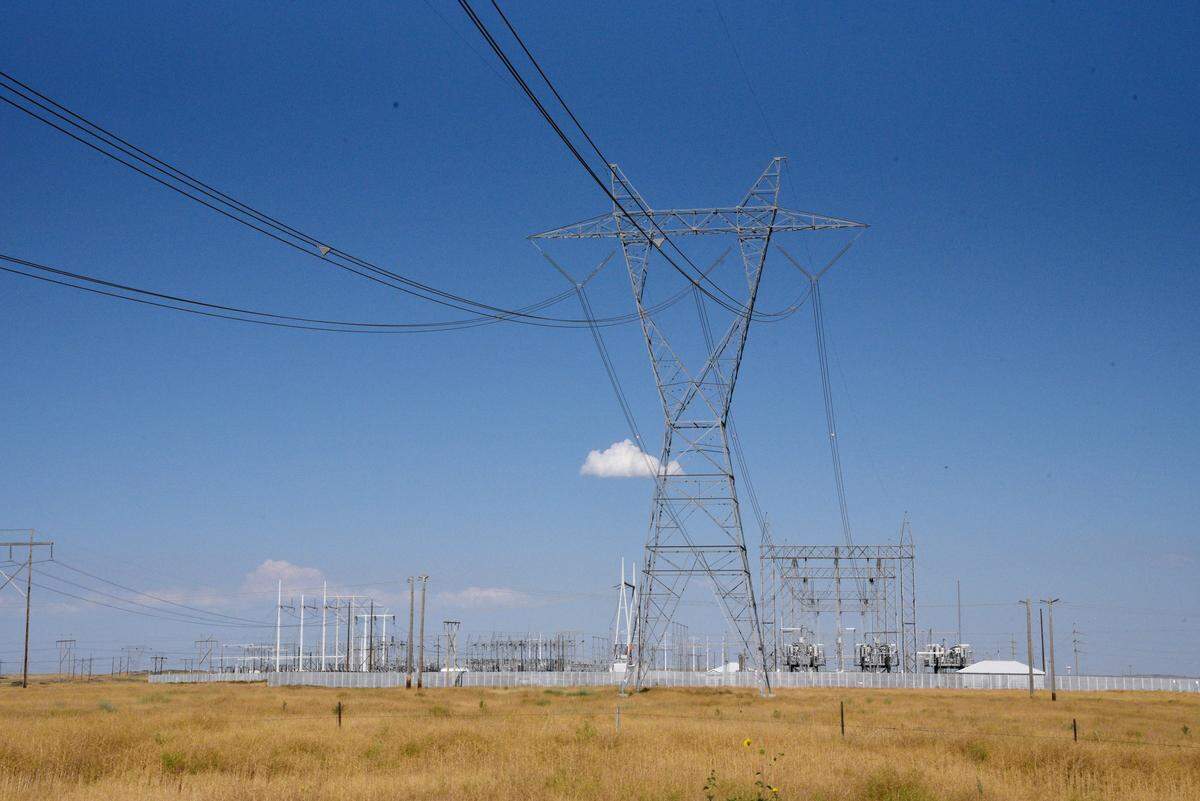
The Magic Valley is primed for energy production because of the infrastructure it already has. The appeal of the site is its proximity to the Midpoint Substation, a key distribution site, which Idaho Power co-owns with PacifiCorp, an Oregon-based utility.
“It is one of the most important electrical hubs in the Mountain West,” Berg said. “Energy generated all over the western U.S. goes through it to utilities and customers all over the West.”
In an interview, Adamson called it “one of the largest substations in the world.”
Sawtooth Energy’s chosen site is 2.75 miles from the transmission hub, which significantly cuts costs, Adamson said.
“We’ll put in 10 towers instead of several hundred towers if we were going to a further substation,” he said.
From there, the power would be brokered to buyers throughout the West via a process called “wheeling,” with Idaho Power taking a fee as it sends the electricity through its transmission infrastructure.
In his executive order stalling the Lava Ridge wind plan, Trump stated that the “the Biden Administration blindly pushed its unsound energy agenda by exploiting Idaho resources for California’s benefit.” Regardless of how it’s made, energy markets direct where the power goes.
“That substation is not going away,” Adamson said. “That substation is going to get bigger, and bigger and bigger. This area is going to be about energy.”
The BLM’s public process over the coming months will determine whether Adamson and Prescott, who incorporated Sawtooth Energy and Development earlier this year and have no practical experience in nuclear power development, are the people to bring it about. Adamson’s draft proposal is preliminary, and does not answer what he calls “engineering questions” sure to arise through review. He says the Nuclear Regulatory Commission would design those specs and he would implement them in construction.
“I hope to get this project built,” he said. “We will then turn it over to the brightest and smartest from throughout the land.”
At the public meeting, neighbors including DeWolfe Arroyo weren’t convinced.
”Nuclear sounds like a good idea, but it probably should be done by men who have experience in nuclear,” she said.
Environmental groups are watching
In the meantime, watchdogs and environmental groups are taking note. Leigh Ford, executive director of the Snake River Alliance, attended the meeting. And The Idaho Conservation League is also “paying close attention” to Sawtooth’s proposal, according to a statement from ICL Executive Director Justin Hayes.
“We’re open to exploring all technologies that can help Idaho reduce emissions, strengthen grid reliability, and provide affordable electricity,” Hayes said. “Nuclear energy — particularly SMRs — could play a role. But before moving forward, we must ask the right questions.”
The ICL does not have an official position on the plant. Its concerns include safety, reliability and cost — but also worries about the technology’s readiness and whether Sawtooth Energy, which has no other projects on its resume, can deliver.
“As with any major infrastructure proposal, it’s fair to ask whether the developer has the experience, resources and partnerships to bring a project like this to life,” Hayes said. “Before the public invests significant time, it’s important to know who’s behind the proposal and whether they can follow through. After all, Idahoans will be the ones living with the results — good or bad — for decades to come.”
This story was originally published July 29, 2025 at 4:00 AM.