Micron, Chobani draw praise for Idaho spending but invest more in New York. Why?
What is it about Idaho and upstate New York?
In September 2022, memory-chip manufacturer Micron announced plans for a new $15 billion fab at its headquarters campus in Boise.
A month later, while Idaho was still buzzing about the news, the company announced an even bigger investment somewhere else. It said it would build the world’s largest semiconductor plant in U.S. history, what it dubbed a “megafab,” in Clay, New York, a suburb of Syracuse. The $100 billion plant would dwarf the one now under construction in Southeast Boise.
Then, in April of this year, Chobani announced a $500 million expansion of its plant in Twin Falls, Idaho. And on Tuesday, the Greek yogurt maker broke ground on a $1.2 billion dairy-processing plant in Rome, New York, which is also near Syracuse and a 46-mile drive from Clay. U.S. Sen. Chuck Schumer, a New York Democrat, said the Rome factory marks the largest investment in natural-food making in American history.
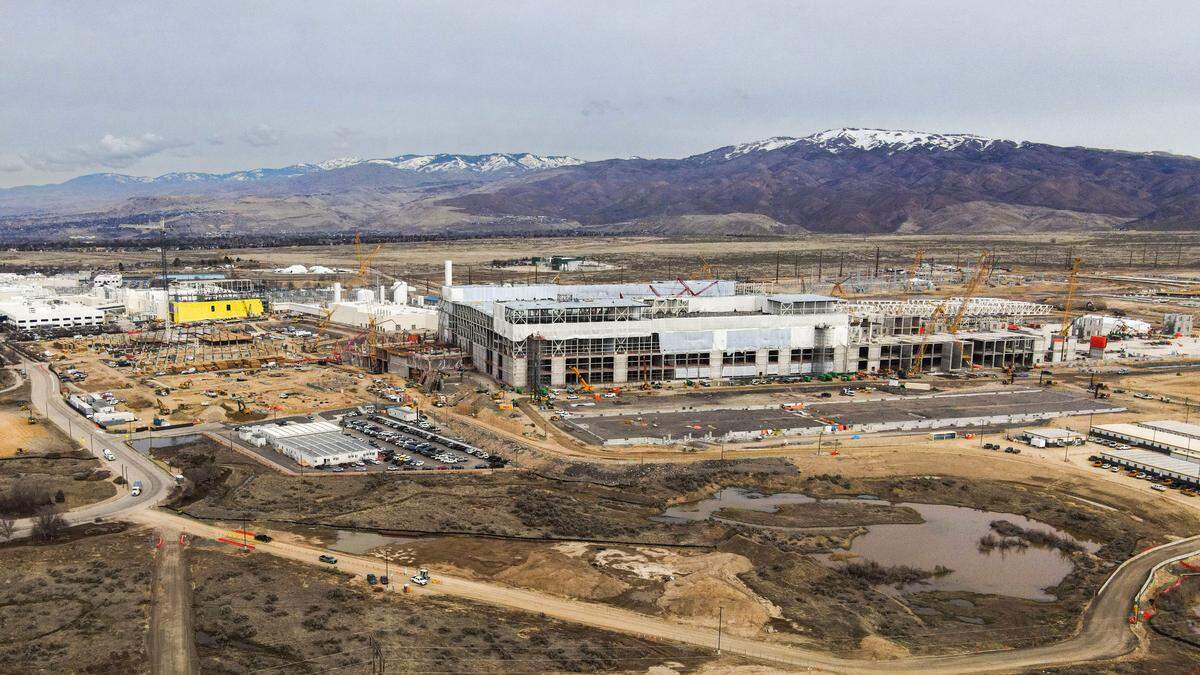
Both companies are important employers in Idaho. Both made historic investments in Idaho that state leaders have celebrated as big deals for the local economy. Idaho Gov. Brad Little lauded Micron’s investment in Boise and said it was the result of conservative policies that make the state “a great place to do business.”
But both companies went on to make even larger investments in central New York, a state notorious for high taxes and burdensome regulations.
We asked the companies why they opted to spend so much more there than here. Neither chose to discuss it. Neither responded to questions sent Tuesday by email and follow-up requests Wednesday.
But others did.
New York state offers big subsidies
The area of New York state where Micron and Chobani are investing doesn’t particularly have a more skilled labor force or better transportation, according to Peter Crabb, a professor of finance and economics at Northwest Nazarene University. So why did the companies land there, rather than, say, Virginia?
He said the larger investments in upstate New York, a region that’s struggled economically for some time, appear to be based on larger business incentives like tax credits from the state and local municipalities.
“It appears that New York stepped up its game,” Crabb told the Idaho Statesman by phone. “The state seems to have decided, ‘We’re going to make a big effort to bring jobs here, no matter what it costs us.’”
The state is giving Micron $5.5 billion in subsidies over the life of its project there, which the company has said, along with “strong support” from the town of Clay and Onondaga County, are critical to support its capital investment. The federal subsidy for semiconductor investment authorized by the CHIPS and Science Act that Micron is taking advantage of is not state-specific.
To persuade Chobani to build its new plant there, Empire State Development agreed to give the company up to $73 million in performance-based tax credits to support over 1,000 good-paying jobs in Oneida County, according to a news release Tuesday from New York Gov. Kathy Hochul’s office.
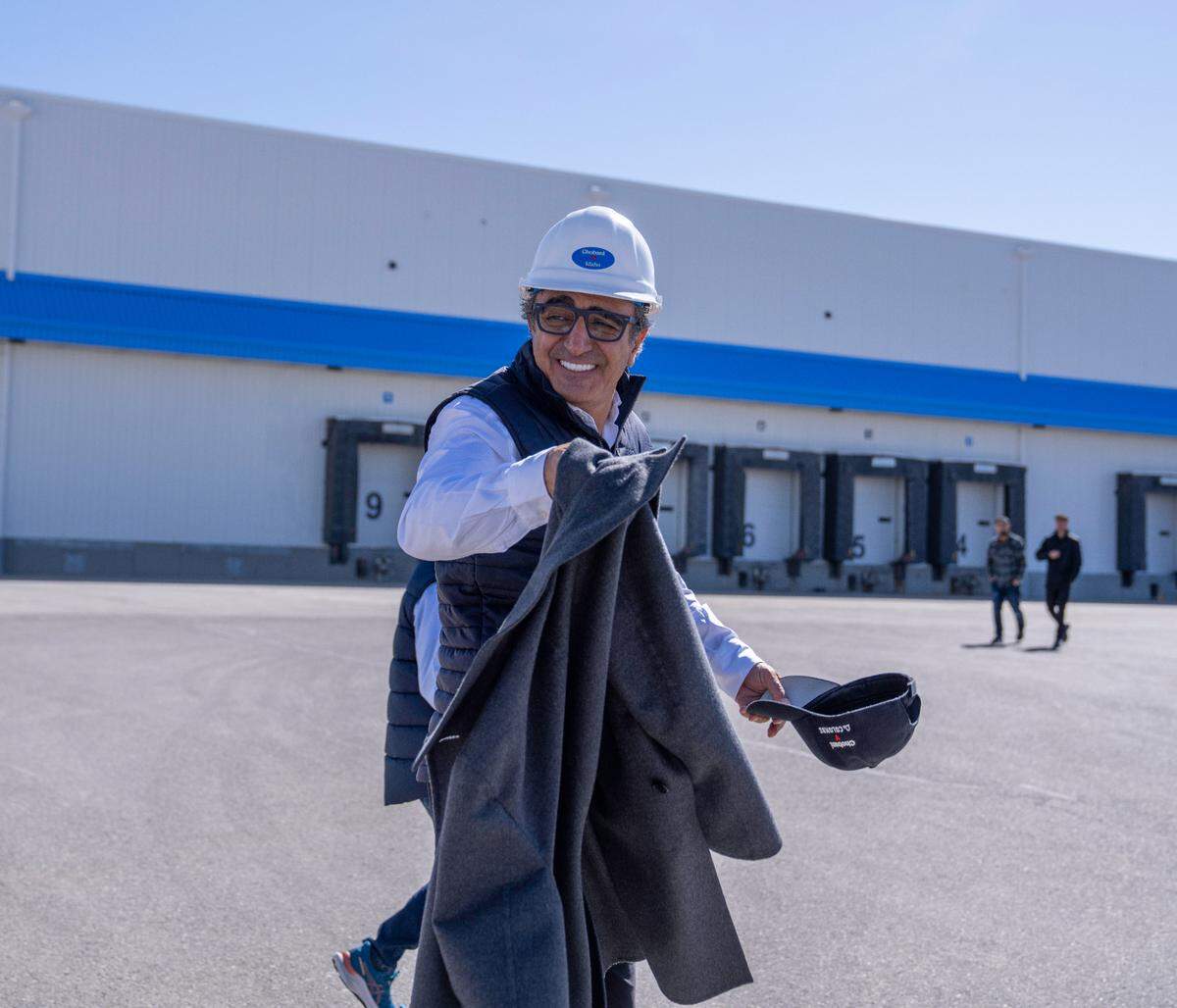
Chobani says New York state was the “perfect spot” to expand because it’s where Chobani got its start two decades ago. The company now manufactures its products in Idaho, Michigan and Australia.
But it can’t hurt that New York’s Excelsior Jobs Program offers a tax credit of up to 6.85% of wages per net new job. For certain qualifying jobs, the maximum credit rises to 7.5%, according to the program’s website.
“If they hire so many people, they essentially get those jobs subsidized,” Crabb said. “They’re lowering the cost of production. That’s not surprising to me with Chobani, because that’s much more labor intensive, as opposed to Micron being more capital intensive. Micron needs the money primarily to get the fabrication plant built and the equipment that goes in it. Chobani needs people to make yogurt.”
‘Everybody’s playing the game’
Crabb and another professor of economics, Steven Peterson of the University of Idaho, said the tax incentives are a zero-sum game.
That’s because if the state pays to subsidize the jobs to get more people working, it then has to either raise taxes or cut its budget elsewhere to pay for it. Thus, the net gain is zero. The incentives often lead to higher sales, income or property taxes, which is what happened in Idaho, Crabb said.
“It makes sense for companies of this size to say, ‘Hey, what are you going to offer me if we moved there?’” Crabb said. “Idaho did it with Amazon. They did it with Meta in the cloud facility that’s going into Kuna. Paylocity in Meridian received tax incentives to come into Idaho. Everybody’s playing the game. But it’s just taking money out of one pocket and putting it into another.”
Peterson said that, along with the tax incentives, cheaper housing could have factored into the decisions by Micron and Chobani to bet big on central New York state.
The average home price in Syracuse is about $195,000, according to Zillow. In Boise, it’s over $498,000.
“I think that the housing issue is something that may very well play a role in that decision making,” Peterson said by phone. “In Idaho, we’ve got a housing constraint. And I’ve suspected that some firms have been making decisions not to locate or expand here because of the housing issues that we face.”
But the regulatory environment in Idaho is far friendlier than in New York state, he added.
“That is an enormous advantage for Idaho, and that would certainly offset some of the other things, like housing costs,” Peterson said.
’Proud of partnership with Chobani’
The Statesman also reached out to the chambers of commerce in Boise, Twin Falls, Clay and Rome — the four cities where Micron’s and Chobani’s investments are underway or planned — for their thoughts.
“I’m afraid we are unable to answer your question at this time, but the Boise Metro Chamber and Boise Valley Economic Partnership are grateful that Micron and Chobani continue to invest into the state of Idaho,” the Boise chamber said by email.
In Twin Falls, the chamber referred the Statesman’s question to Shawn Barigar, the economic development director for the city of Twin Falls.
“Unfortunately, I can’t speak for Chobani and wouldn’t know the answers to the questions you raise regarding their decision-making process for their third manufacturing facility,” Bariger said by email. “I would echo the sentiment that Chobani’s investment in Idaho — to date, $1.2+ billion and now a new $500 million underway for a total of $1.7 billion over the past 14 years — is a significant contributor to Idaho’s economy.
“They employ some 1,200 people in Twin Falls and reach deep into the agriculture sector here with their use of millions of pounds of milk daily. We in Twin Falls and Idaho are proud of the partnership we have with Chobani and continually work to build a solid business and personal relationship with them.
“We’re also excited to hear of their company’s continued growth in additional markets driven by their overall company performance and success.”
The two chambers in New York state did not respond.
Business and Local News Editor David Staats contributed.
This story was originally published April 24, 2025 at 4:00 AM.