FDA warned public not to buy this Idaho product. The company calls it ‘irresponsible’
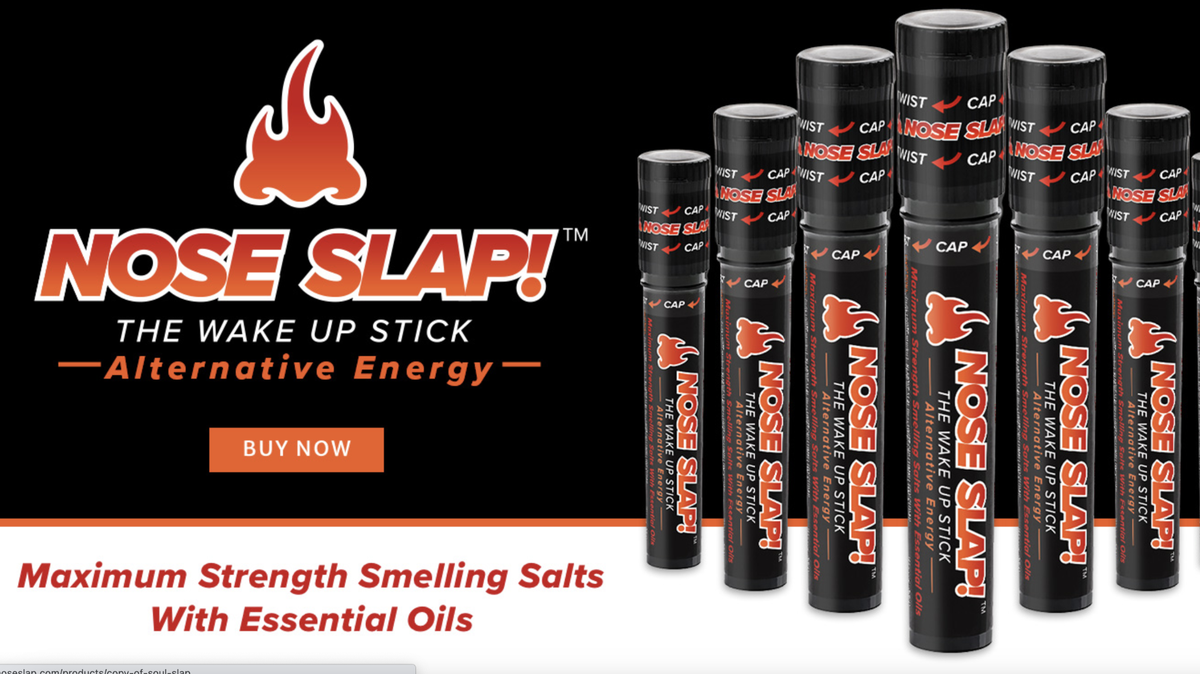
The Food and Drug Administration has warned customers against buying from a Boise-area business that sells smelling salts and said customers have complained of seizures, diarrhea, migraines and more after using the products.
The FDA issued the public warning about Nose Slap in early May, days after sending a warning letter to Nose Slap that said its products are misbranded as a stimulant drug and violate federal law.
But the Meridian-based company said it has concerns about the veracity of the complaints and feels the public warning was “incredibly irresponsible.”
Nose Slap officials told the Idaho Statesman they’re working with the FDA to modify their branding, but added that the public warning blindsided them and has tarnished the company’s reputation. Chuck Meeker, chief technology officer for Nose Slap, said in an interview that he thinks the complaints may have been submitted by a business rival.
“We find it extremely troubling that the FDA, without doing any kind of investigation or discussions with us internally, would post such a damning alert on their website,” Meeker told the Statesman.
What is Nose Slap?
Nose Slap sells two products: a “wake up stick” that shares the same name as the company and a stronger Soul Slap that the company says “packs an even more intense punch of aroma when you need it.” Nose Slap touts its products as essential oil-infused smelling salts that can help users feel alert and focused.
Meeker described Nose Slap as “a scented aroma product” that relies on peppermint essential oils to create an invigorating fragrance. He said the smelling salts in the products create gases that produce a “blast” of the peppermint scent.
Smelling salts have been used for centuries and are perhaps best known as a means for reviving people who are unconscious. They’re made from ammonium carbonate, which releases carbon dioxide and ammonia when combined with water. The ammonia irritates the airway and lungs and triggers inhalation.
In recent years, smelling salts have become popular with athletes and gym-goers as a pick-me-up.
“They use it to help invigorate their senses and help feel focus and alertness,” Meeker said.
He said Nose Slap, which launched nearly a year ago, was meant as an alternative to smelling salt products that users insert in their nostrils or hold close to their nose. Instead, Nose Slap is meant to deliver a peppermint scent rather than the irritating hit of ammonia, he said.
“You shouldn’t inhale, you should be waving or wafting it under your nose and using the puffer feature (on the container) to puff toward your nose without inhaling,” Meeker said.
Meeker told the Statesman that Nose Slap went viral on the social media app TikTok and took off. Not long after, in February, Meeker said a Seattle-based FDA complaints coordinator contacted the company to say the agency had received four complaints about Nose Slap in a single day.
Meeker said that in a phone call, the complaints coordinator told Nose Slap officials the complaints struck her as odd. Meeker said the woman told them two of the complaints were very similar, and the other two also seemed related. According to Meeker, the coordinator asked if anyone had “an ax to grind” with Nose Slap.
“It would not surprise me if one of (our) competitors filed that complaint,” Meeker told the Statesman.
Meeker said the FDA told Nose Slap the complaints were made anonymously. He said Nose Slap filed Freedom of Information Act requests with the FDA about the complaints and has not received a response.
Meeker also said it’s unclear whether the FDA verified the veracity of the complaints. When the Statesman reached out to the FDA to confirm Meeker’s account, spokesperson Jeremy Kahn sad the agency “does not discuss details of ongoing compliance matters or investigation.
“Additionally, as a general matter, the FDA does not discuss its investigative procedures,” he added.
According to Meeker, at the time the FDA received the complaints, Nose Slap had never received any customer complaints about the health issues reported to the FDA.
“If someone truly had an adverse event after using our product as directed, I would want to know about it,” he said. “We’re a responsible company.”
“I’m a Ph.D. biochemist,” added Meeker, who has a doctorate in oncological studies from the University of Utah. “I have a strong desire to see the very best consumer experience product on the market in Nose Slap, and if changes are required in formulation or labeling or marketing, I would be the first to see it done.”
Public warning impacted business, Nose Slap says
Meeker said after two months of “radio silence,” Nose Slap received the FDA’s warning letter on April 24. The letter said Nose Slap’s product packaging and website paint it as a drug “intended to affect the structure or any function of the body.”
In 2008, the FDA created a new rule preventing ammonia products like smelling salts from being sold with directions for use as reflex stimulants. The agency said any ammonia products that do direct consumers to use them as reflex stimulants are “not generally recognized as safe for use” or are misbranded.
Meeker told the Statesman that Nose Slap immediately sought legal counsel “to identify language that needs to change and begin going through and making those changes” on its packaging and marketing. The changes are meant to remove any insinuation that Nose Slap is affecting bodily function, he said.
“At the end of the day, we believe Nose Slap is not a drug product that is regulated by the FDA,” Meeker said. “It’s not within the purview of the FDA to regulate this kind of scented aroma product. We don’t have any plans for Nose Slap to ever be an FDA-approved product.”
The FDA letter instructed Nose Slap to respond within 15 business days. A week after sending the letter, it issued its public warning.
Meeker said as a result, the company’s website host shut down its site, its payment processor stopped processing purchases and its TikTok account was suspended. He said Nose Slap reinstated its website through a new host and successfully petitioned TikTok to reinstate its account.
He called the public warning “super irresponsible and unfair to our company” and questioned whether the FDA did its due diligence to investigate the origin of the complaints. He said Nose Slap views the public warning as “a knee-jerk reaction that wasn’t thought through all the way” to limit any potential liability.
“I don’t know whether the FDA is on a mission to take down Nose Slap,” Meeker said. “I can’t imagine they care about us that much.”
Kahn told the Statesman it takes “appropriate, risk-based action when companies violate federal law.
“As stated in the warning letter and public alert, the drug products Nose Slap and Soul Slap are unapproved drugs marketed to promote alertness and boost energy. As noted in the alert, the FDA received reports of adverse events such as shortness of breath, seizures, migraines, vomiting, diarrhea, and fainting from consumers after using these products.”
Kahn declined to comment on the FDA’s enforcement strategies when asked about the timing of the warning letter and public warning. Kahn said issues are “evaluated on a case-by-case basis.”
Labeling changes in progress
Meeker said Nose Slap has responded to the FDA and proposed changes to its label, marketing materials and website.
Earlier this week, the Nose Slap website appeared to still contain the same claims the FDA included in its warning letter to the company, which it said to paint the products as reflex stimulants that violate FDA guidelines. By Wednesday, the company’s website included an acknowledgment of the FDA warning on its FAQ page.
“The FDA has recently warned consumers about adverse events reported after using Nose Slap, and we are working with the FDA to address the concerns raised,” the statement said.
Nose Slap and Soul Slap products appear to still be available for purchase through the company’s website, and Meeker on Wednesday said Nose Slap has no plans to reformulate its products.
“All the experiences we’ve had (with the product) have been with a positive tone,” Meeker said. “Not everybody enjoys the sensation, but nobody will say it wasn’t an intense, eye-opening experience, a rejuvenating experience for them.”
He said if the FDA believes Nose Slap is harmful, it should also be looking at similar smelling-salt products that are marketed to athletes. A Statesman search of FDA warnings did not return any results for other smelling salt products. Kahn told the Statesman the FDA “would not speculate on the regulatory status of other similar products.”
Meeker said the FDA appears to be focusing on “a product that’s trying to do this the right way.”
“If the products are harmful, why haven’t they told everyone to stop selling them?” he said.
This story was originally published June 2, 2023 at 4:00 AM.