
Retail stores gave hazard pay to workers last spring. Here’s what they’re doing now
With coronavirus cases rising across the country, retailers are preparing for another rush from shoppers worried about new lockdowns and pandemic shortages.
But many retail workers, heralded as heroes during the first wave of the pandemic, are not being provided with the same level of bonuses and raises this time, even as the health risks for them increase.
Even as some companies have announced new hazard pay in recent days, some industry observers say many retailers are not sharing enough of the profits they have earned during the pandemic with their workers but are instead benefiting shareholders through stock buybacks.
Amazon, which said last month that its quarterly profit had increased nearly 200%, ended its $2-an-hour pay raise for workers earlier this year and then provided a pandemic-related bonus in June, but a spokeswoman said no new hazard pay was planned.
Walmart, which reported another big increase in quarterly sales Tuesday, had paid a series of special cash bonuses, but the company has not raised wages broadly as a way to reward workers during the pandemic.
Walmart has spent $1.1 billion on bonuses rewarding its employees who worked during the pandemic. Full-time workers have received a series of three cash payments of up to $300 each. Walmart paid workers a bonus in September related to store performance but has not indicated whether any additional bonuses related to the pandemic would be granted.
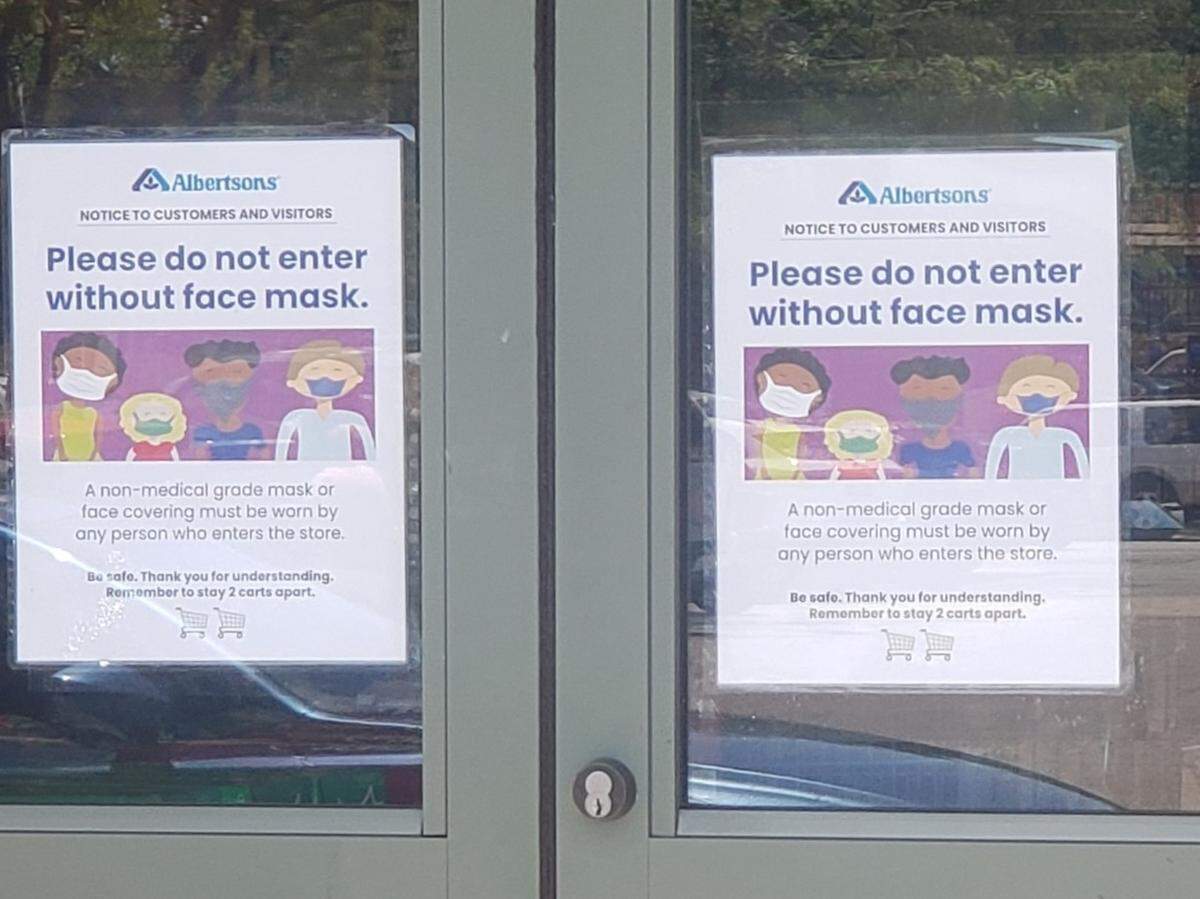
Albertsons, the nation’s second-largest grocery chain, paid its workers an extra $2 an hour in March as the pandemic swept the nation. The Boise company continued the additional pay until June 13, when Idaho Gov. Brad Little moved Idaho to Stage 4 of his recovery plan.
Last week, the governor moved the state back to a modified Stage 2, but the company has said nothing about resuming its “appreciation pay.”
Fred Meyer and other chains owned by Kroger, the nation’s largest grocery retailer, offered raises at the start of the pandemic and bonuses through mid-June, but those have ended. Employees nationwide have staged protests outside stores asking Kroger to reinstate the pay, especially given its booming business — sales are soaring, and it recently said its 2021 business results “will be higher than we would have expected prior to the COVID-19 pandemic.”
This week, the company told workers that they would receive discounts at its fuel centers and a $100 store credit as a “holiday appreciation.”
Lowe’s said Wednesday in its quarterly earnings report that it had already paid more than $800 million in pandemic-related benefits to employees. At the same time, the company said it expected to buy back about $3 billion of its own stock in the fourth quarter, after spending about $1 billion on buybacks and dividends in the third quarter.
“We ask workers with the least to sacrifice the most, and they are not even getting compensated in return,” said Molly Kinder, a fellow at the Brookings Institution, who is preparing a report that ranks which largest retailers have been most generous to their workers during the pandemic. “The companies have the money to do this.”
The issue of hazard pay for retail workers reflects the harsh reality of the pandemic economy — a case of shifting supply and demand. In March and April, when retailers were overrun with customers and workers were calling in sick or quitting, the companies needed to give incentives to employees to stay on the job.
But when the additional unemployment benefits, totaling $600 a week, expired at the end of July, many more Americans needed jobs, making it easier for retailers to attract and retain workers.
The public attention has also waned, as news media accounts of workers getting sick from the virus faded and focus turned to protests over police violence and the election. “The headlines have moved on,” Kinder said.
But the risks to retail workers have not. As the number of new infections hits daily records, retail workers must spend hours inside, dealing with customers who may refuse to wear masks or wear them incorrectly. A large part of this burden has fallen on female, Black and Hispanic employees, who make up a sizable proportion of retail workers.
Grocery workers’ union says 108 members die of COVID-19
The United Food and Commercial Workers International Union, which represents nearly 1 million grocery workers, said that 108 of its grocery workers had died as a result of COVID-19 and that more than 16,300 had been infected or exposed to the virus.
Some leaders in government have tried to step in and compensate retail workers for the risks they are taking. But efforts to include hazard pay for front-line workers in the various rounds of federal stimulus bills have all failed, including a proposal from Sen. Mitt Romney, R-Utah.
Calling it “Patriot Pay,” Romney had proposed that essential workers receive raises of up to $12 an hour from May through July. That was meant to make up for any difference between what workers would earn on the job and what they were receiving in additional unemployment assistance. Romney’s proposal was never approved, and Congress remains at a stalemate over a new round of stimulus.
There may be other issues preventing retailers from continuing to offer pandemic pay raises. Even temporary raises, ostensibly limited to the extraordinary circumstances of 2020, can set expectations for higher pay permanently. Some analysts say retailers opt for bonuses instead of raises because they can be given out at random and do not normalize higher pay.
The momentum behind higher pay in the retail industry appears to have picked up during the pandemic. Unions representing retail workers say they feel emboldened to push for significant pay increases as they enter various contract negotiations over the coming year, bolstered by what they see as the shopping public’s new appreciation for low-wage workers.
In Florida, where President Donald Trump won this month, more than 60% of voters supported a measure that will raise the state’s minimum wage to $15 an hour from $8.56 by 2026. And multiple polls conducted during the pandemic show growing support among Democrats and Republicans to raise the minimum wage.
Pay bumps tied to the pandemic have been relatively modest, but raising wages a few dollars an hour can amount to a large increase in a retail worker’s take-home pay. Kroger gave a $2-an-hour pay raise from the end of March to mid-May and gave employees a bonus of $150 or $300, based on their part- or full-time status. In May, it offered a separate bonus of $200 or $400.
Some retailers boost pay
But a few big retailers have increased wages.
Best Buy, which offered “appreciation pay” to hourly front-line workers starting in March, raised its starting rate for U.S. employees to $15 an hour Aug. 2, the day after the additional pay was set to end.
Home Depot said Tuesday that it would transition from paying a temporary weekly bonus to associates in stores and warehouses to permanently increasing wages for its hourly front-line workers. It’s not clear how generous those raises will prove for each worker. The company, which noted that average wages varied across the country, said it would invest $1 billion in the raises on an annualized basis.
Dollar General said Tuesday that it had spent $73 million on employee bonuses and planned to spend an additional $100 million this year, twice what it had initially planned.
“To demonstrate our ongoing gratitude and support for our employees directly serving our customers and communities during this pandemic, we are proud to double our initial plans for second-half bonuses,” Dollar General’s chief executive, Todd Vasos, said in a statement.
By comparison, Dollar General spent $602 million repurchasing its stock in the second quarter and has authorized the purchase of an additional $2 billion in stock.
The Idaho Statesman contributed.
This story was originally published November 20, 2020 at 4:00 AM with the headline "Retail stores gave hazard pay to workers last spring. Here’s what they’re doing now."