He wants to add jobs in Boise but couldn’t get a loan. Idaho’s hemp ban stopped him
A decade ago, Paul Frantellizzi approached Region IV Development, a private nonprofit in Twin Falls that finances small business development and public infrastructure projects.
The onetime mayor of Stanley obtained $250,000 to fund expansion of Good Superfoods, a Garden City company that focused on creating chocolate bars with healthy additives. By the time he sold the company two years ago, Good Superfoods had grown from a handful of employees to 67 full-time workers.
Earlier this year, Frantellizzi went to Region IV Development again, looking for a similar loan for his latest venture: production of mostly hemp-based wellness and body-care products containing cannabidiol, commonly known as CBD.
Although CBD products are widely sold throughout Idaho, Frantellizzi was turned down for the loan, because hemp remains illegal under Idaho law.
Hemp is related to marijuana but contains only a fraction as much of THC, the compound that gets pot smokers high. Under Idaho law, there is no distinction between hemp and marijuana.
“Because Idaho still considers hemp with any level of THC illegal, I couldn’t get a loan to grow my business,” Frantellizzi said by phone.
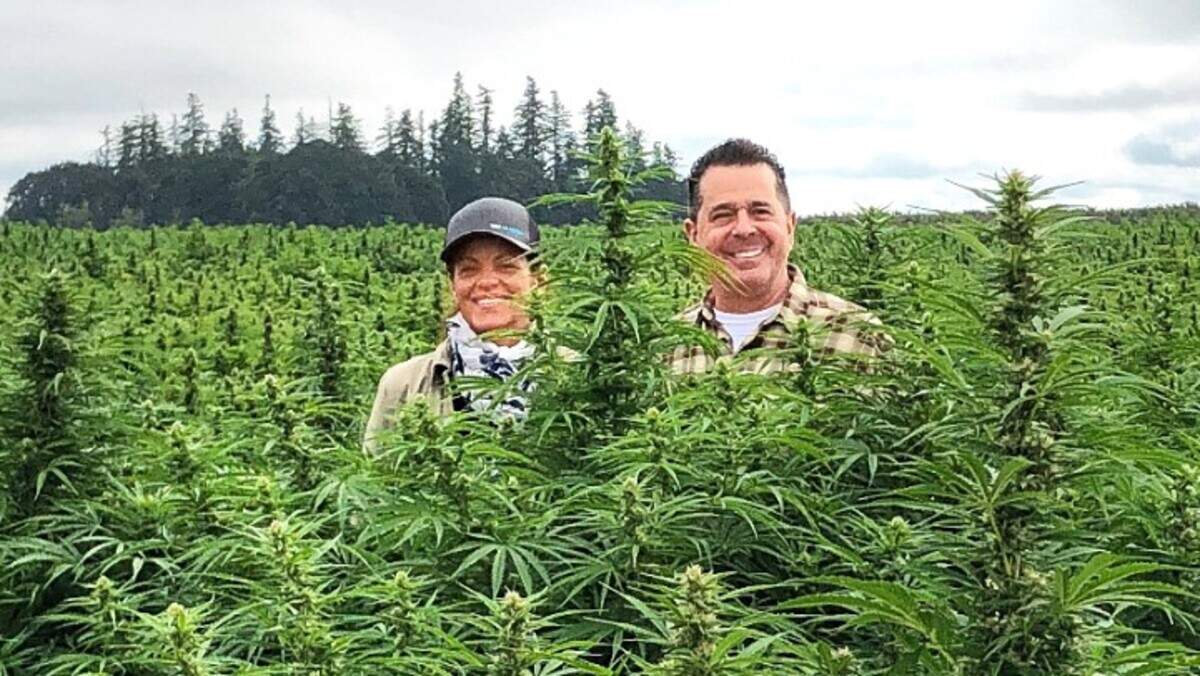
Frantellizzi is CEO of Boise’s The Blissful Plant Co. He and his wife and business partner, Pamela Peters, wanted to use the money to hire employees for the company’s 2,500-square-foot office in Northwest Boise.
“But we can’t hire for the team and grow the business, because we need funding to do that,” he said. “We have four workers, and we wanted to grow that to about 10, which would be mostly online marketing, sales, all the things we can do here in our home office.”
He said his company does not have a backup option for capital. To supplement its income while waiting for the law to change, Blissful Plant is making chocolate and other products at its Boise office that do not contain cannabidiol.
“We are just trying to get through the COVID-19 period and bootstrap if possible,” he said.
Region IV did not return calls seeking comment. Nor did Rep. Caroline Nilsson Troy, R-Genesee, who sponsored an unsuccessful bill this year in the Idaho House that would have begun a process to allow farmers to grow hemp.
Congress removed hemp from the list of controlled substances and legalized it as a farm commodity in 2018. It could be grown and processed as long as THC levels did not exceed 0.3%.
Since then, every state except Idaho has approved legislation allowing hemp production. Mississippi, the last other holdout state, signed a bill to legalize hemp in June.
In March, the Idaho House State Affairs Committee voted 8-7 to kill Nilsson Troy’s bill. Earlier, the Senate passed the bill. Under the 2018 farm bill signed by President Donald Trump to legalize hemp, states are required to develop a plan to grow the crop.
Gov. Brad Little signed an executive order in November that allows interstate transportation of hemp through Idaho. Little has said he is not opposed to hemp farming, but wants to ensure the production and shipping of industrial hemp is not a front for smuggling illicit drugs into and around Idaho.
The bill that stalled would not have legalized CBD or have allowed for the processing of hemp. That’s what Frantellizzi would eventually like to see.
Joyful Hemp uses hemp grown outside Portland and Bend, Oregon. Its production plant is located in Ontario. Oregon has legalized hemp production as well as recreational growing and selling of marijuana. The city has collected $1.1 million in revenues since the first marijuana dispensary opened in July 2019.
“We only chose Ontario because it’s so close by,” Frantellizzi said. “We would love to produce everything here in the state of Idaho and create many jobs here.”